When Charlemagne was an old man near the end of his life, the story goes, he visited a Frankish seaport and saw white sails on the horizon. The townspeople watched the ships and guessed. Maybe they were Jewish merchants. Maybe they came from Africa, or from Britain. But the wise old emperor knew, just from the shape and speed of the vessels, exactly what they carried. "These ships bear no merchandise," he said, "but cruel foes."
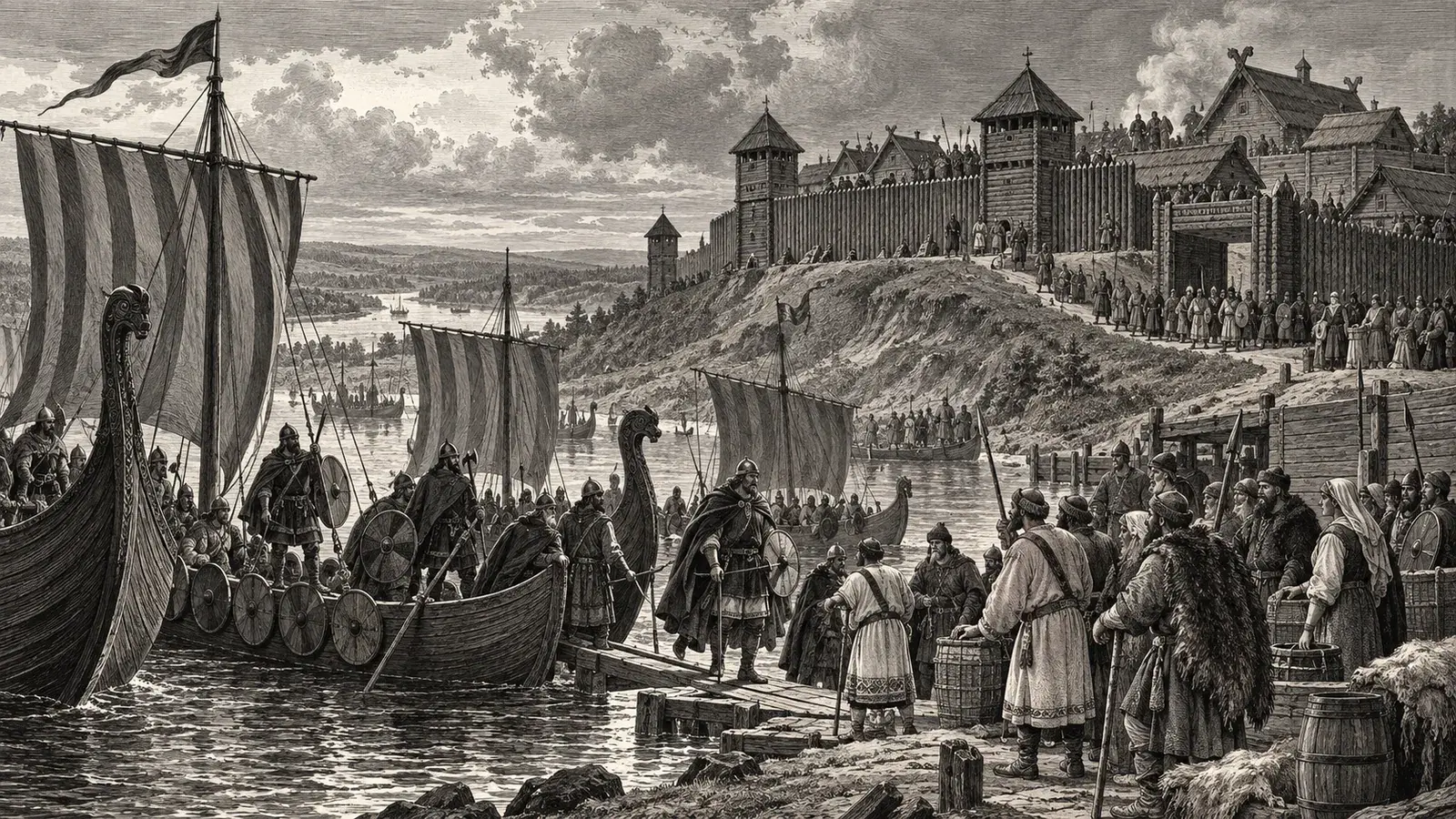
Charlemagne recognized the swift, dragon-prowed ships on the horizon as Viking raiders — and wept, foreseeing the trouble they would bring his people.
The Emperor's Tears
The Franks got ready to defend the city, but they didn't need to. The moment the Northmen heard that the great Charles was nearby, they fled so fast they vanished "not only from the swords but even from the eyes" of the Franks. Everyone celebrated. Everyone except Charlemagne. He rose from his seat, went to a window facing east, and stood there a long time with tears in his eyes. No one dared ask why. Finally he turned and said: "Do you know why I weep? I'm not afraid these raiders will harm me. But I am deeply grieved that in my lifetime they've come this close to our shores — and I'm filled with sorrow when I look ahead and see the troubles they'll bring my children and their people."
The Mysterious North
To southern Europeans, the far north had always been a land of mystery. It was the dread Northern Ocean that Drusus had won fame for sailing centuries earlier. Beyond the known world, people imagined seas that wrapped around the whole earth and places where the sun's light lingered strangely. Some even believed the souls of the dead lived up there, and that the boatmen who sometimes appeared were ferrying departed souls to a better land. So when the dragon ships started showing up in peaceful European harbors, they carried a strange terror with them. On the curved prow of each Viking ship was a carved dragon or monster. Inside were tall, blue-eyed warriors swinging huge two-handed axes with terrifying skill.
"From the Northmen's Fury, O Lord, Deliver Us"
The Viking attacks followed a pattern. A fleet would silently enter a French port or sail up a wide river, then push inland — robbing rich farms, plundering cities for treasure, and attacking ships at the docks. Before anyone could gather a force to fight back, the raiders were gone. Nobody knew if they'd return in a month, a year, or a generation. As the ninth century went on, it became clear they'd come more and more often. Charlemagne's gloomy prediction was coming true. The frightened, helpless people of Europe added a new line to their church prayers: "From the Northmen's fury, O Lord, deliver us."
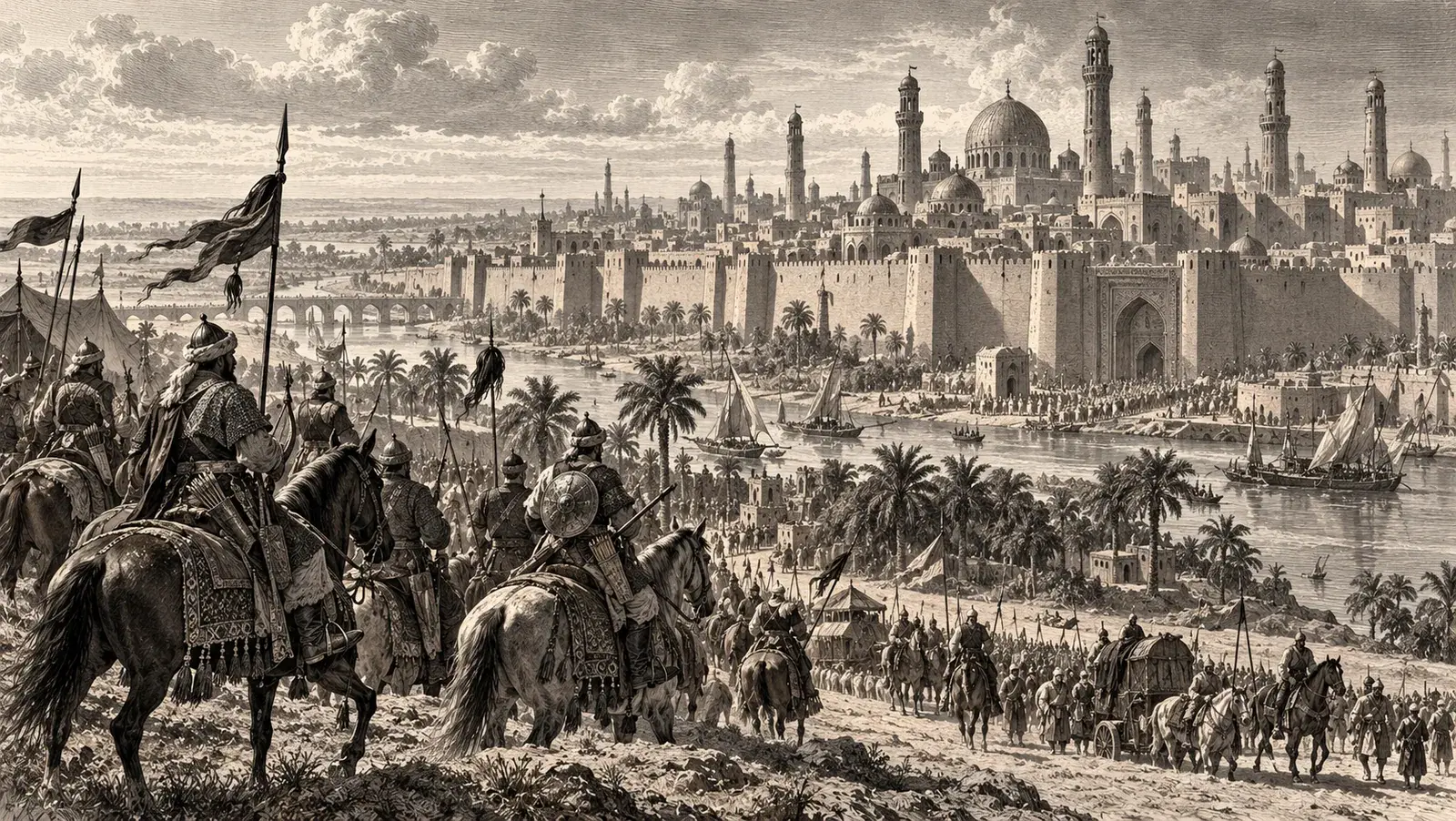
Viking fleets would sail far inland up rivers like the Seine, striking cities that never expected sea raiders to reach them.
The Raid of Ragnar
One famous attack came when the Vikings sailed a fleet of one hundred and twenty dragon ships up the Seine River, all the way to Paris — the first time Viking boats had ever reached the city. Their leader, Ragnar, gazed at the towers of Paris with fierce longing, then landed and rushed through the gates. The people, caught completely by surprise, fled to their homes and left the city to the raiders. The Vikings robbed the palaces and churches and set them on fire. But while they were inside the church of St. Germain, a thick fog rolled over the city. To the religious people of Paris, it seemed that God had blinded the invaders. The Vikings stumbled out into a gray world where they couldn't see a dozen steps ahead. They lost track of the streets, lost each other, and many died fighting in the dark where no one could tell friend from enemy. The survivors who found their ships fled down the river in a panic. According to legend, the fog turned out to be a sickness-bringing mist that followed them home, killing many. Terrified, Ragnar confessed to his king that he'd robbed the churches, and only after returning all the Christian treasures and prisoners did the sickness lift.