In the early years of the 1950s, Iran stood at a crossroads. The country was formally a constitutional monarchy, a system meant to divide authority between the Shah and an elected parliament. In theory, this arrangement promised balance: the monarch symbolized national unity while an elected government handled day‑to‑day political power. Yet the reality was far less stable. Disagreements about where true authority should lie created constant tension between the palace and the parliament. The reigning monarch, Mohammad Reza Shah Pahlavi, believed that the monarchy should play a meaningful role in guiding the country’s direction. Many politicians and reformers disagreed. They argued that Iran’s elected government, led by a prime minister accountable to parliament, should hold the real power. This struggle over constitutional authority would soon intersect with another issue that was far more explosive: oil.
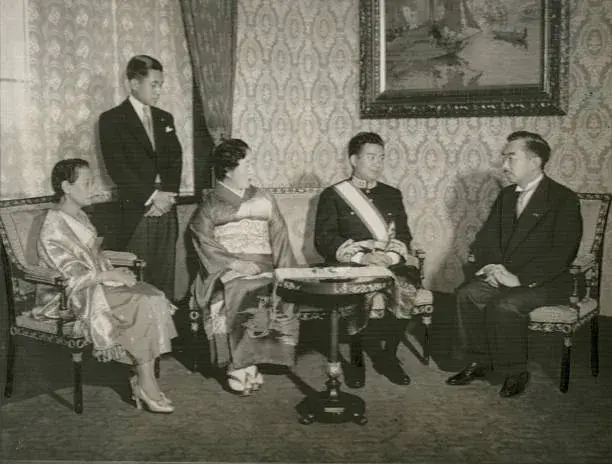
Mohammad Reza Shah Pahlavi ruled Iran as monarch while political tensions grew between royal authority and elected leaders.
Strategic Importance of Iranian Oil in the Twentieth Century
By the mid‑twentieth century, oil had become the lifeblood of the global economy. Industrial production, transportation networks, and modern militaries all depended heavily on petroleum. Nations that controlled oil reserves possessed enormous economic and strategic advantages, and governments around the world competed fiercely to secure reliable supplies. Iran possessed some of the largest oil reserves on Earth. Yet the profits from these resources did not primarily benefit the Iranian state. Instead, the oil industry was largely dominated by a British firm known as the Anglo‑Iranian Oil Company. This company oversaw the extraction, refining, and export of Iranian petroleum, operating vast facilities that connected Iran’s oil fields to the global market. While the company generated tremendous wealth, many Iranians believed the arrangement was deeply unfair. Revenue flowing into Iran’s national budget was far smaller than the profits enjoyed abroad. Workers in the oil industry faced difficult conditions, and political critics increasingly argued that a foreign company was exploiting the country’s natural wealth.
The giant Abadan refinery became a symbol of foreign control over Iran’s oil resources.
Mohammad Mosaddegh and the Rise of Iranian Resource Nationalism
Against this backdrop of growing frustration, a prominent politician named Mohammad Mosaddegh rose to national prominence. Known for his reputation as an incorruptible nationalist, Mosaddegh gained wide public support among Iranians who wanted greater independence from foreign influence. When Mosaddegh became prime minister in 1951, he quickly focused on what had become the most emotionally charged political issue in the country: control of Iran’s oil resources. For many citizens, the question was not simply economic. It was about national dignity and sovereignty. Mosaddegh championed the idea that Iran should manage its own oil industry. After intense debate within the Iranian parliament, lawmakers approved a bold and historic measure: the nationalization of the oil sector. The decision meant that Iran would take direct control of its oil fields, refineries, and export infrastructure. Foreign companies would no longer dominate the country’s most valuable resource. The move electrified Iranian society. Crowds celebrated in the streets, and Mosaddegh quickly became a symbol of national resistance to foreign economic domination.
Prime Minister Mohammad Mosaddegh became a national hero after pushing to nationalize Iran’s oil industry.
Britain’s Response and the Global Oil Crisis
For Britain, however, the decision represented a major strategic and economic threat. The Anglo‑Iranian Oil Company had long been central to British energy supplies and global influence. Losing access to Iranian oil threatened both the British economy and Britain’s position in international politics. The British government reacted swiftly. Rather than accept the nationalization, London organized a sweeping boycott designed to isolate Iran’s oil exports from the world market. Tankers avoided Iranian ports, international companies refused to handle Iranian crude, and financial restrictions were imposed that limited Iran’s access to foreign currency. These measures created immediate economic strain inside Iran. Oil production slowed dramatically as storage facilities filled and exports collapsed. Thousands of workers in the oil sector lost their jobs, and government revenue dropped sharply. What had begun as a nationalist victory soon became an economic crisis. At one stage British leaders even considered a military operation aimed at seizing the enormous refinery at Abadan, which had been built under British management and stood as the largest oil refinery in the world at the time. In the end, Britain decided against a direct invasion. Instead, policymakers turned toward a quieter strategy: undermining Mosaddegh’s government through political pressure and covert influence.
Cold War Fears and the Communism
The crisis in Iran unfolded during one of the most tense periods of the twentieth century: the Cold War. After the Second World War, global politics had become dominated by rivalry between the United States and the Soviet Union. Each superpower sought to expand its influence while preventing the other from gaining strategic footholds. Western governments were particularly concerned about the spread of communism. In several countries, communist parties had gained significant power, and policymakers feared that political instability could create opportunities for Soviet expansion. In Iran, a political organization known as the Tudeh Party promoted communist ideas and maintained connections with Moscow. Although the party did not possess enough strength to seize power on its own, its presence added another layer of anxiety to an already volatile situation. British officials increasingly warned that economic turmoil and political unrest might eventually open the door to communist influence in Iran. These warnings soon reached Washington.
Washington Changing Position Toward the Iranian Crisis
Initially, the United States was cautious about becoming involved in the conflict. During the administration of President Harry Truman, American officials hesitated to support any plan that would overthrow Iran’s elected prime minister. Intervening directly in another nation’s domestic politics carried obvious risks. But global circumstances were shifting rapidly. In 1953 Dwight D. Eisenhower entered the White House, bringing with him a new administration more willing to pursue aggressive anti‑communist strategies abroad. At the same time, British leaders renewed their appeals for American cooperation. London argued that removing Mosaddegh from power had become necessary to stabilize Iran and prevent communist groups from exploiting the growing crisis. Gradually, American intelligence officials began to accept the idea that intervention might serve Western strategic interests.
Operation Ajax: The Secret Plan to Overthrow Mosaddegh
Behind closed doors, intelligence agencies in Britain and the United States began designing a covert operation aimed at reshaping Iran’s political landscape. Britain’s MI6 and the American Central Intelligence Agency collaborated closely on the plan. The British referred to the operation as "Operation Boot," while American planners used the name "Operation Ajax." The strategy did not initially rely on a large military intervention. Instead, the architects of the plan sought to weaken Mosaddegh’s authority by creating political instability within Iran itself. Propaganda became one of the operation’s central tools. Newspapers and political networks circulated messages criticizing the prime minister and questioning his leadership. Demonstrations were organized in major cities, particularly in the capital of Tehran, with the aim of creating the impression that large segments of the public had turned against the government. In some cases, individuals were reportedly paid to participate in protests supporting the Shah or condemning Mosaddegh. The goal was to generate a sense of chaos and to convince both the public and the military that Mosaddegh’s government had lost control.
British and American intelligence agencies secretly coordinated Operation Ajax to remove Mosaddegh from power.
Political Divisions in Iran Before the 1953 Coup
While foreign intelligence agencies were quietly advancing their plans, the internal political coalition that had originally supported Mosaddegh began to fracture. The National Front, a broad alliance of reformers and nationalists, had once provided the prime minister with strong political backing. Over time, however, disagreements among its members grew more pronounced. One particularly significant shift came from Ayatollah Abol‑Qassem Kashani, a powerful religious figure who had earlier supported the campaign to nationalize the oil industry. As political tensions intensified, Kashani gradually distanced himself from Mosaddegh, weakening the prime minister’s support among religious and conservative groups. Relations between Mosaddegh and the Shah also deteriorated. The prime minister believed that Iran should evolve toward a system where the monarch served largely as a ceremonial figure, similar to constitutional monarchs in Europe. The Shah strongly resisted this idea, fearing that it would permanently diminish the power of the monarchy. By the summer of 1953, Iran’s political landscape had become deeply polarized. Protests erupted frequently in Tehran, rival factions clashed in the streets, and the government increasingly relied on emergency powers to maintain order. Critics argued that these extraordinary powers concentrated too much authority in Mosaddegh’s hands, further inflaming political tensions.
Collapse of Mosaddegh’s Government
In August 1953 the covert operation against Mosaddegh entered its most decisive phase. The Shah signed a royal decree dismissing Mosaddegh as prime minister and appointing General Fazlollah Zahedi as his replacement. When the order reached Mosaddegh, he refused to recognize it. The prime minister insisted that the Shah lacked the constitutional authority to remove him from office in this manner. The officer delivering the royal decree was arrested, and supporters of Mosaddegh flooded the streets in protest. The situation rapidly spiraled into chaos. Fearing that events might turn violently against him, the Shah temporarily fled Iran. For a brief moment it appeared that the attempt to overthrow Mosaddegh had collapsed. Yet the forces behind the coup had not abandoned their plans. Within days, new demonstrations erupted in Tehran. Crowds filled the streets, and confrontations between rival political groups grew increasingly violent. On 19 August 1953, the conflict reached its climax. Sections of the Iranian military declared support for the Shah and moved into the capital with tanks and armored vehicles. Fighting spread across the city as soldiers attacked buildings associated with Mosaddegh’s administration. The prime minister’s residence became one of the central battlegrounds. As government defenses collapsed and casualties mounted, Mosaddegh concluded that further resistance would only lead to more bloodshed. He ultimately surrendered to military forces loyal to the Shah.
On 19 August 1953, fighting in Tehran led to the collapse of Mosaddegh’s government.
Rise of the Shah’s Authority
With Mosaddegh removed from power, General Fazlollah Zahedi assumed the position of prime minister. Soon afterward, the Shah returned to Iran and began consolidating authority over the country’s political system. Mosaddegh was arrested and brought before a court. Although the initial sentence called for execution, the punishment was later reduced. He spent three years in prison before being released under strict house arrest, where he remained for the rest of his life. The coup fundamentally transformed Iran’s political structure. Over the next quarter century, the Shah ruled with far greater power than before, supported strongly by the United States and other Western allies. Opposition groups faced increasing repression, and political dissent was often met with arrests and censorship.
Reorganization of Iran’s Oil Industry and Economic Modernization
In the years following the coup, Iran’s oil industry underwent significant restructuring. Instead of returning full control to a single British company, a consortium of international oil firms began cooperating to manage production and distribution. Oil revenues increased substantially during this period, providing the Shah’s government with new resources to invest in development projects. Infrastructure expanded, industrialization accelerated, and modernization initiatives reshaped many aspects of Iranian society. Yet economic progress did not erase the political consequences of 1953. For many Iranians, the memory of the coup became a powerful symbol of foreign interference in the country’s democratic process.
1979 Revolution
Over time, dissatisfaction with the Shah’s increasingly authoritarian rule began to grow across Iranian society. Intellectuals, religious leaders, and political activists criticized the monarchy for suppressing political freedoms and maintaining close ties with Western powers. These grievances accumulated over decades, eventually contributing to a massive revolutionary movement in 1979. The uprising overthrew the monarchy and established a new political system known as the Islamic Republic.