Here's a question historians have been arguing about for over a hundred years: Was Cerdic of Wessex real? And if he was real, was he a Saxon warrior, a British earl, or possibly the same person behind the King Arthur legends? Cerdic was supposedly the founder of Wessex — the kingdom in southern England that eventually grew into England itself. Later genealogies claimed that nearly every English monarch traced their bloodline back to him. That's an enormous legacy for someone whose actual life story nobody can agree on. The ancient sources about Cerdic are short, contradictory, and in some places clearly made up by people with their own agendas. His name is British, not Saxon. The dates in his story don't quite add up. Writers from the 9th century through the 12th each told slightly different versions of who he was. And later writers, filling in gaps the original sources left, made things even more confusing. What we know for certain is that someone named Cerdic founded the Kingdom of Wessex around 519. Almost everything else is up for debate.
Cerdic of Wessex reigned from around 519 to 534 and is considered the founder of the kingdom that eventually became England. His influence was so lasting that later genealogies connected nearly every English monarch to him — yet the details of his life remain unclear and disputed.
What the Anglo-Saxon Chronicles Actually Say
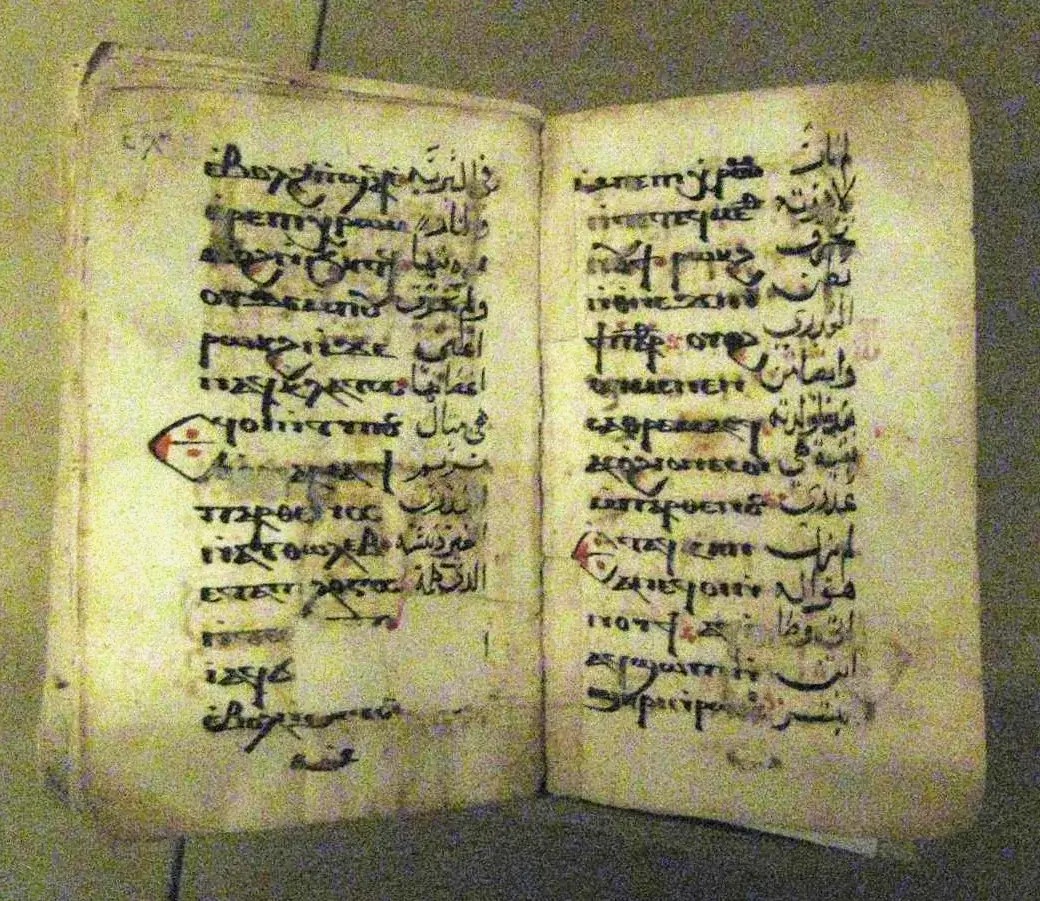
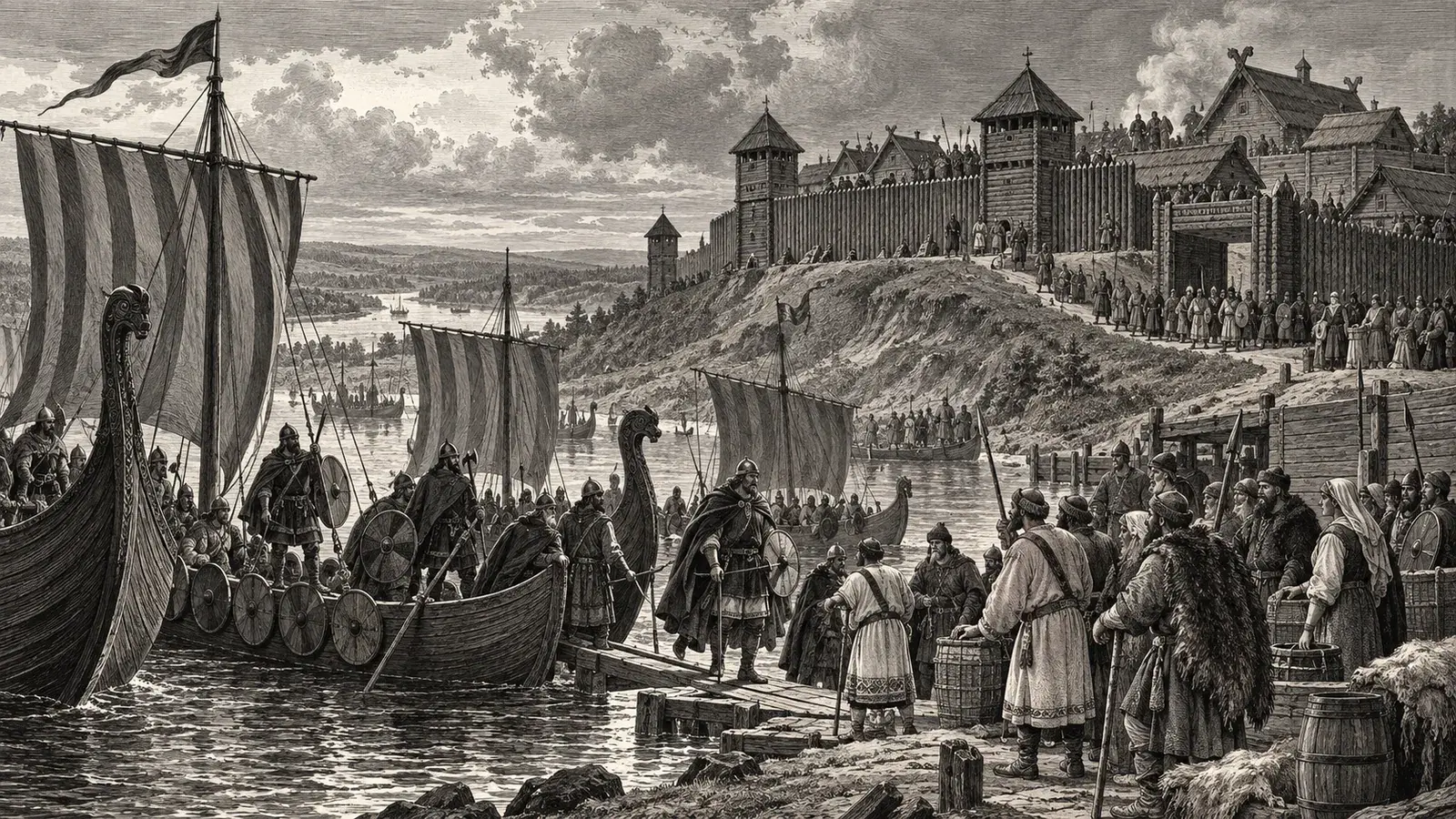
The main source for Cerdic's life is the Anglo-Saxon Chronicles — a series of manuscripts first written in the late 9th century under King Alfred the Great. Scribes continued adding entries for centuries, and the Chronicles cover British history from 1 BCE all the way to 1154. The story they tell about Cerdic is fairly simple. In 495, he arrived in Hampshire with his son Cynric in five ships and immediately fought the Britons — and won. He set up a base and kept campaigning. By 519 he was crowned the first King of the West Saxons. In 530 he conquered the Isle of Wight. He died in 534, and his son Cynric took over. That's basically it. The Chronicles give Cerdic maybe eight or nine total lines spread across all the years they cover. No physical descriptions, no explanations of where he came from, no real sense of who he was as a person. Just brief entries — year, event, done. Later writers looked at those eight or nine lines and decided more needed to be said. Some claimed Cerdic fought King Arthur. Some said Arthur was Cerdic's father. Some said they were enemies. Some said Arthur and Cerdic were the same person entirely. The reason there are so many different versions of Cerdic's story is mostly because the original source left so much space to fill.
The Problem With the Sources
Even those eight or nine lines in the Chronicles come with problems. For starters, the dating system used by medieval scribes was not consistent. Some counted the new year as starting at Christmas. Others started it at Easter. So an entry listed as 519 might actually describe events from 518 or 520. Historians have basically agreed to accept certain dates as probably correct and work from there — knowing the actual dates might be slightly off. The bigger problem is that historians have found evidence that the Cerdic story in the Chronicles was shaped on purpose. Historian John Morris pointed out that the early Wessex entries were deliberately put together by 9th-century scholars to serve political goals of their own time. The Wessex kings of the 800s needed a respected founder to trace their lineage to. So the story was constructed to make Cerdic fill that role — and his family tree was built in ways that, as Morris described it, gave some of his supposed descendants two or three different fathers depending on which version you read. Historian Roger Collins raised another problem: the place names in Cerdic's story are suspicious. He lands at a place called Cerdic's-ore and fights at Cerdic's-ley. Collins thinks those place names probably already existed and the story of Cerdic was invented afterward to explain them. In other words, instead of a place being named after a person, a person was created to explain why a place had that name. That's a very different situation — and it means the geographic details of Cerdic's story might not be historical at all.
The Anglo-Saxon Chronicles were first written under King Alfred the Great in the late 9th century. They are the main source for Cerdic's story — but historians have identified major problems with their reliability, including inconsistent dating, political bias, and invented genealogies.
Was Cerdic British or Saxon?
Here is one of the most interesting problems in the whole story: Cerdic has a British name. The Chronicles present him as the founder of the Kingdom of the West Saxons — a Saxon king. But multiple historians across different time periods have pointed out that the name Cerdic is Welsh in origin, not Saxon. It closely resembles the Welsh name Ceredig and a character called Ceretic who appears in the history written by a monk named Nennius in the 9th century. In Nennius's account, a man called Ceretic worked as an interpreter between Vortigern — the King of the Britons — and Hengist, the Saxon military leader. Ceretic was the only person in the room who could speak both British and Saxon. He made their alliance possible. Some historians argue that this Ceretic and Cerdic the founder of Wessex were the same person. Geoffrey of Monmouth, another medieval writer, actually mentions Cerdic by name as an ally of both Vortigern and Hengist, saying he arrived with hundreds of ships and helped Vortigern defeat his enemies. Put this together and one theory takes shape. Cerdic was a British earl who was fluent in Saxon. He served as interpreter and military ally for Vortigern and Hengist. At some point he left for Brittany — a region of France where many British people had relocated. He built a Saxon force there, came back to Britain in 495, and used his existing reputation in the region to establish his kingdom quickly. This would explain why his victories between 495 and 519 seem so fast and easy. He was not a stranger arriving from nowhere. He was someone the people of the region already knew.
Did Cerdic Fight King Arthur?
Multiple later writers claimed that Cerdic and King Arthur fought each other. The 1862 history called The Manual of Dates states that Cerdic fought the renowned King Arthur in 520. Some scholars suggest the battle at Cerdic's-ley in 527 was also a clash between the two. There's a logical problem with this, though. The monk Nennius, writing in 828, says Arthur never lost any of his famous twelve battles. If Arthur defeated Cerdic in 520 or 527, why did he then let Cerdic keep ruling Wessex? Why did Cerdic go on to conquer the Isle of Wight in 530 in his own name and for his own glory? If Arthur had truly beaten him, none of that would have happened. The 2004 film King Arthur actually featured Cerdic as a major villain — a Saxon warlord played by Swedish actor Stellan Skarsgard who is defeated by Arthur at the Battle of Badon. But Cerdic is never mentioned in any account of the Battle of Badon. If he had actually been there, someone probably would have written it down. The film was promoted as historically accurate, but on this point it was not.
The connection between Cerdic of Wessex and King Arthur has been debated for centuries. Some sources say they fought each other. Others claim they were related. A pair of historians even argued the two were the same person — a theory that has interesting evidence but too many assumptions to be proven.
Were Cerdic and King Arthur the Same Person?
Two historians named John C. and Joseph W. Rudmin made an argument that sounds far-fetched at first but actually has some interesting pieces behind it: Cerdic and King Arthur were the same person. Here is their basic reasoning. Around the year 500, the historical record shows someone ruling south-central Britain. The legends say Arthur ruled south-central Britain around 500. The records say Cerdic ruled south-central Britain around 500. If both men controlled the same territory at the same time, maybe they were one man whose story got told in two very different ways. The Rudmins also pointed out a list of specific similarities. The name Arthur means strong arm in some interpretations — and the Welsh name Vreichvras, which some scholars connect to Cerdic, also means strong arm. Both Arthur and Cerdic are associated with Winchester. Arthur marries Guinevere of Cornwall in the legends. In some accounts, Cerdic marries a woman named Guignier of Cornwall. Arthur is an illegitimate son. Cerdic, in some accounts, is also described as illegitimate. The Rudmins admitted their own theory makes too many assumptions to meet strict historical standards. And one major problem stands out: the Welsh figure Caradoc Vreichvras, who they link to both Cerdic and Arthur, is not identified as king in Welsh legend. He's known as a knight who served under Arthur — not as Arthur himself. That's a significant difference that their theory never fully gets around. Still, the overlap between Cerdic's story and Arthur's legend — same region, same time period, similar personal details in some sources — is real enough that the debate keeps going.
What We Actually Know About Cerdic
After all the debate, here is what can actually be said about Cerdic with reasonable confidence. He existed. There was a real person who founded the Kingdom of Wessex around 519. Later generations considered him important enough to build entire royal genealogies around him. The kingdom he built became the foundation of England. That much is generally accepted. He had a British name in a supposedly Saxon kingdom. This strongly suggests he was either British himself or had deep British connections — possibly as the interpreter Ceretic, possibly as the British earl who returned from Brittany with a Saxon army. The detailed story of his life was either never recorded or was heavily shaped later. The place names in his story look like they came before the man, not after. The family tree connecting him to later Saxon kings was patched together by 9th-century writers who needed a convenient origin story. The dates in his story are approximate at best. His legend got tangled up with King Arthur's stories in ways that nobody has been able to fully sort out, and maybe never will. Historian John Morris put it clearly: Cerdic had a British name, no genuine Saxon ancestry anyone can trace, and was remembered as the ruler of the Winchester-Southampton area in the late 5th century — a ruler who commanded Saxon soldiers and fought against British armies. He was probably British, probably powerful, probably real. Everything else was added by later writers with their own reasons for telling the story a certain way. The Cerdic of history is mostly the Cerdic those later writers created. The real one is still somewhere underneath.