When historians talk about the Germanic peoples, they are not talking about one country or one united group. Instead, they mean many different tribes who lived in northern and central Europe long ago, during ancient times and the early Middle Ages. These tribes lived in areas that today include Germany, Denmark, southern Scandinavia, Poland, and parts of eastern Europe such as Ukraine and Moldova. What connected them was not a shared government or a single ruler, but language. Many of these tribes spoke related languages that scholars now call Germanic languages. Even with this shared language, most groups thought of themselves as separate tribes with their own leaders and traditions.
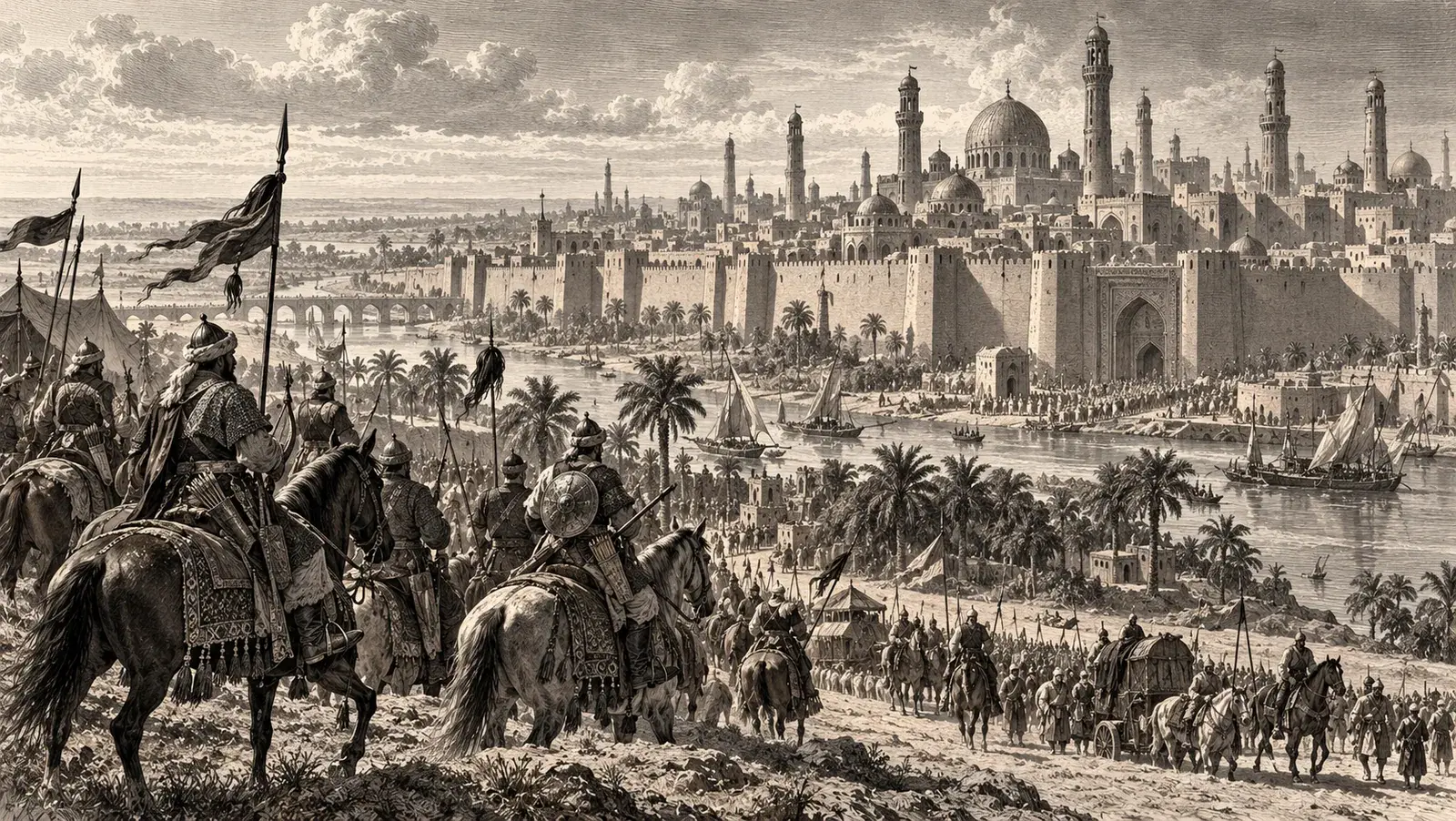
An artistic reconstruction of early Germanic tribal lands along the edge of the Roman world.
Origins of the Name
The very word “Germanic” is misleading if taken at face value. It was not a name these peoples used for themselves. The term comes from Roman writers, who used “Germani” to describe certain groups living near the Rhine River. Over time, Roman authors expanded the label to include many different tribes spread across a vast area. Because of this, modern historians are careful with the language they use. Calling these communities “ancient Germans” suggests a direct connection to modern Germany, which did not exist in any meaningful sense at the time. These tribes lived centuries before modern nation-states and had no concept of belonging to a single Germanic people. Roman authors also spoke of a region they called Germania. In their imagination, this land lay east of the Rhine and stretched north into Scandinavia, east toward the Vistula River, and south toward the Danube. Yet Germania was never a real country with fixed borders. It was a loose geographical idea, filled with forests, rivers, and independent tribes who owed no loyalty to one another. Some Germanic-speaking groups lived far beyond Roman influence altogether. Among them were the Goths, who would later become central players in Roman history.
Language, Culture, and Identity
Even today, scholars debate what it truly means to call a group “Germanic.” Linguists often define Germanness through language: if a people spoke a Germanic language, they fall into that category. Historians and archaeologists tend to be more cautious. Shared language does not automatically create a shared identity. Neighboring tribes might speak related languages and yet see each other as enemies or strangers. For this reason, many scholars argue that the idea of a single Germanic identity was shaped long after antiquity, influenced heavily by Roman writers and much later by modern political ideas. Despite these differences, there were some shared cultural patterns. Archaeologists often associate early Germanic-speaking peoples with what is known as the Jastorf culture, which developed in parts of northern Germany and southern Denmark several centuries before Roman contact. During this period, Germanic languages began to develop distinctive sounds that separated them from Celtic and Italic languages. As these peoples expanded across Europe, they encountered Celts, Slavs, and many other groups. Trade, intermarriage, conflict, and migration ensured that cultural influence flowed in all directions.
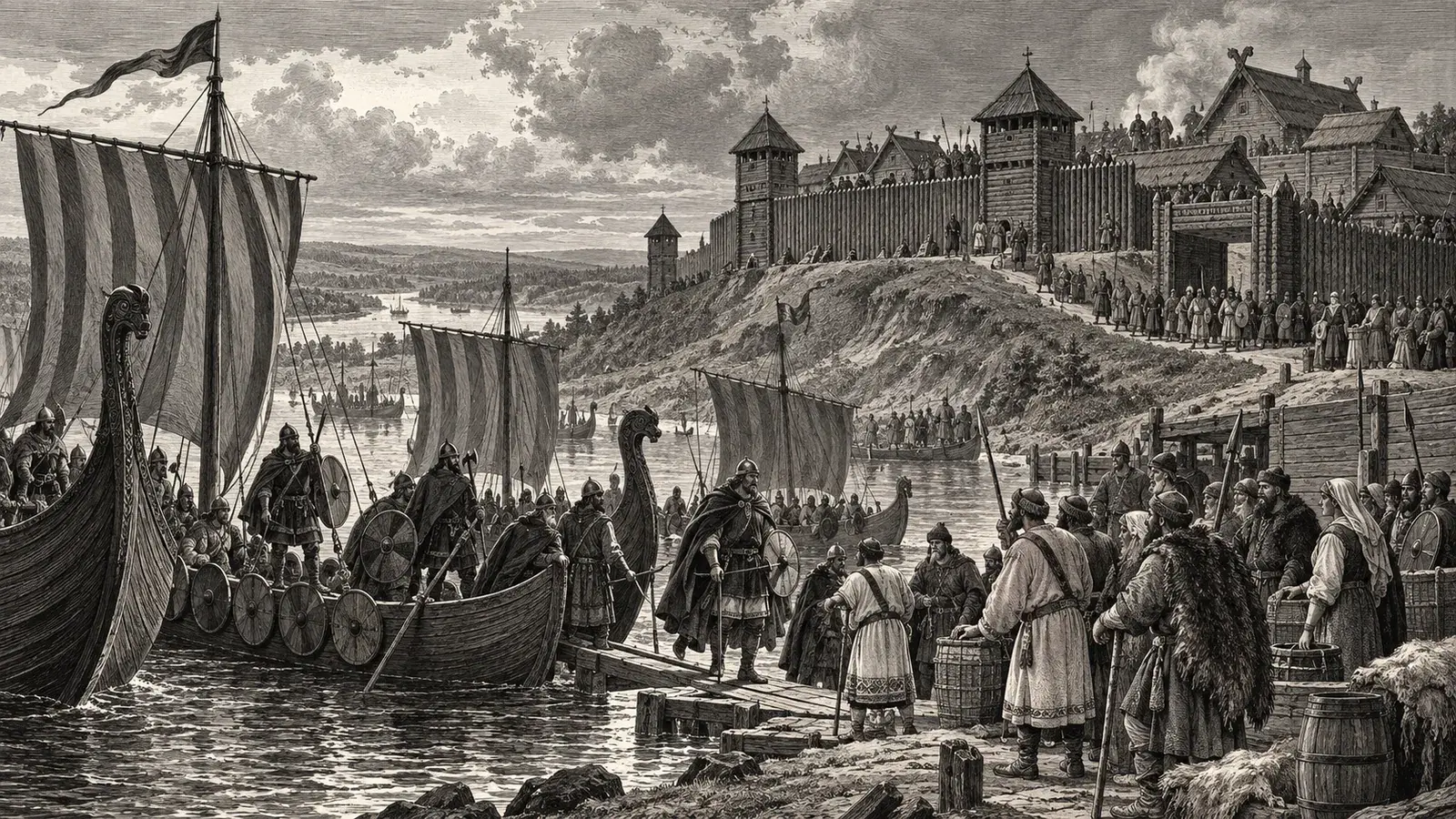
Archaeology shows that early Germanic societies were settled, skilled, and deeply rooted in local traditions.
Rome and the Germanic Tribes:
Our earliest detailed written descriptions of the Germanic tribes come from Roman authors. Julius Caesar, writing in the first century BCE, described peoples he called the Germani living beyond the Rhine. He portrayed them as harder, poorer, and more dangerous than the Celts. This image served a political purpose. By emphasizing their toughness, Caesar could justify why Roman expansion should stop at the Rhine. Later writers, most famously Tacitus, expanded on these descriptions. Tacitus often contrasted what he saw as Germanic bravery and moral simplicity with what he believed was the corruption of Roman society. His work tells us as much about Roman fears and ideals as it does about the people he described. Rome did not simply observe Germania from afar. Under Emperor Augustus, Roman armies pushed deep into the region and reached as far as the Elbe River. This expansion ended abruptly in the year 9 CE, when a Roman force was ambushed and destroyed in the Battle of the Teutoburg Forest. The defeat shocked Rome and permanently changed imperial strategy. Afterward, Rome abandoned plans to fully conquer Germania. Instead, it focused on securing its borders along the Rhine and Danube with forts, roads, and watchtowers known collectively as the limes. Even without direct conquest, Roman influence remained strong. Roman officials supported certain tribal leaders, encouraged rivalries between groups, and worked to prevent any single power from dominating the region. Conflicts still erupted. In the second century, Rome fought long wars against groups such as the Marcomanni and Quadi. Out of this period of pressure and conflict, new collective names began to appear. Groups like the Franks, Saxons, Alemanni, and Goths were not ancient tribes in a timeless sense. They were alliances, formed when smaller communities banded together in response to war, migration, and Roman involvement.
Society Beyond the Roman Stereotypes
For a long time, Roman writers portrayed Germanic life as simple and primitive. Archaeology paints a more complex picture. Excavations reveal settled farming communities, active trade networks, skilled metalworkers, and clearly defined social roles. These societies were not chaotic or disorganized. Power rested with kings and chieftains, but their authority depended on the support of warriors and influential families. Law and order were maintained through tradition rather than written codes. Important decisions were made in public assemblies often referred to as things, where free men gathered to debate and judge disputes. Religion was deeply woven into daily life. The gods worshipped varied from region to region, but figures later known as Odin and Thor appear in many traditions. Long before the spread of Latin literacy, some Germanic peoples used runes as a writing system, carving them onto stone, wood, and metal.
Migration Period
A major change began in the late fourth century, around the year 375. At this time, a powerful group called the Huns started moving west from the open lands of Central Asia. Their movement caused trouble across Europe. Peoples who lived in the path of the Huns had to run away, fight back, or give in. One of the first groups affected were the Goths, who lived in what is now Ukraine. Their king, Ermanaric, tried to keep his people united, but after he died, the pressure became too strong. By the year 376, large groups of Goths reached the Danube River and asked the Roman Empire for safety. The Roman emperor Valens allowed them to cross into Roman land. Soon, however, things went wrong. Roman officials treated the Goths badly and often failed to provide enough food. Many Goths began to starve and grew angry. They rebelled, and in 378 the Roman army was badly defeated at the Battle of Adrianople. Emperor Valens was killed, and people realized that the Roman army was no longer unbeatable. In 382, Rome made peace with the Goths and allowed them to live inside the empire with a lot of freedom. These Goths later became known as the Visigoths. Peace did not last long. Under a strong leader named Alaric, the Visigoths moved into Italy. In 410, they entered the city of Rome and looted it. Although Rome was not destroyed, the event shocked the entire empire. Rome had not been captured by an enemy in almost eight hundred years.
The arrival of the Huns triggered large-scale migrations across Europe.
Reordering of Europe
The early fifth century saw movement on an even larger scale. Groups such as the Vandals, Suebi, Alans, and Burgundians crossed the Rhine into Roman territory. Some faced resistance; others moved almost unopposed. Many eventually settled in Spain, while the Burgundians established themselves near the Rhine. The Visigoths, now Roman allies, were settled in southern Gaul, ruling from cities like Toulouse. Meanwhile, the Huns built a vast and unstable empire north of the Danube. Their most famous leader, Attila, used warfare and diplomacy to extract tribute from both halves of the Roman Empire. In 451, he invaded Gaul. A Roman general named Aetius responded by forming a remarkable coalition that included former enemies such as the Visigoths and the Franks. Together, they halted Attila’s advance. When Attila died in 453, his empire collapsed almost immediately, and the peoples once ruled by the Huns fought for independence. Elsewhere, Germanic warriors known as Saxons were settling in Britain. Originally invited as defenders, they soon carved out territories of their own. Over time, they laid the foundations for the kingdoms that would become early England.
The End of Roman Rule in the West
By the late fifth century, the Western Roman Empire was no longer able to sustain itself. In 476, a Germanic commander named Odoacer removed the last western emperor and ruled Italy in his place. Soon after, another Gothic leader, Theodoric, invaded Italy with the support of the Eastern Roman Empire. He defeated Odoacer and established a Gothic kingdom that attempted to preserve Roman administration while ruling over a mixed population.
By the late fifth century, Germanic kingdoms had replaced Roman rule in the West.
As the sixth century began, the political map of Europe had been transformed. Older tribal names faded, and stronger kingdoms emerged. The Franks, under leaders such as Clovis, united large areas of Gaul and western Germany. Other groups were absorbed or defeated. In the east, the Eastern Roman Empire briefly reasserted control under Emperor Justinian, destroying the Vandal kingdom in North Africa and the Ostrogothic kingdom in Italy. Yet these reconquests were temporary. In 568, the Lombards moved into Italy, taking much of the peninsula. This invasion is often seen as the final chapter of the Migration Period. By then, the ancient Roman world had given way to something new. Germanic kingdoms ruled former Roman lands, cultures had blended, and Europe had entered the early Middle Ages, shaped by centuries of movement, conflict, and adaptation.