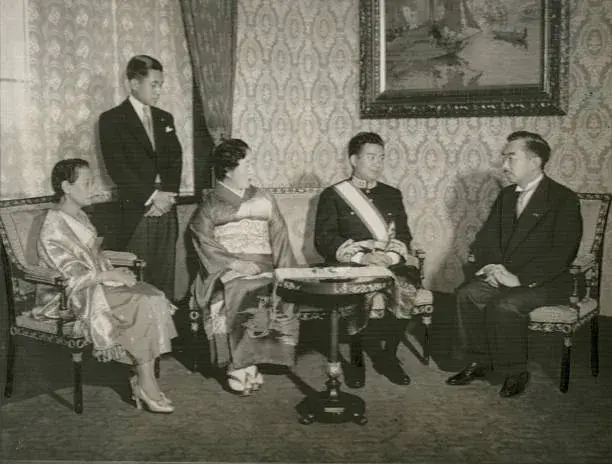
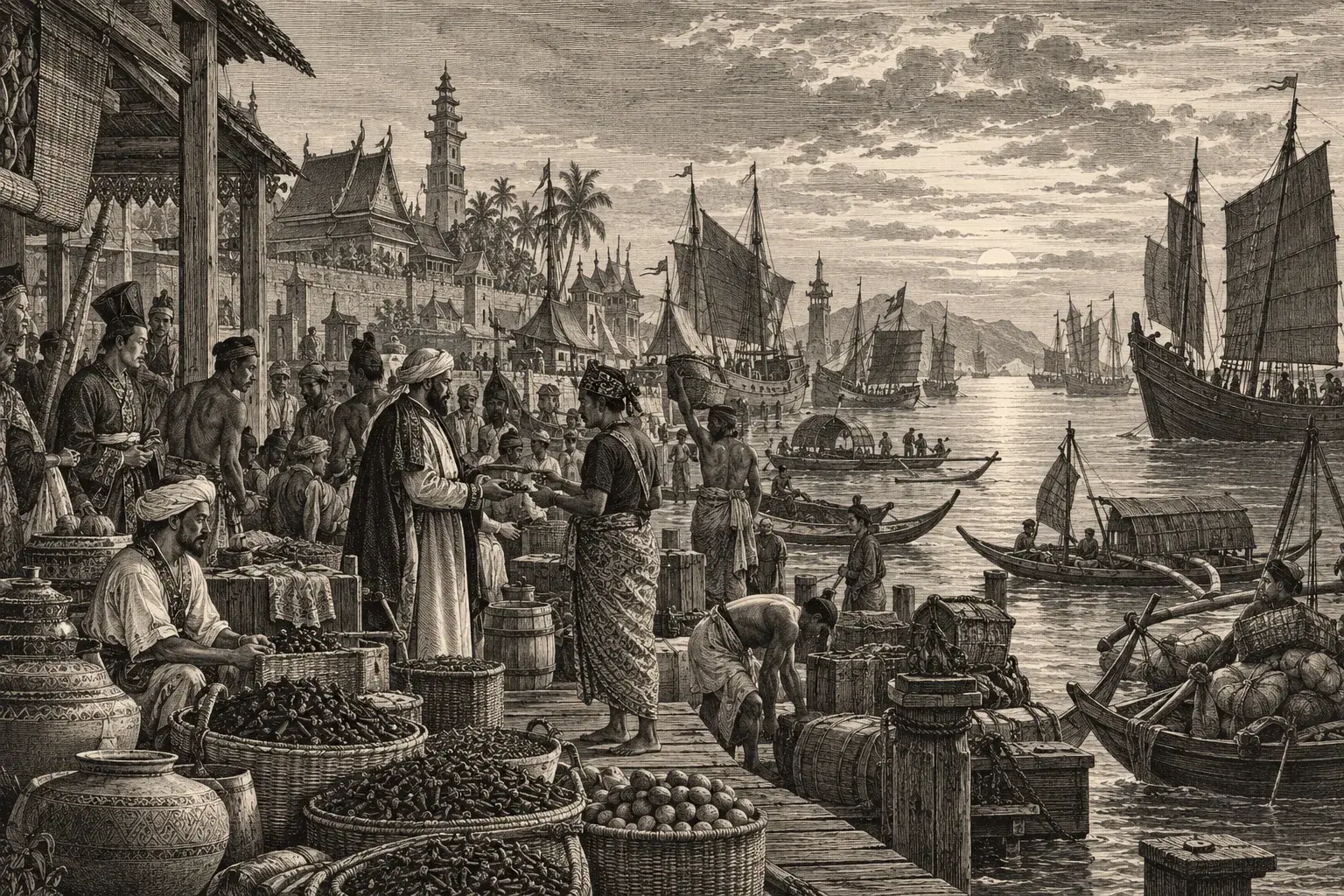
The name changed in 1935. Reza Shah, the founder of the Pahlavi dynasty, asked foreign governments to stop calling the country Persia and start calling it Iran. The request was granted, the terminology shifted, and the word Persia became historical — the name for what the place used to be rather than what it is. But the continuity underneath the name change is the point. Iran is Persia. The people who built the Achaemenid Empire and the people who live in Tehran today are separated by two and a half thousand years of history, but they are part of the same continuous civilization, one of the oldest on earth. Humans have been in this territory for 800,000 years. Cities have been here for six thousand years. The Achaemenid Empire — the first great world empire, the one that Cyrus the Great built and Darius expanded and Alexander finally destroyed — was administering provinces from the Aegean to the Indus Valley while most of Europe was still living in small farming villages. What that history produces is a country with a very long and not particularly comfortable memory. Iran has been conquered multiple times — by Greeks, by Arabs, by Mongols, by Timur — and each time has eventually absorbed, reworked, or outlasted the conquerors. The Islamic Republic established in 1979 is the latest political form a civilization has taken that has been forming and reforming for millennia. Understanding what Iran is now requires understanding at least some of what it has been.
Persepolis — the great ceremonial capital built by Darius the Great and expanded by Xerxes — was burned by Alexander the Great in 330 BCE and has been a World Heritage Site and a symbol of Iranian national identity ever since.
Before the Persians: The Civilizations That Came First
The earliest farming in what is now Iran dates to around 12,000 years ago. The site of Chogha Golan, in the Zagros Mountains, shows early domestication of emmer wheat. Ganj Dareh, nearby, contains the earliest known evidence of domesticated goats — roughly 10,000 years ago. These are not minor footnotes. Wheat and goats are two of the foundational agricultural species that allowed human civilization to develop at scale. The Iranian plateau was one of the places where the transition from hunter-gatherer to farmer happened, and the downstream effects of that transition shaped the entire ancient Near East. The city of Susa — which would later become a capital of the Elamite civilization and then a royal city of the Achaemenid Empire — was first settled between 4400 and 4200 BCE. The Proto-Elamite script, which predates cuneiform and is one of the earliest writing systems ever developed, appeared in the early third millennium BCE. Iran was producing writing before most of the world had cities. The Medes were the first Iranian people to build a unified state. In 612 BCE, the Median king Cyaxares allied with the Babylonian king Nabopolassar and destroyed Nineveh, the capital of the Assyrian Empire — the dominant military power of the region. That alliance ended Assyrian dominance and reshuffled the entire ancient Near East. The Medes controlled a large chunk of the Iranian plateau and adjacent regions. They were the dominant Iranian power until one of their own created something much larger.
The Achaemenid Empire: The First World Superpower
Cyrus the Great overthrew the Median king Astyages around 550 BCE and founded the Achaemenid Empire. What followed, over the next three decades of his reign, was one of the most rapid territorial expansions in history. He conquered Lydia — taking the famously wealthy king Croesus in the process. He took Babylon without a destructive siege, entering the city peacefully and adopting the title King of Babylon. He extended Persian rule from the Aegean coast of modern Turkey to the edges of what is now Pakistan. Cyrus's son Cambyses II then conquered Egypt, absorbing the last major independent power in the ancient Near East. By the time Darius the Great consolidated his rule after a period of succession struggles, the Achaemenid Empire was the largest state the world had ever seen. Darius built. He completed Persepolis, the great ceremonial capital. He developed the Royal Road — a highway running from Susa to Sardis with relay stations that allowed messages to travel at unprecedented speed. He organized the empire into provinces called satrapies, each administered by a governor who answered to the center. He also launched military campaigns into Greece that produced two of the most famous battles in ancient history: Marathon in 490 BCE, which Athens won, and the campaign of 480 BCE under his son Xerxes, which initially overran Greece before being reversed at Plataea and Salamis. Alexander the Great ended it. Between 334 and 330 BCE, he defeated Darius III at three major battles — Granicus, Issus, and Gaugamela — and swept through Persian territory with a speed that left the empire's administrative apparatus intact but leaderless. He burned Persepolis. Darius III was murdered by one of his own nobles. The Achaemenid line ended.
The Achaemenid Empire at its height stretched from the Aegean coast of modern Turkey to the Indus Valley — the largest empire the world had seen, governed through a provincial system that later empires consciously borrowed from.
Greeks, Parthians, and Sassanids: Four Centuries of Recovery
After Alexander died and his empire split, the Seleucid dynasty — one of his generals' successors — controlled Iran for about a century. Greek became the language of administration. Greek culture mixed with Persian tradition in ways that produced the distinctive Hellenistic art of the period. Then, around the middle of the third century BCE, an Iranian group called the Parni — led by a man named Arsaces — began carving out an independent territory in the northeast. This was the beginning of the Parthian Empire. The Parthians spent the better part of a century slowly expanding, eventually taking Babylon in 142 BCE and confining the Seleucids to a rump state in Syria. Their empire lasted five centuries. They fought Rome to a standstill multiple times — their cavalry defeated Crassus at Carrhae in 53 BCE and killed him in the process, one of the most stunning Roman military disasters of the republican period. They developed a style of mounted archery — the Parthian shot, firing backward while retreating at full gallop — that entered military history as one of the most effective light cavalry tactics ever devised. Civil wars eventually weakened Parthian rule. In 224 CE, a regional ruler named Ardashir I defeated the last Parthian king and founded the Sassanid Empire. The Sassanids were more aggressively Persian in their cultural orientation than the Parthians had been. They revived Zoroastrianism as a state religion and as a unifying ideology. They built elaborate court culture, supported Persian language and literature, and fought the Byzantine Empire — Rome's successor in the east — in a series of wars that consumed both powers for generations. The most dramatic Sassanid moment came under Khosrow II, whose forces overran Syria, Egypt, and Anatolia early in the seventh century CE — pushing the Byzantine Empire to its breaking point. The Byzantines eventually recovered and counterattacked, and by the 620s the two empires had fought each other into exhaustion. Neither was ready for what came next.
The Arab Conquest and What Iran Did With It
Arab armies carrying the new religion of Islam swept out of the Arabian Peninsula in the 630s and 640s. The Sassanid Empire, weakened by decades of war with Byzantium and by internal political instability, collapsed faster than anyone had predicted. By 654 CE, the Rashidun Caliphate had absorbed what had been one of the great empires of the ancient world. What happened next is one of the more interesting cultural dynamics in history. Iran was conquered. But the Persians were not simply absorbed into Arab civilization. Instead, they absorbed the conquerors — or at least reshaped the civilization being built around them. Arab governors adopted Persian administrative customs. Persian scribes and bureaucrats ran the caliphate's paperwork. The Persian language, though temporarily subordinated, survived and eventually reasserted itself. The conversion to Islam was not instantaneous. Historians estimate the Muslim population of Iran was around forty percent by the mid-ninth century and close to ninety percent by the end of the eleventh. The process took centuries. And throughout it, Persians were not passive recipients of a foreign culture. They shaped the Islamic civilization being built around them, contributing to the literature, philosophy, mathematics, medicine, and astronomy of the Islamic Golden Age in ways that made Persian culture inseparable from that achievement. By the ninth and tenth centuries, independent Iranian dynasties were reasserting power. The Samanids, based in Bukhara, made Persian the primary literary language of their court and sponsored works like Ferdowsi's Shahnameh — the Book of Kings, the great Persian national epic that preserved the pre-Islamic mythological tradition in Islamic-era form. The Iranian Intermezzo, as historians call this period, saw the gradual ending of Arab political dominance over Iran while the religious and cultural transformation to Islam continued.
The Mongols: The Catastrophe That Defined Everything After It
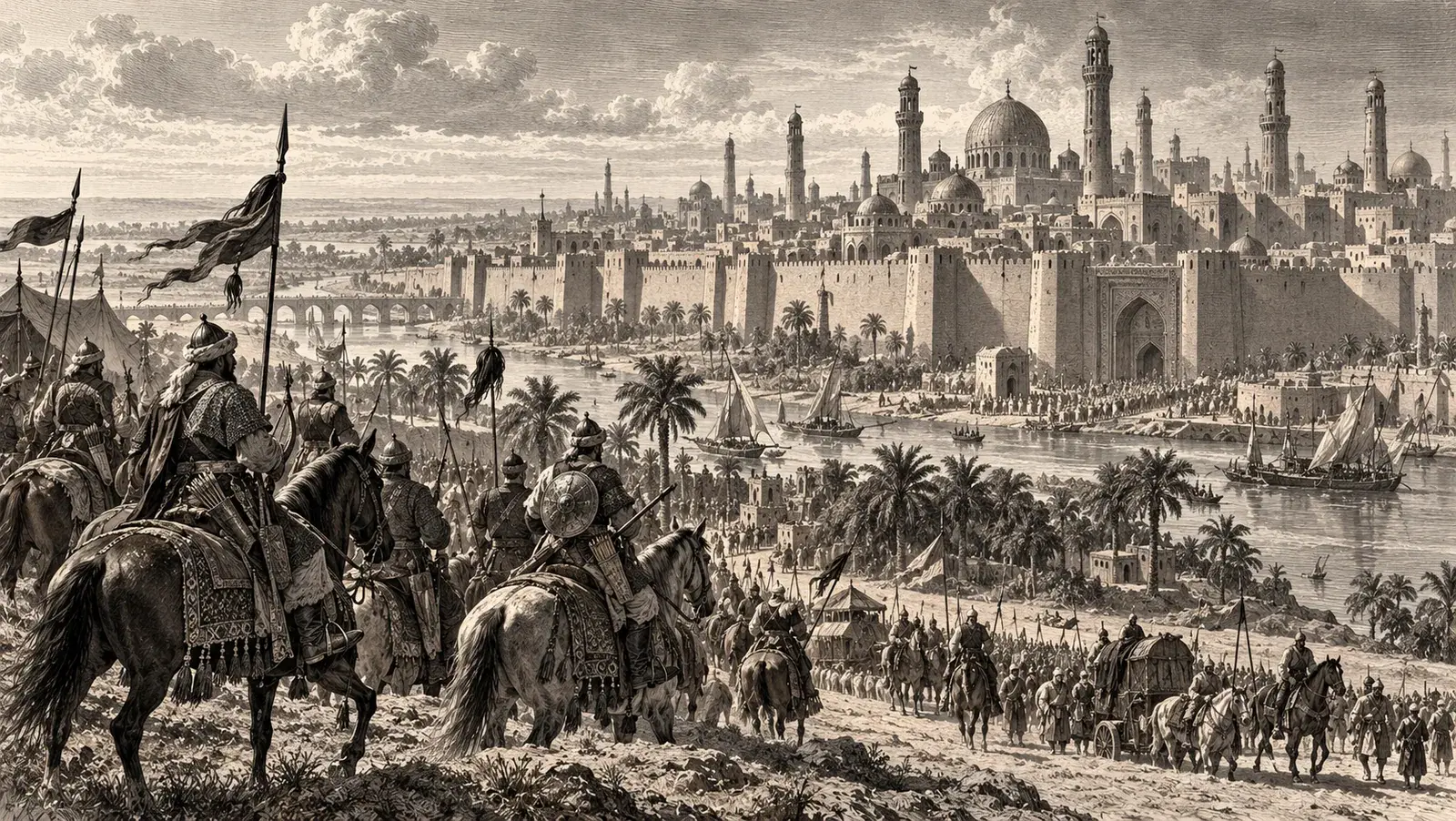
The Mongol invasions of the thirteenth century were the worst thing that happened to Iran in recorded history, and the competition for that title is not light. In 1220, Bukhara fell. Samarkand fell. The armies moved through the northeast destroying cities and killing populations at a scale that still appears in the historical record as one of the great demographic catastrophes of the medieval period. Herat, Tus, Nishapur — razed. The irrigation systems that had allowed agriculture to survive in arid regions for millennia were deliberately destroyed, turning productive land into desert. In 1258, the Mongols sacked Baghdad and killed the Abbasid caliph — ending the institution of the caliphate that had been the symbolic center of Sunni Islam for six centuries. The mid-fourteenth century then brought the Black Death, which killed approximately thirty percent of Iran's population. Timur — Tamerlane — followed in the late fourteenth century. He captured Isfahan in 1387 and ordered a massacre that killed approximately 70,000 people. Towers of skulls were built outside the city, a Timurid habit across multiple campaigns. Iran's population in the early fifteenth century was a fraction of what it had been two centuries before. And yet. Cultural production continued. Iran under the Ilkhanids — the Mongol dynasty that ruled after the conquest — experienced what historians describe as a cultural renaissance. Ghazan Khan converted to Islam. Persian became the court language. Iranian arts, architecture, and literature recovered. The Timurid period produced remarkable achievements in miniature painting and architecture. The civilization survived what should have destroyed it.
Isfahan under the Safavids became one of the most beautiful cities in the world — its great central square, bridges, and mosques representing the cultural peak of a dynasty that reunified Iran and established Shia Islam as its official religion.
The Safavids: The Dynasty That Made Iran Shia
The Safavid dynasty, founded by Ismail I in 1501, made one decision that shaped the next five hundred years of Iranian history and continues to shape it today: they established Twelver Shia Islam as the official state religion. Most of the Muslim world at that point was Sunni. The Ottomans to the west were Sunni. The Mughals to the east were Sunni. Ismail's decision to enforce Shia Islam in Iran created a religious boundary that became a political one, separating Iran from its neighbors in a way that has never been fully bridged. The conversion was not entirely voluntary — Ismail used force where persuasion was insufficient — but the result over generations was a genuinely Shia Iran. The Safavids also built a state. They reunified Iran after centuries of fragmentation. They built Isfahan into one of the most beautiful cities in the world — the great Naqsh-e Jahan Square, the Sheikh Lotfollah mosque, the Ali Qapu palace. They developed a bureaucratic system with checks and balances designed not to equalize power but to concentrate it in the shah while preventing anyone below him from accumulating enough independent authority to threaten him. The French merchant and diplomat Jean Chardin, who visited in the seventeenth century, described the Safavid shahs as ruling with an iron fist in a thoroughly despotic manner. He did not mean this as entirely criticism — the system worked, for a time. The Safavids collapsed in 1722 when an Afghan army took Isfahan. What followed was decades of instability, rival dynasties, and eventually the emergence of a military genius named Nader Shah, who built an empire that briefly stretched from the Caucasus to northwestern India. He invaded Mughal India, sacked Delhi, and came home with the Peacock Throne and the Koh-i-Noor diamond. Then he was assassinated, his empire dissolved, and Iran went back into fragmentation until the Qajars consolidated power at the end of the eighteenth century.
The Nineteenth Century: Losing Ground to Russia and Britain
The Qajar dynasty that ruled Iran through the nineteenth century had the misfortune of governing at exactly the moment when two expansionist empires — Russia moving south and Britain protecting its Indian interests — were using Iran as a buffer zone and squeezing it from both sides. Iran lost significant territories in the Caucasus to Russia through two wars — the Treaty of Gulistan in 1813 and the Treaty of Turkmenchay in 1828. These are not small losses in Iranian national memory. The territories lost included what is now Azerbaijan, Armenia, and parts of Georgia. The borders drawn in those treaties still define the northern edge of Iran. Meanwhile, poor governance combined with drought and famine killed a significant portion of the population. The Great Persian Famine of 1870 to 1871 is estimated to have killed somewhere between several hundred thousand and four million people — the uncertainty in the estimate reflects how badly documented the catastrophe was, which is itself a measure of the state's inadequacy. The Persian Constitutional Revolution of 1905 to 1911 produced Iran's first parliament — the Majles — and a constitutional government. It was a genuine popular uprising that involved merchants, clerics, intellectuals, and ordinary people who were fed up with Qajar corruption and foreign interference. The revolution was eventually undermined by Russian military intervention in the north and British indifference in the south, but it established a precedent: Iranians had fought for and briefly achieved constitutional government, and that fight was in the historical record for the next generation to know about.
The Pahlavis, Mosaddegh, and the 1953 Coup
Reza Shah came to power through a 1921 coup and ruled until 1941, when the British and Soviets invaded Iran — officially to secure supply lines to the Soviet Union during World War II — and forced him to abdicate. His son Mohammad Reza Pahlavi took the throne at twenty-one years old, initially a young and not particularly powerful king operating under Allied occupation. The defining crisis of his reign came in 1951. Mohammad Mosaddegh, elected prime minister with enormous popular support, pushed through the nationalization of the Anglo-Iranian Oil Company — the British-owned company that had been extracting Iranian oil for decades while returning relatively little to Iran. Britain imposed an economic blockade. The situation deteriorated. In 1953, American and British intelligence services organized a coup — Operation Ajax for the CIA, Operation Boot for MI6 — that removed Mosaddegh from power. He was arrested and convicted of treason. His foreign minister was executed. Mosaddegh himself spent the rest of his life under house arrest. The coup restored the Shah to full power with American backing. It also created a political wound that has not healed. The 1953 coup is a central reference point in Iranian political consciousness — evidence, for many Iranians, that Western powers will remove elected governments that threaten their economic interests. When the 1979 revolution happened, the memory of 1953 was one of the things driving it. The Shah's subsequent rule modernized Iran in certain ways — the White Revolution of the 1960s brought land reform, literacy campaigns, and expanded rights for women. But it did so through an authoritarian apparatus that used the secret police SAVAK to suppress opposition. By 1978, the combination of economic inequality, political repression, and resentment of Western influence had produced a revolutionary situation that the Shah could not control.
The 1979 Iranian Revolution brought millions into the streets — a coalition of leftists, nationalists, and Islamists united by opposition to the Shah but divided about what should replace him. Khomeini's faction won that internal argument.
The 1979 Revolution and What It Actually Was
The Iranian Revolution of 1979 was not simply an Islamist uprising. It was one of the largest popular revolutions of the twentieth century — involving over ten percent of the country's population in active protest at its peak, at a time when most revolutions struggle to mobilize even one percent. The protesters were not all Islamists. Many were leftists, nationalists, and secular democrats who shared nothing ideologically with Ayatollah Khomeini but who shared with him the desire to get rid of the Shah. Khomeini, returning from fourteen years of exile, was the one figure capable of unifying these factions under a single banner. After the Shah fled and the interim government collapsed, Khomeini's faction moved quickly and effectively to consolidate control. The referendum that followed produced a ninety-nine percent vote for an Islamic republic — a number that reflects both genuine popular enthusiasm for ending the monarchy and the absence of a meaningful alternative on the ballot. The hostage crisis followed almost immediately. In November 1979, Iranian students seized the U.S. embassy and held fifty-two American diplomats for 444 days. The crisis froze U.S.-Iranian relations in a posture of mutual hostility that has not fully thawed since. Then, in September 1980, Saddam Hussein's Iraq invaded, calculating that the revolutionary chaos had left Iran militarily vulnerable. The Iran-Iraq War ran for eight years. It killed roughly half a million people. Iraq used chemical weapons against Iranian troops and Kurdish civilians. Iran sent waves of infantry including very young fighters against entrenched Iraqi positions. The war ended in 1988 in a ceasefire that changed nothing on the ground — borders remained where they were, both countries were economically devastated, and the human cost was staggering. Khomeini described accepting the ceasefire as drinking poison. He died the following year.
The Islamic Republic: How the Government Actually Works
The Islamic Republic runs on a dual system that is unusual in the history of political organization. There are elected bodies — a president chosen by universal suffrage, a parliament of 290 members. And there are unelected bodies that hold ultimate authority over the elected ones. At the top is the Supreme Leader, the Rahbar. The current holder of this position — Mojtaba Khamenei, elected by the Assembly of Experts in March 2026 following the assassination of his father Ali Khamenei — controls the military, intelligence services, the judiciary, state media, and foreign policy. The president handles executive implementation and domestic affairs within constraints set by the Rahbar. The Guardian Council, twelve members all appointed by the Supreme Leader, can veto any legislation and disqualify any candidate for any elected office. Candidates for president, parliament, and the Assembly of Experts itself must be approved by the Guardian Council before they can run. The result is a system where elections happen but their outcomes are constrained before the vote occurs. Presidential candidates who pass the Guardian Council's screening are already within an acceptable range of opinion. Legislation that conflicts with the Rahbar's vision can be blocked. The Assembly of Experts, which theoretically has the power to dismiss the Supreme Leader, has never exercised that power in the Islamic Republic's history and several of its own members have said doing so would be illegal. Analysts describe two parallel systems operating within the state: a military-intelligence apparatus that controls the nuclear program, the regional proxy network, and internal repression, reporting directly to the Rahbar; and a diplomatic-political apparatus of ministers and presidents who speak to the outside world but have limited knowledge of what the first apparatus is actually doing.
The Nuclear Program and Escalating Conflict: 2018–2026
The 2015 nuclear deal — the Joint Comprehensive Plan of Action, negotiated between Iran, the United States, and five other major powers — was the closest thing to a diplomatic breakthrough in US-Iranian relations since 1979. Iran agreed to limit uranium enrichment and allow international inspections. The major powers agreed to ease economic sanctions. For roughly three years, the arrangement held. In 2018, the Trump administration withdrew from the deal and reimposed sanctions. Iran progressively reduced its compliance, then stopped observing limits altogether. By late 2023, Iran had uranium enriched to sixty percent fissile content — close to the ninety percent threshold for weapons-grade material. Some analysts already regarded Iran as a de facto nuclear power. The assassination of IRGC commander Qasem Soleimani by the United States in January 2020 — he was the second most powerful figure in Iran — further destabilized the relationship. Iran retaliated with ballistic missile strikes on American bases in Iraq, the largest such attack ever on American forces. Days later, Iran's own military shot down Ukraine International Airlines Flight 752 in the dark and confusion following the strike — killing all 176 people aboard. The government initially denied responsibility, then admitted it after international investigation made denial untenable. In 2024 and 2025, direct exchanges of strikes between Iran and Israel — which had been operating through proxies for decades — became explicit. Iran launched hundreds of drones and ballistic missiles at Israel in April 2024 in retaliation for an Israeli strike on its Damascus consulate. Israel struck Iranian military sites in response. The Twelve-Day War of June 2025 brought Israeli strikes on Iranian nuclear facilities and military leadership, followed by U.S. strikes on the same targets on 22 June 2025. On 28 February 2026, coordinated U.S. and Israeli strikes hit Iran at scale. That same day, Supreme Leader Ali Khamenei was killed in Israeli airstrikes targeting senior Iranian officials. His death was confirmed by the Iranian government on 1 March 2026. On 8 March, the Assembly of Experts elected his son Mojtaba Khamenei as the new Supreme Leader in what was described as a unanimous vote.
Beginning in December 2025, Iran saw its largest protests since 1979 — sparked by economic crisis and years of accumulated grievance. By January 2026, estimates suggested thousands of protesters had been killed as the government escalated its use of lethal force.
What Iran Is: Economy, Culture, and the Country Underneath the Headlines
None of the geopolitical crisis captures what Iran actually is for the 92 million people who live there. Iran is one of the world's major oil and gas powers — it holds ten percent of global oil reserves and fifteen percent of gas reserves, and the South Pars gas field it shares with Qatar is the largest natural gas field in the world. It is also a country where economic mismanagement, sanctions, corruption, and the IRGC's involvement in the economy have produced chronic inflation and shortages that fall heaviest on ordinary people. Iran manufactures cars — 1.188 million in 2023, making it the sixteenth largest car manufacturer in the world, ahead of the UK and Italy. It produces three-quarters of the world's handmade carpets. It exports caviar, pistachios, and saffron. Its scientists have cloned a sheep, published extensively in string theory, and produced the first woman to win the Fields Medal — the highest prize in mathematics. Maryam Mirzakhani won it in 2014. It is also a country where the internet is heavily filtered, where women face legal restrictions, where minorities face systematic discrimination, and where protest is met with lethal force. The Mahsa Amini protests that began in September 2022, after a young woman died in police custody following her arrest by the morality police, produced a wave of demonstrations that crossed ethnic and gender lines in ways that surprised observers. The slogan — Woman, Life, Freedom — became an international shorthand. The crackdown was severe. By 2025, the economic crisis had driven the largest protests since 1979, with demonstrations across multiple cities calling for the end of the Islamic Republic itself. By January 2026, estimates suggested at least 16,500 people had been killed in what was being called the 2026 Iran massacres. The country in the headlines — the nuclear program, the proxy wars, the Strait of Hormuz, the assassinations — is real. So is the country of Persepolis and Hafez and miniature painting and the world's best pistachios. Both of these are Iran, and neither one explains the other completely.
The Civilization That Keeps Surviving
Iran has 29 UNESCO World Heritage Sites — tenth in the world and first in the Middle East. Among them: Persepolis, the ruins of the Achaemenid ceremonial capital. Pasargadae, where the tomb of Cyrus the Great still stands. Chogha Zanbil, one of the best-preserved ziggurats outside Mesopotamia. The Behistun Inscription, where Darius the Great had his victories carved into a cliff face in three languages. The historic city of Yazd, where a Zoroastrian temple has maintained a sacred flame for over 1,500 years. The continuity represented by that list is not symbolic. It is literal. The flame burning in Yazd is the same tradition that Cyrus the Great's people honored. The Persian language that Ferdowsi used to write the Shahnameh a thousand years ago, after the Arab conquest was supposed to have ended it, is essentially the same language spoken in Tehran today. The poets Hafez and Rumi are still memorized, still quoted, still present in daily conversation in a way that has no parallel in most cultures. Governments come and go. The Achaemenids, the Parthians, the Sassanids, the Arab caliphate, the Mongols, the Safavids, the Qajars, the Pahlavis, the Islamic Republic — each has had its turn. The civilization underneath them has been damaged, disrupted, and reshaped by each transition, and has come through recognizably itself on the other side. What that means for whatever comes after the current government is not predictable. History does not guarantee anything. But a civilization that has survived Alexander, the Arab conquest, the Mongols, and Timur has demonstrated a durability that is worth taking seriously when thinking about what Iran might look like in another generation.