The relationship between Iran and Saudi Arabia has become one of the most important political conflicts in the modern Middle East. However, it is not a typical war where two armies meet on a single battlefield. Instead, the tension between them plays out across many different countries through politics, alliances, and armed groups.
For many years, both countries have tried to increase their power and influence in the region. They do this by supporting different governments, political groups, and militias. Because they usually avoid fighting each other directly, experts often call this kind of struggle a "proxy war." In a proxy war, powerful countries compete by backing different sides in other conflicts.
To understand how the conflict between these two countries started, we need to look back to an important moment in Middle Eastern history: the Iranian Revolution of 1979.
Map illustrating the geopolitical competition between Iran and Saudi Arabia across key Middle Eastern conflict zones.
Iranian Revolution of 1979
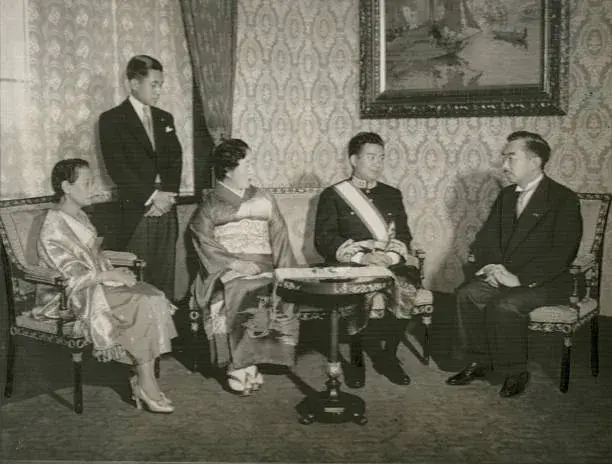
Before 1979, Iran and Saudi Arabia were not enemies. In fact, both governments were closely aligned with the United States during the Cold War and played important roles in maintaining stability in the Persian Gulf. Iran was ruled by Shah Mohammad Reza Pahlavi, a monarch whose government pursued strong ties with Western powers and promoted modernization at home. Saudi Arabia, governed by the House of Saud, also maintained a strategic partnership with Washington and shared concerns about Soviet influence in the region.
This balance collapsed dramatically in 1979 when the Iranian Revolution overthrew the Shah's monarchy. In its place emerged a new political system: the Islamic Republic of Iran, led by the cleric Ayatollah Ruhollah Khomeini. The revolution did more than change Iran's domestic politics. It introduced an ideological project that aimed to reshape politics across the Muslim world.
Khomeini and his supporters framed their revolution as an example for other societies, encouraging Islamic movements to challenge secular governments and monarchies. This message immediately alarmed many leaders in the region, particularly those who ruled hereditary monarchies.
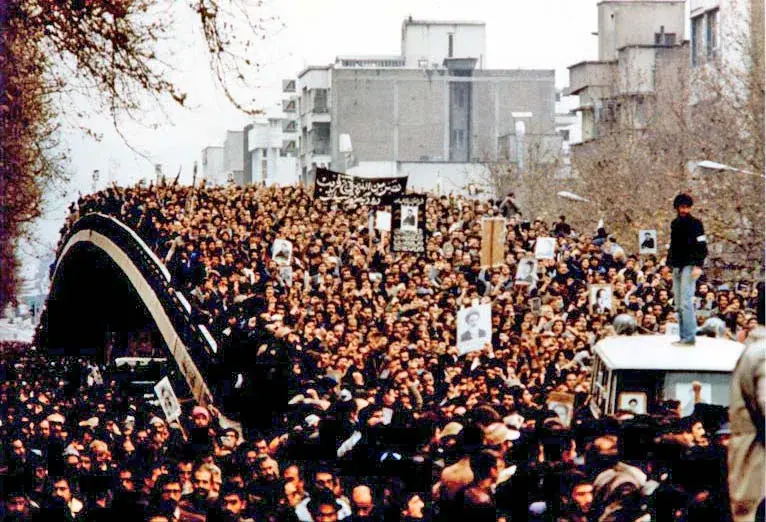
The Iranian Revolution of 1979 overthrew the Shah and established the Islamic Republic of Iran.
Image Credits: Wikimedia Commons (GFDL)
Why Iran's Islamic Revolution Worried Saudi Arabia
For Saudi Arabia, the message coming from Iran after the revolution felt like a serious threat. Saudi leaders believed their country had an important role in the Islamic world. The kingdom controls the holy cities of Mecca and Medina, which are the most sacred places in Islam. The government is also closely linked with a conservative form of Sunni Islam often connected to Wahhabi traditions.
When Iran became a Shia Islamic republic and spoke about leading the Muslim world, Saudi Arabia saw this as a challenge to its influence. Religious differences were not the only reason for tension, but they made the situation more intense. Iran began presenting itself as a protector of Shia communities, while Saudi Arabia continued to see itself as a leading power within Sunni Islam.
Because of these religious, political, and strategic differences, the relationship between the two countries quickly became much more tense and competitive.
1979 Shia Protests in Saudi Arabia
The year 1979 witnessed tensions not only between governments but also within societies. In Saudi Arabia's Eastern Province, where a large portion of the country's Shia population resides, demonstrations erupted during the religious commemoration of Ashura. Protesters expressed long-standing frustrations over economic inequality, political marginalization, and restrictions on religious expression.
Saudi security forces responded forcefully, and clashes broke out between demonstrators and authorities. Although these grievances had local roots, Saudi officials increasingly viewed them through the lens of the Iranian Revolution. The possibility that revolutionary ideas from Tehran could inspire unrest among Shia communities became a growing concern for the Saudi leadership.
Throughout the 1980s, several political movements connected to Saudi Shia opposition operated from outside the kingdom. Some of these groups maintained ties with Iran and attempted to mobilize opposition against the Saudi government. Over time, more militant organizations emerged as well, including Hizbullah al-Hijaz, which carried out attacks on Saudi targets.
These developments deepened distrust between Tehran and Riyadh and contributed to an atmosphere of mutual suspicion that would shape regional politics for decades.
Iran–Iraq War
Only a year after the Iranian Revolution, another major conflict erupted that further intensified tensions. In September 1980, Iraqi leader Saddam Hussein launched an invasion of Iran, beginning the Iran–Iraq War. Saddam feared that the revolutionary ideology promoted by Iran might inspire rebellion among Iraq's own Shia population. Territorial disputes and longstanding rivalries between the two countries also contributed to the outbreak of war.
Saudi Arabia and several other Arab governments supported Iraq during the conflict. Their backing was motivated largely by a desire to contain the spread of Iran's revolutionary influence across the region. Financial assistance and diplomatic support from Saudi Arabia, Kuwait, and other Gulf states helped sustain Iraq's war effort.
The war dragged on for eight devastating years, ending in 1988 without a decisive victory for either side. The conflict caused immense destruction and resulted in hundreds of thousands of deaths. While the fighting concluded without clear territorial changes, the political consequences were profound. The war hardened divisions between Iran and many Arab governments, especially Saudi Arabia.
Proxy Warfare in the Middle East
As direct confrontation between Iran and Saudi Arabia remained unlikely, both states increasingly turned toward indirect methods of competition. This approach gradually evolved into what analysts describe as a proxy war.
In proxy conflicts, rival powers support different actors—governments, militias, or political movements—within local struggles. Through these alliances, external powers can expand influence and pursue strategic goals without engaging in open war against each other.
Over time, several regional conflicts became intertwined with the broader Iran–Saudi rivalry. While many of these wars began as local disputes, the involvement of the two regional powers often intensified the fighting and transformed them into part of a wider geopolitical contest.
Lebanon and the Rise of Hezbollah
Lebanon was one of the first places where this conflict between Iran and Saudi Arabia appeared. During the Lebanese Civil War, Iran helped create and support Hezbollah, a Shia political and armed group. Over time, Hezbollah grew into one of the strongest political and military forces in Lebanon.
Hezbollah kept close connections with Iran's Islamic Revolutionary Guard Corps. The group also became part of a larger alliance sometimes called the "Axis of Resistance." This network includes governments and movements that oppose Israel, the United States, and some other regional powers.
At the same time, Saudi Arabia supported Lebanese political groups that opposed Hezbollah's influence. Because of this outside involvement, Lebanon's politics became very complicated, with many groups sharing power and different countries trying to influence events.
Hezbollah became one of the most powerful armed groups in Lebanon with strong ties to Iran.
Iraq After the 2003 US Invasion
The situation between Iran and Saudi Arabia grew more serious after the United States invaded Iraq in 2003. When Saddam Hussein's government fell, Iraq suddenly had no strong central power. This created a power gap and changed how politics worked inside the country.
Iran quickly built close ties with several Shia political parties and armed groups in Iraq. Some of these groups later became part of the Popular Mobilization Forces, which helped fight the Islamic State in the mid-2010s.
Saudi Arabia and its allies were concerned about Iran gaining too much influence in Iraq. To balance this, they supported political groups and networks that could challenge Iran's allies in the country.
Syria's Civil War
Syria later became one of the main places where tensions between Iran and Saudi Arabia played out. In 2011, people across Syria began protesting against President Bashar al-Assad during a period of regional protests known as the Arab Spring. What started as peaceful demonstrations soon turned into a long and destructive civil war. Iran strongly supported the Syrian government. Syria was important to Iran because it helped connect Iran with Hezbollah in nearby Lebanon. Iran sent money, military advisers, and support from allied militia groups to help Assad stay in power. Saudi Arabia supported the opposite side. It backed several rebel groups that wanted to remove Assad from power. Over time, other countries such as Russia, the United States, and Turkey also became involved, making the Syrian war one of the most complex conflicts of the twenty-first century.
Yemen War and Humanitarian Crisis
Yemen became another place where tensions between regional powers grew stronger. In 2014, the Houthi movement, which comes from Yemen's Zaydi Shia community, took control of the capital city, Sanaa. The Yemeni government was forced to flee, and the country soon fell into a wider civil war.
Saudi Arabia saw the Houthis as a serious security threat, especially because they controlled areas close to the Saudi border. Saudi leaders accused Iran of helping the Houthis with weapons, training, and political support. Iran denied direct military involvement but admitted it supported the group politically.
In 2015, Saudi Arabia formed a coalition with several regional allies and began a military campaign to restore the former Yemeni government. The fighting quickly led to a severe humanitarian crisis. Airstrikes, blockades, and battles on the ground damaged cities and infrastructure and caused great suffering for civilians.
The conflict in Yemen shows how outside involvement can make local wars last longer. While Yemen already had deep political divisions, support from regional powers helped extend the fighting.
The war in Yemen created one of the world's worst humanitarian crises.
Iran–Saudi Diplomatic Crisis (2016)
Political events have sometimes made tensions between Iran and Saudi Arabia even worse. One of the most serious moments happened in 2016 when Saudi Arabia executed a well-known Shia cleric named Nimr al-Nimr. After his execution, large protests broke out in Iran, and some protesters attacked the Saudi embassy in Tehran.
Because of this incident, Saudi Arabia cut diplomatic relations with Iran. Several of Saudi Arabia's regional allies also ended their relations with Iran, which increased the political divide between the two countries.
These tensions are also connected to global politics. The United States has long had close ties with Saudi Arabia, while Iran often opposes American influence in the Middle East. Other major powers, including Russia and China, have also played roles in regional diplomacy and political alliances.
2019 Oil Facility Attacks
At several points, tensions between the two countries nearly turned into direct fighting. One major incident happened in 2019 when drones and missiles hit Saudi Arabia's large oil facilities at Abqaiq and Khurais. The attack stopped a big part of Saudi Arabia's oil production for a short time and shocked energy markets around the world. Saudi Arabia and the United States blamed Iran for the strikes, but Iran denied being involved. This event showed how quickly tensions in the region can affect important global resources like oil.
Middle Eastern Cold War
Because this conflict often happens indirectly and affects many countries, some experts describe it as a "Middle Eastern Cold War." It is similar to the Cold War between the United States and the Soviet Union, where two powerful countries competed for influence without fighting each other directly. Instead, they supported different allies and groups in conflicts across several regions.
However, the tension between Iran and Saudi Arabia is not only about religion or ideas. Economic interests, geography, and concerns about security in the region are also important. Both countries want greater influence over trade routes, political movements, and security systems across the Middle East.
Iran–Saudi Relations Restored (2023)
Even after many years of tension, the two countries have sometimes tried to improve relations. In March 2023, Iran and Saudi Arabia agreed to restore diplomatic ties after talks helped by China. The agreement included reopening embassies and restarting official communication after years without relations. Many experts saw this step as a hopeful sign that tensions in the region could begin to ease.