Most ancient belief systems describe the end of the world as something sudden — a disaster that arrives without warning and catches everyone off guard. Norse mythology does something different. The Norse gods knew exactly how the end would come. They knew the order of events, the names of who would kill whom, the specific battles. Odin spent much of his existence gathering information about it. He sacrificed an eye for wisdom. He disguised himself and rode to the land of the dead just to ask a prophetess how things were going to go. They could not stop it. They knew they could not stop it. But knowing was important to them anyway. Ragnarök — which translates roughly as the fate of the gods or the twilight of the gods — was not an ambush. It was a countdown. This is the story of how that countdown ended: the years of cold that came first, the final roll call on the plain of Vigrid, every death and every last stand, Surt's fire, and then the something unexpected that grew out of the wreckage.
Ragnarök was not a surprise to the Norse gods — it was a prophecy they had known for ages, a countdown they watched approach without being able to change what was coming.
The Fimbul-Winter: Six Years Without a Summer
Before any battle was fought, the world had to be broken down. The first sign that Ragnarök was truly arriving was the Fimbul-winter — a winter so severe and so long that it was a catastrophe all on its own. The Fimbul-winter lasted six years. Not six cold months. Six full years without summer. Three years of storms, bitter cold, short dark days, and blinding snow. Then three more years exactly like the first three. Rivers froze solid. Animals died in their shelters. Nothing grew. The sun rose every day but gave no warmth at all — it crossed the sky pale and cold as a stone. People watched the seasons where summer should have come and waited for warmth that never arrived. As the years of darkness dragged on, something worse than the cold took hold. People began to lose more than comfort. Brothers fought brothers. Families fell apart. The long starving winter brought out something cruel in people who had once been decent, and violence spread across the world faster than the snow. In Jotunheim, the frost-giants were celebrating. They had been waiting for this for the entire age.
The Fimbul-winter was not just extreme weather — it was six consecutive years without any summer at all, slowly dismantling the order of human society before the final battles even began.
When the Wolves Caught the Sun and Moon
Throughout the entire age of the gods, two wolves had been chasing the sun and moon across the sky. Every day the sun raced overhead with the wolf Sköll behind it. Every night the moon crossed the sky with Hati close behind. They had been running for centuries, slowly gaining. At Ragnarök, the chase ended. Sköll caught the sun and swallowed it. Hati caught the moon and swallowed it. The stars fell from the sky one by one until there was complete darkness. At exactly that moment, every chain and fetter holding something dangerous in place broke at once. The earth shook hard enough to crack mountains and split open the ground. Fenrir, the monstrous wolf who had been bound with the magical ribbon Gleipnir on a rocky island, snapped his binding and walked free — his jaws spread from the ground to the sky, fire burning from his eyes and nostrils. Loki, who had been chained in a mountain cavern as punishment for causing Balder's death, burst free. The Midgard-serpent Jörmungandr released its tail from its own mouth for the first time in the age and began crawling from the deep sea toward the land. The ship Naglfar — built from the fingernails and toenails of the dead — set sail with the host of Hel aboard.
Who Came to the Plain of Vigrid
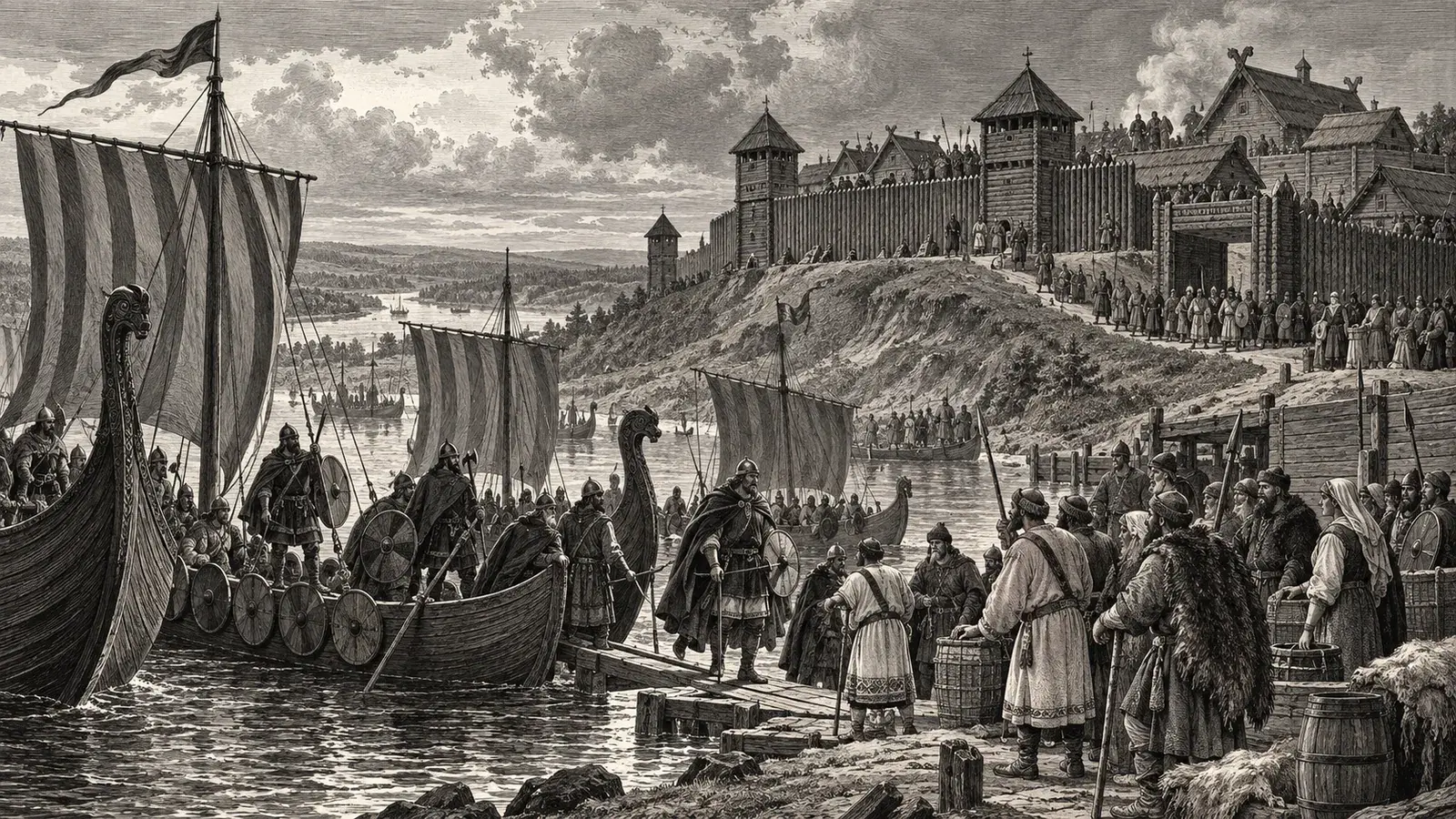
The battlefield was called Vigrid — one hundred miles wide on each side, the same plain Odin had identified when Vafthrudner asked him about it centuries earlier. Every enemy of the gods assembled there. Fenrir came with his jaws stretched from the earth to the sky. Jörmungandr came from the sea, spraying venom into the air and the water as it moved, poisoning everything in its path. Loki led the armies of the dead out of Niflheim. The frost-giants marched in a long line behind their leader Hrym. From the south came the fire-giants of Muspelheim — the realm of fire that had existed since before Asgard — led by Surt, who carried a flaming sword. The armor of the fire-giants burned as they marched. On the other side, Heimdal stood on the rainbow bridge Bifrost and blew the Gjallar-horn — a blast heard across every world simultaneously. The gods armed themselves. Odin rode out in his golden helmet at the front. Before riding to battle, Odin stopped at Mimir's fountain one last time. What he asked, or what he was told, the sources say no one will ever know. Then he rode to Vigrid.
Every enemy the Norse gods had ever faced assembled on the plain of Vigrid at once — and the gods rode out to meet them knowing exactly how the day would end.
How Each God Died — and Who They Took With Them
The Norse sources are specific about who killed whom at Ragnarök. The prophecies had named these outcomes long before the battle, and they played out exactly as foretold. Odin and Fenrir met on the field. The All-Father and the monstrous wolf fought, and Fenrir swallowed Odin whole. Vidar, Odin's son, was close behind. He wore a legendary shoe assembled from scraps of leather that had been set aside across all of time — every shoemaker in every age had unknowingly contributed to it. Vidar stepped onto Fenrir's lower jaw, seized the upper jaw with both hands, and tore the wolf's mouth apart. Odin was avenged. Thor and Jörmungandr met for their third and final encounter — after the disguised cat-lifting at Utgard-Loki's hall and the fishing trip with the giant Hymir where the line was cut. This time nothing interrupted them. Thor killed the serpent. Then he walked nine steps backward and fell dead from the venom the creature had been spraying throughout the fight. Frey faced the fire-giant Surt and had no way to defend himself. He had given away his own magic sword long ago — traded it to his servant Skirner in exchange for help winning the love of a giantess. Without it, Surt killed him. Tyr, the god of single combat, fought the great hound Garm. Both were killed. Tyr fought with only one arm — his right hand had been in Fenrir's mouth when the gods bound the wolf, and he had lost it then. Heimdal and Loki, who had been adversaries throughout the entire age, met on the field and killed each other at the same moment.
Surt Sets Everything on Fire
When the battles between gods and their enemies had run their course, Surt — the fire-giant who had been guarding the realm of fire since before the gods were born — strode to the center of the field. He threw his flaming sword across the worlds. Everything caught fire. Yggdrasil, the cosmic ash tree that had held all nine worlds together since the beginning of time, burned and fell. The earth shook itself apart and sank beneath the sea. The sky was consumed by fire. Every world — Asgard, Midgard, Jotunheim, Niflheim, Muspelheim and the rest — went dark and silent. Gods, giants, monsters, and humans: all dead. The texts describe the aftermath as a vast ocean rolling quietly under a pale, colorless light with no sun, no stars, and no sound but water.
What Rose From the Sea: The New Earth
After an age no one could measure, a light appeared in the sky over the water. It deepened slowly from faint to full — a new sun, daughter of the old one, taking over the course her mother had run before the wolves caught her. A new earth rose from the ocean. It came up green and rich, already alive — rivers ran to the sea, waterfalls thundered white over new rocks, forests grew fast from good soil, and birds moved through the trees before anyone was there to listen to them. Out of this new world, the survivors returned. Balder came back from Hel, more beautiful than he had been before his death. His brother Hoder walked beside him — the blind god who had thrown the mistletoe without knowing what he was doing. They walked together without grief between them. The gods Hœner, Vidar, and Vale also survived. Thor's sons Magne and Mode came through with Mjolnir in hand, bringing the hammer back to the world. Two human beings had hidden in a forest called Hoddmimir during all the burning and the flooding. Their names were Lif and Lifthraser. They survived on morning dew through the darkness. When the new sun came they walked out into the light, drank from the fresh earth, and began filling the new world with people. On the plain of Ida — the same ground where the original Asgard had stood, which somehow came through the fire unburned and intact — the surviving gods gathered. The voice of the All-Father, the unseen force that had existed before the gods and outlasted them, spoke to them. They sat together in the new sunlight, talked about the things that had happened in the old age, and found the golden playing pieces the first gods had used in the Age of Gold lying in the grass where they had been left behind. The world had ended. A new one had started. The Norse tradition did not end with fire and nothing — it ended with fire, and then morning.
Ragnarök was not purely an ending — the Norse tradition described a new earth rising from the water afterward, with Balder returned, human survivors emerging from the forest, and the voice of the All-Father guiding a world that had been remade.