The history of the Jurchen Jin Dynasty is full of change, conflict, and determination. The Jurchen people started as small groups living in the forests and river areas of Manchuria, in northeastern Asia. Over time, they grew strong enough to build an empire that controlled much of northern China and influenced nearby regions.
Who Were the Jurchens?
The Jurchen lived in Manchuria, a land of forests, rivers, and open plains. They were not one united nation at first. Instead, they lived in different clans, with the Wanyan clan eventually becoming the most powerful. They spoke a Tungusic language and lived by farming, hunting, and trading. Their ancestors included both nomadic groups and the people of the old Balhae kingdom. The Jurchen were skilled at raising horses, which became one of their biggest strengths. By the 11th century, they were selling thousands of horses every year to the nearby Liao dynasty. In exchange for peace, they had to send the Liao rulers gifts like furs, pearls, and falcons. Their relationship with the Song dynasty to the south was calmer. The Song rulers preferred peace and sent the Jurchen tea, silk, and silver to avoid fights. These interactions showed how complicated the Jurchen's world was, where peace, trade, and conflict were always mixed together.
Jurchen horsemen in traditional armor riding through snowy forests.
The Fall of the Liao Dynasty
The Jurchen’s connections with the Liao and Song dynasties were never simple. They traded goods, but they were also pulled into political struggles. By the early 1100s, the Jurchen were tired of being controlled by the Liao. In 1103, they finally revolted. Their first big conflicts were with Goryeo, the Korean kingdom. Led by Wanyan Yingge, the Jurchen won early battles. In 1107, Goryeo sent a special army to crush them, and for a while it looked like the Koreans would win. But by 1109, the Jurchen came out on top. Their fast horses, excellent archers, and quick attacks helped them win. This victory proved that the Jurchen were becoming a major military power.
Birth of the Jin Dynasty
In 1115, after growing stronger, Wanyan Aguda declared the creation of the Jin Dynasty. This new state rose quickly in power. The Song dynasty saw a chance to weaken their old enemy, the Liao, so they teamed up with the Jin. Together, they attacked the Liao. The Jin armies were strong and fast, and by 1121 they had captured the Liao capital. Within four years, the entire Liao dynasty collapsed. Suddenly, the Jin controlled a huge part of northern Asia and were one of the region’s major powers.
War with the Song and the Fall of Kaifeng
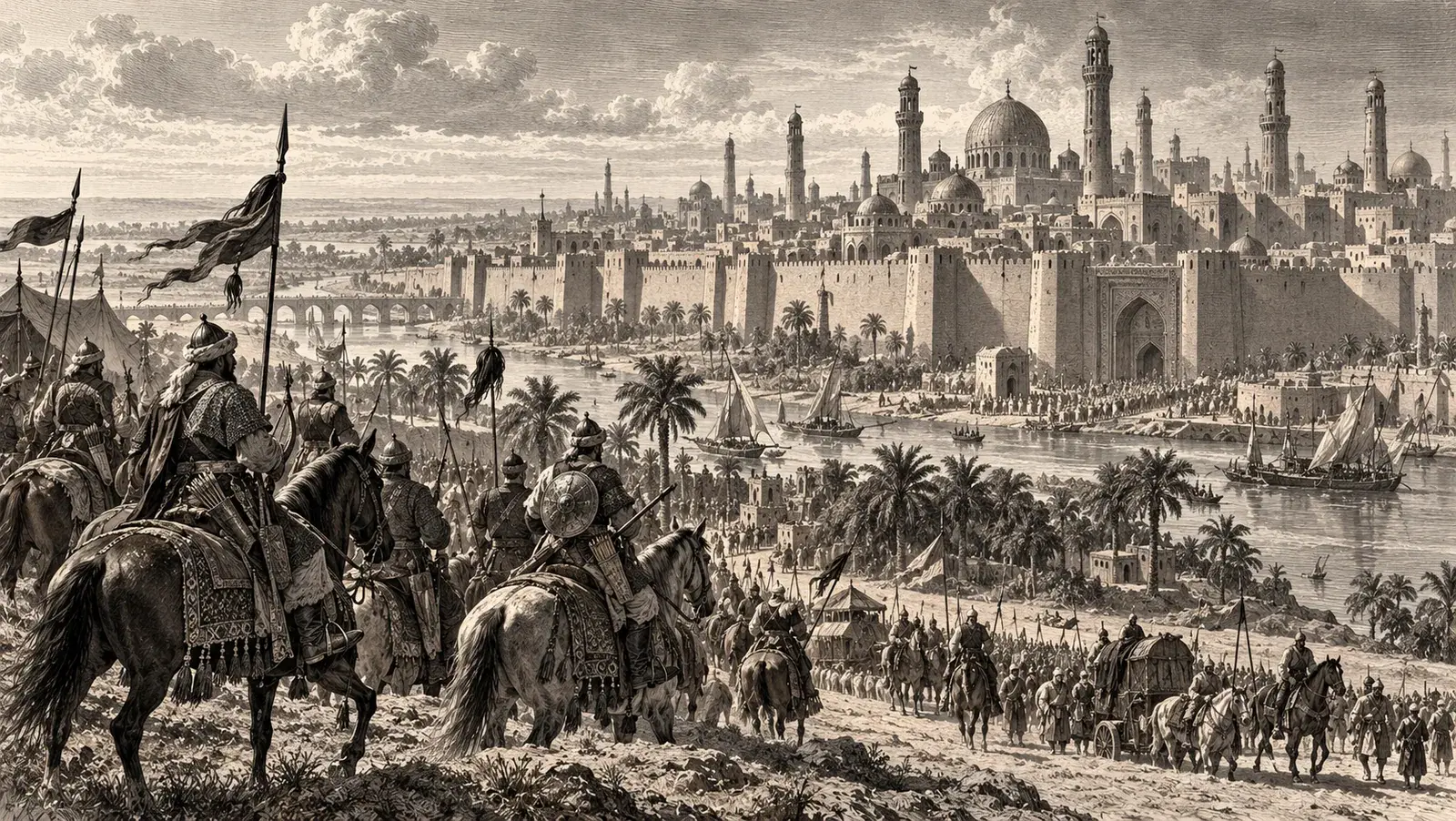
After Emperor Aguda died in 1123, Emperor Taizong took the throne. He quickly noticed that the Song dynasty was weak and decided to attack. In 1125, he launched a major invasion into northern China. Jin armies moved quickly, capturing cities one after another. Even the famous Song general Tong Guan couldn't stop them. The Jin reached Kaifeng, the Song capital, and surrounded it. They captured Emperor Huizong and many of his people. The Song had to pay a huge ransom and flee south. In 1138, the surviving Song government settled in Hangzhou, starting what became the Southern Song dynasty.
Jin troops besieging a Song Dynasty walled city.
Influence over Korea
The Jin’s power spread across East Asia. In Korea, the kingdom of Goryeo realized they could not resist the Jin. In 1126, Goryeo’s king officially submitted to Jin authority. Later, when the Song dynasty begged Goryeo for help in saving their captured emperor, Goryeo refused because they feared angering the Jin. For many years, the Jin were one of the most feared and respected powers in the region.
Establishing a New Capital and Evolving Cultural Identity
By the mid-1100s, the Jin felt strong enough to reorganize their empire. In 1153, they moved their capital from Shangjing, near modern Harbin, to Yanjing, which is now Beijing. This move showed how much power they held over their new lands. As they ruled more Chinese territory, the Jin began adopting Chinese customs. They created government systems similar to those used in China and even developed their own writing style based on Chinese characters. But these changes caused tension. Many Jurchen nobles felt that adopting too much Chinese culture would erase their traditions. This tension peaked in 1161 when Emperor Hailingwang was assassinated. His death was the result of arguments between those who wanted more Chinese-style reforms and those who wanted to protect Jurchen culture.
Safeguarding Jurchen Cultural Heritage
After Hailingwang’s death, Emperor Shizong tried to protect Jurchen identity. He encouraged the use of the Jurchen language, opened schools to teach it, and included it in government exams. Art from this time often showed traditional activities like hunting and falconry, reminding people of their roots. Still, as the Jin ruled more Chinese areas, many leaders began to see themselves as part of Chinese civilization. This made cultural identity inside the Jin Empire more complicated.
Genghis Khan and the Mongol Threat
In the early 1200s, a new enemy appeared: the Mongols, led by Genghis Khan. At first, they tested the Jin’s defenses. But by 1211, they launched a full invasion with huge armies. The Jin had a massive military, but they struggled against the Mongols’ speed and strategy. Genghis Khan used a harsh pattern: destroy cities, retreat, and attack again. Some Jin cities were destroyed multiple times. Corruption and natural disasters weakened the Jin even further. In 1213, Emperor Feidi was killed by one of his generals, who was then killed shortly after. The empire was falling apart when it needed unity the most. The Jin tried to survive by retreating south and paying the Mongols for peace, but it didn’t work. In 1215, the Mongols struck again and took even more land. The Jin barely held on for twenty more years. Finally, in 1234, under Ogedei Khan, the Mongols destroyed the Jin dynasty completely.
Genghis Khan leading Mongol horse archers across the steppe.
Legacy
Even though the Jin dynasty ended, the Jurchen people did not disappear. They continued to be active in northern Asia, raiding Korea in the 14th and 15th centuries. Their biggest transformation came in the 1600s, when the Jurchen became known as the Manchus. They grew powerful once again and, in 1636, conquered Korea. Shortly afterward, they took control of China and founded the Qing dynasty, which ruled until the early 1900s.