Alexander the Great's last words, if Arrian and others are to be believed, were that his empire should go to the strongest. Whether he actually said that, or whether it was the kind of thing people later decided he must have said, is less important than what happened next. His generals heard it, or heard something like it, and proceeded to spend the next several decades trying to prove they were the one he meant. Five men came out of that process with real territory: Cassander took Greece, Ptolemy took Egypt, Lysimachus took Thrace and chunks of Anatolia, Antigonus tried to hold Asia Minor, and Seleucus ended up with Babylon. Of the five, Seleucus built the most. The Seleucid Empire at its peak ran from the eastern Mediterranean coast to the Indus Valley — a stretch of terrain encompassing dozens of languages, dozens of religious traditions, and more ethnic diversity than any single governing apparatus had tried to manage since the Persians. It lasted from 312 to 63 BCE. That is nearly two and a half centuries, which is longer than many empires that receive considerably more attention. The fact that it gets overlooked — wedged between the more famous story of Alexander's conquests and the more famous story of Roman expansion — is one of those gaps in popular history that is hard to explain and easy to fix.
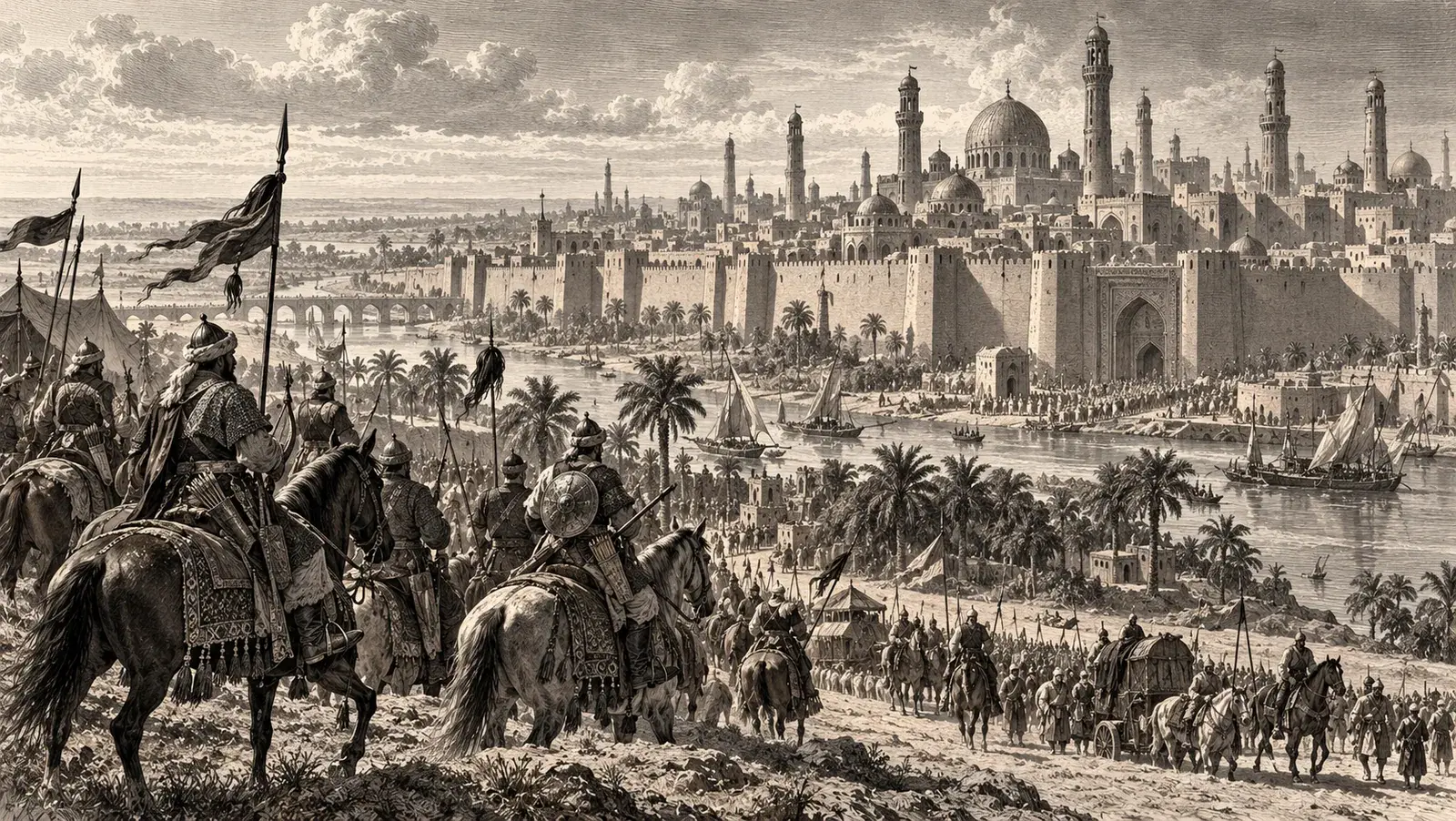
At its peak, the Seleucid Empire stretched from the eastern Mediterranean to the Indus Valley — a territory so large and diverse that even Seleucus I understood it could not be governed the way a smaller, more homogeneous kingdom could.
How the Wars of the Successors Actually Worked
Alexander died in 323 BCE in Babylon, thirty-two years old, having conquered an area larger than anyone before him and having made essentially no arrangements for what should happen after he was gone. The empire did not hold together for long. The Wars of the Diadochi — diadochi meaning successors — were not a single war. They were a series of shifting alliances, betrayals, battles, and negotiations that ran for roughly forty years and produced different winners in different rounds. The five generals who eventually emerged with stable territories had all been allies, rivals, and enemies of each other at various points. The alignments changed constantly based on opportunity and threat rather than any fixed principle. Seleucus's path to power was not the straightforward one. He had Babylon, which was strategically central and economically significant, but Antigonus pushed him out of it for a period and he had to fight his way back. Around 305 BCE, he was fighting a different war — against Chandragupta Maurya, who was taking back the Indian territories that Alexander had nominally controlled. That war ended not in victory but in a deal: Seleucus gave up the disputed eastern territories, received a large number of war elephants in exchange, and came home with military assets that turned out to be worth considerably more than the land he had traded away. Those elephants helped him win the Battle of Ipsus in 301 BCE, where Antigonus was killed and the balance of power in the Hellenistic world shifted decisively. From that point, Seleucus was the dominant figure among the surviving successors, ruling Mesopotamia, Syria, Cappadocia, and Armenia from two capitals — Antioch in the west, Seleucia on the Tigris in the east.
What Seleucus Actually Built — and Why It Held Together as Long as It Did
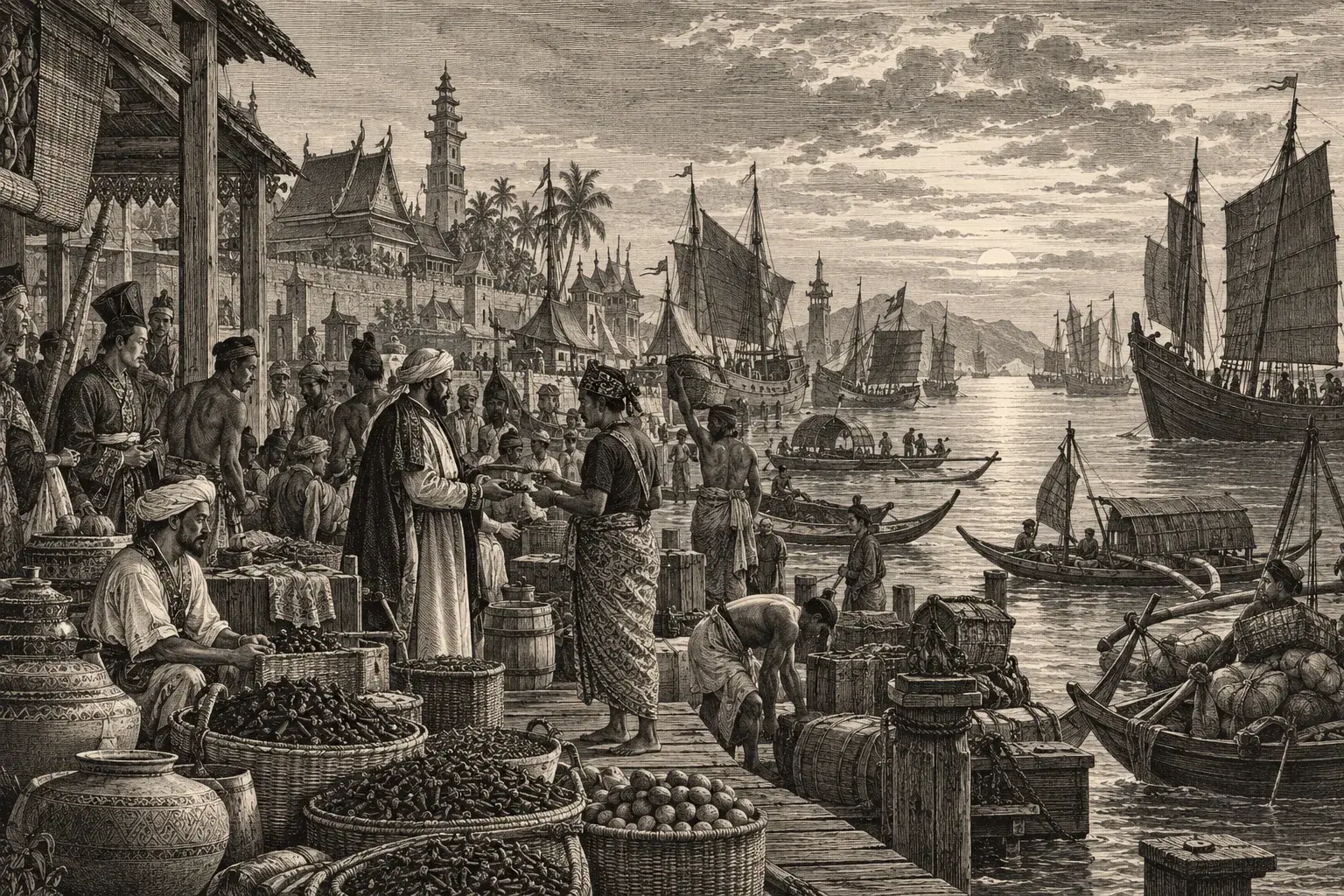
The Seleucid approach to governing a diverse empire was not accidental. Seleucus and his early successors understood something that other conquerors had gotten wrong: trying to rule millions of non-Greek people as purely Greek kings was not going to work. What they did instead was borrow from the Persian administrative model and adapt it. The structure kept strong central authority at the top while delegating daily administration to local officials. Governors handled civil matters. Military commanders ran the army. No single regional figure accumulated enough combined power to become a genuine threat to the center. Alexander had used a version of this system. The Seleucids refined it and made it more consistent. Along with the administrative framework came a deliberate cultural policy. Greek and Eastern traditions were allowed to coexist rather than compete. Local religions were respected. Local customs were not suppressed. The Seleucids styled themselves as kings of Babylon in Mesopotamia and as successors to Persian authority in the eastern territories. They used Greek as the administrative language while permitting local languages in everyday life. The combination made them harder to resent than a purely foreign occupying force would have been. This approach also made trade easier. The empire's geographic position — straddling the land routes between the Mediterranean and Central Asia — gave it natural commercial advantages. Goods from India, from the Arabian Peninsula, from Egypt, and from Greece moved through Seleucid territory. The tax revenue this generated funded the army and the court. As long as the trade routes stayed open and the administrative system held, the empire had money and the empire had peace.
Seleucus I Nicator built his empire not just through military conquest but through a deliberate policy of blending Greek and Eastern traditions — allowing local religions and customs to coexist alongside the Greek administrative structure he imposed.
The Assassination and What Came After
By 281 BCE, Seleucus was the last survivor of Alexander's inner circle of generals. He had defeated or outlasted everyone else. He had just beaten Lysimachus at the Battle of Corupedium and was preparing to move into Macedonia — which would have made him ruler of effectively the whole Hellenistic world. He never got there. Ptolemy Ceraunos — a member of Lysimachus's royal family who had asked Seleucus for help earlier, and whom Seleucus had sheltered — killed him. The assassination was swift and the logic behind it straightforward: Ceraunos wanted power, Seleucus was in the way, and proximity gave him the opportunity. He took it. Ceraunos seized Macedonia briefly. Then he was killed in battle against Celtic invaders a few years later. It was a short and violent career for a man who had traded the friendship of the most powerful ruler in the Hellenistic world for a temporary throne. Seleucus's son Antiochus I Soter inherited the empire. He was already experienced — his father had made him co-ruler of the eastern territories while still alive — and he continued the policy of cultural accommodation that had been the empire's governing principle. He also dealt with the Celtic problem. Celtic groups had moved into Anatolia and were raiding cities and farmland in ways that the local populations could not stop. Antiochus faced them in a battle that became known as the Battle of the Elephants — the same war elephants that Seleucus had traded the Indian territories to obtain — and won decisively. Many of the surviving Celts were settled in Galatia and eventually hired into the Seleucid military. A threat became an asset.
Breakaways and the Beginning of the Long Decline
The empire that Antiochus I and his son Antiochus II Theos held together was already showing structural cracks. The problem with governing territory from the Aegean to Central Asia was that the center was always distant from something. Regions that felt underserved or underprotected had strong incentives to make their own arrangements. In 247 BCE, a leader named Arsaces broke away in Parthia and founded an independent kingdom that would eventually grow into the Parthian Empire — one of the Seleucids' most persistent future rivals. Shortly after, Bactria separated and became the Greco-Bactrian Kingdom. Both breakaways happened during a period when the Seleucids were fighting the Ptolemies of Egypt over Syria, distracted and stretched thin. Under Seleucus II and Seleucus III, the situation continued to deteriorate. The economy was weak. Regional rebellions were constant. The Celts of Galatia, settled into Anatolia as supposed allies, were difficult to manage. The kings did not have the military resources or the political authority to take back what had been lost, and the dynasty's internal stability — always dependent on smooth succession — was beginning to show the strain of competing ambitions within the royal family itself. By the time Antiochus III came to power, the Seleucid Empire was a shadow of what Seleucus I had left behind. But Antiochus III was not ready to accept that.
Antiochus the Great: The Last Real Attempt to Save It
Antiochus III spent more than twenty years trying to put the empire back together, and for a period he came close to succeeding. He led his armies personally across an extraordinary range of territory. He fought rebels and reclaimed lost regions. He marched east in a campaign that brought Bactria back under nominal Seleucid control and produced a peace arrangement with Parthia. He then turned west and took Judea and southern Syria from Egypt. By the time his eastern campaign was finished, observers who had written the empire off were revising their assessments. Then he looked at what was happening in the western Mediterranean and made a serious miscalculation. Rome had just finished fighting Carthage in the Second Punic War — the war in which Hannibal crossed the Alps, won a series of devastating battles against Roman armies, and then ultimately lost to Scipio Africanus at Zama. Rome emerged from that conflict as the undisputed dominant military power in the Mediterranean world, and it was not done expanding. Rome had already defeated Philip V of Macedon, who had been allied with Hannibal, and had begun positioning itself as the protector of Greek city-states. Antiochus had Hannibal at his court — the Carthaginian general had fled there after his defeat. Hannibal urged him to strike first, before Rome consolidated its position. Antiochus crossed into Greece and occupied Thermopylae. The choice of location was symbolically loaded. It did not help militarily. A Roman force pushed him out. He retreated to Asia Minor. The Romans followed. At Magnesia in 190 BCE, the Seleucid army was decisively beaten.
The Battle of Magnesia in 190 BCE ended Antiochus III's attempt to resist Roman expansion — and the Treaty of Apamea that followed stripped the Seleucid Empire of most of its Anatolian territory and imposed crippling financial reparations.
The Treaty of Apamea and What It Actually Cost
The peace terms Rome imposed at Apamea in 188 BCE were designed to ensure the Seleucid Empire could never threaten Rome again. Antiochus lost all of his territory in Asia Minor north and west of the Taurus Mountains — a massive reduction in the empire's western holdings. He was required to pay fifteen thousand Euboic talents over twelve years, a sum that would drain the treasury for over a decade. He had to surrender his war elephants and reduce his navy. Members of his family, including his son — the future Antiochus IV — were sent to Rome as hostages. He was forbidden from conducting military operations in Europe. Antiochus III died a few years later while raiding a temple in the east, trying to raise the money the treaty required. The manner of his death — robbing a religious site out of financial desperation — is a fairly precise measure of what the treaty had done to the empire's finances. His son Seleucus IV became king and spent his reign essentially as Rome's collection agent, squeezing the empire to meet the reparation schedule. He was assassinated. His brother Antiochus IV Epiphanes took over.
Antiochus IV and the Maccabean Revolt
Antiochus IV had spent years in Rome as a hostage. He understood Roman power in a way that was not theoretical. He also understood that the Seleucid Empire's remaining assets were limited and that he needed to maximize what he had. He invaded Egypt and actually took control of it for a short period, leaving the local king technically in place as a client — careful enough to avoid giving Rome a formal reason to intervene. When Egypt attempted to reassert independence, he returned. This time a Roman official, Gaius Popillius Laenas, intercepted him at the Egyptian border and handed him a letter from the Roman Senate ordering him to leave. Laenas drew a circle in the sand around Antiochus and told him to give his answer before stepping outside it. Antiochus withdrew. Frustrated and financially pressed, he turned to Judea. What happened there was the result of decisions that earlier Seleucid rulers would not have made. There was an existing conflict within Jewish society between those who favored accommodation with Greek culture and those who wanted to preserve traditional practices. Antiochus involved himself in that conflict badly — allowing the high priesthood to be sold to the highest bidder, supporting Hellenizing factions in Jerusalem, and eventually responding to the resulting violence with measures that went far beyond what the situation required. He had non-kosher sacrifices performed in the Jerusalem temple. He outlawed Torah reading and circumcision. He installed a statue of Zeus. These were not the actions of a ruler following the Seleucid tradition of cultural accommodation. They were the actions of a ruler who had decided that suppression was easier than governance. The response was the Maccabean Revolt. A priestly family named Mattathias and his sons — the Maccabees — led an armed uprising that Antiochus IV could not put down. The rebels rededicated the temple, and the festival of Hanukkah commemorates that moment. Antiochus IV died in 164 BCE, still trying to find money and restore control, and left behind a Judea that was effectively lost to the empire.
The Maccabean Revolt was a direct consequence of Antiochus IV abandoning the Seleucid tradition of religious tolerance — his attempt to impose Greek religious practices on Judea produced the one rebellion he could not suppress.
The Long Collapse
After Antiochus IV, the Seleucid Empire entered a period that is difficult to narrate cleanly because it had essentially stopped being an empire and become a dynastic quarrel over a shrinking territory. Kings succeeded each other rapidly, often through violence. Rival claimants backed by different external powers fought over what remained. The Parthians, who had been growing steadily stronger since Arsaces founded his kingdom in 247 BCE, continued to absorb Seleucid territory in the east. Rome remained the fixed boundary in the west, preventing any recovery there. Internal candidates for the throne found it easier to fight each other than to organize any coherent response to external pressure. Piracy became a serious problem. The Seleucids had never been strong naval powers, and as their land-based authority weakened, their ability to police coastal waters declined with it. Pirates operating from Cilicia raided shipping across the eastern Mediterranean and sold captives into slavery. This disrupted the trade that had been one of the empire's economic foundations. By the late first century BCE, what called itself the Seleucid Empire was a small, unstable kingdom in Syria, governing little more than the area around Antioch. Rome's expansion into the eastern Mediterranean had been making the situation increasingly irrelevant for decades. In 64 BCE, the Roman general Pompey arrived, assessed what remained, and organized it into the Roman province of Syria. The last Seleucid king, Philip II, had no meaningful power and no realistic path to reversing what had happened. The empire Seleucus I had built from Babylon with elephants traded for Indian land was over.
What the Seleucid Empire Actually Was
The standard narrative of the Seleucid Empire is one of failure — a kingdom that had the pieces for greatness and managed to lose them through bad leadership, military defeat, and internal incompetence. That narrative is not wrong exactly, but it undersells what the empire accomplished during the period when it was functional. For roughly a century after its founding, the Seleucid state demonstrated that a highly diverse empire — Greek administrators over Persian, Babylonian, Syrian, Jewish, and Armenian populations, among many others — could be governed without suppression. The policy of cultural accommodation was not idealistic. It was practical. It worked. The empire maintained trade networks, supported urban development, and kept the peace across an area where peace was hard to maintain, for long enough that the results were visible in the cities it founded and the commerce it facilitated. The failure came gradually. Not from one battle, not from one bad king, but from the accumulated weight of territorial loss, financial exhaustion from reparations, dynastic instability, and the inexorable growth of Rome — a power that no Hellenistic state could match once it had consolidated control of the western Mediterranean. Antiochus IV's mistakes in Judea are remembered because they produced Hanukkah and the Maccabees — events that mattered enormously to subsequent history. But those mistakes were a departure from what the empire had been, not an expression of it. The tradition of the dynasty was tolerance and accommodation. Antiochus IV abandoned that tradition, and the empire paid for it in ways that lasted. Seleucus I wanted to build a place where Greek and Eastern cultures could exist together. For a while, he did. That it lasted as long as it did, given the pressures it faced from the beginning, is probably more impressive than its eventual failure.