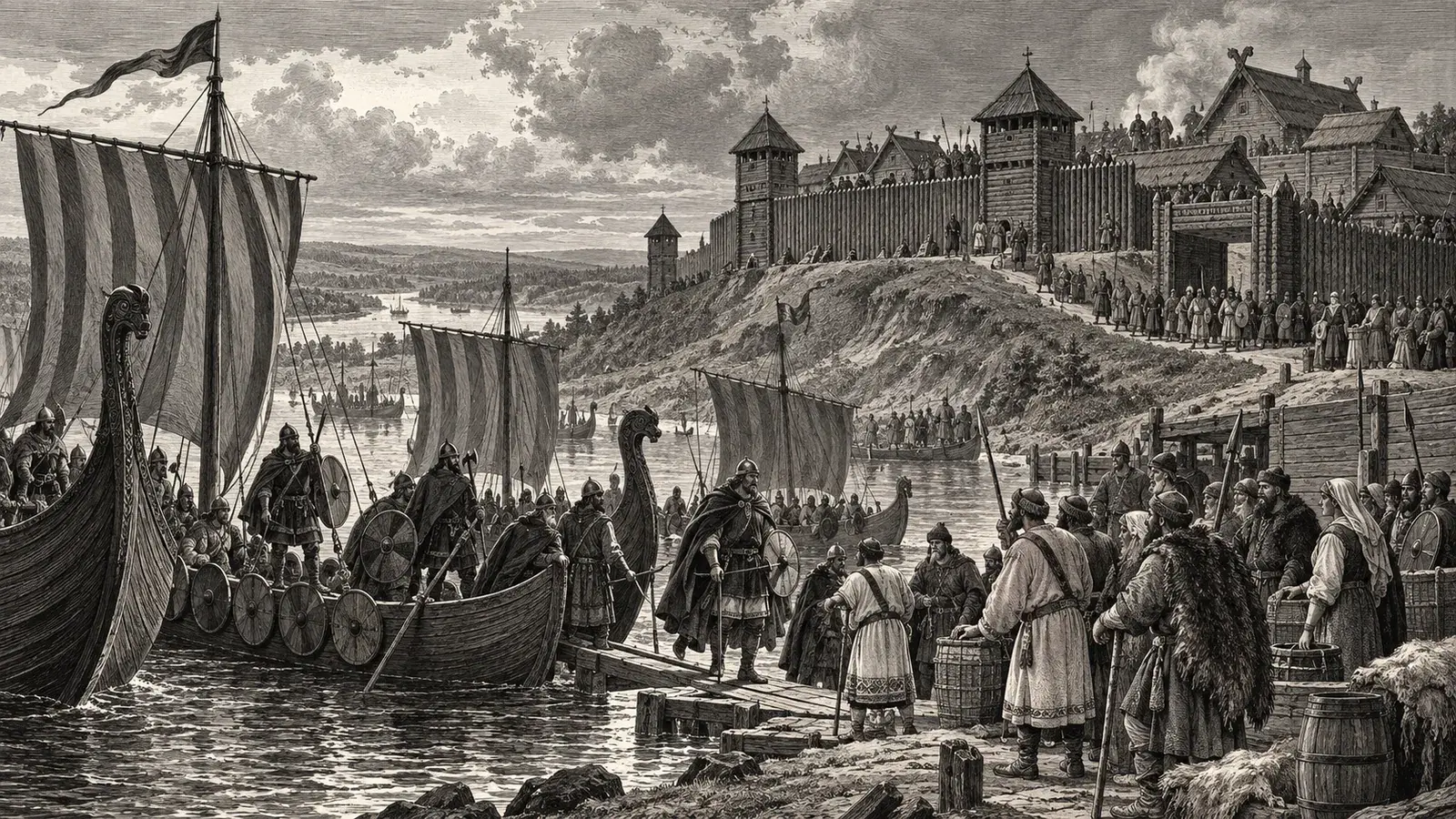
King Theudemir sat alone in his great Gothic hall, staring into the fire, wrestling with the hardest decision of his life. His enemies only knew him as a fierce general, always at the front of battle. They couldn't understand why his own people called him "Theudemir the Beloved." But that night, with the firelight softening his face, you'd have understood. The whole court had gone hunting. The king had stayed behind to answer a message that had arrived that morning from the Roman court — and the answer would cost him dearly.
King Theudemir stayed behind from the hunt to make a painful choice: whether to send his young son to the Roman court as a hostage to keep the peace.
A Painful Price for Peace
By now, the tables had turned a little. It was often the Romans paying the Goths to keep the peace, calling the payments "New Year's presents" to save face. When the money didn't show up one year, Theudemir's East Goths knew something was wrong. The emperor had switched his friendship to a rival Gothic chief — confusingly, also named Theodoric. The East Goths reminded the emperor of their strength with a quick raid, and a message of peace soon arrived. The Goths cheered. But Theudemir noticed the part everyone else ignored. The emperor would pay, and pay even more from now on — but he demanded one thing in return. The Goths had to hand over a hostage to be raised at the Roman court: Theudemir's own son, the eight-year-old heir Theodoric.
A Father's Worry
No wonder the king had sent his happy, chattering son out of the room. To hand over this boy — the pride and hope of the entire Gothic nation — to be raised hundreds of miles away by Roman teachers in Roman ways! The dangers were real. If the Goths ever broke the peace, Theodoric's life would be worth nothing in a court where murder and betrayal were common. And even if he survived, would he lose the love of freedom that kept the Goths strong? Would Rome turn him into a soft Roman courtier? In the end, Theudemir decided he owed it to his people to let the boy go. He found comfort in an old belief, too: Theodoric had been born on a lucky day, the very day the Goths won a great victory over the Huns. The boy carried the family name Amal, which meant "the fortunate." Surely, Theudemir hoped, his son would come through this unharmed.
The Boy Who Couldn't Write His Name
We don't know much about Theodoric's years in Constantinople, but one detail stuck: he never learned to read or write. Later, when he ruled a huge empire, he couldn't sign his own name. Instead, he used a gold plate with the first four letters — "THEO" — cut into it. He'd lay the plate on a document and trace the letters through the holes. Maybe nobody bothered to teach him, or maybe the young Goth looked down on Roman boys who were better with a pen than a sword. Either way, his good looks, quick wit, and skill at riding and fighting made him a favorite of the emperor. When he was seventeen, Emperor Leo reluctantly let him go home, loaded with royal gifts.
Theodoric never learned to write, so he signed documents by tracing the first four letters of his name through holes in a gold plate.
Still a Goth at Heart
Theudemir's fears that Rome had ruined his son melted away almost immediately. The welcome-home feasting had barely ended before young Theodoric vanished — along with a group of his childhood friends. Word soon came from the frontier. A king named Babai had just beaten a Roman army and seized a major city (modern Belgrade). While Babai was celebrating, Theodoric showed up at the city gates with troops he'd borrowed from his father's army, and took it back. But here's the Gothic part: he didn't hand the city back to the Romans. He kept it for himself. The Goths took him to their hearts after that. Despite his Roman clothes and manners, he was no foreigner. He'd followed the old Gothic rule that every young man must prove himself with a bold deed — and he'd passed. With one voice, the people declared that Theodoric, and only Theodoric, should follow his father as their king.