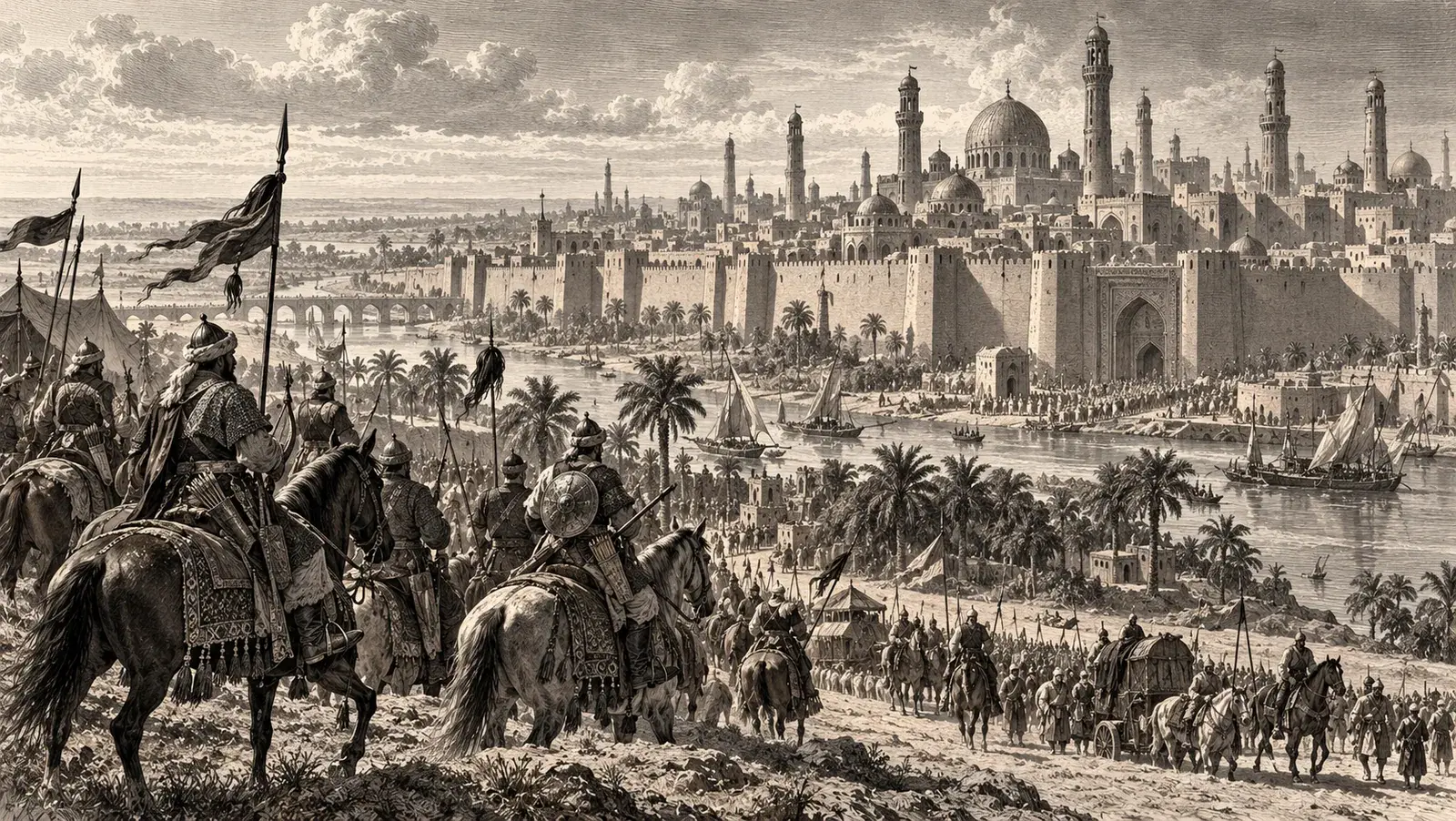
The city of Ur was not a small place. By the time Abraham lived there, it had been a major center of Mesopotamian civilization for centuries — temples, ziggurat, trade networks, a population of tens of thousands. Leaving it was not like walking away from a village. It was abandoning the infrastructure of an entire life. Abraham left anyway. He was seventy-five years old. He took his wife Sarah, his nephew Lot, their households, their servants, and everything they owned, and he walked out of Ur toward a destination that had not been given a name or coordinates — just a direction and a promise that God would show him the land when they arrived. That is the setup. What follows in the biblical account is not a straight march toward a triumphant destination. It is a series of practical complications — famine forcing a detour to Egypt, family arguments over grazing rights, a nephew who makes a reasonable choice that turns out badly, three strangers who arrive at a tent door and turn out to be something other than strangers. The story has the texture of something that actually happened to actual people, even when it operates on a cosmic scale.
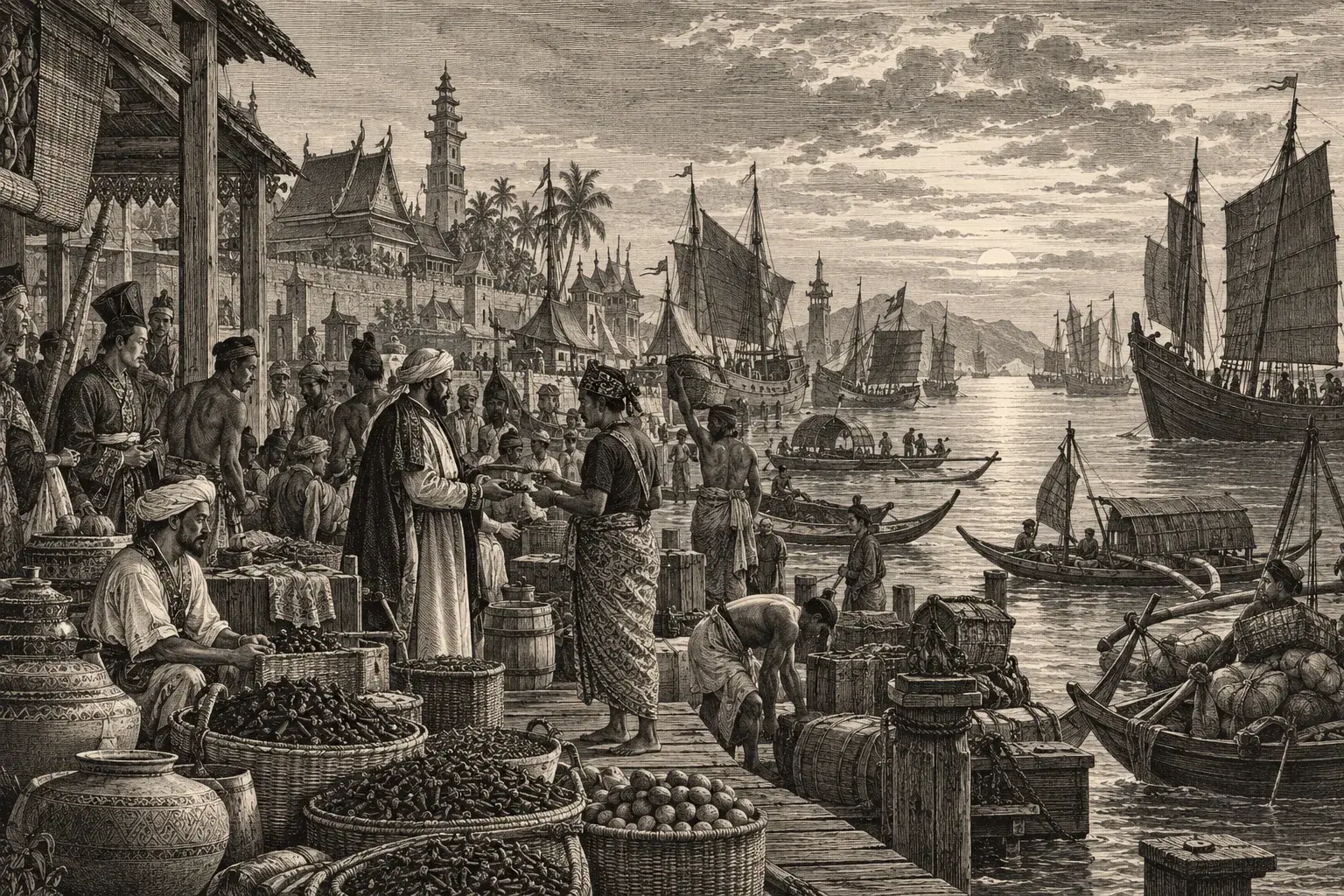
Abraham's journey from Ur to Canaan was not a short pilgrimage — it was a full relocation of a household, servants, livestock, and possessions, across unfamiliar terrain, toward a land Abraham had never seen.
The Command That Made No Practical Sense
Leave your country. Leave your relatives. Leave your father's house. Go to the land I will show you. That is what Abraham was told. Not where the land was. Not how long the journey would take. Not what he would find when he got there. Just go, and the destination will become clear as you move toward it. This is worth pausing on. The ancient Near East was not a world friendly to rootless wandering. Identity, protection, economic networks, legal standing — all of these depended on being connected to a place and a kin group. Cutting those ties deliberately was not a minor thing. Leaving your father's house in that context meant stepping outside the social and legal structure that defined who you were. Abraham did not negotiate the terms. He did not ask for clarification or request a more detailed itinerary. The text says he departed as God had spoken to him, and the simplicity of that phrasing carries its own weight. He was seventy-five, well past the age when most people would consider dismantling a settled life and starting an open-ended journey on a divine instruction. He went.
Arriving in Canaan — and Then Leaving Again
They reached Canaan. God confirmed this was the land — and promised it to Abraham's descendants. Abraham built an altar and made offerings. So far, so ceremonially appropriate. Then a famine hit. The land God had just promised him became unable to feed his family or his animals. Crops failed. Grass dried up. The practical response to this was not to wait for miraculous intervention but to move somewhere that had food. Abraham took his household to Egypt. This detail gets underplayed in many retellings, but it matters. The man who had just received a divine promise about this specific land left it almost immediately because conditions made staying impossible. He was not walking away from faith. He was managing a food crisis. The two things were not in contradiction, and the text does not treat them as contradictions. He went to Egypt, he stayed until the land recovered, and then he came back. When he returned, he built another altar. The text notes this specifically — he had not forgotten God during the Egyptian period. For Abraham, building an altar was the physical act of marking a connection, placing a stone stake in the ground that said this matters to me and I am still paying attention.
After the famine forced Abraham's household to Egypt, he returned to Canaan and built an altar — the text's way of showing that the detour had not broken the original connection to the land or to God.
The Argument About Grazing Land
By the time the family returned to Canaan, both Abraham and Lot had become wealthy. That is the word the text uses, and it means something specific: large herds, many servants, real material assets that required land and water to sustain. The problem with two wealthy pastoralists traveling together is that wealth in animals takes up space. A lot of space. Herds need pasture. Pasture is finite. When two large herds graze the same area, the men who watch those herds start competing over patches of ground, arguing about whose animals have priority, occasionally claiming animals that are not theirs. This is not a theological crisis. It is a grazing dispute. It is the kind of friction that builds up slowly until someone addresses it or someone gets hurt. Abraham addressed it. He went to Lot and laid out the situation without drama: they were family, fighting within the family was bad, the land was large enough that they did not have to share the same pasture. Lot could choose which direction he wanted to go. Abraham would take the other direction. Lot looked out from where they were standing. The Jordan Valley spread below them — well-watered, green, productive land. It reminded the text of Egypt, which in context meant genuinely good agricultural country. He chose it. He moved his people and his herds down into the valley and settled near the cities there. Abraham stayed in Canaan. He did not complain about what Lot had chosen. He had offered first choice and Lot had taken it. The text presents this without apparent bitterness on Abraham's part, which is itself somewhat notable. Letting go of the better-looking land without resentment is not the default human response.
What Lot Chose — and What Was in the Jordan Valley
The Jordan Valley looked like a good choice. Fertile land, reliable water, established cities. Lot moved there and eventually settled near Sodom. The text does not let this pass without comment. Sodom and Gomorrah, along with the smaller city of Zoar nearby, are described as places where the people behaved wickedly. The specific nature of that wickedness is addressed later in the story — this is simply a flag placed early, so that when things go badly for the cities later, the reader has been told this was coming. Lot picked the land based on how it looked. How it looked was accurate — the Jordan Valley was genuinely fertile. What he could not see from the high ground where he and Abraham were standing was the moral landscape of the cities he was moving toward. That information was not available from the vantage point of a pastoral land survey. After Lot left, God renewed the promise to Abraham. Look north, south, east, and west — everything visible will belong to you and your descendants. The family line will grow beyond counting, like dust of the earth, like stars. Abraham had just given away the first choice of land. The text's response to that generosity is to have God expand the promise rather than qualify it.
Lot chose the Jordan Valley because it was visibly fertile and well-watered — a reasonable decision based on what he could see, with no way of knowing yet what kind of cities he was moving toward.
Three Strangers at the Tent Door
The episode with the three visitors is one of the stranger passages in Genesis, and the strangeness is not in the supernatural elements — it is in the normalcy that wraps around them. Abraham was sitting at the entrance of his tent during the hottest part of the day. He looked up and saw three men standing nearby. He did not know who they were. He ran toward them — the text specifies that he ran, not walked — and bowed down before them, which was standard respectful greeting for guests in this culture. Then he went into hospitality mode with an urgency that reads almost like panic. He told the visitors to rest while he got them water and food. He went into the tent and told Sarah to get the best flour and bake bread. He ran to the herd — again, ran — and picked out a good calf, which he gave to a servant to prepare. He brought out milk and butter alongside the bread and meat. He stood beside them while they ate, under the tree, in the shade. This is elaborate hospitality by any standard. But the detail that sits strangely is the speed. He hurried, he ran, he ran again. For an elderly man with a large household and established wealth, there was no practical reason to personally sprint back and forth preparing a meal for three unannounced visitors. That urgency says something about how seriously Abraham took the obligation of hospitality — in his world, this was not optional social nicety but a genuine moral duty. The three men ate. Then they asked where Sarah was. Then one of them said something that changed the conversation entirely: Sarah, despite being well past the age of childbearing, would have a son by the same time next year. Sarah, listening from inside the tent, laughed. The text records her laugh and then records that she denied laughing when asked about it. The denial is a small human detail — someone caught in an involuntary reaction and then embarrassed by it. The visitor's response is direct: yes, you laughed. But the laugh does not disqualify the promise. The son will come anyway.
Abraham's response to three unannounced strangers was immediate, generous, and physically urgent — he ran to meet them, ran to prepare food, and stood attending them while they ate, treating hospitality as an obligation rather than a courtesy.
What the Story Is Actually About
The Abraham narrative in Genesis covers a lot of ground, and the section from his departure from Ur to the visit of the three strangers covers the kind of detail that usually gets reduced to summary in popular tellings: obedient man leaves home, gets promise, reaches destination. But the actual text spends time on a famine that forced a retreat to Egypt. On herdsmen arguing over grass. On an old man running across a field to greet unknown visitors. On a woman laughing and then lying about laughing. These are not dramatic high points. They are the texture of what a life under a long-term promise looks like when you are actually living it day by day — less triumphant than expected, more complicated, with God's faithfulness apparent in the arc rather than in any individual moment. Abraham across these chapters is patient without being passive. He makes practical decisions — going to Egypt, offering Lot first choice — that are not specifically commanded but that reflect good judgment about what the situation requires. He keeps building altars at significant moments, which is the text's recurring sign that he has not lost track of where he is in the larger story. The promise given to him is enormous in scale — descendants like dust, like stars, land as far as he can see. The life he lives while waiting for that promise is mostly walking, camping, managing animals, feeding guests, and handling disputes within the family. The distance between the cosmic scale of the promise and the ordinary texture of the waiting is one of the things that makes the story feel true.