There's a region in ancient northeastern Africa that keeps getting passed over in popular history. It shows up briefly in footnotes about Egypt's southern border, or gets a mention when someone talks about Nubian archers, and then the story moves on. That region is Ta-Seti. Ta-Seti sat at the southern edge of Upper Egypt, right where Egyptian territory met Nubian land. That position — neither fully one nor the other, belonging to both and defined by neither — made it something history tends to flatten into a simple border zone. It wasn't. It was a functioning, organized, culturally layered region that existed before Egypt unified, stayed important through the height of Egyptian power, and kept getting referenced by Kushite and Meroitic kings centuries after the period most people associate with ancient Egypt had ended. The name itself is telling. Ta-Seti almost certainly means Land of the Bow. That name came from the Nubian people living there, who had a reputation across the ancient world as archers of extraordinary skill. Egypt recorded them. Egypt also recruited them, fought them, traded with them, and — as the evidence increasingly suggests — learned from them in ways that shaped the very idea of Egyptian kingship.
Ta-Seti occupied a stretch of the Nile Valley roughly 112 kilometers long, covering parts of what is now southern Egypt and northern Sudan — a position that made it the key transit point between two of ancient Africa's most consequential civilizations.
The First Nome — And What That Actually Meant
In Egyptian administrative terms, Ta-Seti was designated as the first nome — the first province — of Upper Egypt. Being first in this numbering system placed it at the southernmost point, which in Egyptian geographical thinking was actually the beginning, since the Nile flows north and Egyptian orientation ran with the river. Being the first nome gave it official importance, but the region's significance ran well past administrative labels. Ta-Seti was a through-route — armies moved through it, traders carried goods along its paths, families from both Egyptian and Nubian backgrounds lived alongside each other across its stretch. The region covered parts of today's southern Egypt and northern Sudan, forming a physical and cultural link between two worlds that were never as separate as the border label implies. Its main city was Abu — known today as Elephantine, sitting near modern Aswan. Elephantine was not just a provincial town. It was a serious center of commerce, government, and religion. Other key settlements in the region included Philae, Syene, and Kom Ombo. Each had temples, administrative buildings, and the kind of organized infrastructure that doesn't appear in unimportant places. A governor called a nomarch ran Ta-Seti and answered directly to the pharaoh, which tells you how much the central government cared about what happened there.
The A-Group Culture and What Existed Before Egypt Unified
Here's the part that tends to get buried under Egypt-centric narratives: before Egypt was a unified kingdom ruled by a single pharaoh, advanced Nubian societies were already established and operating in this region. Archaeologists excavating sites at Qustul, Sayala, and Ballana found rich grave complexes, imported goods, and evidence of long-distance trade dating from roughly 3800 to 3100 BCE. This material belongs to what scholars call the A-Group culture, and what it shows is not a simple village society. The A-Group had social hierarchy, organized leadership, and control over trade networks. The goods found in graves suggest connections across long distances — these were people who knew where things came from and had the relationships to get them. Ta-Seti, in this light, was not a region that Egypt built from the north and then populated with meaning. It was already part of a living Nubian cultural and political world centered largely in what is now northern Sudan. Egypt's later administrative claim on it came after that world had already been functioning for a long time.
The A-Group culture sites at Qustul, Sayala, and Ballana revealed graves with rich goods and long-distance trade connections dating back to 3800 BCE — evidence that advanced Nubian society was already well established in the Ta-Seti region before Egypt became a unified kingdom.
The Qustul Incense Burner and the Debate That Won't Close
In the 1960s, excavations at Qustul turned up something that split the academic world. The tombs there predated Egypt's First Dynasty, and among the objects found was an incense burner carrying an image of a ruler wearing the White Crown — a symbol that later became strongly associated with Egyptian kingship. Archaeologist Bruce Williams argued from this that concepts of divine kingship may have developed in Nubia before Egypt fully crystallized its own royal system. The implication was significant: the idea of the god-king, central to everything Egypt became, may have traveled north from the Nile's upper reaches rather than originating in the Egyptian heartland. Later findings in Egypt, particularly at Abydos, led many scholars to push back and argue that Egyptian kingship developed independently and earlier than the Qustul evidence suggested. The debate never fully resolved, and it probably can't — the Qustul cemeteries were submerged when Lake Nasser was created after the Aswan High Dam was built, taking most of the physical evidence with them underwater. What could have been studied, measured, and reconsidered is now inaccessible. Historian Christopher Ehret later argued that Nubian influence on early Egyptian culture had been systematically underestimated, partly because Egypt was so often studied in isolation from the rest of Africa rather than as part of a connected Nile Valley world. His position was that Nubian and Egyptian elites were likely in close contact during the formative periods, shaping each other's ideas about power, religion, and governance in ways that neither tradition developed entirely on its own.
Taharqa, Nastasen, Arnekhamani — The Kushite Kings Who Kept the Name Alive
If Ta-Seti had faded into irrelevance after its earliest periods, later rulers wouldn't have bothered mentioning it. They did. King Taharqa of the Twenty-fifth Dynasty — the Kushite dynasty that actually ruled Egypt for a period — specifically referenced Ta-Seti in his inscriptions. He wrote that he spent part of his youth there before traveling north to take the throne. That's not a throwaway administrative note. It places Ta-Seti in the middle of a king's personal formation — connected to education, upbringing, identity. The region meant something to him. King Nastasen later wrote that Amun of Napata had granted him authority over Ta-Seti, framing control of the region as a divine gift. This pushed Ta-Seti into religious significance — not just territory to govern, but land that the gods specifically approved and endorsed. King Arnekhamani went further. He titled himself King of Ta-Seti and King of the Two Lands, deliberately pairing the old regional name with the classic Egyptian claim over Upper and Lower Egypt. By the Meroitic period, Ta-Seti had been important for well over two thousand years, and rulers were still finding it worth claiming in their formal titles. That kind of longevity doesn't happen to places that don't matter.
Taharqa — one of the most powerful rulers of the Kushite Twenty-fifth Dynasty that governed Egypt — specifically mentioned Ta-Seti as a place connected to his youth and upbringing, showing the region's continued importance in Kushite royal identity centuries after its earliest periods.
Gods, Governors, and a Religion That Blended Both Worlds
The religious landscape of Ta-Seti was exactly what you'd expect from a place where two major civilizations met and overlapped for centuries: a mixture that doesn't separate cleanly into Egyptian on one side and Nubian on the other. Horus was the primary deity worshipped in the region, which aligned Ta-Seti with mainstream Egyptian religion. But alongside Horus stood gods with distinctly Nubian connections — Anuket and Satet in particular were closely tied to the Nile cataracts and to Nubian religious tradition. Isis and Hathor were present, as were Khnum, Sobek, Mandulis, and Arensnuphis — a lineup that reflects genuine religious mixing rather than one tradition simply displacing the other. Anutket and Satet's connection to the Nile and its flooding points to something the region's people understood practically as well as spiritually. The cataracts near Elephantine were where the Nile's power was most visibly concentrated, and the gods honored there reflected that. Religion in Ta-Seti was grounded in the physical reality of the river. One detail that stands out is what happened to a local governor named Heqaib. After his death, he was worshipped as a minor deity. That kind of posthumous religious elevation requires real community investment — people had to continue honoring him, maintaining a cult, treating his memory as sacred. It's the kind of thing that happens when a leader leaves a genuinely deep impression on the people he governed.
Elephantine — The Bridge That Connected Everything
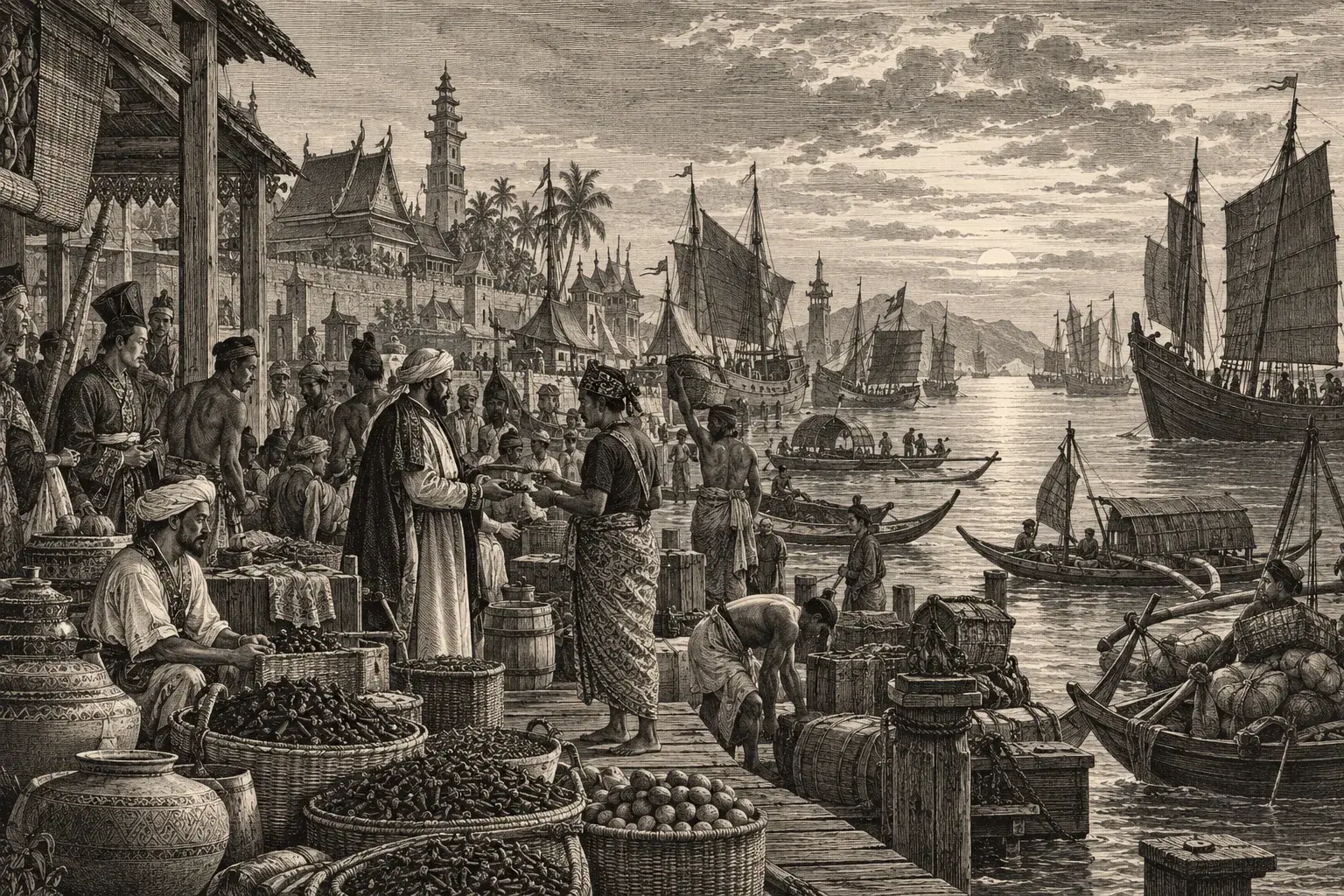
Elephantine, Ta-Seti's main city, deserves its own attention. Its position at the boundary between Egypt and Nubia made it something more than a provincial capital — it functioned as the actual hinge point where two worlds connected. Families at Elephantine maintained ties in both directions along the Nile. People married across the cultural boundary. Trade moved through the city's markets carrying goods from deep in Africa northward into Egypt and Mediterranean goods southward into Nubia. Political relationships, religious practices, and daily customs from both sides of the boundary mixed together in the city's daily life over hundreds of years. A text known as the Prophecy of Neferti claims that the mother of King Amenemhat I — founder of Egypt's Twelfth Dynasty — came from Ta-Seti, specifically from Elephantine. Because Elephantine sat so directly on the Egyptian-Nubian boundary, some historians read this as possible evidence of Nubian ancestry within the Middle Kingdom royal family. Statues of Twelfth Dynasty rulers have also drawn comment for showing facial features that may reflect Nubian heritage. The evidence is not conclusive on royal ancestry specifically, but it is very clear about the depth of connection between the ruling class of Egypt and the southern lands during this period. Many Sudanese historians and scholars have pushed for Ta-Seti to be understood properly as part of a long Nubian and Sudanese historical tradition, not just as a footnote in Egyptian provincial administration. Their argument is that Egyptian records of the region preserve it through an Egyptian lens, and that the region's own history and meaning operated within a Nubian cultural framework that those records often miss or minimize. That's probably the most honest summary of what Ta-Seti was: a place that Egyptian records mention but don't fully explain, that Kushite kings kept citing because it still meant something to them, that archaeologists have only partially uncovered, and that sat for thousands of years at one of the most important intersections in ancient African history. Not a border. A meeting point. The distinction matters.
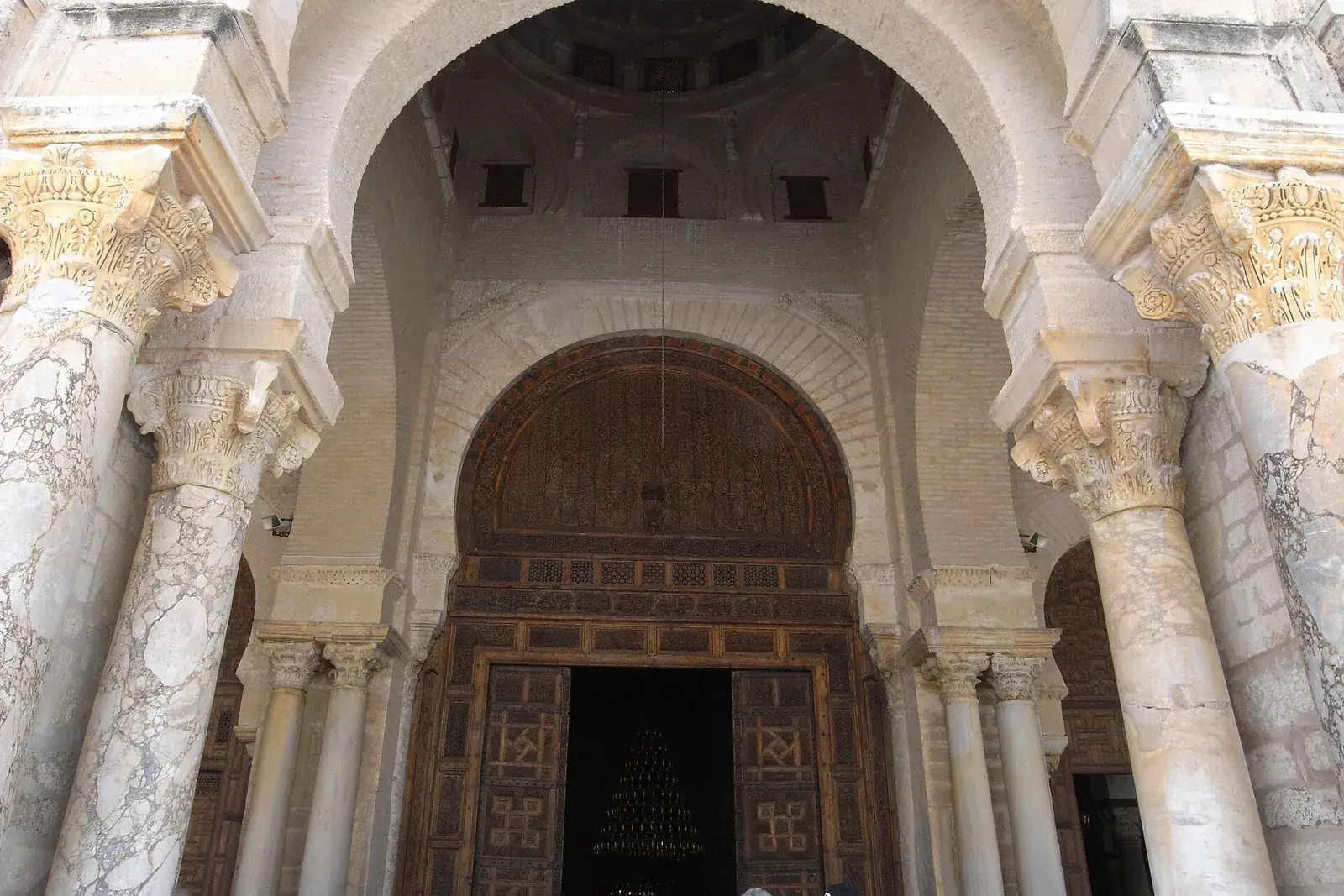
Elephantine — sitting in the Nile near modern Aswan — was the main city of Ta-Seti and served as the physical and cultural gateway between Egypt and Nubia for thousands of years, a place where families, trade goods, religious ideas, and political relationships moved in both directions along the river.