The word crusade carries a particular image with it. Armies with crosses sewn onto their tunics, marching toward the Holy Land, fighting for Jerusalem. That's the version that made it into popular memory. What didn't make it in quite so cleanly is the other kind of crusade — the ones aimed not at Muslims or Jews, but at fellow Christians. Christians who believed the wrong things. Christians who lived in the wrong part of France and had the misfortune of attracting the wrong kind of attention from Rome. The Albigensian Crusade ran from 1209 to 1229, twenty years of sieges, massacres, and political maneuvering aimed at a religious movement called the Cathars, concentrated in the southern French region known as Languedoc. On paper it was a holy war. In practice it was a land grab wrapped in religious justification, and even some people at the time could see through the packaging. The story is worth knowing — not just as a piece of medieval curiosity, but as a fairly clear example of what happens when institutional religion, territorial ambition, and fear of the unfamiliar get pointed in the same direction at the same time.
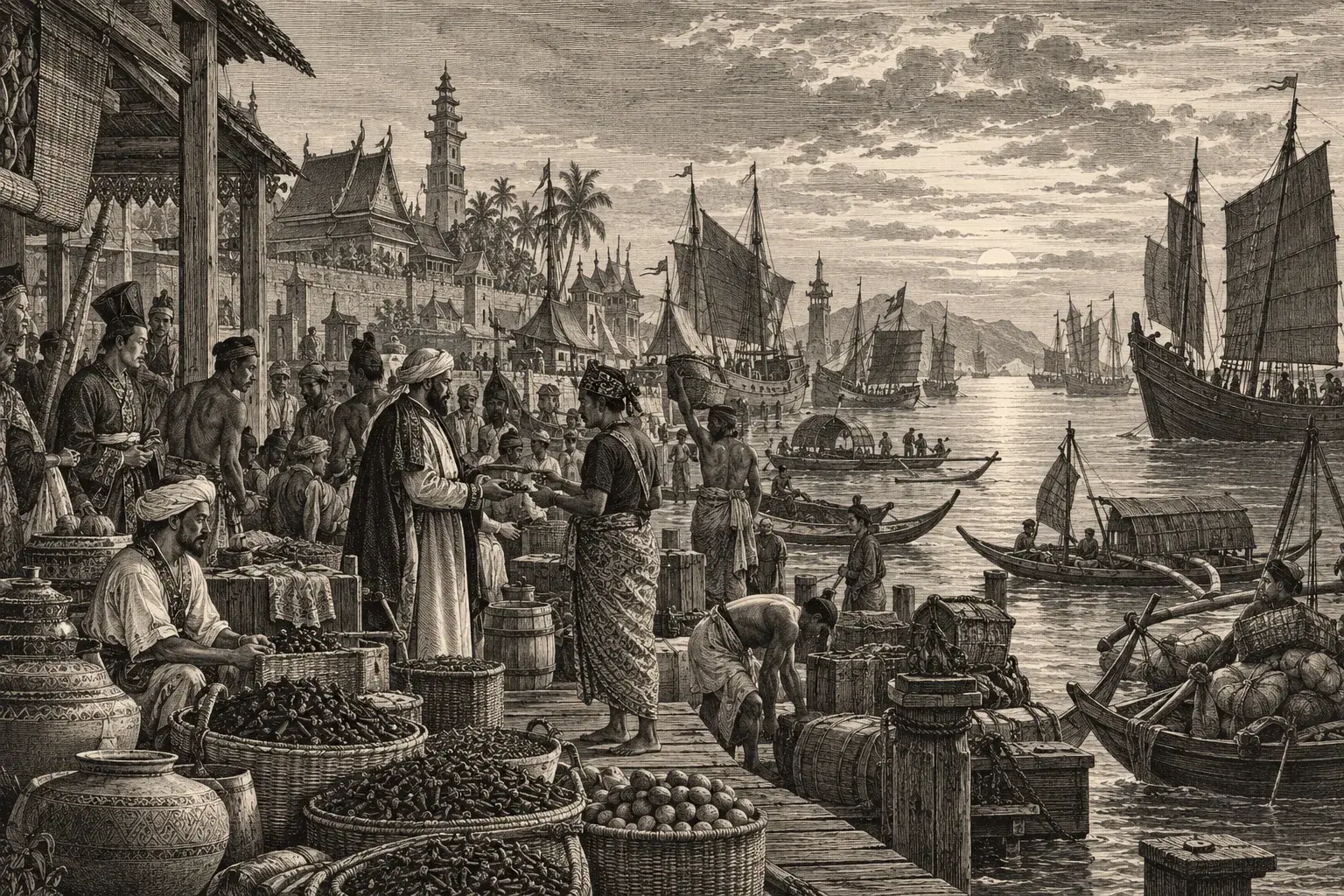
The Albigensian Crusade brought northern French armies into the culturally distinct south — a region with its own language, political traditions, and religious landscape that made it a target for both Rome and the French crown.
The South Was Different — And That Mattered
Languedoc in the early thirteenth century was not fully French in the way the north was French. The people spoke Occitan, not the langue d'oïl that would eventually become standard French. Their culture had more in common with northern Spain and northern Italy than with Paris. Cities like Toulouse were prosperous trading hubs — less isolated, more cosmopolitan, more tolerant of religious variation than the tighter grip of the northern Church would have liked. The French king's authority over this region was loose at best. Local counts and lords ran their own affairs. The Count of Toulouse, Raymond VI, was technically a vassal of the crown but operated with a degree of independence that would have been unthinkable further north. This isn't just background detail. It's the reason the Church's campaign against the Cathars became a crusade rather than staying a local problem. The loose political structure meant there was no reliable local authority willing to crack down on heresy on Rome's behalf. And the French crown, watching from the north, saw an opportunity behind the religious justification — a chance to bring a wealthy, semi-autonomous region under tighter royal control. Religion was the stated reason for what followed. Territory was the prize.
Who the Cathars Actually Were
The Cathars were not some tiny fringe group hiding in the hills. By the late twelfth century they had built a substantial presence across Languedoc — their own clergy, their own rituals, their own parallel structure that competed directly with the Catholic Church for the loyalty of ordinary people. Their beliefs were genuinely different from Catholic orthodoxy, not just slightly divergent. They held a dualist worldview: two principles governed the universe, one good and one evil. The material world — everything physical, everything you could touch — was the creation of an evil force. The spiritual world belonged to a good God. The goal of human existence was to escape the trap of physical existence and return to a purely spiritual state. From this framework, a number of things followed. Jesus, in Cathar belief, had not truly taken on a physical body in the way Catholic doctrine insisted. Reproduction perpetuated the physical world, so the Cathar elite — called perfecti — practiced strict celibacy. Meat and dairy were avoided because they came from sexual reproduction. The perfecti also rejected wealth and lived plainly, wandering and preaching without fixed homes. Ordinary believers — credentes — were not held to this level of strictness. They could live normal lives, but they were expected to receive a ritual called the consolamentum, ideally near death, which was thought to free the soul from further physical rebirth. The Church found all of this intolerable, for obvious reasons. The Cathars rejected the sacraments, the priesthood, the entire institutional structure that gave the Church its authority and its income. And they didn't just tolerate this privately — they preached it openly, and people listened. What made the situation worse for Rome was that Catharism had a certain moral credibility. The perfecti were visibly poor, visibly sincere, visibly committed to their beliefs in ways that Catholic clergy often were not. When a wandering Cathar preacher showed up in a village alongside a well-fed local priest, the comparison was not always flattering to the Church.
The Cathar perfecti — their ordained spiritual elite — were known for austere, wandering lives that stood in sharp contrast to the wealth and comfort of many Catholic clergy, which helped them build genuine popular support across Languedoc.
The Murder That Started a War
Pope Innocent III had been trying the patient approach. He sent preachers into Languedoc to debate the Cathars and win people back through persuasion. It wasn't working. The local bishops were seen as corrupt. The Church's moral authority in the region was weak. Raymond VI of Toulouse was uncooperative, more interested in keeping peace with his Cathar-sympathizing population than in doing Rome's enforcement work for them. Then, in January 1208, the pope's legate — a man named Pierre de Castelnau, who had been sent to pressure Raymond VI — was murdered. A knight in Raymond's service killed him as he was about to cross the Rhône. Innocent III's response was swift and absolute. He declared a crusade. The machinery that had been used to organize armies for the Holy Land was now turned inward, aimed at southern France. Crusading indulgences — the forgiveness of sins in exchange for military service — were offered to anyone who joined. Forty days of service would earn the same spiritual reward as fighting in Jerusalem. This was a remarkable escalation. Crusades were supposed to be for fighting the enemies of Christendom. Using one against Christians — however unorthodox their beliefs — required a theological stretch that not everyone was comfortable making. But Innocent III made it, and enough French knights were willing to go along with it.
Béziers: What Happened When the Talking Stopped
In the summer of 1209, a crusading army — mostly northern French lords and their soldiers — moved into Languedoc. Raymond VI of Toulouse, facing excommunication and political pressure, made a sudden about-face and reconciled with the Church. He handed over some castles and joined the crusade himself for a period, which removed him as an immediate target and confused the army's original purpose considerably. The army needed a different target, and it found one at Béziers. Béziers was a prosperous town on the Orb River. Before the attack, the crusaders demanded the city hand over its Cathar residents. The townspeople refused — Catholics and Cathars alike apparently unwilling to give up their neighbors. The army attacked. What followed has been remembered ever since. The town was taken quickly after some of the defenders overreached during a sortie. The soldiers, supplemented by a mass of poorly-armed camp followers, swept through the streets. The killing was indiscriminate. No distinction was drawn between Cathars and Catholics. Thousands died — the exact number is disputed by historians, but contemporary accounts put it in the tens of thousands, and even if that's inflated, the scale was clearly enormous. A phrase got attached to this massacre in later accounts — allegedly spoken by the papal legate Arnaud Amalric when asked how soldiers should distinguish Cathars from Catholics: kill them all, God will know his own. Whether he actually said it is contested. Whether it accurately described what happened is less contested. The news of Béziers spread fast. Many towns in the region surrendered rather than risk the same fate. The crusade had established its logic early: resistance meant destruction, cooperation might mean survival.
The fall of Béziers in 1209 set the tone for the entire crusade — the refusal to separate Cathars from Catholics in the killing signaled that this was as much about terror and territorial conquest as it was about rooting out heresy.
Simon de Montfort and Twenty Years of War
The military command of the crusade fell to Simon de Montfort, a Norman baron who proved to be an effective and brutal commander. He captured Carcassonne shortly after Béziers — its viscount, Raimond-Roger Trencavel, died in captivity not long after surrendering. De Montfort began accumulating territory, installing himself as its lord, and prosecuting the campaign with a consistency that the crusade's shifting political dynamics otherwise lacked. But the war dragged. That forty-day minimum service meant armies were constantly cycling through — men completing their obligation and going home, new forces arriving, campaigns starting and stopping without the sustained pressure that would have been needed to finish things quickly. Money was a persistent problem. And the local population, even those who were not Cathars, increasingly resented the northern takeover that the crusade was producing. Raymond VI and his son, Raymond VII, kept fighting to recover what they'd lost. Other local lords joined them at different points. The war developed into a grinding back-and-forth — towns changed hands, sieges went on for months, and the violence accumulated on all sides without producing a clean conclusion. In 1218, de Montfort was killed at the siege of Toulouse, struck by a stone thrown from a siege engine that the city's women were reportedly manning. He'd spent nearly a decade building his position in the south. His death didn't end the war, but it changed its shape. Without him, the northern crusading forces lost some of their coherence. The conflict entered a new phase when the French crown stepped in directly. Under Louis VIII and then the young Louis IX, the campaign became a royal project rather than a crusade-funded operation. This made it more sustained and ultimately more effective. The south's resistance, while real and lasting, couldn't indefinitely hold off the resources of the French crown.
The Treaty of Paris and What It Settled
The Albigensian Crusade ended formally in 1229 with the Treaty of Paris — not the more famous one, but a settlement between Raymond VII of Toulouse and the French crown that effectively closed out the military phase of the conflict. Languedoc was brought under the authority of the French king. Raymond VII kept some lands but under sharply reduced independence, and the arrangement was designed to ensure his territory would eventually pass to the crown through marriage arrangements involving his daughter. The political absorption of the south into France — the thing the northern lords and the king had been moving toward all along — was now treaty law. The Cathars were not gone. They still existed in the region, reduced in numbers and openly active support, but present. The Church had a different solution ready for what remained of them: the Inquisition. The medieval Inquisition — distinct from the later Spanish one — was specifically designed for this situation. Rather than military force, it used judicial investigation. Inquisitors arrived in towns, heard testimony, offered the chance to recant and receive lighter punishment, and pursued those who wouldn't. The records they generated are actually one of the better historical sources we have for understanding what ordinary Cathars believed, because inquisitors wrote down what people told them in some detail. The process was slow but systematic. By the early fourteenth century, organized Catharism in Languedoc was effectively finished. The last known Cathar perfectus, a man named Guillaume Bélibaste, was burned in 1321. A movement that had taken nearly a century to build was dismantled over the following century through a combination of military terror and legal pressure.
After the military crusade ended in 1229, the Inquisition took over the work of eliminating Catharism — a slower but ultimately more effective method that used interrogation, testimony, and formal judicial processes rather than armies.
What It All Actually Was
The Albigensian Crusade gets framed as a religious event because that's how it was justified at the time and how it entered history. The religious dimension was real — the Church genuinely viewed Catharism as a threat to Christian society, and Innocent III genuinely believed he was doing necessary theological work. None of that is fabricated. But the crusade also happened to eliminate a semi-independent region and fold it into the French kingdom. It also happened to transfer massive amounts of land from southern lords to northern ones. It also happened to produce a legal mechanism — the Inquisition — that extended Church authority into communities in ways that hadn't previously been possible. These weren't accidental side effects. They were outcomes that benefited the people who drove the campaign forward, and they help explain why a pope who'd tried peaceful methods for years suddenly found the military option when a political murder gave him the opening. Critics existed even in the thirteenth century. Some clerics and local clergy were uncomfortable with the designation of this campaign as a true crusade. What was happening in Languedoc wasn't the same as fighting for the Holy Sepulchre. But the indulgences were issued anyway, and the armies came. The memory of this crusade has stayed complicated. In southern France, particularly in areas around the old Cathar strongholds in the Ariège and Aude regions, it sometimes gets remembered as something closer to a cultural conquest than a religious purification — the suppression of Occitan culture and its gradual replacement by northern French norms, a process the crusade accelerated even if it didn't begin it. Others engage with it more narrowly as a story about medieval theology and power. Both framings capture something true. The crusade was religious and political and cultural all at once, in the way that major conflicts rarely separate out neatly into one thing. Twenty years of war over a region of southern France that history has since mostly footnoted — but that, at the time, was the most ambitious domestic military campaign the medieval French Church had ever mounted. That's not nothing. That's a story that repays some attention.