Ask a Zarathustri priest whether the Prophet taught reincarnation and you will likely get a firm no. Ask some members of the same community why certain prayers include blessings for souls that must return, and the conversation gets complicated fast. This tension is not new. It has been sitting inside Zarathustri religious life for a long time, and in Western countries especially, where independent study groups, translated prayer books, and individual writers have multiplied, the debate has only gotten louder. Everyone has an interpretation. Not everyone agrees on what the texts actually say. And a fair number of people on both sides are very sure they are right. What follows is an attempt to lay out the argument that certain believers make — the case that the Zarathustri scriptures do, in fact, describe a soul that can return to physical life before reaching its final destination. This is not a position held by all, or even most, within the faith. But the argument is more grounded in specific texts than casual dismissal usually acknowledges, and the questions it raises about the soul, about fairness, and about what one lifetime can realistically accomplish are worth taking seriously.
Fire temples like the Agiary and Atash Behram are understood in Zarathustri tradition as holding spiritual energy that serves both the living and the departed — central to a faith where the soul's journey does not end at physical death.
Why This Question Keeps Coming Back
The standard objection to the rebirth reading goes something like this: Zoroastrianism teaches resurrection, not reincarnation. The soul lives once, is judged at the Chinvat Bridge, and waits for the final renewal — Frashokereti — when all creation is restored. That's it. Trying to find reincarnation in the scriptures is either a misreading or the result of too much contact with Indian religious ideas. The people who push back on that objection are not fringe figures. Some are devout practitioners with serious study behind them. Their argument is not that Zarathustri teaching looks like Buddhism or Hinduism — they are often the first to reject that comparison. Their argument is that the evidence is already inside the Avesta and Pazand scriptures, independent of any Indian influence, and that it has been there all along. What makes the debate stubborn rather than resolvable is that both sides are working with ancient texts that are partially damaged, translated through multiple languages, and interpreted within traditions that have themselves shifted over centuries. The honest answer to what the Prophet originally taught on this specific question is: we are not fully certain. That uncertainty is exactly what keeps the argument alive. There is also a practical dimension that traditional voices sometimes understate. Believers in the rebirth position raise a question about fairness that is not easy to dismiss: if every soul receives one life and one judgment, how does divine justice account for the vast differences in circumstance between a child who dies young and an adult who lives long enough to cause serious harm? The weighing of deeds at the Chinvat Bridge — performed by Meher, Sarosh, and Rashne — presupposes something to weigh. What is there to weigh for a soul that barely had time to act?
The Urvaan's Journey — What the Tradition Actually Describes
Before getting to the specific textual arguments, it helps to understand what mainstream Zarathustri tradition says about the soul — the Urvaan — and what happens to it after death. Because even the standard account is not as simple as resurrection-and-done. At death, the soul does not immediately go anywhere. For three days, it remains close to the physical world, bound by the attachments formed during life. This pull — called Sheshab — keeps the soul near what it has known. The rituals performed during those first days are understood, by serious practitioners, as doing something real for the soul's condition during this liminal period. The Uthamna prayers, the specific timings of different ceremonies — these are not purely symbolic gestures. On the fourth day, the soul begins its movement toward judgment. It encounters Sarosh Yazad and approaches the Chinvat Bridge, where the accounting happens. Souls whose deeds have built toward righteousness — Ashavans — continue forward. The path is described in terms of light and ascent. Souls still bound by what the tradition calls Druj — falsehood, negativity, spiritual impurity — face something harder. For the most advanced souls, the destination is Garonamana — the House of Song, the highest spiritual realm, the place of union with the divine source called Ahu. But the texts are clear that this destination is not automatic. It is earned. And this is where the rebirth argument finds its opening: if Garonamana is for souls that have removed all trace of Druj, and if most souls die carrying considerable Druj, then what exactly happens to them between judgment and the final renewal of Frashokereti?
The Chinvat Bridge — where the soul's deeds are weighed by Meher, Sarosh, and Rashne — is central to Zarathustri teaching about the afterlife, and it is in the texts describing what happens to souls who cannot yet cross that supporters of rebirth find their strongest arguments.
Four Classes of Souls — and Why One Lifetime May Not Be Enough
Some scholars within the tradition describe a hierarchy of souls — four categories, with the human soul placed at a level that is not near the top. This is not an incidental theological detail. If the human soul begins at a relatively low point in a multi-tiered spiritual system, and if Garonamana is the summit, then the distance between where most souls start and where they need to end up is genuinely vast. From this framing, the rebirth argument gains a certain logic. Not the emotional logic of wanting more chances, or the philosophical preference for fairness — though those play a role — but a structural logic. If the spiritual work required to become a full Ashavan is this extensive, and if human life is the arena in which that work happens, then one round of human life may simply not be sufficient to complete the task. Support for this appears in how the tradition talks about what it means to become Ashavan. It is not a status conferred by birth into the faith, and traditional voices are consistent on this point. The Navjote ceremony initiates a child. The Sudreh and Kusti are worn daily. The prayers, the purifications, the Dokhmenashini — all of these are prescribed to protect and support the soul's movement. But wearing a thread and reciting prayers does not, in this tradition, make a soul automatically righteous. Becoming Ashavan requires Ashoi — actual righteousness in thought, word, and deed, consistently, across a life. Most people fall short. The tradition says this openly. Morning to night, humans generate thoughts and actions that carry negative weight. The world is complex. The pressures are real. A soul that begins human life already carrying Druj and then accumulates more across one lifetime may arrive at judgment very far from the state required to enter Garonamana. So where does it go?
What the Specific Texts Say
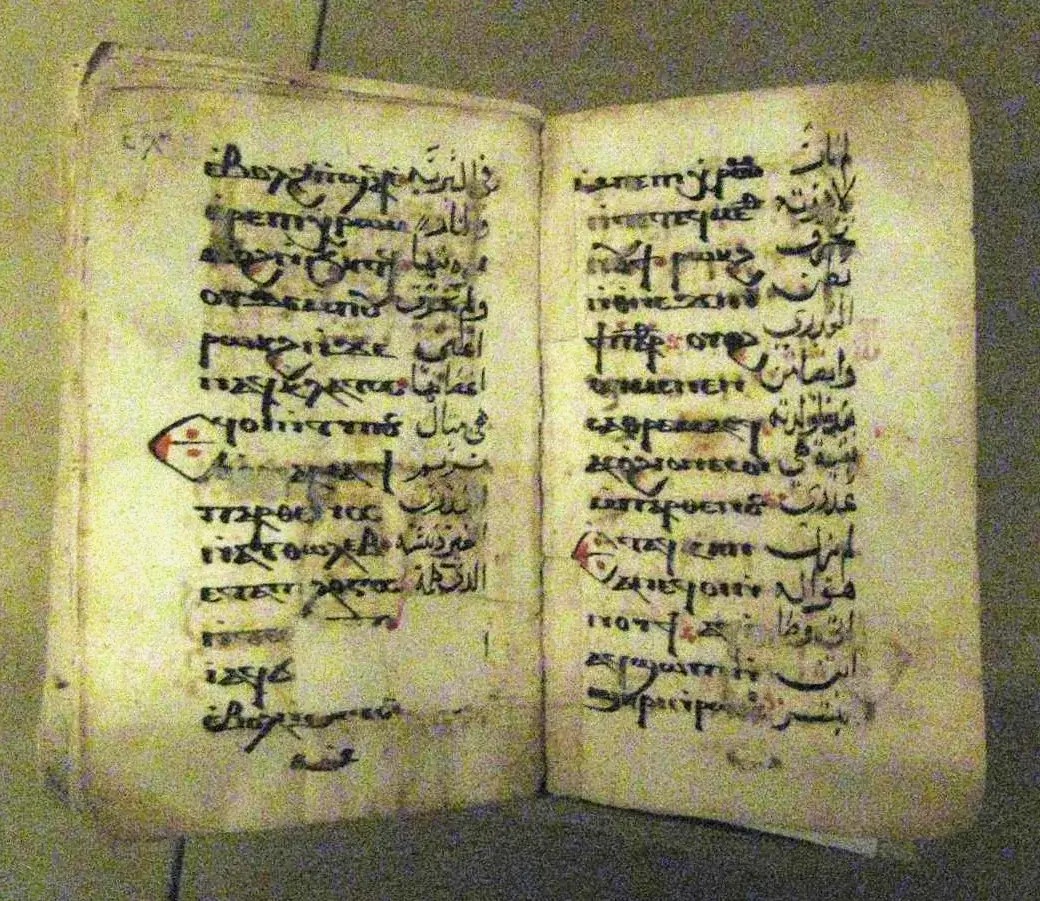
The rebirth argument does not rest on general theological inference. It rests on specific textual passages, and these are worth examining. The Uthamna ceremony includes a prayer line that asks — in a blessing for souls who must experience the consequences of negative actions — that such souls may return again within the good religion. The conditional structure is the important part: if they do not need to return, let them advance toward Meher Yazad. The prayer explicitly contemplates two possibilities. Souls that need to return — and souls that do not. If no soul ever returned, the first half of that blessing would be meaningless filler in a prayer tradition that wastes very few words. Yasna 49:11 is another passage cited consistently by rebirth supporters. It describes souls linked with falsehood returning because of the results of their own actions. The language is about consequence — Kerdar, karma in practical terms — and the implication supporters draw is that the return itself is a consequence, not a punishment or a theological anomaly, but the natural result of a soul's own accumulated actions. Passages from the Vendidad are read similarly. The text includes language that certain supporters interpret as describing repeated return for souls who remain spiritually unprepared. The Drujo-Deman — the realm associated with falsehood — holds such souls until they become ready to move beyond it. What happens then, in the rebirth reading, is a return to the physical world to continue the unfinished work. The Hadokht Nask, which contains detailed descriptions of the soul's experience after death, includes moments of reflection — the soul reviewing its past, accepting divine justice, encountering the consequences of its own record. Supporters of rebirth read these passages as compatible with a cycle that continues until completion rather than a single one-way judgment.
The Avesta and Pazand scriptures — including the Yazashne, Vendidad, Yasts, and prayers like the Uthamna — contain specific passages that supporters of the rebirth position cite as evidence that the soul's journey may include return to physical life.
The Four Practices and What They Demand
The Prophet's central teachings are sometimes summarized in four practices: Ashoi, Mithra, Manthra, and Yasna-Tarikat. Righteousness, covenant-keeping, sacred speech, and the path of worship. These are not passive categories. Each one demands active, consistent effort across the full range of daily life. Ashoi — the first and most fundamental — means actual righteousness. Not the performance of it. Not membership in a community that practices it. The real thing, in thought, word, and deed, throughout a life. The tradition is clear that this is hard. Harder than most people manage. And supporters of rebirth make a pointed observation here: if full Ashoi is the standard, and if the soul cannot enter the highest realms without achieving it, then for the vast majority of souls who die without having achieved it, something has to happen next. The four Anasars — fire, water, air, and earth, understood as having both physical and spiritual dimensions — add another layer to this. Humans are given a religious path partly to help transform these elements from their base state into Gao-Chithra, a purified condition. When that transformation is complete, the soul can move into higher realms freely. When it is not complete, the soul remains bound to the physical. Even the concept of Frashokereti — the final renewal of all creation, the ultimate destination of the Zarathustri cosmological story — fits this framework without contradiction. If Frashokereti is the endpoint of the entire cosmic process, and if souls must reach readiness before it, then the time between death and that final renewal is not empty waiting. Something is happening. Whether that something includes a return to physical life is precisely what the debate is about.
What Traditional Practice Implies — Whether or Not It's Stated Directly
One of the more interesting aspects of this debate is what it reveals about religious practice versus religious statement. The official position — priests stating that reincarnation is not part of Zarathustri teaching — exists alongside a set of ritual practices that, if taken seriously, point toward something more complicated than a simple single-life model. The emphasis on proper handling of the deceased body — Dokhmenashini specifically — is very strong in traditional communities. The argument for its importance goes beyond hygiene or even religious law. It is connected to what happens to the soul's relationship with the physical elements at death. If the body's dissolution is purely a post-death formality and the soul is simply waiting for resurrection with no further physical-world connection, the intensity of the concern about proper practice is harder to explain fully. Similarly, the elaborate ritual calendar around the days immediately after death — the specific prayers, the timings, the offerings — implies a soul that is still in a process, still affected by what happens in the physical world, still close enough to it that what living people do on its behalf matters. That picture of a soul in an ongoing, sensitive state does not sit awkwardly with the idea of a soul that might, under certain conditions, return. None of this proves the rebirth position. It simply shows that the gap between what traditional practice seems to imply and what traditional statements assert is not as wide as it might appear.
Kerdar: Every Thought, Word, and Deed Gets Recorded
The Zarathustri understanding of Kerdar — the record of a soul's actions — is detailed in ways that go beyond a simple moral ledger. According to traditional teaching, actions are recorded in at least three ways: within the soul's own surrounding field, within the location where the action occurred, and within spiritual records connected to positive and negative consequences. This is a precise, structured accounting system, not a vague sense that good and bad actions have consequences. When the soul reaches the Chinvat Bridge and the weighing happens, what is being weighed is this complete record — everything thought, said, and done across the life. The rebirth position's use of this concept is straightforward: if the record at judgment shows a soul still heavily burdened by negative Kerdar, the work is unfinished. The soul has not yet become what the Zarathustri path says a soul should become. Something must allow that work to continue. The physical world — with its tests, its opportunities for choice, its demands on thought, word, and deed — is where that work happens. A return, in this view, is not a punishment. It is the continuation of an incomplete process. This framing also addresses a question about motivation. If the soul's material life is purely a one-time test, the urgency to take religious practice seriously is concentrated in a single window that closes at death. If physical life is part of an ongoing process in which the soul's choices accumulate across cycles, every action carries weight not just for this life but for what the soul carries into subsequent ones. From a teaching perspective, that is a framework that takes the significance of daily practice extremely seriously.
The Navjote ceremony initiates a Zarathustri child into the faith — but traditional teaching is consistent that initiation alone does not make a soul Ashavan. Becoming truly righteous requires sustained practice across a life, which is part of why some argue one life may not be sufficient.
The Saosyants and the Long Road to Farshogard
Traditional Zarathustri cosmology includes the concept of Saosyants — spiritual leaders who appear at key moments to help humanity move forward toward the final renewal. The historical figure of Dastur Adarbad Marespand is sometimes cited in this role, a teacher who shaped prayers and practices in ways that were understood as guiding the community toward Farshogard. The existence of this concept — periodic divine helpers appearing across history to assist souls in their progress — fits more naturally with a multi-cycle view of spiritual development than with a single-life model. If humanity is on a long journey toward Farshogard, and if Saosyants appear at intervals to guide that journey, the implied timescale is not one that can be compressed into individual human lifetimes. The cosmic process described in Zarathustri cosmology operates across vast time. The final stage in the soul's journey, Tanpasin, is described as the full redemption — Ravaan-Bokhtagi — beyond which the soul is fully free from physical attachment and moves into its highest condition. The path to Tanpasin runs through Rishtakhiz — a purification stage — before the final liberation. Supporters of rebirth place the return cycles before Rishtakhiz, as part of the process through which the soul builds toward the readiness to undergo that final purification. The overall arc, in this reading, is coherent. Human life is the training ground. Kerdar accumulates. Judgment happens. Souls ready to advance do so. Souls not yet ready — still carrying Druj, still unfinished — return to the training ground. Eventually, across however many cycles are needed, each soul reaches the point of readiness for Rishtakhiz, then Tanpasin, then the full entry into Garonamana. And all of this converges in Frashokereti, when the entire creation is restored. Whether the Prophet taught this specifically, or whether it is a later interpretation of texts that admit multiple readings, is a question the tradition has not resolved. What is clear is that the people who hold this view are not reading casually. They are engaging with the same texts that everyone else in the faith is working with — and arriving at a different conclusion about what those texts say.
Living With the Uncertainty
The traditional caution about human interpretation — the reminder that material-world thinking has limits, that divine wisdom operates on levels humans cannot fully access — applies here as much as anywhere. The rebirth supporters themselves often acknowledge this. They are not claiming certainty. They are claiming that the texts they point to are genuine, that the questions they raise are real, and that dismissing the entire argument without engaging with the specific passages is not the same as refuting it. The Parsis who arrived in India in the eighth century, according to historical tradition, came with an emphasis on righteousness, purity, honesty, and care for divine creation. That emphasis — on active, sustained right living rather than belief alone — is something both sides of this debate share. Whatever one concludes about rebirth, the teaching that the soul's condition depends on what a person actually thinks, says, and does is consistent across the tradition. That consistency is probably where both sides would find common ground, if they looked for it. Whether the soul gets one turn or many, the answer to how one should live is the same: Good Thoughts, Good Words, Good Deeds. Every day. As fully as humanly possible. The debate about what happens when that standard is not met — and most lives do not fully meet it — is the one that will likely continue for a while yet.