The woman whose house Alfred was hiding in did not know she had a king in her kitchen. She knew she had a large, quiet man in ragged clothes sitting by the fire who was supposed to be watching her cakes. When she came back in from the field to find them burned and ruined, she scolded him with the directness of someone who has no patience for useless people eating her food. You lazy, good-for-nothing man, she said. I warrant you can eat cakes fast enough but you are too lazy to help me bake them. She drove him out. Alfrid received this without argument and left. In his ragged state he certainly looked like a poor beggar, which is what she assumed he was. He was the king of the West Saxons, the only English monarch who had not been killed or driven off by the Danish army that controlled most of England. He had been hiding in forests and over hills for months, eating what he could find, grateful when a farmer's wife would give him a meal in exchange for work.
Alfred's most audacious move during his war with the Danes was disguising himself as a wandering minstrel and walking into the enemy camp to gather intelligence. The Danish commander Guthrum had no idea the musician he was entertaining was the king he was trying to destroy.
The Danes Take England
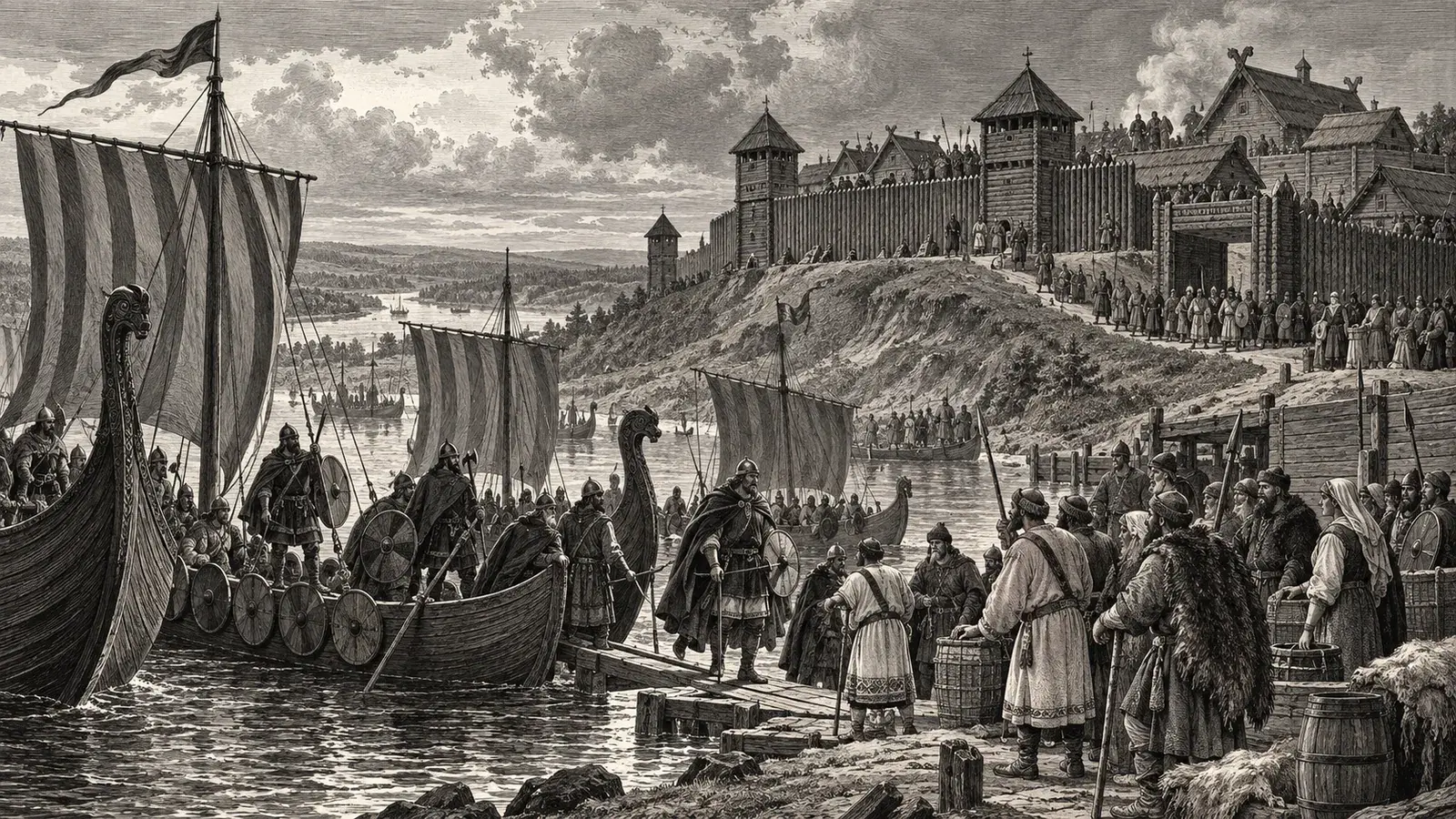
Alfred became king of Wessex in 871 when he was twenty-two years old and his brother Ethelred was killed fighting the Danes. The Danes had already taken the northern and eastern portions of England and were pushing south. The wars that followed were brutal and went badly for the English. Alfred fought. He lost. He fought again. The Danes took more territory. In 878, a massive Danish force swept into Wessex. Alfred had to flee. For months he lived as a fugitive. He moved from place to place through forests and marshes, sometimes staying with shepherds and cowherds, sometimes living in caves, tending cattle in exchange for food. He was a king without a kingdom, without an army, without anything except the will to keep trying. He also built an interesting first — in 875, before his worst reverses, he had begun constructing ships and won the first English naval victory ever recorded. The Danes came by sea. Fighting them by sea made sense. Nobody had tried it before.
The Spider and the Minstrel
The spider story is probably legendary, but it captures something real about Alfred's mental state in hiding. He watched a spider try six times to throw a thread from one beam to another in the hut where he was sheltering. The first five attempts failed. On the sixth, it succeeded. Five times the English had been beaten. Six might be different. Alfred's friends began finding him in his hiding place. Soldiers joined him. A stronghold was built. He began raiding Danish outposts and winning small engagements. His army grew. Then he did something memorably audacious. He disguised himself as a wandering minstrel — a traveling musician — and walked into the camp of Guthrum, the Danish commander. He strolled around, played his harp, sang Saxon ballads. Guthrum was delighted with him and had the minstrel brought to his tent to perform privately. Alfred played and sang for the man trying to destroy his kingdom, received handsome presents for his performance, and gathered every piece of military intelligence the camp could offer. A week later he attacked. The battle lasted all day and far into the night. Guthrum was captured.
The King He Could Have Killed
When Guthrum was brought before Alfred, Alfred revealed himself as the minstrel. The Dane was astonished. You, then, King Alfred, were the wandering minstrel? Yes, Alfred replied. Your life is in my hands. But I will give you your liberty if you become a Christian and never again make war on my people. Guthrum agreed. He and his men were baptized as Christians. An old road across England from London to Chester became the agreed boundary between Danish and Saxon territory. The Danes settled in East Anglia. The area of their settlement became known as the Danelaw. What followed were years of peace in Wessex that Alfred used with characteristic thoroughness. He rebuilt destroyed towns. He strengthened the navy and army. He founded a school similar to Charlemagne's. He personally translated a number of important Latin books into the Saxon language, making them accessible to people who could not read Latin. He was the only English king who ever did more for education than for conquest. He probably did more for both than any other king who sat on the English throne.