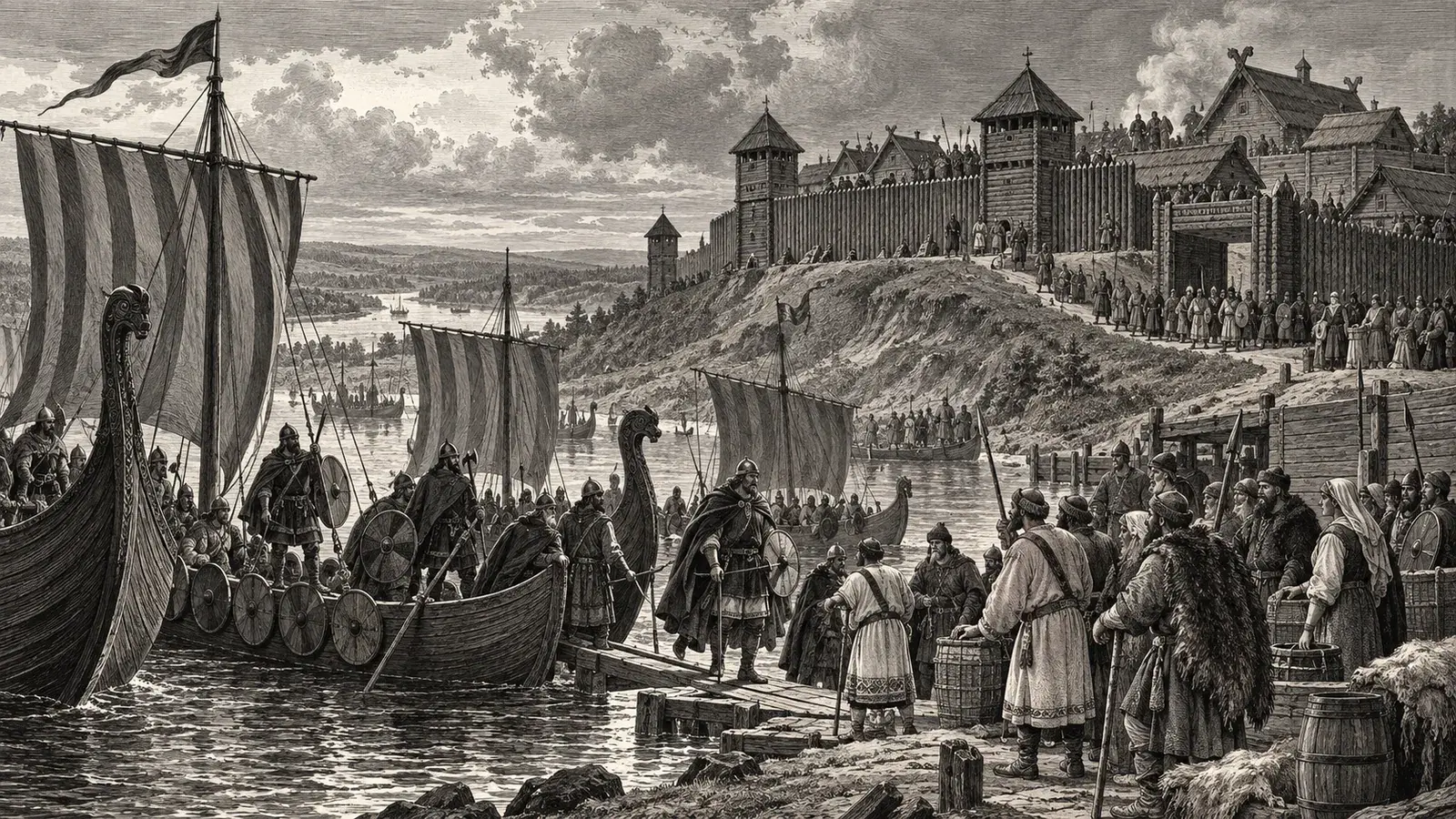
Rollo the Walker got his nickname from a practical problem. He was a giant — physically so large that no horse in Norway or Gaul or anywhere else could carry his weight without breaking down. He walked instead. He did on foot what few warriors could do on horseback. This is the kind of detail that sticks in historical memory. The Viking who was too big to ride a horse. He showed up leading an army and carrying a fleet of 700 ships, and the people of Rouen looked at the river covered in masts and decided they would rather negotiate than fight a man that size.
In 885 AD, Rollo commanded 700 Viking ships carrying 30,000 warriors up the Seine toward Paris. The city held for thirteen months before Rollo eventually retreated — then returned in 911 and received Normandy as his own territory.
Two Hundred Years of Terror
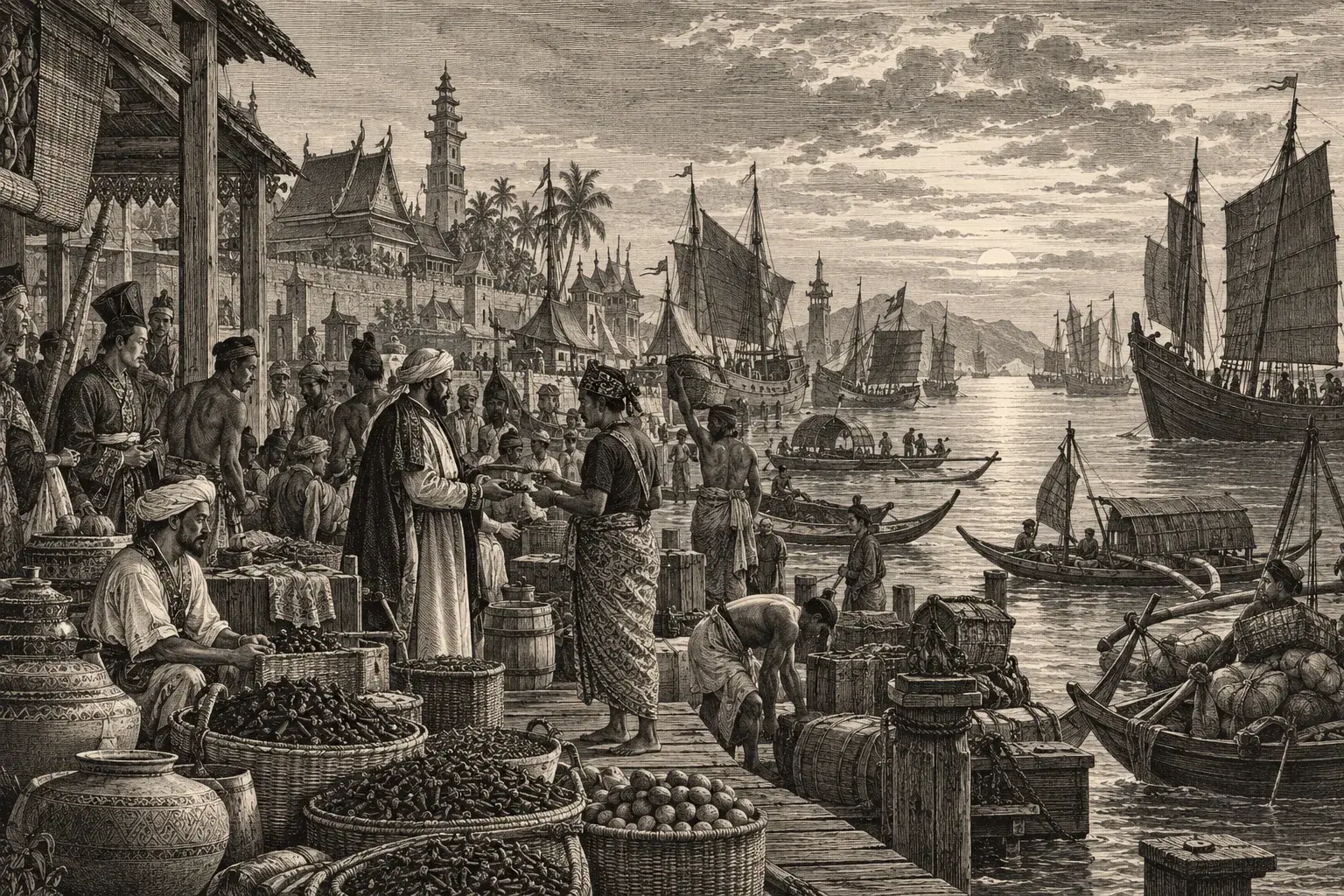
For over two centuries during the Middle Ages, the Christian countries of western Europe faced attacks from two directions simultaneously. From the southwest, the Saracens of Spain pressed north across the Pyrenees. From the northwest, the Norsemen — Northmen, or Vikings — came by sea. The Viking ships were long and swift, built for exactly this work. A single mast carried one large sail. When there was no wind, the crews rowed — sometimes twenty men to a vessel. They could be hauled up beaches. They could navigate rivers that seemed far too shallow for serious ships. They could appear almost anywhere that water touched land. Nearly fifty times in two hundred years the Frankish territories were raided. The Vikings sailed up the Loire, the Rhine, the Seine, penetrating deep into territories that had never expected to need coastal defenses. Some years after Charlemagne's death, a Norse raiding party pushed all the way to Aix, his capital, took the city, and stabled their horses in the cathedral he had built. In 860 they found Iceland and settled it. A few years later they reached Greenland. And then, sometime around 1000 AD, a Viking ship was driven by storm to a coast that turned out to be North America — probably Labrador. The captain went home and told what he had seen. A young Viking prince called Leif the Lucky sailed back to explore it. He found a land of wild grapes and called it Vinland — the land of vines, probably the Rhode Island coast. The Vikings were the first Europeans to set foot in the Americas, roughly five centuries before Columbus. They did not know what they had found, no one in more civilized Europe heard about it, and the settlement they briefly established was eventually abandoned. History credits Columbus because his voyage made the Americas known permanently to all of Europe.
The Siege of Paris
In 885, Rollo and other Viking chiefs led a fleet of 700 ships out of Norwegian harbors, sailed to the mouth of the Seine, and started upriver toward Paris. The city had been warned and had built two walls with strong gates. It was not going to fall easily. Rollo and his men tried a siege tower — built one on wheels, rolled it up to the walls, manned it with soldiers. The Parisians shot arrows and threw rocks and poured boiling oil on anyone who came close. The walls held. The Vikings settled in for a long wait, encamping around the city for thirteen months. Food inside Paris grew scarce. The Count of Paris, a warrior named Eudes, slipped out one dark night through a gate and rode to the king for help. The king assembled an army and marched to the city. The Vikings, facing a battle they apparently did not want, lifted the siege and pulled back. They went to Burgundy and lived off the land there for a while.
The Deal That Created Normandy
In 911, Rollo came back to Francia with another fleet and started plundering farms again. The Frankish king Charles — called Charles the Simple, which was apparently meant as an insult by his contemporaries — had the intelligence to see that this needed to stop, and more importantly, that it could be stopped without a battle. They met to negotiate, the two sides standing on opposite banks of a small river, messengers carrying proposals back and forth. Charles offered Rollo the region around Rouen and the surrounding territory as his own, in exchange for Rollo and his people becoming Frankish vassals and converts to Christianity. Rollo agreed. He asked his man to perform the ceremonial kissing of the king's foot on his behalf. The Norseman who did this stood beside the king's horse, grabbed the royal foot, and lifted it to his lips without bending his own knee — nearly tipping the king off his horse in the process. The Norsemen found this very funny. The territory given to Rollo became known as Normandy — the land of the Northmen. The people settled, learned the Frankish language, adopted Christianity, and integrated into French society within a few generations. And then Rollo's descendant, William Duke of Normandy, crossed the channel in 1066 and conquered England. The giant who was too big for a horse started a line that gave England its current royal family's ancestry.
The Feudal System Was His Idea Too
The arrangement Rollo made in Normandy followed the same logic as the arrangement he had made with the Frankish king, just scaled down: he gave parts of Normandy to his leading men on condition that they bring soldiers to his army and fight when called. They became his vassals, as he was the king's vassal. The lands granted in this way were called feuds. The system of landholding was called the feudal system. It spread throughout Europe during the Middle Ages and defined the political and social structure of the western world for the next five hundred years. Rollo had been a robber before he became a duke. He understood robbery from the inside, and he made his duchy one of the safest places in Europe by hanging robbers. His people learned French, converted to Christianity, and gave up piracy — entirely because it suited them better than the alternative. Practical. Like most things he did.