The story of Canute and the tide is one of the most misunderstood episodes in English history. The version most people know: an arrogant king so puffed up with his own power that he literally commanded the ocean to obey him, was surprised and embarrassed when it did not, and learned humility the hard way. The version that actually happened, according to the sources: a king who had grown thoroughly tired of courtiers telling him he could do anything sat them down at the tide line specifically to demonstrate what human authority could not do. When the water reached his feet, he turned to them and said: Learn how feeble is the power of earthly kings. None is worthy the name of king but He whom heaven and earth and sea obey. The lesson was for them, not for him. He already knew.
The tide scene was not arrogance but deliberate pedagogy — Canute staging a demonstration to rebuke courtiers who had told him he could do anything, using the rising water to make a point about the difference between royal and divine power.
How a Nineteen-Year-Old Conquered England
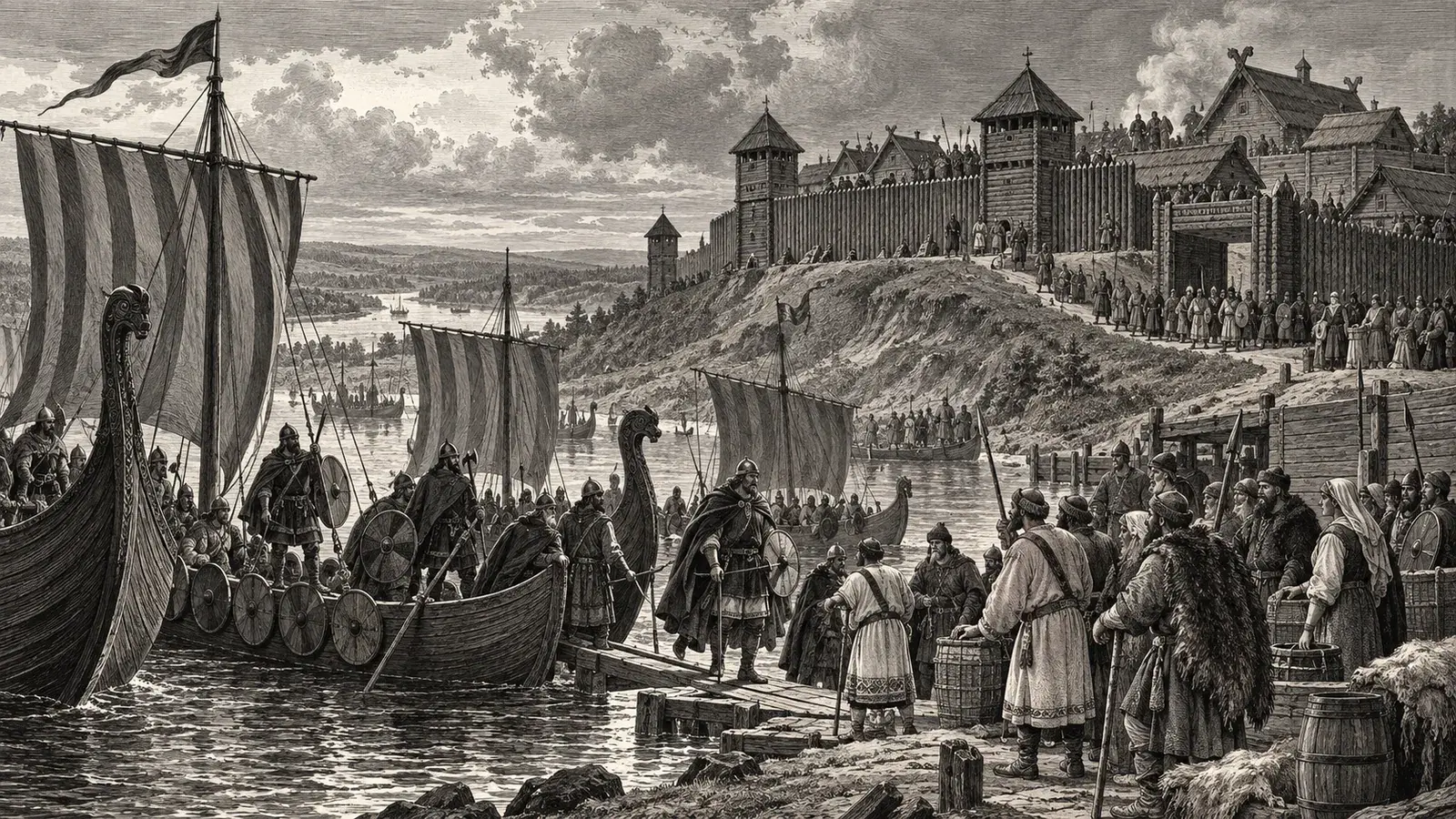
Canute's father Sweyn, King of Denmark, had invaded England in 1013 and driven the Anglo-Saxon king Ethelred into exile in Normandy. Sweyn declared himself king. Within months, he died. Canute was nineteen, and the succession was not clean. Some of the Anglo-Saxons recalled Ethelred and rebelled against the Danes. Canute went back to Denmark, assembled the largest Danish army that had been gathered in a generation, and sailed back to England. Ethelred died during the campaign. His son Edmund — called Edmund Ironside for obvious reasons — took up the defense of Saxon England and proved to be exactly the kind of opponent who makes wars complicated. He fought five major battles against Canute in a single year. Canute won none of them decisively. Edmund won none of them either. The sixth battle finally went to Canute, through the treachery of a Saxon noble named Edric who took his men out of the fight at a critical moment. Edmund Ironside had to surrender. But Canute, who had watched this man fight against overwhelming odds with extraordinary stubbornness, treated him generously. He divided England: Canute took the north and east, Edmund kept Wessex and the south. For a brief, strange period, England had a Danish king and a Saxon king simultaneously. Edmund died in 1016. Canute became sole ruler of all England.
The Decision That Won the War After the War
Canute understood something that most conquerors do not: winning the battle is easier than winning the peace. His Anglo-Saxon subjects had lost the war, but they outnumbered his Danes enormously, knew the country, and would never fully accept a foreign king who governed them through force alone. So he sent his army home. He kept a portion of his fleet and a small guard for his palace. Beyond that, he dissolved his Danish military presence and placed himself deliberately at the mercy of his Anglo-Saxon subjects' acceptance. It was either the bravest or the most calculating thing he did, and it worked. The Anglo-Saxons had never had a Danish king treat them this way — as people whose trust needed to be earned rather than as a conquered population to be managed through fear. They gave him their loyalty, and he kept it.
A King Worth Remembering
During Canute's reign England had peace and prosperity that the country had not known for decades. He governed wisely and justly by the standards of his era. He did not abandon his Danish heritage but he did not impose it on his English subjects either. The tidal demonstration came from this same quality of mind. One of his courtiers said: Most noble king, I believe you can do anything. Canute rebuked him sharply for the flattery and then arranged the lesson at the water's edge so that everyone present would understand why such talk was dangerous — dangerous not to Canute, who knew his own limits, but to the courtiers themselves, who needed to understand that a king's power ended where God's began. The English people held his memory dear long after his death. Which is a rare thing for a foreign conqueror to achieve.