The story that surrounds El Cid begins not with a battle but with a leper in the mud. One afternoon, a company of knights was riding through northern Spain when they heard cries for help. A leper was sinking in a deep mire at the roadside. One of the knights — young Rodrigo — dismounted, pulled the man free, put him on his own horse, and rode with him to the inn where they were stopping for the night. He gave the leper the seat beside himself at dinner. He shared his bed with him. At midnight, while Rodrigo slept, the leper breathed on his back and disappeared. A vision appeared: I am St. Lazarus, the leper to whom you were so kind. Because I have breathed upon you, you shall accomplish whatever you undertake in peace or in battle. Go on and always do good. The story may be legend. What follows it is history.
El Cid operated in the complex world of 11th-century Spain, where Christian and Moorish kingdoms coexisted, allied, and fought in shifting combinations. He served both sides at different points, always on his own terms.
The World El Cid Lived In
When El Cid was born around 1040, the Iberian Peninsula was divided roughly in half. The Moors — North African Muslims who had crossed the Strait of Gibraltar in 711 and conquered most of Spain within a decade — held the southern half. The northern half was Christian Spain: several kingdoms including Castile, Leon, and Aragon, perpetually at war with the Moors and frequently at war with each other. The Reconquista — the Christian reconquest of Spain — had been grinding forward for three centuries. In El Cid's time it had pushed the Moorish kingdoms south of roughly the center of the peninsula. But the process was slow, brutal, and complicated by the fact that Christian and Moorish rulers made alliances with each other as readily as they made war. El Cid operated in this world without apology for its complexity.
Champion, Then Exile
El Cid served King Fernando of Castile and proved himself quickly. When Fernando had a territorial dispute with the king of Aragon, they agreed to decide the matter by combat — each king chose a champion, and the winner's king got the city in question. Fernando chose El Cid. The other champion was described as the bravest knight in Spain. El Cid beat him anyway. When Fernando's son Alfonzo inherited the throne, he became angry with El Cid for reasons the accounts describe as unjust — probably political jealousy of a man whose reputation was growing uncomfortably large — and banished him from Christian Spain. El Cid needed money for his journey. He filled two chests with sand, sent word to two wealthy moneylenders that he wished to borrow six hundred marks against his treasure of gold and silver in the chests, and required them to swear not to open the chests for a full year. They agreed. He got his six hundred marks and set out with three hundred of his knights, and a perfectly good debt that he fully intended to repay.
Valencia: The Greatest Siege of His Career
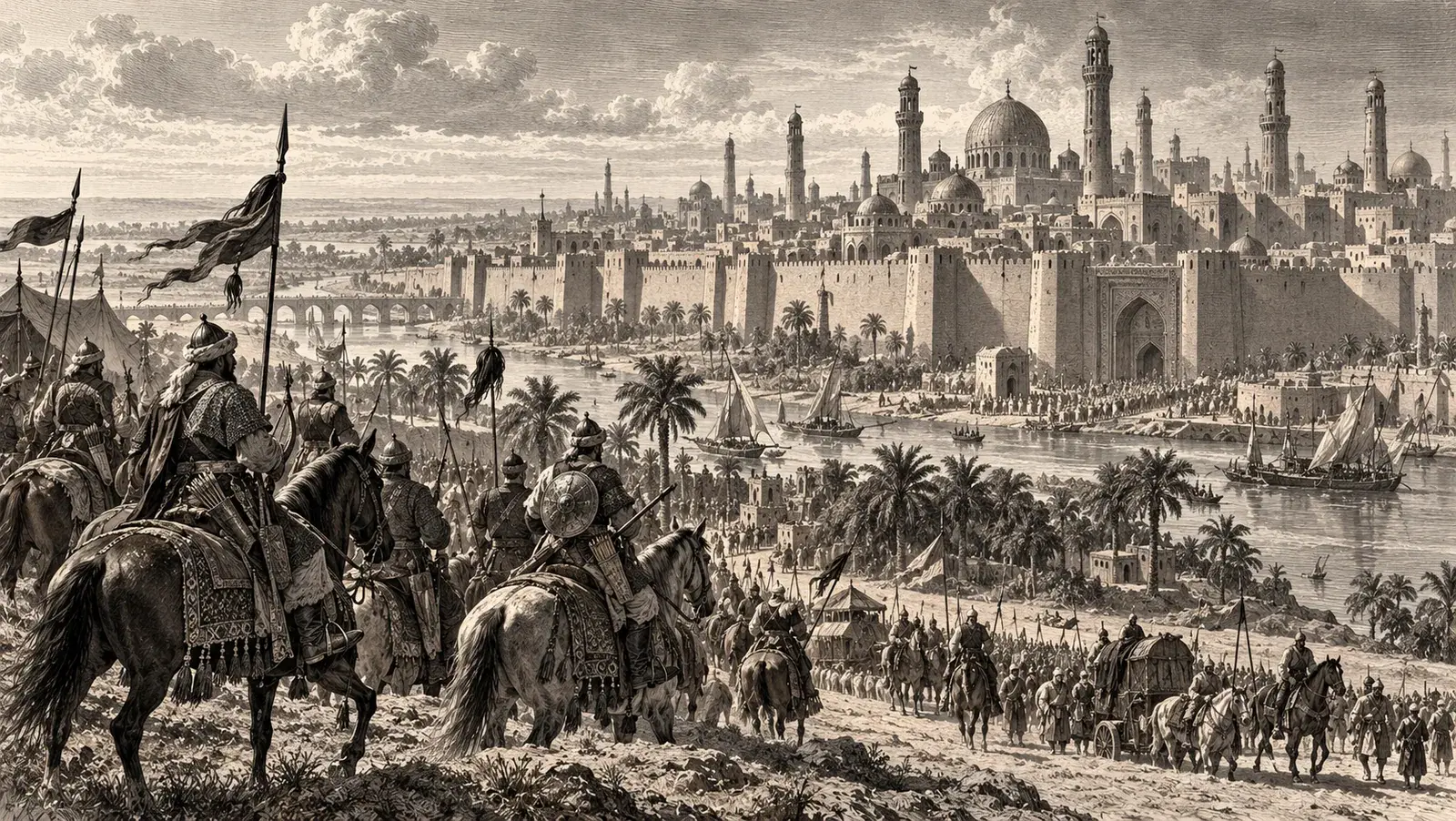
After years of successful campaigning in Moorish territory — serving at various points as a Moorish vassal, fighting for himself, and eventually being recalled and reinstated by Alfonzo — El Cid turned his attention to Valencia, the richest and most powerfully fortified city in Moorish Spain. The Saracens who held Valencia tried to prevent his army from approaching by flooding the plain around the city. El Cid camped on high ground above the flood and began his siege from there. The city held out under severe privation — food became so scarce that people ate horses, dogs, cats, and mice until only three horses and a mule were left alive in the whole city. On June 15, 1094, the governor came out of the city and handed El Cid the keys. He placed his men in all the fortifications, took the citadel for his own residence, and flew his banner from the towers. He called himself the Prince of Valencia. When the king of Morocco sent fifty thousand soldiers to recapture the city, El Cid led a sudden attack that routed them entirely. Sources say fifteen thousand of them drowned trying to cross the Guadalquivir River. El Cid held Valencia until his death in 1099. The Moorish account says he died of rage when word came that an army he had sent against the Moors had been nearly destroyed. Whether that is literally true, it has the ring of the man.
The Last Battle
Before he died, El Cid had reportedly seen a vision of St. Peter telling him he would gain a victory over the Saracens after his death. His orders were carried out. His body was embalmed so well it seemed alive. It was dressed in his coat of mail. His famous sword was placed in his hand. The corpse was mounted on his favorite horse, strapped to the saddle, and at midnight, a guard of a thousand knights rode out of Valencia with the dead man at their head. The Moorish king camped outside with thirty-six chieftains saw, in the predawn darkness, what appeared to be a vast army of knights in white robes led by a figure of extraordinary size. Whatever actually happened in the confusion of that night, the Moorish forces fled to the sea. Twenty thousand of them reportedly drowned trying to reach their ships. The dead knight won his last battle. El Cid was buried near the altar of a church. The Latin inscription translates: Brave and unconquered, famous in triumphs of war, enclosed in this tomb lies Roderick the Great of Bivar.