By the time the Angles, Saxons, and Jutes finished fighting their way across Britain, the Christian Church there was nearly gone. Not weakened. Nearly gone. Churches had been burned. The Christians who survived were pushed west into remote hills and isolated valleys, far from the centers of the land the newcomers now controlled. Cut off from the rest of the Christian world, they kept their faith alive quietly, but they drifted from wider church customs simply because nobody was coming to remind them of those customs. They were survivors, not a growing movement. The new rulers of the land followed pagan religions. They worshipped Woden, the god of war, and Thor, the god of thunder. Their belief system was built around battle — courage was everything, cowardice was the worst thing a man could be, and the afterlife was something you earned by how hard you fought. Kindness and mercy did not feature much. These were practical values for warriors carving out territory in a contested land, but they were about as far from Christian teaching as it is possible to get. What happened over the next century and a half — the slow, strange process by which a pagan warrior society became one of the most deeply Christian regions in Europe — is not a simple story. It involved a pope who noticed slaves at a market, a monk who felt guilty about a battle, Irish monasteries that became the most famous schools in the western world, and a lot of kings making political decisions that turned out to have enormous religious consequences.
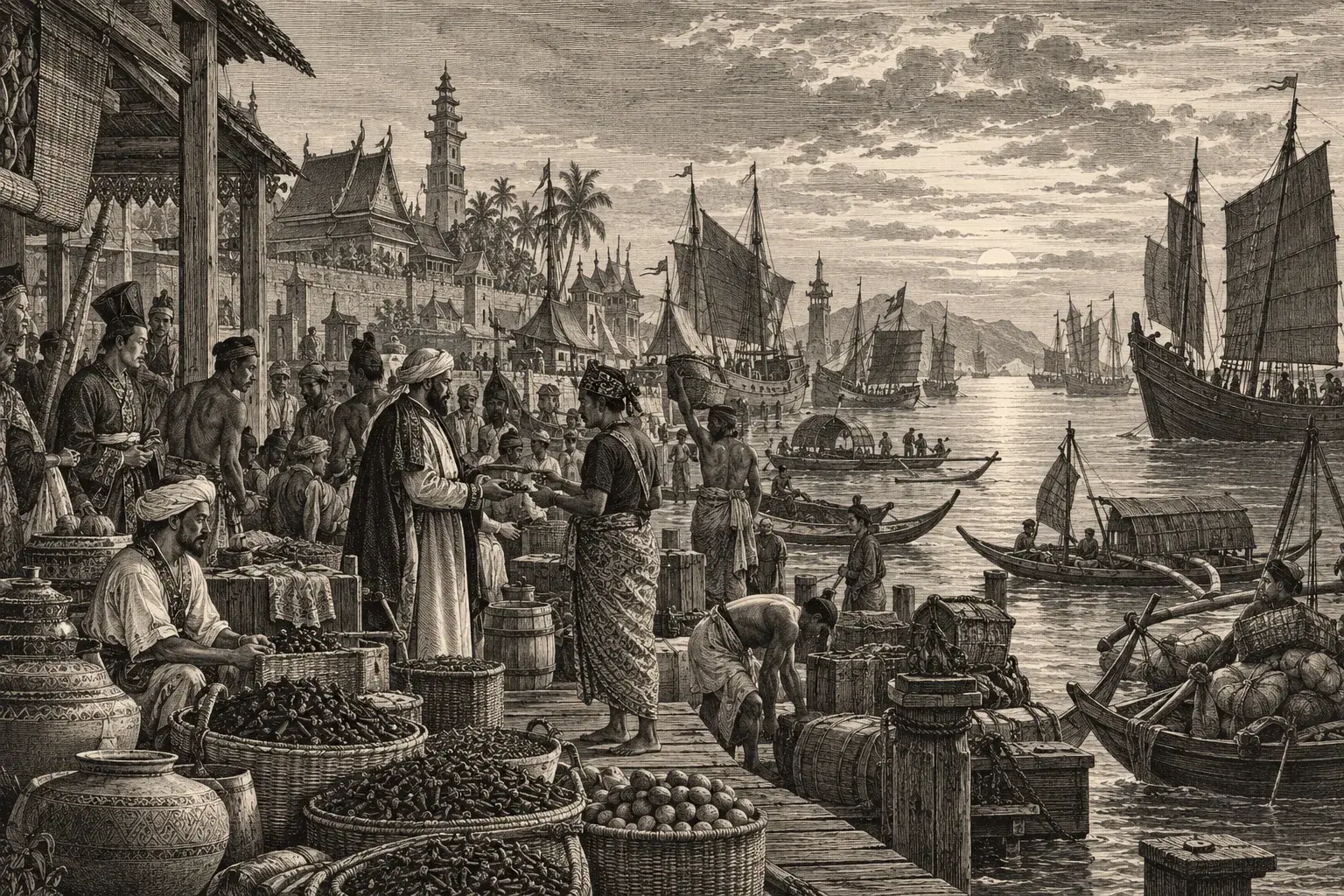
While Anglo-Saxon paganism dominated most of Britain, Christian communities survived in the western fringes — and in Ireland, monasteries were growing into the most important centers of learning in early medieval Europe.
The Kingdoms That Rose From the Fighting
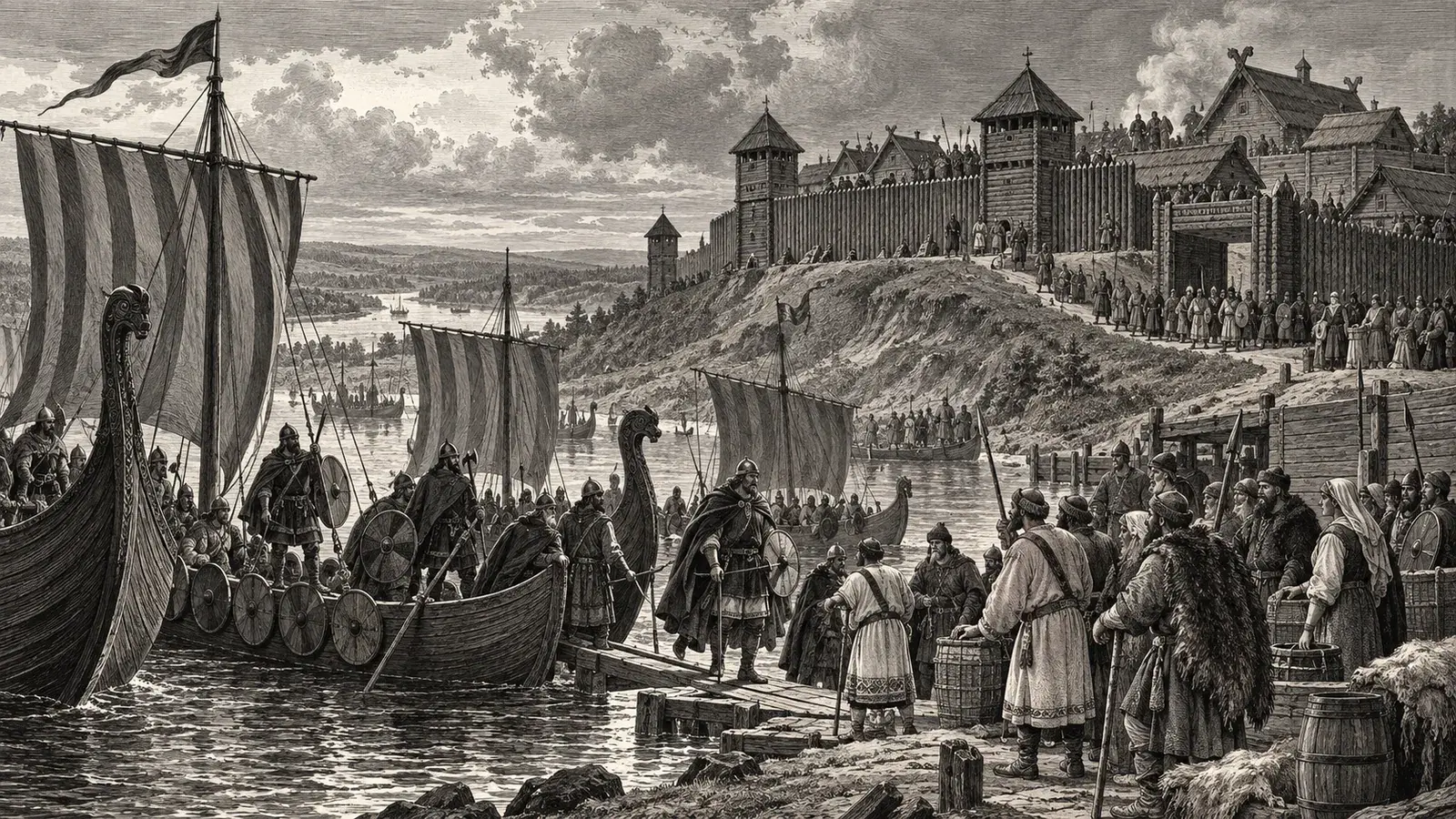
The fighting between the British and the invaders lasted nearly 150 years. That is a long time for a territory to be at war, and by the end of it the map looked completely different. Kent rose in the southeast under the Jutes. Around it, Saxon kingdoms took shape — Essex, Sussex, and Wessex. The Angles formed their own kingdoms in the north and east: East Anglia, Bernicia, and Deira. In the center sat Mercia, a kingdom made up of different groups pressed together. These were not peaceful, well-organized states. They were hard and violent, frequently at war with each other as well as with the remaining British communities to the west. But out of that violence, the foundations of what would become England were being laid. The language changed. The culture changed. And eventually, the religion would change too — though that process started not in Britain but in Rome.
A Pope, Some Slaves, and a Plan for England
The story of how Christianity came back to England has a specific starting point, and it involves a slave market. A church leader named Gregory — not yet pope at the time — was passing through a market in Rome when he noticed a group of fair-haired boys being sold as slaves. He asked where they were from. When he was told they were Angles, from the kingdom of Deira in Britain, he made a wordplay that became famous: these Angles should become Angels, their kingdom of Deira should be delivered from God's wrath, and their king, whose name was Aella, should have the praises of God sung in his land. Whether or not Gregory actually said all of this in quite that polished a way, the story stuck, and it captures something real about his reaction. Gregory wanted to go to Britain himself. He did not get permission. Years later, after he became Pope Gregory I — later called Gregory the Great — he found another way. He chose a monk named Augustine and sent him to England with forty companions in the year 596. The journey was difficult and the monks nearly turned back at one point. They reached Kent, which was the strongest kingdom in southern England at the time. King Ethelbert gave them a cautious welcome. His wife, Queen Bertha, was already a Christian — she had come from the Franks on the continent and brought her faith with her — so the ground was not entirely unfamiliar. Ethelbert watched Augustine and the monks, listened to their preaching, and eventually became a Christian himself. That same Christmas Day, thousands of people from Kent were baptized in the River Stour. The king gave Augustine land and an old ruined church, which became Christ Church in Canterbury — still the center of the Church of England today. The first Benedictine monastery in England was built nearby.
When Augustine arrived in Kent in 596, King Ethelbert gave him protection and the freedom to preach — a cautious welcome that turned into one of the most significant religious conversions in English history.
The Faith Spreads — and Hits Walls
Christianity moved quickly after Kent. Essex accepted the new faith. London became a center for church leadership. Rochester got its own bishop. Pope Gregory, hearing reports from Augustine, sent more missionaries and more books — which formed the first libraries in England. The young church was getting organized fast. Augustine tried to get the older British bishops in the west to join him in teaching the English. It did not work. The British Christians had spent generations being pushed around by the very people Augustine was now trying to convert. Old anger and old habits of isolation kept the two sides apart. The theological disagreements over certain customs — the date of Easter, the style of monks' haircuts — were real, but the deeper problem was that the gap between the British survivors and the English newcomers was not just religious. It was cultural and historical, and it did not close quickly. Augustine died in 604, only seven years after arriving in England. He had not resolved the tension with the British church, and the young church he left behind was not yet secure. After his death, some kingdoms slid back toward pagan worship. Progress stalled. In the south, the church fought to hold what it had gained. In the north, a different story was beginning.
Northumbria and the Christianity of the North
In Northumbria, the northern English kingdom formed from Bernicia and Deira, King Edwin allowed Christian worship because his wife was Christian. After long discussions with his advisors — a famous scene describes his chief priest comparing human life to a sparrow flying through a warm hall on a winter night, passing briefly through light and warmth before disappearing back into the cold — Edwin chose baptism. Many of his people followed. Northumbria became one of the strongest Christian kingdoms in England. Several of its kings are remembered as saints. King Oswald, who ruled after a period of chaos following Edwin's death, made a decision that shaped the region for generations. He invited monks from Iona — the Irish monastery off the Scottish coast — to come and teach his people. Those monks founded Lindisfarne, a monastery on a small island off the Northumbrian coast, in 635. From Lindisfarne, monks traveled across the land on foot, building churches and communities as they went. The style of Christianity they brought was rooted in Irish monastic tradition — personal, scholarly, closely tied to the rhythms of monastery life — and it gave Northumbrian Christianity a character distinct from the more Roman-influenced church in the south. Meanwhile, in the center of England, pagan Mercia under King Penda was fighting hard against the Christian kingdoms. Penda killed Christian kings in battle and rolled back Christian influence wherever he won. He was good at winning. Only after his death did Mercia finally accept Christianity, and only then did a real peace settle over the English kingdoms.
Lindisfarne, founded by Irish monks from Iona in 635, became the center of Christianity in northern England — a place from which monks traveled on foot across the land, building the church one community at a time.
Ireland: The Country That Kept the Faith Alive
While England was going through all of this — the invasions, the burning of churches, the slow recovery — Ireland was doing something completely different. The pagan Saxons never reached Ireland. Saint Patrick had brought Christianity there in the 5th century, and it kept growing without the violent interruption that nearly killed it in Britain. Irish monasteries expanded and became famous across Europe. Students traveled from France, Germany, and other parts of the continent to study at places like Clonard and Bangor. Some of these monasteries grew to hold thousands of monks and learners at a time — by medieval standards, they were effectively large towns organized entirely around prayer and scholarship. Irish monks had a particular attachment to books. Many spent their entire lives copying the Bible and other texts by hand. They also wrote history and poetry in a highly decorated Celtic style. The manuscripts they produced were objects of serious craft — the colors, the interlocking patterns, the fine lettering — and the most famous example, the Book of Kells, is still kept in Dublin today and still draws visitors from around the world to see it. It dates to around 800 AD and shows what Irish monastic book-making had become by then. Because learning and faith were so central to Irish monastic life, Irish monks felt driven to take what they knew to other places. For more than two hundred years, they traveled as missionaries across Western Europe — into Scotland, northern England, France, Switzerland, Italy. They founded monasteries as they went and left lasting marks on the church in every region they reached.
Saint Columba and the Island of Iona
The most famous of these Irish missionaries was Columba, and his story starts with a failure. Columba was a monk, but he came from a warrior family and still had a warrior's instincts. He pushed his family into a battle over a dispute — the exact cause involves a copied manuscript and a question of who owned it — and the battle ended with many deaths. Filled with regret, Columba accepted a harsh personal penalty: permanent exile from Ireland. He would leave his home country and never return except in extraordinary circumstances. As penance, he committed to converting at least as many souls to Christianity as had died because of the battle he had encouraged. In 563, Columba and twelve companions crossed the sea and settled on Iona, a small rocky island off the western coast of Scotland. It was about as far from comfortable as it is possible to get — isolated, windswept, a long way from anything. From there, Columba began building one of the most important missionary operations in the early medieval church. His monks crossed dangerous stretches of open water in small boats, moving along the Scottish coast from island to island. Wherever they landed and found people willing to listen, they built a church and a small monastery. Columba himself was widely respected — his strong, fierce character had not disappeared, but it had turned toward courage, care for others, and a kind of authority that people trusted rather than feared. Kings consulted him. Disputes were brought to him for judgment. King Aidan of Scotland was the first Scottish ruler crowned in a Christian ceremony — Columba performed the coronation. The stone used in that ceremony passed through history for centuries, eventually ending up under the English coronation chair in Westminster Abbey. Columba also stayed connected to Ireland even in exile. When serious conflicts threatened, he returned to help resolve them — including one that nearly resulted in all Irish poets being banned from the country, which he managed to prevent by negotiating a compromise that kept the poetic tradition alive.
Iona became one of the most important Christian centers in early medieval Europe — from this small, remote island, Columba and his monks spread Christianity through Scotland and eventually back into northern England.
The Church Finds Its Shape
Columba died quietly in 596, found kneeling before the altar. He knew his death was coming and had spent his last day writing. He stopped mid-sentence on Psalm 34 and left the rest for whoever came after him. By the time peace settled over the English kingdoms — after Mercia finally accepted Christianity and the long cycle of pagan kings destroying Christian kingdoms came to an end — the church in England was strong enough to begin organizing itself seriously. Two men were especially important to this. Wilfrid of York pushed hard for the English church to stay closely aligned with Rome, even when that position cost him personally. Theodore of Canterbury, a Greek monk sent from Rome, brought real administrative order to the church — he organized it into clear geographic areas, set rules that everyone was expected to follow, and founded schools. Before Theodore, the English church was a patchwork of different traditions and local arrangements. After him, it functioned as a single institution. There were arguments along the way. The tension between the Irish-influenced church of the north and the Roman-influenced church of the south came to a head at a gathering called the Synod of Whitby in 664, where the date of Easter and the style of monastic life were debated and the Roman position won. Wilfrid argued the Roman case. The Irish tradition was not erased — it left too many marks on English Christianity for that — but the formal alignment went to Rome. Out of the monasteries that developed during this period came some of the most significant intellectual work of the early medieval world. Bede, writing at the monastery of Jarrow in Northumbria in the early 700s, produced a history of the English church that remains one of the main sources for everything described in this article. A poet named Caedmon, also from Northumbria, wrote some of the earliest surviving poetry in the English language — religious verse, rooted in the same monastic culture. A scholar named Alcuin eventually left England to work at the court of Charlemagne, taking English learning to the heart of continental Europe.
What Changed and What It Cost
In roughly a hundred and fifty years, a land where Christianity had nearly been wiped out became one of the most deeply Christian regions in Europe. England came to be called the Island of Saints. The monasteries produced scholars whose work was read across the continent. Kings and queens gave up their thrones to become monks and nuns. Churches went up everywhere. Books were copied and schools were opened. None of that happened automatically. It happened through specific people making specific choices — Gregory noticing a group of slaves and following through on what he felt, Augustine finishing a journey he almost abandoned, Ethelbert deciding to listen rather than dismiss, Oswald inviting Irish monks rather than keeping the north isolated, Columba accepting exile and doing something useful with it rather than giving up. The Danish invasions that came later in the 800s destroyed a lot of what was built during this period. Churches were burned again. Monasteries were attacked. Written records were lost. In Scotland and parts of northern England, most of what the early monks had built disappeared so completely that only small traces remain. But the faith itself survived a second time, for the same reason it had survived the first: enough people kept it going through enough difficulty that it was still there when the destruction stopped. That pattern — something nearly lost, then slowly recovered through the efforts of people who refused to let it go — is what runs through this whole stretch of history, from the burning of churches in the 5th century to Bede writing his history in the 8th.