Most mythologies have a creation story. Norse mythology has a creation story where the world is built from a dead body. Three gods — Odin, Vili, and Vé — killed a giant named Ymir and used the pieces. His flesh became the earth. His skull became the sky. His bones became mountains. His blood became the sea. His eyebrows, according to Snorri Sturluson's account, became the fence around the human world. The first humans were carved from trees. This is how the Norse mythological world begins, and it sets the tone for everything that follows. It is a mythology that does not shy away from violence, or from the idea that the world is built on something unstable, or that even the gods are mortal and the whole thing will eventually fall apart in fire and chaos. Norse mythology refers to the mythological beliefs held across Scandinavia during and around the Viking Age, roughly 790 to 1100 CE. It is polytheistic — there are many gods — and headed by Odin, a one-eyed god of wisdom who traded his eye for knowledge and hanged himself from the World Tree Yggdrasil for nine days to learn the secrets of the runes. The myths are old, complex, and often strange. They were also genuinely central to how Viking people understood the world and their place in it.
Yggdrasil, the great World Tree, stood at the center of the Norse cosmological universe — its branches reaching into the heavens, its roots extending into the realms of the dead and the giants, connecting everything that existed.
How We Know What We Know — and Why It Gets Complicated
Here is the first problem with Norse mythology: the Vikings were not big writers. Scandinavia during the Viking Age was largely an oral society. Stories, beliefs, and customs were passed down by word of mouth, performed at gatherings, or preserved in poetry recited at court. Very little was written down at the time it was actually happening. What we have instead are two main types of sources, both with limitations. The older material comes from Eddic poetry — a collection of poems compiled around 1270 CE but thought to originate from the pre-Christian era before the 10th century — and skaldic poetry, which was composed during the Viking Age itself and performed at the courts of kings. The Codex Regius, the main manuscript of the Poetic Edda, contains an anonymous collection that includes ten poems about gods and nineteen about heroes. The problem is that these poems assume you already know the myths. They reference characters and events without explaining them, the way a conversation between friends skips the background that outsiders need. Using them to build a complete picture of Norse mythology is, as one scholar put it, a bit like trying to complete a difficult Sudoku puzzle with half the numbers missing. The later medieval sources are more structured and more readable. Snorri Sturluson, an Icelandic chieftain and scholar, wrote his Prose Edda around 1220 CE — an organized account of Norse mythology that is the main reason we have any coherent picture of it at all. But Snorri wrote as a Christian, roughly two centuries after the Viking Age had ended, and he was working from his own perspective and purposes. His account is indispensable and also needs to be read carefully. The word that Old Norse used for what we might call religion was síður, which simply means custom. That tells you something important about how mythology functioned in Viking society — it was not a separate category of belief held apart from daily life. It was woven into ordinary habits and routines.
How the Vikings Actually Practiced It
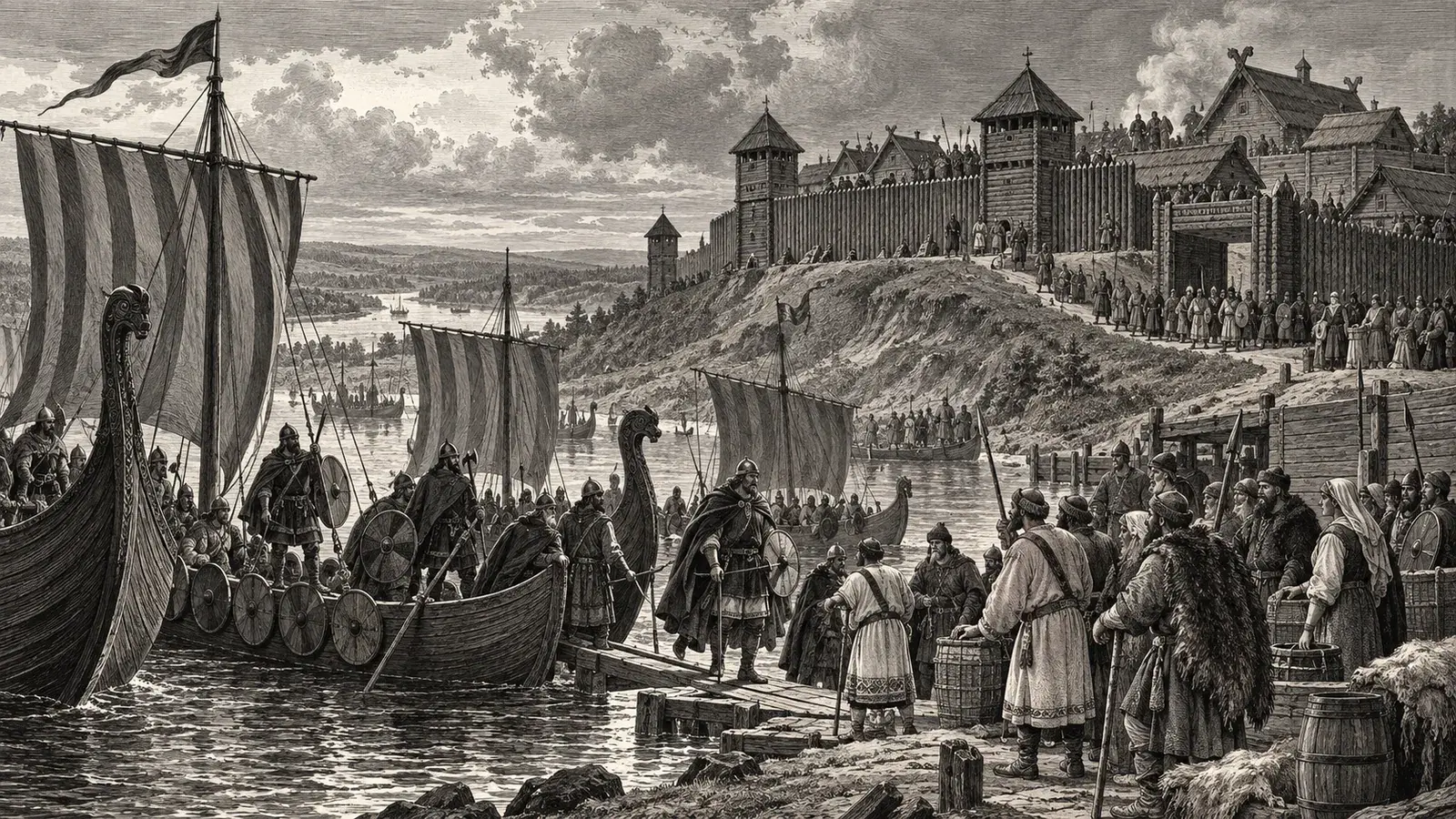
Archaeological evidence suggests that personal devotion to specific gods was common — people connected to particular deities based on what they did for a living, where they lived, or what they needed. Farmers in Scandinavia tended to have strong connections to the fertility gods. Warriors and rulers leaned toward Odin and Thor. These were not rigid categories, but the patterns show up clearly enough in place names and artifact finds to be meaningful. One of the best clues about where worship happened comes from place names. A location called Fröslunda, for instance, translates as the grove dedicated to the god Freyr. When a god's name appears in the name of a place, it is usually a signal that something religiously significant happened there. Adam of Bremen, a German church writer who put together an account of Scandinavia around 1070 CE based on what he had heard from travelers, described a great temple at Uppsala in Sweden housing images of Thor, Odin, and Freyr. According to his account, each god was called upon for different needs — Thor for famine and disease, Odin for war, Freyr for weddings. Every nine years, a major festival brought people together at Uppsala for sacrifices involving humans, horses, and dogs, their bodies hung from trees in a sacred grove. Archaeologists have not found evidence of the temple itself, but they have found remains of large buildings at Uppsala dating between the 3rd and 10th centuries, so something significant was clearly happening there. When Christianity began arriving in Scandinavia in the second half of the 11th century, the transition was not instant or clean. Because Vikings were polytheistic — accustomed to a world with many gods — many of them simply added Christ to the list and kept practicing their old customs alongside the new ones for a while. The two sets of beliefs ran in parallel before Christianity eventually took over.
Rune stones across Scandinavia preserve fragments of Viking Age belief — names of gods, references to myths, and traces of customs that were central to daily life in the Norse world.
How the World Was Made
The Norse cosmological story has four phases: creation, the time in between, the destruction of everything at Ragnarök, and the birth of a new world from the sea. Before creation, there were two realms separated by a void called Ginnungagap. On one side was Niflheim, a realm of ice and cold. On the other was Muspelheim, a realm of fire. The cold and heat eventually expanded until they met across the void. Fire melted ice. From that melting came Ymir, the first giant, and the cow Audhumla, who fed him. Audhumla licked salt from the ice and gradually uncovered a figure named Búri — the forefather of the gods. Búri's son Borr married Bestla, daughter of a giant, and together they had three sons: Odin, Vili, and Vé. These three killed Ymir and built the world from his body. The first human couple, Ask and Embla, were made from two trees. Once humans existed, time began. The World Tree Yggdrasil stood in Asgard, the home of the gods, with its roots spreading through all the other realms. One root reached into Midgard, the human world. Another went into Jotunheim, where the giants lived. At the base of the tree, three figures called Norns — the Norse fates — spun the destinies of human lives. A dragon named Nidhogg chewed continuously on the roots from below. A stag browsed on the branches from above. The tree held the whole structure of existence together while various things slowly worked at destroying it from every angle.
The Nine Realms and What Lived in Them
The Norse universe was not just the human world and the divine one. It was a set of connected realms, all running beneath and through Yggdrasil, each with its own inhabitants and character. Asgard was home to the gods. Midgard was the human world, wrapped around its equator by the Midgard Serpent — a monster so large it circled the entire earth and bit its own tail. Jotunheim was the land of the giants, who were not necessarily stupid or purely evil in the myths but were frequently in conflict with the gods. Niflheim held the realm of the dead for those who did not die in battle. Helheim, ruled by the goddess Hel, was where most of the dead ended up. Asgard and Midgard were connected by Bifröst, a burning rainbow bridge that was also the express route between the divine and human worlds. The beings that populated this universe were various. There were the gods, split into two families. There were giants. There were elves — Álfar — whose exact nature is debated. There were dwarfs — Dvergar — master craftsmen who lived underground and made some of the most important objects in the mythological world, including Thor's hammer Mjolnir and Odin's spear Gungnir. There were also the Dísir, female spirits associated with family and fate, who were particularly important in private household worship.
The Norse pantheon was headed by Odin, the one-eyed god of wisdom and war, and included Thor, the thunder god whose hammer was one of the most recognizable symbols of the Viking Age.
The Æsir and the Vanir: Two Divine Families Who Went to War
The Norse gods were divided into two distinct families who did not always get along. The larger family was the Æsir, associated mostly with war, power, and governance. Odin led them. Thor was there — the strongest of the gods, reliable in a fight, popular with ordinary people partly because his hammer protected against chaos and disorder. Loki was Æsir, technically, though his loyalties were always complicated. Baldr, Hodr, Heimdall, and Týr were also among the Æsir. In practice, Æsir was also used as a general term for the main gods, which shows how dominant this family was in the overall mythology. The smaller family was the Vanir, gods of fertility, agriculture, and the sea. Njord, Freyr, and Freyja were the main Vanir. Freyr was especially important to farming communities — his name shows up in place names across Scandinavia because farmers called on him for good harvests and fair weather. Freyja was associated with love, fertility, and also with war and death, which is a combination that surprised people who expected her to be purely a goddess of romance. The two families went to war — the Æsir-Vanir War — and eventually made peace by exchanging hostages. Some researchers have read this myth as a reflection of real social divisions in Viking society: the Vanir connected to farming communities and the everyday needs of the land, the Æsir connected to the warrior aristocracy and the concerns of kings. The peace between them in the mythology might mirror the idea that a working society needed both, and that the two social worlds had to find a way to coexist.
Ragnarök: How Everything Ends
Most mythologies have an end of the world story. Norse mythology has Ragnarök, which translates roughly as the final destiny of the gods, and it is one of the more detailed and specific apocalyptic visions in any world mythology. It starts with a terrible winter — a winter that lasts three years without summer in between. Then things get worse. The wolf Fenrir, who had been chained by the gods specifically because they feared what he would do if free, breaks his bonds. He devours the sun. The Midgard Serpent rises from the ocean. The dead stream out of their realm. The giants march. Yggdrasil shakes. The rainbow bridge Bifröst collapses under the weight of the forces crossing it. The gods gather and go to war. Odin fights Fenrir and is swallowed whole. His son Vidarr avenges him by tearing the wolf's jaws apart. Thor kills the Midgard Serpent but is so badly poisoned by it that he manages exactly nine steps before falling dead. The gods and their enemies kill each other in large numbers until the fire giant Surtr ignites a world-fire that burns what is left of everything. And then — this is the part that tends to surprise people — the world is reborn. The earth rises from the sea, green and new. A handful of gods who survived, or who return from wherever the dead go, find each other. A new human couple is found living in the forest. A new world begins. The Norse concept of time was cyclical rather than linear — endings looped back into beginnings. The destruction was real but not final.
Ragnarök — the final battle of the gods — was not a story the Vikings told as a warning or a fear. It was a fact built into their cosmology: the world had an end, the gods were mortal, and from the destruction something new would rise.
Why Norse Mythology Still Gets People's Attention
Part of the appeal is probably the texture of it. Norse mythology is not a clean system with tidy moral lessons attached. The gods lie, make bad decisions, lose, die, and occasionally act in ways that are hard to excuse. Odin is the chief of the gods and also a wanderer, a trickster, a god who gives victory to whoever he chooses and then takes it away. He sacrificed his eye for wisdom and spent nine days hanging from a tree to learn the runes. He is not a reassuring figure. He is an interesting one. Thor is more straightforward — strong, protective, direct, the god ordinary people called on when they wanted practical help — but even he gets tricked regularly, often by Loki, and his responses are usually to hit something harder. Loki is the most written-about Norse figure after Odin in modern popular culture, which makes sense because he is the most dramatically interesting character in the mythology. He is neither good nor evil in a simple sense. He solves problems the gods create and then creates problems that get worse than the originals. His role in the death of Baldr — the most beloved of the gods — and the consequences that follow from it are among the most emotionally affecting stories in the whole mythology. The Norse mythological world is also unusual in its acceptance that everything ends. The gods know Ragnarök is coming. Odin collects warriors in Valhalla specifically to prepare for a fight he knows the gods will lose. That combination — full awareness of inevitable defeat, continued effort anyway — is something that has resonated with people far outside the original Viking context, and probably explains why these myths have stayed alive and interesting long after the religion that produced them stopped being practiced.