The word "Slavs" refers to a large group of people who speak related languages. These languages are part of the Indo-European family, which also includes Greek, Latin, and Sanskrit. However, unlike the Greeks and Romans, the early Slavs did not leave written records, so we do not know exactly how they lived or where they first came from. The earliest clear descriptions of the Slavs come from Byzantine writers in the sixth century CE. They called them the “Sclaveni.” Their descriptions, however, were not always accurate. Some writers claimed the Slavs were nomads who moved often, while others said they lived in villages in forests and wetlands. These descriptions sometimes reflected the opinions and biases of the writers more than the reality of Slavic life.
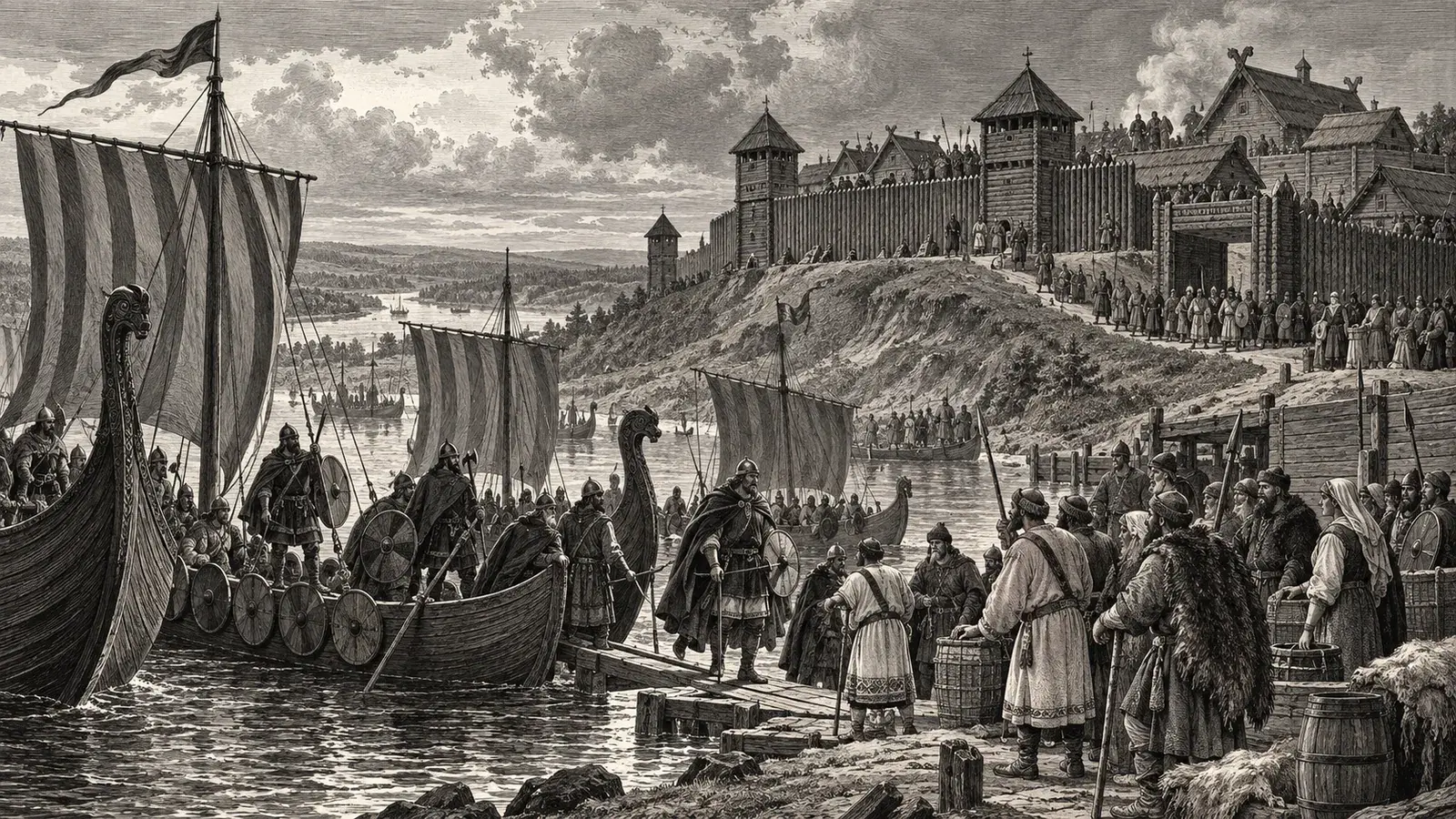
Early Slavic communities lived in simple wooden villages surrounded by forests and rivers.
Where Did the Slavs Come From?
Historians still debate the original homeland of the Slavs. One popular theory suggests that the Slavs came from the area around the Oder and Vistula rivers, which are in modern-day Poland and the Czech Republic. According to this view, Slavic groups formed there and then slowly spread outward. Archaeology, however, suggests a wider area of development. Evidence shows that Proto-Slavic groups existed by around 1500 BCE across a large region stretching from western Poland to the Dnieper River in today’s Belarus. Instead of having one single homeland, the Slavs seem to have developed across a large zone where different communities shared similar customs, tools, and ways of life. Language studies support this idea. Early Slavic-speaking people lived near many other groups, including Iranian-speaking peoples to the east and Germanic tribes to the west. Because of this, Slavic languages contain borrowed words from both groups, showing that the Slavs had contact with their neighbors very early on.
What Language Tells Us About Their Environment
A Polish scholar named Józef Rostafiński made an important discovery when studying Slavic languages. He found that words for certain types of trees, like beech and larch, were borrowed from other languages. This suggests that these trees did not grow in the areas where the early Slavs lived. Small clues like this help historians understand what the environment of early Slavic communities may have looked like.
Slavic Religion and Mythology
Early Slavic religion is difficult to study because their myths and stories were not written down until the ninth and tenth centuries CE. Before that, their beliefs were passed down through oral storytelling, and many stories were lost over time. Still, we know the names of some of their gods. One of the most important was Perun, the god of thunder. He was similar to the Norse god Thor and was often seen as the leader of the gods. Two other important figures were Jarilo, a god connected with spring and new life, and Lada, the goddess of love. Their stories reflected the cycle of the seasons, with death in winter and rebirth in spring. The Slavs also believed in gods with multiple heads. Svantovit had four heads, Porevit had five, and Rujevit had seven. These many faces represented different powers or seasons. Another god, Triglav, had three heads that were said to watch over the sky, the earth, and the underworld.
Slavic mythology featured powerful gods connected to nature, seasons, and storms.
Slavs During the Roman Empire
The Slavs became much more visible in history during the final centuries of the Roman Empire. By the fifth century CE, the Balkans were in turmoil. The fall of the Hunnic Empire and the wars led by Attila destroyed towns and left many areas empty. The Roman Empire struggled to protect its borders. During this unstable period, Slavic groups began moving south into Roman lands. By the early sixth century, Roman armies were already fighting Slavic groups but had trouble stopping them. From 531 to 534 CE, several Roman attempts to push them back failed. In the 550s, Slavic groups moved even deeper into Roman territory, heading toward the major city of Thessalonica. Although they destroyed many towns along the way, they could not take the city, which was protected by a strong Roman army.
Avars and the Siege of Constantinople
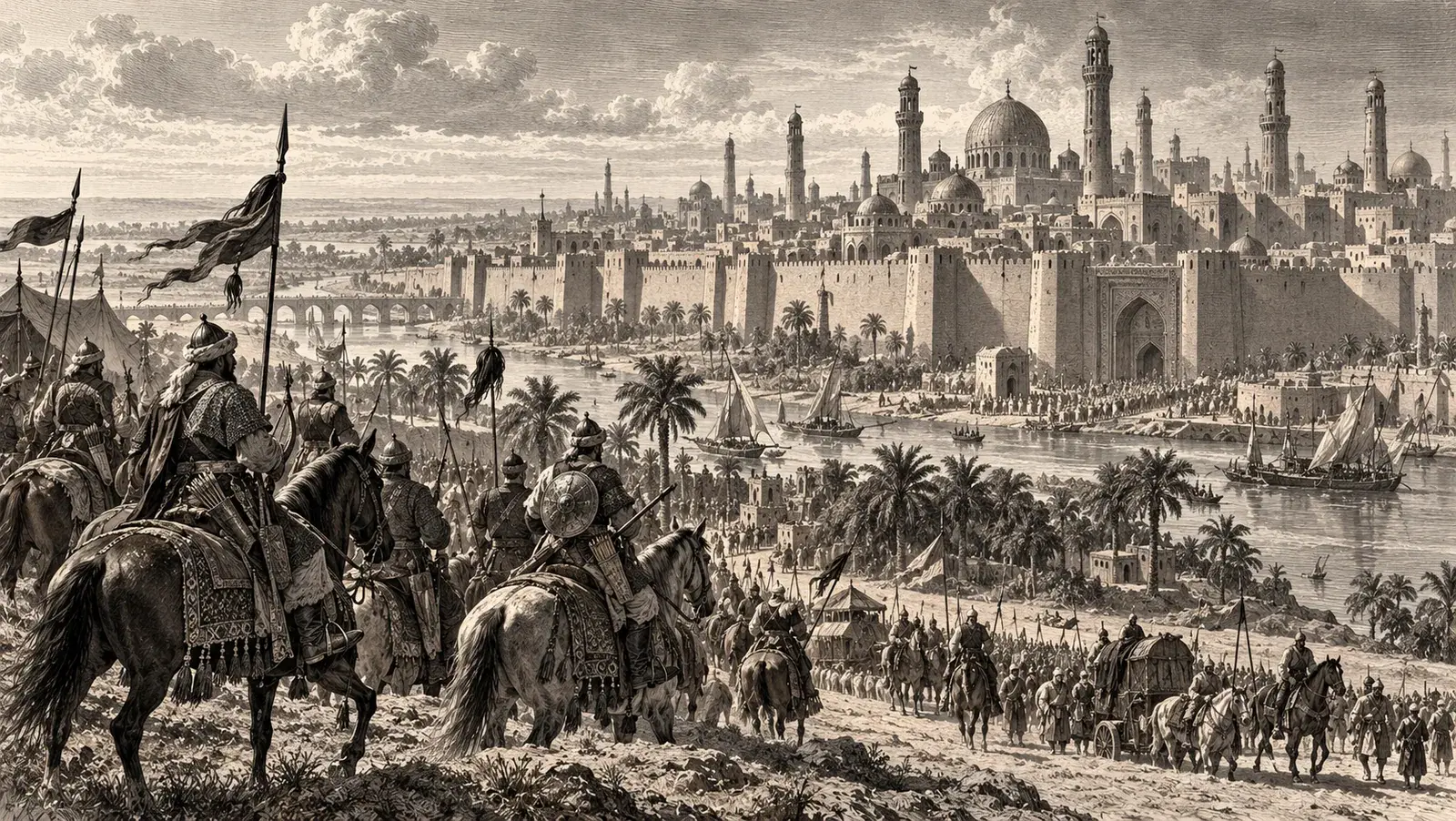
In the early 580s, the Slavs joined forces with the Avars, a powerful nomadic group. Together, they invaded Greece, Thrace, and Thessaly. Rome tried to secure peace by paying the Avars a large yearly sum, but the Slavs were not included in this agreement and continued to raid. In 585 CE, Slavic groups attempted to reach Constantinople, but the city’s walls held them back. Over time, raids turned into settlements, and Slavic communities began living permanently in parts of Greece. The most dramatic moment came in 626 CE when the Slavs, Avars, and Bulgars worked together to surround and attack Constantinople. For a short time, it seemed like the city might fall. However, the Romans managed to defend it, and the alliance between the Slavs and Avars collapsed soon afterward. Even though they failed to take Constantinople, the Slavs remained in the Balkans and continued to grow in number. The Byzantine Empire did not fully regain control of these areas until the ninth century.
The combined forces of Slavs and Avars attempted but failed to conquer Constantinople in 626 CE.
Spread of Slavic Cultures and Languages
As the Slavs settled across eastern, central, and southern Europe, their communities grew more diverse. They lived in forests, mountains, and plains, and their surroundings influenced their customs and lifestyles. From the tenth century onward, Slavic groups formed their own states and cultures. Their languages changed over time, gradually splitting into separate languages such as Russian, Polish, Czech, Slovak, Serbian, Croatian, and Bulgarian.