In the late 1500s, something unusual happened in the Polish‑Lithuanian Commonwealth. When King Sigismund II Augustus died in 1572 without any children, the country had to decide how to choose the next king. Instead of letting the crown pass from parent to child, like most kingdoms did, the nobles decided that every new king would be elected. This made Poland very different from other European countries. It also meant that other powerful nations could try to influence who became king by offering money, support, or military help.
Charles XII and the Temporary Rise of Stanisław Leszczyński
In 1697 the nobles elected Frederick Augustus I of Saxony, also known as Augustus II, to be their new king. He didn’t win just because the nobles liked him. He had strong support from two major countries: Russia and the Habsburg Empire. Because of this, Augustus II had to juggle the interests of Poland, Saxony, Russia, and Austria. The Polish government became tangled up in the politics of the whole region. During this time, northern Europe was at war. Russia and Denmark joined forces against Sweden. But Sweden’s king, Charles XII, was a brilliant general who won many battles. With his victories, he was able to influence who ruled Poland. With Swedish support, a Polish noble named Stanisław Leszczyński was elected as a rival king to Augustus II. For a short time he seemed secure. But in 1709 Sweden lost a major battle at Poltava. After this loss, Sweden’s power collapsed, and Stanisław had to escape to France. Augustus II took full control again.
Polish nobles gathering outdoors to elect a king during the Polish-Lithuanian Commonwealth.
New Alliances, Old Rivalries
Even in exile, Stanisław never gave up. His luck changed in 1725 when his daughter Maria married King Louis XV of France. This gave Stanisław powerful allies. France saw the Polish throne as a way to gain influence over Europe, especially against the Habsburg Empire. When Augustus II died in 1733, a new election was held. Stanisław quietly returned to Poland and convinced many nobles to vote for him. But Russia and Austria did not want a French‑supported king in Poland. They supported Augustus II’s son, Frederick Augustus II. Russian troops marched into Warsaw and placed him on the throne as Augustus III. Stanisław had to flee again.
A War That Spread Across Europe
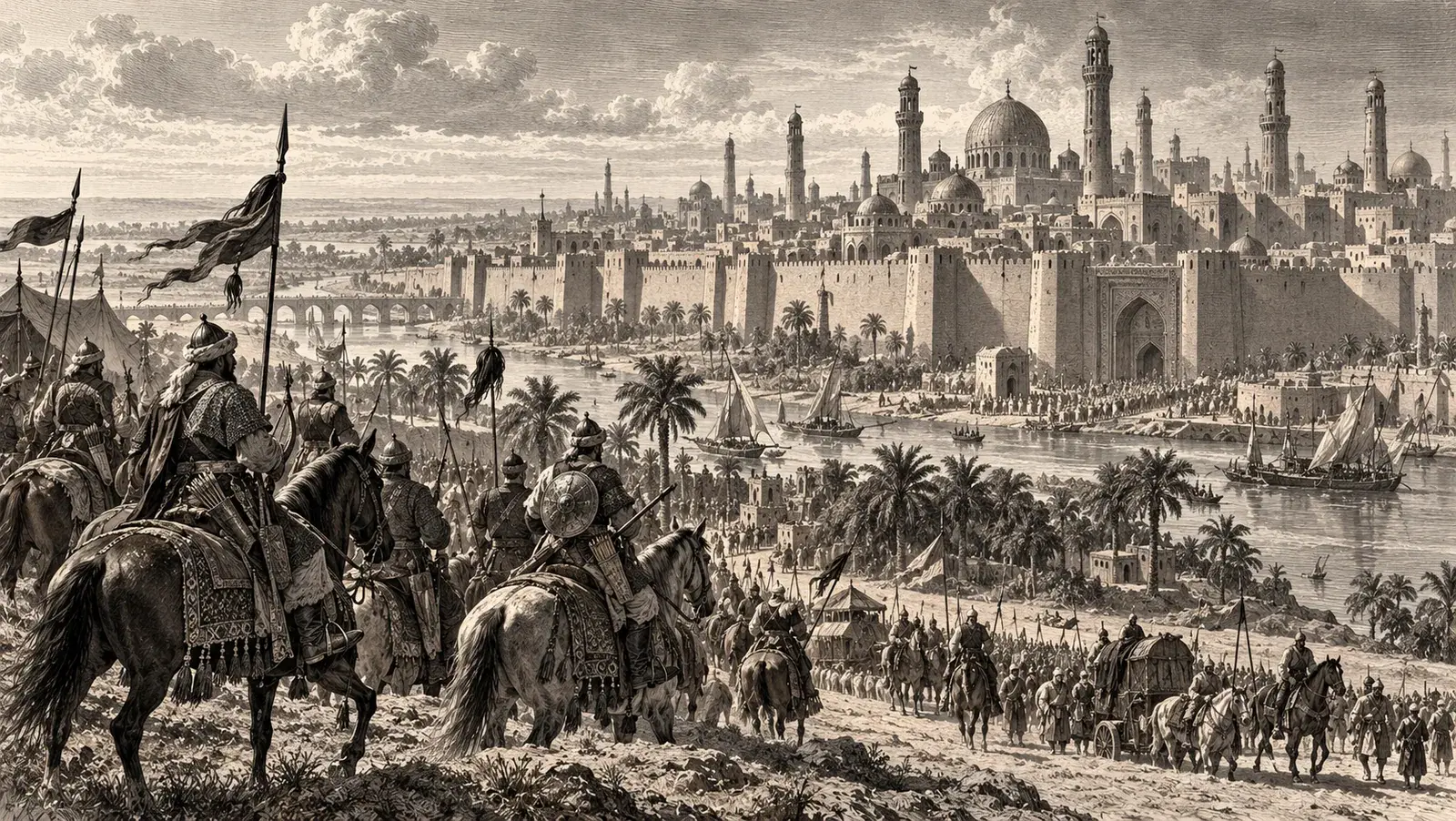
Even though the conflict was called the War of the Polish Succession, most of the fighting happened outside Poland. France supported Stanisław, but mostly because the situation helped them weaken Austria and gain territory. Inside Poland, fighting happened mainly around the city of Gdańsk (Danzig), where Stanisław was trapped. Russian and Saxon forces attacked the city in 1734. Even though the people fought bravely, they eventually had to surrender, and Stanisław escaped once again. Meanwhile, battles took place along the Rhine River and in Italy. France captured land in Lorraine. In Italy, France, Spain, and Sardinia fought against Austria. Spain took back Naples and Sicily, two regions it had ruled long ago. Austria struggled to keep control of its lands.
Siege of Gdańsk in 1734, with Russian and Saxon forces attacking the city during the War of the Polish Succession.
Treaty of Vienna
By 1735, countries on both sides were tired of fighting. Britain and the Netherlands tried to help negotiate peace. Austria could not keep fighting, and France wanted to secure the gains it had made. The Treaty of Vienna was signed in 1738. According to the agreement, Stanisław had to give up his claim to the Polish throne. Augustus III remained the official king. Stanisław was given the Duchy of Lorraine to rule for the rest of his life. After he died, it would become part of France. Spain gained control of Naples and Sicily again. France agreed to accept the Pragmatic Sanction, which allowed Maria Theresa to inherit all her father’s lands. This decision would be important for future European wars.
European diplomats signing the Treaty of Vienna in 1738 to end the War of the Polish Succession.
Decline of a Once‑Powerful State
The treaty did not stop Poland’s decline. The elective monarchy gave nobles a lot of power, but it also weakened the country. Foreign nations could easily interfere. The Polish parliament, called the Sejm, was filled with disagreements. Sometimes a single noble could stop important decisions. Augustus III, who became king after the war, did little to help this situation. He spent most of his time in Dresden enjoying art and music instead of ruling. As a result, Poland became weaker and weaker. In the late 1700s, Poland was divided by its neighbors—Russia, Prussia, and Austria—until it disappeared from the map entirely.