Four days of your week are named after gods that most people have never seriously thought about. Wednesday belongs to Woden. Thursday is Thor's day. Tuesday was Tiew's. Friday came from Frija. These were the primary deities of the Teutonic peoples — the Goths, Vandals, Huns, Franks, and Anglo-Saxons — the northern tribes who would eventually pour through the crumbling edges of the Roman Empire and reshape the entire map of Europe. Their religion was not a curiosity. It was the force that made sense of storms, harvests, death in battle, and the bewildering fact of winter in the north. Understanding what they believed matters for the same reason understanding any civilization's faith matters: it explains what they were willing to die for, and what they thought came after.
The Teutonic peoples — Goths, Franks, Anglo-Saxons, and their kin — shared a common mythology built around warrior gods, a cosmic world-tree, and a final apocalyptic battle. Four of their gods still name our weekdays.
Who Were the Teutons?
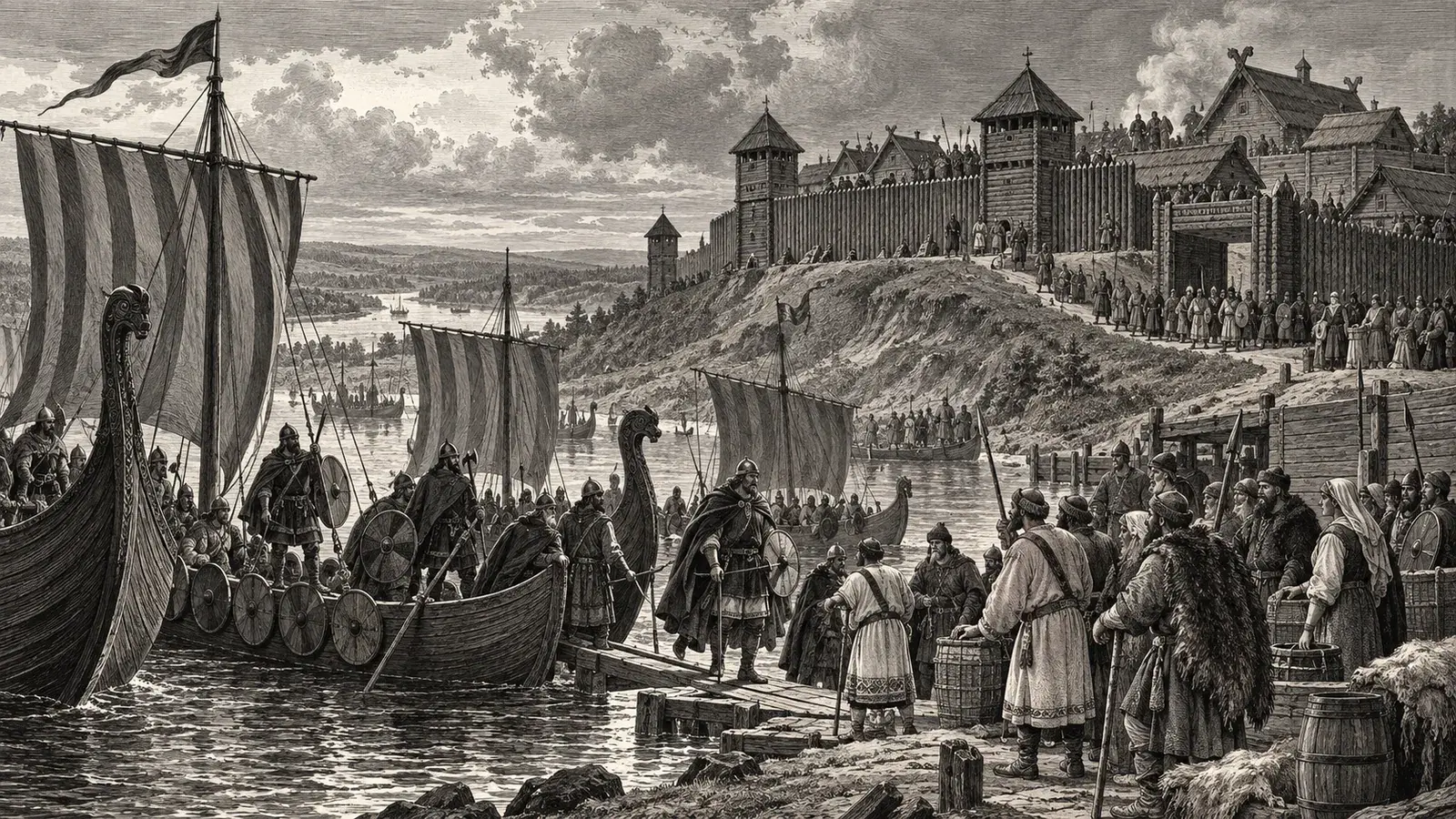
The Teutons were not a single people but a family of related groups — Goths, Vandals, Franks, Anglo-Saxons, and others — who lived north of the Danube and Rhine rivers during the period when Rome was the dominant power in the western world. All except the Huns belonged to the same broad racial and linguistic family. They were, by Roman standards, savages. They raided, they burned, they did not build the kinds of cities or legal systems the Romans had spent centuries constructing. But they spoke related dialects of the same underlying language, and they worshipped the same gods. That shared mythology was the invisible thread connecting tribes scattered across an enormous stretch of northern Europe. From these peoples came the foundations of what would become England, France, Germany, and the Scandinavian countries. Their mythology fed directly into what the later Norse world preserved — the same stories, the same gods with slightly different names, the same terrible vision of how everything ends.
Woden: King of Gods, Rider of Eight-Legged Sleipnir
Woden — known to the Norse as Odin — stood at the top of the Teutonic pantheon. His name meant mighty warrior, and he earned it. He rode through the sky on Sleipnir, a horse with eight legs that moved faster than any eagle. When storms blew in hard off the North Sea and the thunder of hooves seemed to echo in the clouds, the Teutons heard Sleipnir's snorting. When ships made port safely after a crossing that should have killed everyone aboard, Woden's breath had filled the sails. He was not just a war god. He was knowledge, mystery, the hidden truth behind appearances. The Teutons prayed to him before important decisions and long journeys. His Wednesday — Woden's day — was not just a name. It was a weekly reminder that the universe ran according to his will. The Anglo-Saxons, who carried this mythology into Britain, had a saying that captures his character well: Woden is the father of all wisdom and the lord of all victory. The two things were not separate. In Teutonic thinking, the wisest general was the most dangerous one.
Thor, Tiew, and Frija: The Rest of the Family
Thor was Woden's son, and the most physically dramatic of the gods. He rode across the sky in a chariot pulled by goats — the rumble of wheels was thunder, the flash of his hammer Mjolnir was lightning. When he threw the hammer against the ice mountains in the far north, they shattered into fragments; the crash was more thunder. The hammer always returned to his hand. Soldiers called on Thor before battle because he was raw, uncomplicated power, and that is exactly what a warrior needed before a fight. Tiew was another son of Woden, god of battle, armed with a sword that flashed like lightning when he swung it. The Teutons believed that Attila the Hun — the single most terrifying military figure of the 5th century — owed his victories to possessing Tiew's actual sword, which a shepherd had found buried in a field. Whether or not anyone really believed this literally, the story says something about what Tiew meant to them: he was the force behind a winning army, the god whose favor decided outcomes before the first blow landed. Frija was Woden's wife, ruler of the bright summer clouds and the rains that kept the fields alive. She was the queen of the gods in the practical sense — the deity who kept the world fed. Her day is Friday.
Thor — called Donar or Thunar by the Germans — was the thunder god whose hammer created lightning when thrown and always returned to his hand. Soldiers called on him before battle.
Baldur, the Beloved God Who Had to Die
Among all the gods, Baldur was the favorite. His face shone like the sun. His hair was the color of burnished gold. Wherever he walked, night became day. The only being in all of creation who hated him was Loki, the spirit of evil — a trickster, a deceiver, the force that could not leave well enough alone. Frija, terrified that her beloved son would be killed, went to every creature on earth and every plant in every field and every tree in every forest and extracted a promise that none of them would hurt Baldur. She missed the mistletoe. Loki knew this. He shaped a dart from mistletoe wood and guided the hand of the blind god Höðr to throw it. Baldur fell dead. Everything mourned. The summer breeze went quiet. Leaves fell from trees that had no reason to shed them yet. Flowers closed. The bear and the hedgehog and the squirrel crawled into holes and refused to eat. The death of Baldur was the death of sunlight — the long northern winter made divine and terrible. The myth is not complicated to read. Baldur is the sun. His death is the coming of winter. His absence explains why the north goes dark and cold in ways that feel like grief rather than just weather. For people living through their fourth or fifth hard winter in a landscape that offered no real shelter, this was not metaphor. It was explanation.
Valhalla: Where the Best Warriors Went
The Valkyries were female warriors of extraordinary power — armed with helmet, shield, and spear, riding horses almost as fast as Sleipnir himself. They were invisible as they swept across battlefields, selecting which warriors were worthy enough to carry to Valhalla. Valhalla was the hall of the slain. Its walls hung with shields. Its ceiling glittered with polished spearheads. It had five hundred and forty gates, each wide enough for eight hundred men to march through side by side. Every morning the chosen warriors rushed out to fight a battle that lasted until nightfall. Every evening they returned, wounds healed, ready to feast on the finest food and drink mead from cups the Valkyries served them personally. Then they did it again the next day. And the day after. This was paradise — not rest, not singing, not clouds. Eternal combat. An endless proving of worth. It tells you exactly what the Teutonic warrior valued and feared: not death in battle, but a death that failed to earn the right to fight again.
How the World Was Made — and How It Will End
Before any gods existed, before the world itself, there was Ginnungagap — a yawning void whose name translates roughly as the emptiness of emptiness. To the north of this gap was eternal cold. To the south was eternal fire and heat. The heat melted the ice mountains of the north, which toppled into the void and became a frost giant named Ymir. Woden and his brothers killed Ymir and used the pieces of his body to build the world. His bones and teeth became mountains and rocks. His hair became leaves. His skull became the sky. But the body of a frost giant is cold, and the world made from it was lifeless. So the gods took sparks from the southern realm of light and set them in the sky: two large ones became the sun and moon, the smaller ones became stars. The world warmed. Trees grew. Flowers opened. At the center of it all stood the great ash tree Yggdrasil — the world tree, whose branches covered the earth and reached beyond the sky, whose roots ran in three directions: to heaven, to the realm of frost giants, and to the underworld beneath the earth. Near those roots, three figures called the Norns sat beside a sacred spring, dipping water and pouring it over the roots, which was the reason the tree kept growing toward the stars. And then the ending. The Teutons believed the world would not survive. Three terrible winters would come without any spring between them. The sun and moon would go dark. The stars would fall. The earth would shake itself apart. Loki, bound by the gods, would break free. The frost giants would march with him. Heimdall, the sentry who needed no sleep and could see a hundred miles in any direction by day or night, would sound his horn — loud enough to be heard through heaven and earth and the underworld — and the gods would rush to meet the giants. Woden with his spear. Tiew with his glittering sword. Thor with his hammer. It would not be enough. The gods would die. The giants would die. Loki would die. And then — a new earth would rise from the sea. Its forests would never lose their leaves. Its fields would yield harvests without being planted. The brave and the good would gather in a hall far brighter than Valhalla, and that would be the end of all the old stories. For a people who lived in hard country and built their identity around endurance and courage in the face of certain death, this mythology was not dark. It was honest.
Yggdrasil — the great ash tree — held the Teutonic cosmos together, its branches covering the earth and roots reaching into heaven, the frost giants' realm, and the underworld. The three Norns tended its roots by pouring sacred water, keeping it alive.
Why This Mythology Still Matters
The Teutonic peoples eventually converted to Christianity. The old stories were not thrown away — they were written down by monks and scholars who understood that something important would be lost if they disappeared. The Nibelungenlied, the great German national epic of the 12th century, is built on these same stories. Wagner built four enormous operas from them in the 19th century. The weekday names survived because ordinary people kept using them and nobody could make them stop. Wednesday, Thursday, Friday, Tuesday — four gods, four days, every week, for over fifteen hundred years. The mythology of the Teutons produced some of the most durable stories in human history. Baldur and the mistletoe. Thor's hammer. Valhalla. The world tree. The final battle. These are not museum pieces. They are the living inheritance of the people who broke Rome apart and rebuilt Europe in their own image — and four mornings every week, you say their gods' names without thinking twice about it.