The tomato is not Italian. The potato is not Irish. Chili is not Indian. Pasta, in all likelihood, does not trace back to Marco Polo bringing noodles from China — that story is probably wrong too, though it keeps getting repeated. Almost everything on your plate has an origin story that would surprise you, a journey that took centuries, and a chain of farmers, sailors, traders, and colonizers who moved it from where it started to wherever it is now. The rice in a Chinese restaurant grew from seeds first cultivated in the Yangtze Valley. The coffee in an Ethiopian café comes from a plant that was first domesticated — in Ethiopia. The corn eaten across sub-Saharan Africa began in Mexico. The wheat in a French baguette has roots in the hill country of southeastern Turkey. None of this happened by accident, and none of it happened quickly. The story of how farming began and how crops moved across the planet takes roughly 12,000 years to tell properly. This is a compressed version — but the main points are all there, and some of them are strange enough to be worth knowing.
Farming began independently in several regions around 12,000 years ago — not as a single invention that spread outward, but as something different people figured out in different places at roughly the same time.
Where It Started — and It Started in Several Places
The old version of this story had a single origin point. Farming began in the Fertile Crescent, the thinking went, and spread from there everywhere else. That picture has gotten considerably more complicated as archaeobotany — the study of ancient plant remains — has produced evidence from more and more sites across more and more continents. Farming appears to have started independently in at least several different places, within a few thousand years of each other, without any of those places necessarily knowing what the others were doing. The Near East does have strong claims to being one of the earliest. The hill regions of southeastern Turkey, western Iran, and the Levant had a particular concentration of wild plants and animals that were good candidates for domestication — grasses with large seeds, animals that could tolerate human proximity. By about 12,000 years ago, people in this region were doing something that looks, in the archaeological record, like deliberate cultivation. Sheep and goats were the first animals domesticated, in territory just north and east of where the plant cultivation was happening. By 11,000 years ago, barley and wheat were being grown alongside the goats and sheep. Pigs and cattle came in around 10,000 years ago. Peas and lentils around 8,000. Olives and grapes another two thousand years after that. But while all of this was happening in the Near East, West African farmers along the forest edges were doing their own thing. Ethiopian communities were domesticating coffee, finger millet, and teff — crops that never came from anywhere near the Levant. Across the Sahel, people were growing sorghum, pearl millet, and African rice, and raising guinea fowl. West African farmers were working with yams, cowpea, watermelon, and oil palm. In China, two separate farming regions appeared around 8,000 years ago: one in the north built around broomcorn millet and foxtail millet, and one in the Yangtze Valley built around rice. These were distinct systems, not offshoots of each other. Thailand and New Guinea show farming evidence going back to between 8,000 and 10,000 years ago. Bananas, taro, citrus, and sugarcane were being cultivated in Southeast Asia well before any of those crops appear in the historical record of the Near East or Africa.
The Near East — particularly the hill regions of southeastern Turkey, western Iran, and the Levant — was one of the earliest centers of agriculture, where barley, wheat, sheep, and goats were domesticated within a few thousand years of each other.
How Near Eastern Farming Reached Europe — Faster Than You Would Expect
Once Near Eastern farming was established, it moved. The rate at which it moved is one of the things that surprised researchers when the full picture came together — it was not a slow, gradual seeping across the landscape over millennia. It spread fast. By around 8,000 years ago, Near Eastern crops had already turned up in Greece, Egypt, the Caspian region, and parts of what is now Pakistan. Less than a thousand years after that, Central Europe was being farmed. By 5,000 years ago, farming communities ran in an unbroken line from coastal Spain to England and Scandinavia. The crops that made that journey generally traveled as a package. Emmer wheat, einkorn wheat, barley, lentils, peas, and flax moved together — the same bundle of domesticates that had developed together in the Near East kept traveling together as they spread west. As they moved into new environments, they picked up local additions. Oats started as weeds that got accidentally carried along with the original crops and became important food plants by the time the farming frontier reached the Iberian Peninsula. Certain vegetables — cole crops, onions, radishes — probably joined the package around 5,000 years ago in a similar way, starting as incidental travelers and ending up as staples. How exactly farming spread across Europe has been debated for decades. Two main theories exist. Cultural diffusion says that knowledge traveled — people watched their neighbors farming and started doing it themselves, without the farmers themselves moving. Migration says that farming populations physically moved into new areas, mixing with the hunter-gatherers who were already there. The current weight of genetic and archaeological evidence leans toward migration: Near Eastern farmers moved west in successive waves and mixed with local populations as they went. The cultural diffusion happened too, but it was not the main driver.
Farming Went by Sea Too
The land routes get most of the attention, but farming also spread by boat — and this is where the story gets a bit more interesting than the standard textbook version. Cyprus was settled somewhere between 10,500 and 9,000 years ago by farming communities that arrived by boat from the mainland carrying an already complete agricultural package: sheep, goats, cattle, pigs, einkorn wheat, barley, emmer wheat, lentils, pistachios, flax, and figs. These were not people experimenting with farming. They were established farmers who decided to move to an island and brought everything they needed with them. The same pattern repeated across the Mediterranean. Seafaring farmers reached coastal Greece between 9,000 and 8,000 years ago. Around 8,000 years ago, similar groups brought farming to the Italian peninsula, building the first farming villages in the Apulian heel of the Italian boot. Evidence from southern France shows migrant farmers arriving from mainland Italy between roughly 7,700 and 7,600 years ago. This is not farmers slowly walking across Europe and occasionally getting their feet wet. These are people making deliberate sea crossings with livestock and seed stock, founding farming communities on islands and coastlines before the land routes had even reached those areas. Maritime agriculture deserves more recognition than it usually gets in the general telling of this story.
Farming spread across the Mediterranean not only by land but by boat — seafaring communities carried complete agricultural packages to Cyprus, coastal Greece, Italy, and southern France thousands of years before the land frontier reached those areas.
The Indian Ocean Was an Ancient Crop Highway
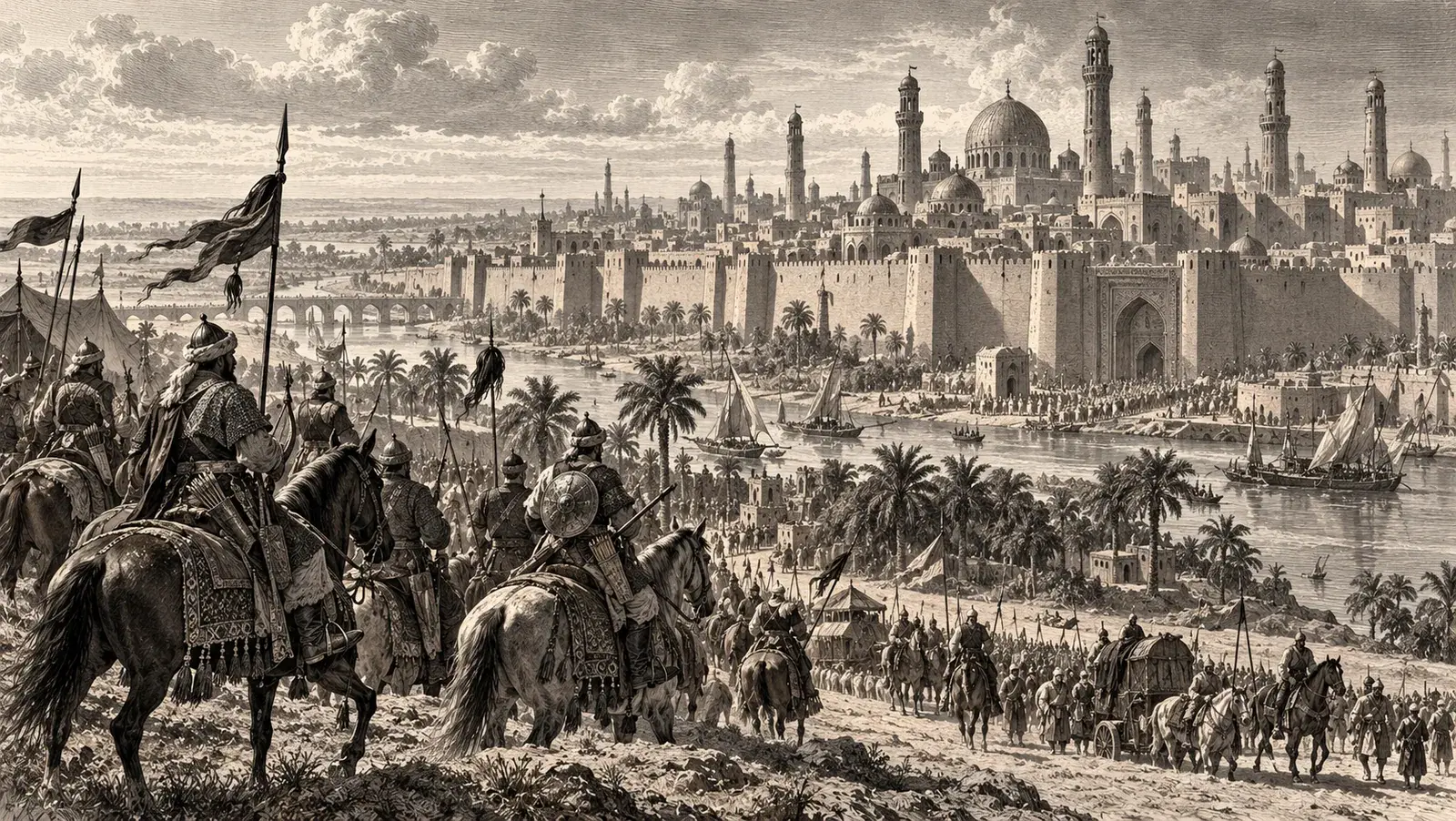
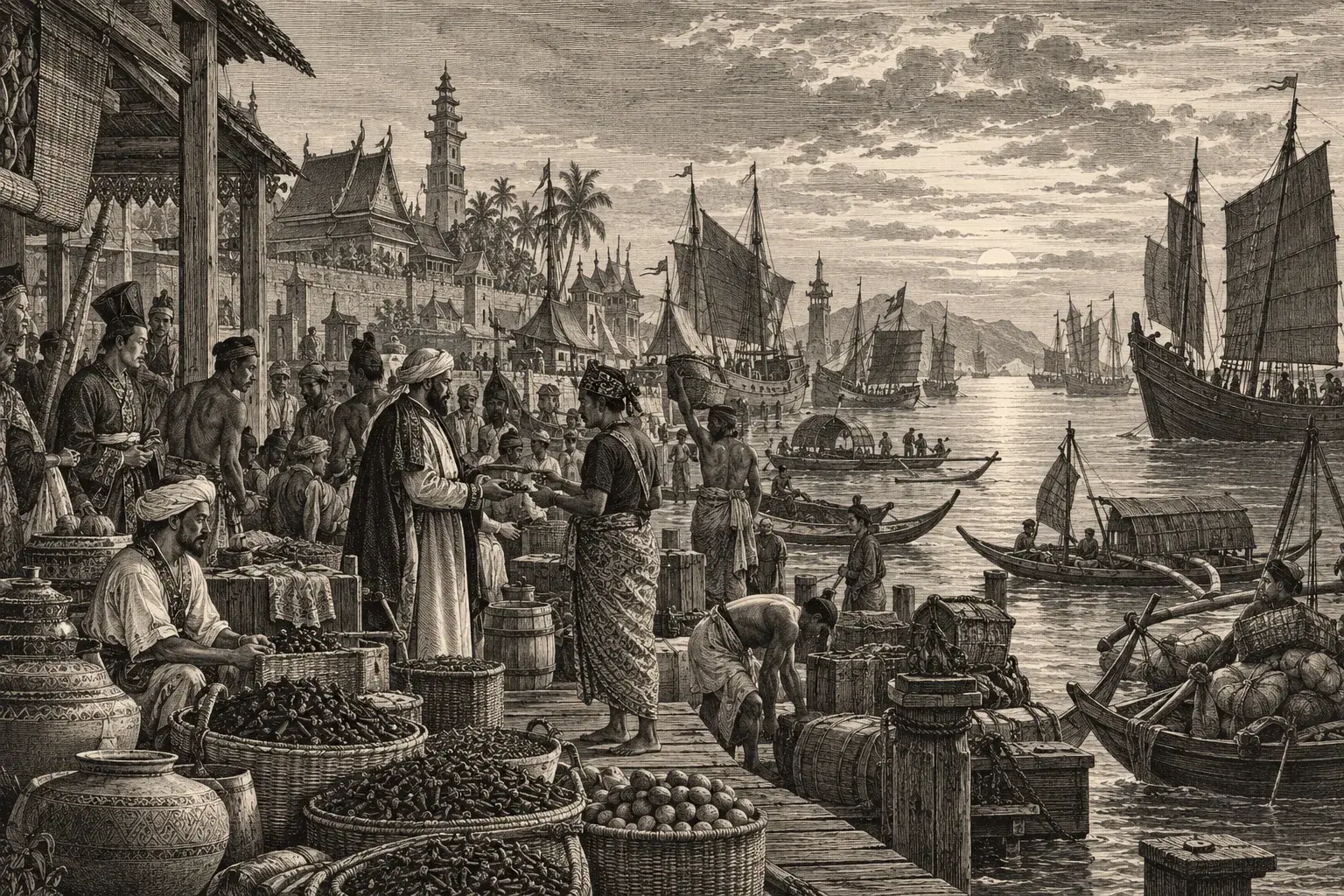
Across the Indian Ocean, a parallel set of movements was happening that doesn't get enough attention in Western-focused histories of agriculture. By the second millennium BCE — so roughly 3,000 to 4,000 years ago — sailors were moving Asian crops across the Indian Ocean to Madagascar, East Africa, and India. Sugarcane, citrus, Asian rice, Asian yams, taro, bananas, coconut, mango, breadfruit, and possibly ginger, cloves, and cardamom were all part of this movement. Some of these crops then spread further into Africa, following routes that researchers are still working to trace precisely. Traffic went in both directions. By the end of the third millennium BCE, a trade network connected coastal southern Arabia with Gujarati sailors from India. Through this network, several African crops — pearl millet, sorghum, cowpea, finger millet — moved to South Asia. African crops in India, Indian crops in Africa. This is not a late development driven by European contact. It was happening thousands of years before Columbus was born. China's broomcorn millet was already moving west by about 2200 BCE. Zebu cattle — the humped cattle that are now a defining feature of East African pastoral communities — came from India to Yemen and East Africa around the same time, mixed with African cattle breeds, and became central to the herding economies of the region. Around 5,000 years ago, India became a major domestication center in its own right, influenced by crops arriving from Africa and Southeast Asia. Indian farmers domesticated eggplant, cucumber, pigeon pea, mung bean, pepper, ginger, sesame, cotton, and the Indica variety of rice — a variety that is now eaten by a very large fraction of the world's population. Mung beans later moved from southern India into Southeast Asia. Citron and mango may have traveled the other direction, from areas around Assam, Burma, and Yunnan into South India. Bananas from Indonesia reached India and parts of Africa as early as 2000 BCE. By around 500 BCE, bananas had spread into western Africa along forest routes. Chickens spread from India into Africa through multiple routes, some across the Sahara, others along the East African coast. The chicken is now the most numerous bird on the planet.
The New World Did Its Own Thing — and Did It Well
While all of this was happening across Africa, Asia, and Europe, the Americas were developing their own agricultural traditions in complete isolation from the Old World. The separation lasted for roughly 12,000 years — until 1492 — which is why when Columbus arrived, the two hemispheres had entirely different sets of crops and almost no overlap between them. Agriculture in the New World developed about 1,000 to 2,000 years later than in the Old World, but it was not simpler or less sophisticated. It was just different. Mesoamerica — the region stretching from roughly modern Mexico City down to Honduras — was one center. Farmers there domesticated amaranth, avocado, beans, chili peppers, cotton, squash, and the crop that would go on to feed more people than almost anything else in history: maize. Corn, in American English. A grass that was transformed, over thousands of years of deliberate selection, from a wild plant called teosinte — which produces only a few small seeds — into the large, dense ears of grain that now grow on every inhabited continent. South America was a separate and much larger zone of domestication, spread across multiple ecological regions. The central mid-altitude Andes gave the world quinoa and amaranthus. Higher up in the north and central Andes, farmers developed the potato, oca, and cañihua. In the lowland southern Amazon, cassava and peanuts were domesticated. Ecuador and northwest Peru produced common beans and squash. Animal domestication followed its own regional paths. Turkeys in Mexico. Llamas and guinea pigs in South America. Eastern North America produced a separate, smaller center of cultivation: sunflower, sump weed, goosefoot, and at least one variety of squash were all domesticated there, independently of Mesoamerica.
The Three Sisters farming system — maize, beans, and squash grown together — spread from Mesoamerica across North America over thousands of years, eventually replacing earlier native crop systems across much of the continent.
The Three Sisters Move North
From its Mesoamerican heartland, the maize-bean-squash system spread northward. As it moved up through North America, it picked up local domesticates — sunflower most notably — and by about 4,500 years ago was established in eastern North America. The Three Sisters, as this combination came to be called, proved more productive than many of the crops that were already being farmed in eastern North America. Sump weed and chenopod — crops that Indigenous farmers in that region had been developing for thousands of years — were largely replaced as the more productive Mesoamerican system took over. The exact routes this spread followed are still being debated: whether it came along the Gulf Coast, through the southeast, or by multiple paths simultaneously. South of Mesoamerica, crops moved in both directions. Maize had reached Central America and the Amazon basin between about 5,000 and 4,000 years ago. Moving north into Mexico, South American crops including potato, peanut, and lima bean arrived between roughly 3,000 and 2,000 years ago, likely via the Caribbean islands, Central America, or possibly both. The New World was not static — it had its own internal crop exchange going on for thousands of years before any European showed up to complicate things.
1492 and What Happened After
For most of those 12,000 years, crops mostly stayed on their own continents. There was movement within the Old World — significant movement, as the Indian Ocean trade routes show — but the Eastern and Western Hemispheres were separated by oceans that nobody was crossing in either direction with any regularity. That ended in 1492. The Columbian Exchange — the name historians use for the movement of crops, animals, diseases, and people between hemispheres after Columbus — was one of the most transformative events in the history of agriculture, and it happened in both directions simultaneously. From the Americas, European ships carried back potato, chili pepper, maize, tomato, cocoa, cassava, and groundnuts. These were plants that nobody in Europe, Africa, or Asia had ever grown. They went on to reshape diets on three continents. The potato became a staple crop in northern Europe and Ireland with consequences that included, when a blight struck the monoculture crop in the 1840s, the deaths of roughly one million Irish people and the emigration of another million. Going the other direction, Spanish colonizers brought Near Eastern crops into Mesoamerica and the Andes: barley, chickpea, cucumber, wheat. From Southeast Asia came sugarcane and citrus. From China, peach. From Africa, sorghum and melons. From the Mediterranean, cabbage, lettuce, grapes, and onions. In Brazil, Portuguese settlers introduced a similar package with some variations. The crops did not move without people moving them, and people did not move crops without moving other things too — diseases, in particular, that devastated Indigenous populations in the Americas who had no immunity to Old World illnesses. That part of the exchange was catastrophic in ways that are hard to overstate and that directly enabled the colonial agriculture that followed.
What This Means for the Food on Your Plate Right Now
The practical upshot of all of this, 12,000 years after the first farmers in the Near East started deliberately planting seeds, is that almost nobody on earth eats mainly what their ancestors domesticated. Europe and North America run on a combination of Near Eastern wheat and barley, Mesoamerican maize, South American potatoes, and Chinese soybean. None of those crops are native to the same place. They represent the accumulated movement of thousands of years of trade, migration, and colonialism, all landing together on a plate in Ohio or Germany. Across sub-Saharan Africa, traditional crops like sorghum, millet, and yam — crops that African farmers domesticated over thousands of years and that are genuinely well-suited to the soils and climate of the continent — have been substantially displaced by maize from Mesoamerica, cassava and sweet potato from South America, and bananas from Southeast Asia. This is not entirely a story of colonial imposition: some of these crops were moving into Africa long before European contact. But the scale and speed of displacement after the Columbian Exchange is different in kind from what came before. In China, rice and soybean remain central, but they share the table with maize from Mexico and potatoes and sweet potatoes from South America. There is something worth pausing on in all of this. Every culture tends to treat its traditional food as ancient and native and essentially fixed. Italian cuisine without the tomato. Indian cuisine without the chili. Irish food without the potato. Thai food without the bird's eye chili. These all feel like contradictions, but they are simply the result of crops having histories that predate the national cuisines built around them. And those histories go back a long way — to farmers in hill country Turkey, in the Ethiopian highlands, in the Yangtze Valley, in Oaxaca, who started making decisions about which plants to grow and which animals to keep, and set in motion a 12,000-year chain of movement that ended up, eventually, on your table.