The Kurds of Iran do not appear much in Western coverage of the Kurdish question. That gap is not because the situation there is simpler or less serious than what has happened in Turkey or Syria or Iraq. It is because Iran has been more deliberate in how it manages the conflict — and because the most dramatic moments in Iranian Kurdistan have tended to be crushed quickly enough that they didn't generate sustained international attention. But the Kurdish–Iranian dispute is arguably the oldest of the modern Kurdish conflicts. It predates the PKK by decades. It predates the Iraqi Kurdish uprisings under Mustafa Barzani. The first organized armed revolt against a central Iranian government happened in 1918, when the Qajar dynasty was still on the throne and the modern state of Iran didn't yet exist in its current form. Since then, the conflict has moved through several distinct phases — tribal rebellion, Soviet-backed separatism, post-revolutionary insurgency, targeted assassination campaigns, low-level guerrilla activity — without ever fully resolving. Each time Tehran thought it had finished the problem, something happened to restart it. As of 2026, with major Iranian Kurdish parties openly calling for the fall of the Islamic Republic, the question has reached a new level of intensity that nobody who has followed this history should find entirely surprising.
The rugged terrain along the Iran–Iraq border has sheltered Kurdish armed groups for over a century — from Simko Shikak's tribal fighters in the 1920s to PJAK militants operating today from bases in the Kurdistan Region of Iraq.
Before There Were Parties: Tribal Revolts and What Drove Them
The earliest Kurdish resistance to Iranian central authority wasn't nationalist in any modern sense. It was tribal — driven by local chiefs who resented the encroachment of state power into regions they had governed by their own rules for generations. Simko Shikak is the name most associated with this period. His revolt against the Qajar dynasty ran from 1918 to 1922 and was backed, at various points, by the Ottomans — which already tells you something about how layered the politics were. Historians are careful to note that Simko's rebellion was not really a Kurdish independence movement in the ideological sense. He was a tribal chief trying to consolidate personal authority, not a nationalist trying to build a state. He massacred thousands of Assyrians during this period, used conventional plunder as a primary motivation, and his movement had no administrative apparatus worth mentioning. That said, some Kurds today remember him as a forerunner of the independence cause, which is how contested historical legacies tend to work — the meaning gets assigned afterward, by people with their own political needs. Simko tried again in 1926. It went worse. His own troops defected mid-campaign and he fled to Iraq. The pattern — a revolt, a suppression, an exile — would repeat several more times across different leaders and different decades. Jafar Sultan of the Hewraman region held territory between Marivan and north of Halabja for years, running what amounted to an independent local fiefdom until 1925, when Persian authority finally reasserted itself. He revolted again in 1929 and was crushed relatively quickly. The Hama Rashid revolt came during World War II, when the Anglo-Soviet invasion of Iran in 1941 created a general atmosphere of chaos and weak central authority. Rashid's uprising ran in two stages — 1941 to 1942, then again in 1944 — before being defeated. It matters less for what it achieved than for what it helped set in motion: the shift from purely tribal resistance to organized political struggle.
Komala, the KDPI, and the Turn Toward Politics
The year 1943 is where most historians locate the beginning of organized Kurdish political nationalism in Iran — not tribal chieftains maneuvering for local power, but actual political parties with stated ideological programs. Komala (the Committee for the Revival of Kurdistan) was founded that year in Mahabad. Shortly after, the Kurdish Democratic Party of Iran — the KDPI — emerged from or alongside it, depending on which account you follow. Both organizations wanted some form of Kurdish autonomy within Iran, though their emphasis on exactly how much autonomy and under what political framework shifted over time. The distinction between these early parties and the tribal revolts that preceded them is real but easy to overstate. Tribal leaders were still influential in Kurdish political life, and the parties needed their cooperation. What changed was that there was now an organizational layer above the tribes — something capable of articulating demands in political language and negotiating, or attempting to negotiate, with state governments and outside powers.
The founding of Komala in 1943 and the Kurdish Democratic Party of Iran (KDPI) shortly after marked the shift from tribal uprisings to organized political nationalism — a transition that would define how the Kurdish question in Iran developed for the rest of the twentieth century.
The Republic of Mahabad: Eleven Months of Kurdish Statehood
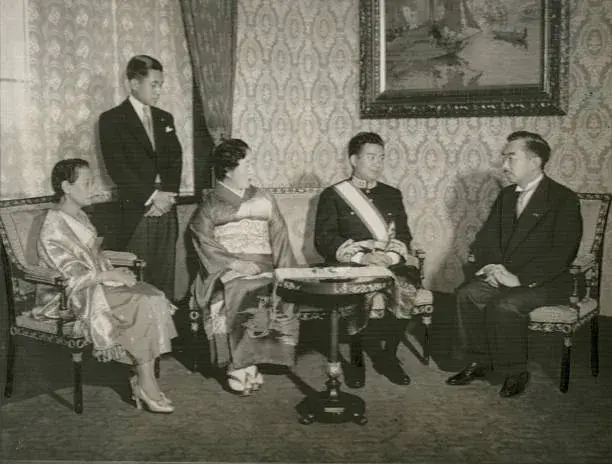
The closest the Kurds of Iran have ever come to an actual state lasted eleven months. The 1946 Iran crisis grew directly out of World War II. The Soviet Union had occupied northwestern Iran during the war as part of the Allied arrangement, and when the war ended, the Soviets simply didn't leave. They backed the establishment of two separatist entities in northwestern Iran — the Azerbaijan People's Government in the north, and the Republic of Mahabad in what is now the southern part of West Azerbaijan Province. Qazi Muhammad, a respected local religious and civic figure, became the republic's president. Mustafa Barzani — who would later become the defining figure of Iraqi Kurdish nationalism — was there with a contingent of fighters who had fled Iraq. The republic was small. It controlled Mahabad and adjacent towns but couldn't extend into southern Iranian Kurdistan, which fell within the Anglo-American zone of influence, and it couldn't pull in the tribes outside the immediate area, many of whom were skeptical or indifferent. The USSR's calculation was purely strategic: keeping pressure on Tehran to extract oil concessions. When negotiations with the Iranian government produced an agreement on oil rights in late 1946, Stalin pulled Soviet support. Iranian government forces entered Mahabad in December 1946 without meaningful resistance. Qazi Muhammad was arrested and hanged the following spring. The republic was finished. At least 1,000 people died during the crisis, and the broader lesson — that Kurdish political aspirations in Iran would be dependent on outside support that could be withdrawn at any moment — was one the KDPI would have to learn again more than once. One important nuance: despite the KDPI's role in the Mahabad republic, neither the KDPI nor Komala were ever seeking the kind of independent Greater Kurdistan that organizations like the PKK in Turkey later advocated. Their stated goal was autonomy within Iran, not outright secession or Pan-Kurdish unification. That distinction matters for understanding how Tehran and the Kurdish parties have negotiated — and failed to negotiate — over the decades since.
The Republic of Mahabad existed for eleven months in 1946 under Soviet backing. When the USSR withdrew its support after extracting oil concessions from Tehran, Iranian forces entered the city unopposed. President Qazi Muhammad was hanged in March 1947.
The 1967 Revolts and Two Decades of Simmering Tension
The period between the collapse of Mahabad and the 1979 revolution was not quiet, but it was not a sustained war either. A series of tribal disturbances broke out in Western Iran during the mid-1960s, feeding off a revival of KDPI activity in the region. Iranian government troops suppressed these uprisings in 1967 and 1968 without enormous difficulty, consolidating control over the Mahabad-Urumiya area. What the Iranian government under the Shah managed to do during this period was keep the Kurdish question on a low simmer — never fully resolved, but never allowed to boil over into open, sustained insurgency. The Shah's security apparatus, SAVAK, was extremely effective at identifying and neutralizing political organizers, including Kurdish ones. Exile became the operational mode for the KDPI's leadership, which ran its political work from abroad while maintaining contacts inside the country. The situation changed completely in 1979 — not because the Kurds had grown stronger, but because the state had suddenly grown very much weaker.
1979: Revolution, Rebellion, and the Most Violent Episode
The Islamic Revolution that brought Ayatollah Khomeini to power in February 1979 created a window of opportunity that Kurdish political leaders moved to exploit immediately. The Shah's government was gone, the new regime was not yet consolidated, and Iranian Kurdistan had always been one of the regions least integrated into the Tehran-centered state. The KDPI and Komala both launched armed uprisings in early 1979, demanding Kurdish autonomy. What followed became the most violent episode in the entire history of the Kurdish–Iranian conflict. The numbers are sobering: more than 30,000 Kurds died in the 1979 rebellion and the KDPI insurgency that continued afterward. Ten thousand killed and 200,000 displaced by the time the rebellion was formally ended in December 1982. Khomeini's response to the Kurdish uprising was unambiguous. He declared jihad against the Kurdish rebels and sent the Revolutionary Guards — the newly formed IRGC — into the region with a mandate that left little room for restraint. The Islamic Republic, fighting simultaneously to consolidate power against multiple domestic opponents and to defend against Iraq's invasion (which began in September 1980), was not in a conciliatory mood about any form of separatism. The KDPI's armed struggle continued in various forms through the 1980s and into the early 1990s. The insurgency was geographically rooted in the mountainous border areas, where the terrain provided cover and the proximity to Iraqi Kurdistan offered at least some logistical depth. But the IRGC learned to fight in that terrain, and the Iranian government developed a strategy that would prove more effective than direct military pressure alone.
The 1979 Kurdish rebellion — the most violent episode in the century-long Kurdish–Iranian conflict — saw over 30,000 killed as the newly formed IRGC moved aggressively to suppress KDPI and Komala-led uprisings in Western Iran.
The Assassination Campaign and the 1996 Ceasefire
By the late 1980s, the Iranian government had concluded that the most efficient way to end the KDPI insurgency was not to defeat it in the field but to decapitate its leadership. The strategy was systematic. KDPI leaders living in exile in Western Europe and Iraqi Kurdistan were tracked and killed. The most significant of these assassinations was the killing of Abdul Rahman Ghassemlou, the KDPI's secretary-general, in Vienna in July 1989 — shot during what were supposed to be negotiations with Iranian government representatives. His successor, Sadegh Sharafkandi, was murdered along with three other KDPI officials at a restaurant in Berlin in 1992. German courts later attributed the Berlin killings to Iranian state actors. The effect was exactly what Tehran intended. The KDPI's leadership was disrupted, its organizational capacity degraded, its members in exile operating under the constant awareness that they were potentially being tracked. The armed wing of the organization kept fighting inside Iran through the early and mid-1990s, but it was running out of momentum. In 1996, the KDPI announced a unilateral ceasefire. The armed struggle that had run, in various forms, since 1979 was paused. The organization didn't dissolve, and its political work continued, but the insurgency as an active military campaign was over — for a while.
PJAK and the Twenty-First Century Insurgency
The ceasefire left a vacuum, and a new organization moved into it. PJAK — the Party of Free Life of Kurdistan — emerged in the early 2000s and began armed operations against Iranian security forces in 2004. It is based in the mountainous border area between Iran and Iraqi Kurdistan and has organizational ties to the PKK, the Kurdish militant group fighting in Turkey, though PJAK itself tends to downplay that connection when it becomes politically inconvenient. The ideological character of PJAK is a mix of Kurdish nationalism and the broader political philosophy associated with PKK founder Abdullah Öcalan — a framework that blends elements of anarchism, feminism, and ecological politics with the core demand for Kurdish self-governance. Iranian authorities treat it as a separatist terrorist organization. Western analysts have described it similarly, though the Obama administration's formal designation of PJAK as a terrorist organization in one of its first foreign policy moves was also read by some observers as a gesture toward Tehran during a period of attempted diplomatic engagement. The conflict between PJAK and Iranian forces has been intermittent rather than sustained — exchanges of fire along the border, Iranian strikes on PJAK positions in Iraqi Kurdistan, occasional ceasefires that don't hold. A ceasefire deal was reached in 2011 following a major Iranian military offensive against PJAK bases. Clashes resumed in 2012, intensified again in 2016, and have continued at varying levels of activity since. In 2004, the same year PJAK began operations, the KDPI formally called for a federal Iran — a system that would give Kurdish regions significant autonomy without requiring full independence. It was a shift in framing that reflected both pragmatism and the recognition that arguing for federalism is easier to defend internationally than arguing for secession.
PJAK began armed operations against Iranian forces in 2004, operating from bases in the Iraqi Kurdistan border area. The group's ideological ties to the PKK and its demand for Kurdish autonomy within Iran have made it a persistent, if intermittent, security challenge for Tehran.
The 2014–2016 Flare-Up and the PDKI's Return to Armed Activity
The period after 2014 saw a gradual but real escalation in the conflict that had been running at low intensity since the 1996 ceasefire. In January 2014, Iranian forces killed a KDPI member distributing leaflets — the kind of incident that reads like a data point in isolation but signals something about the temperature on the ground. In September 2014, the KDPI engaged Iranian security forces for the first time in years, killing at least six soldiers. Whether this represented a deliberate policy change or a series of escalating local incidents was initially unclear, even to outside observers following the situation closely. May 2015 brought both military and civil unrest together. A suspected Iranian attack on Kurdish forces at the Iraq–Iran border left several dead, attributed by different sources to different actors. Days later, a 25-year-old Kurdish hotel chambermaid named Farinaz Khosravani died under unexplained circumstances in Mahabad, and her death ignited protests that spread quickly to other Kurdish cities. The protests in Mahabad and Sardasht turned violent; police clashed with crowds; at least six protesters were reported killed by mid-May. The Kurdistan Freedom Party and the PDKI both issued statements condemning the crackdown. By June 2015, the KDPI had carried out an attack on Revolutionary Guard forces that left six people dead. The eighteen-year period of relative restraint since 1996 was over in any meaningful sense. The clashes that began in April 2016 — between the PDKI and the IRGC — were more sustained. The Kurdistan Freedom Party (PAK) and Komala both expressed support for the PDKI's position and engaged Iranian security forces themselves. The PDKI described the background to the conflict as 'a growing sense of discontent and alienation in Rojhelat' — the Kurdish name for Iranian Kurdistan. A PAK military commander put it more bluntly: conditions for Kurds in eastern Kurdistan had become unbearable, with arbitrary executions happening regularly.
Iran's Cross-Border Strikes and the Iraq Border Agreement
A recurring feature of the conflict since the 1990s has been Iranian strikes against Kurdish party bases inside Iraqi Kurdistan. The logic is straightforward: KDPI, PJAK, and other groups use the border region as an operational rear area — for logistics, training, and leadership. Iran periodically hits these bases with artillery, drones, or missiles when it calculates the political cost with Baghdad is manageable. The political cost became more manageable in 2023, when Mohammed Shia' Al Sudani — who came to power through a coalition of parties with close Iranian ties — signed a border security agreement with Tehran in March. The agreement committed Iraq to tightening the frontier and, in August, Iraq formally agreed to disarm and relocate the Iranian Kurdish groups to camps near Mosul by September 19. The deadline passed without the relocation happening. According to reporting in The New Arab, the groups had not been disarmed as of October 2023, and Iraq appeared to lack either the political will or the practical capability to enforce the agreement. The Iranian Kurdish parties have deep roots in the Kurdish Regional Government's territory, and the KRG's relationship with them is complicated enough that Erbil was unlikely to apply serious pressure even under Baghdad's instructions. This is a pattern that has repeated throughout the conflict: formal agreements that look decisive on paper but change very little on the ground.
Iran has periodically struck KDPI, PJAK, and other Kurdish opposition bases inside Iraqi Kurdistan for decades. A 2023 border security agreement between Baghdad and Tehran committed Iraq to disarm these groups — a commitment that had not been meaningfully implemented as of late 2023.
The 2026 Crisis: Where Things Stand Now
The 2025–2026 Iran protests — which grew from the same currents of economic frustration, political repression, and generational discontent that have periodically shaken the Islamic Republic since 2009 — created a new context for the Kurdish political parties operating both inside Iran and in exile. In 2026, against the backdrop of those protests and a significant US military buildup in the Middle East that altered the regional security calculus, the major Iranian Kurdish parties took a step that marked a real shift in their stated political position: they formed the Coalition of Political Forces of Iranian Kurdistan (CPFIK). The coalition's stated purpose was to bring down the Islamic Republic of Iran and realize the Kurdish people's right to self-determination. This language is notably harder than anything the KDPI had officially used since at least the 1980s. The call for federalism that the PDKI articulated in 2004 was a demand for reform within the system. The 2026 coalition's framing is explicitly regime-change language — not autonomy within the Islamic Republic, but an end to it. Whether the CPFIK has the organizational depth and popular support inside Iranian Kurdistan to translate that framing into sustained political or military pressure is a separate question. Kurdish opposition parties have faced this gap before — between the rhetoric of exile organizations and the actual conditions facing Kurds living inside Iran, where the cost of open political activity is extremely high. What is different now is the broader regional environment. The US military presence in the Middle East, the weakened state of Iranian proxy networks following years of conflict in Syria and Iraq, and the internal pressures the Islamic Republic faces from multiple directions simultaneously have created a context that is genuinely different from previous periods of Kurdish activism. Whether that context translates into meaningful change for Iranian Kurds, or whether it produces another cycle of uprising and suppression, is the open question that a century of this conflict has not yet answered.
Iran's Approach: Brutal Enough, Never Genocidal
One line in the academic literature on this conflict is worth sitting with: Iran has not been as brutal against its own Kurdish population as its neighboring countries, but it has always staunchly opposed Kurdish separatism. That comparison is doing real work. The reference point is Saddam Hussein's Anfal campaign in Iraq, which killed somewhere between 50,000 and 182,000 Kurdish civilians in the late 1980s, and the widespread use of chemical weapons against Kurdish towns including Halabja. Or Turkey's decades of military operations in the southeast, its banning of Kurdish-language education for decades, its treatment of the PKK and associated political parties. Against those benchmarks, Iran looks different. But that framing can obscure what Iran has actually done. Executions of Kurdish political activists are not rare; Iran has one of the highest execution rates in the world, and Kurds are disproportionately represented among those executed on political charges. The 1979 rebellion produced 30,000 Kurdish deaths. The targeted assassination campaign of KDPI leaders in the late 1980s and early 1990s — killings carried out on European soil — was a state terrorism operation by any reasonable definition. The periodic strikes on Kurdish villages and base areas in Iraqi Kurdistan cause civilian casualties. Iran's approach has been calibrated rather than total. The goal has consistently been to prevent any organized Kurdish political or military structure from gaining enough strength to threaten territorial integrity, while avoiding the kind of mass atrocity that would generate international intervention or produce the sustained radicalization that even worse repression might create. It is a strategy of managed suppression, and it has worked — imperfectly, incompletely, but well enough that Iranian Kurdistan has never again come close to what existed in Mahabad in 1946. Whether 2026 represents a genuine turning point in that calculation, or another episode in the long cycle of Kurdish resistance and Iranian suppression, remains to be seen.