People tend to think of the Vietnam War as an American story. That framing is understandable — the US lost over 58,000 soldiers there, spent the equivalent of roughly 1.7 trillion dollars in today's money, and came home with something it had never quite experienced before: a military defeat it couldn't explain away. But the war did not begin with American soldiers landing at Da Nang in 1965. It began, depending on where you want to draw the line, somewhere in the 1880s when France absorbed Vietnam into its colonial empire, or in 1946 when the French tried to reassert that control after World War II knocked everything loose, or in 1954 when a peace conference in Geneva drew a line across the middle of the country and called it temporary. The Americans stepped into something that was already twenty years deep when they arrived. Understanding what happened there — really understanding it, not just the helicopter-on-the-rooftop version — means going back to those earlier chapters. The war makes more sense once you see that almost nobody involved got what they thought they were fighting for, and that the decisions which look catastrophic in hindsight often seemed defensible, or at least politically necessary, to the people making them at the time.
The Vietnam War drew in multiple countries over twenty years — but the roots of the conflict stretch back to French colonialism, Vietnamese nationalism, and a 1954 peace agreement that satisfied almost no one.
Before America: France, Ho Chi Minh, and the First Indochina War
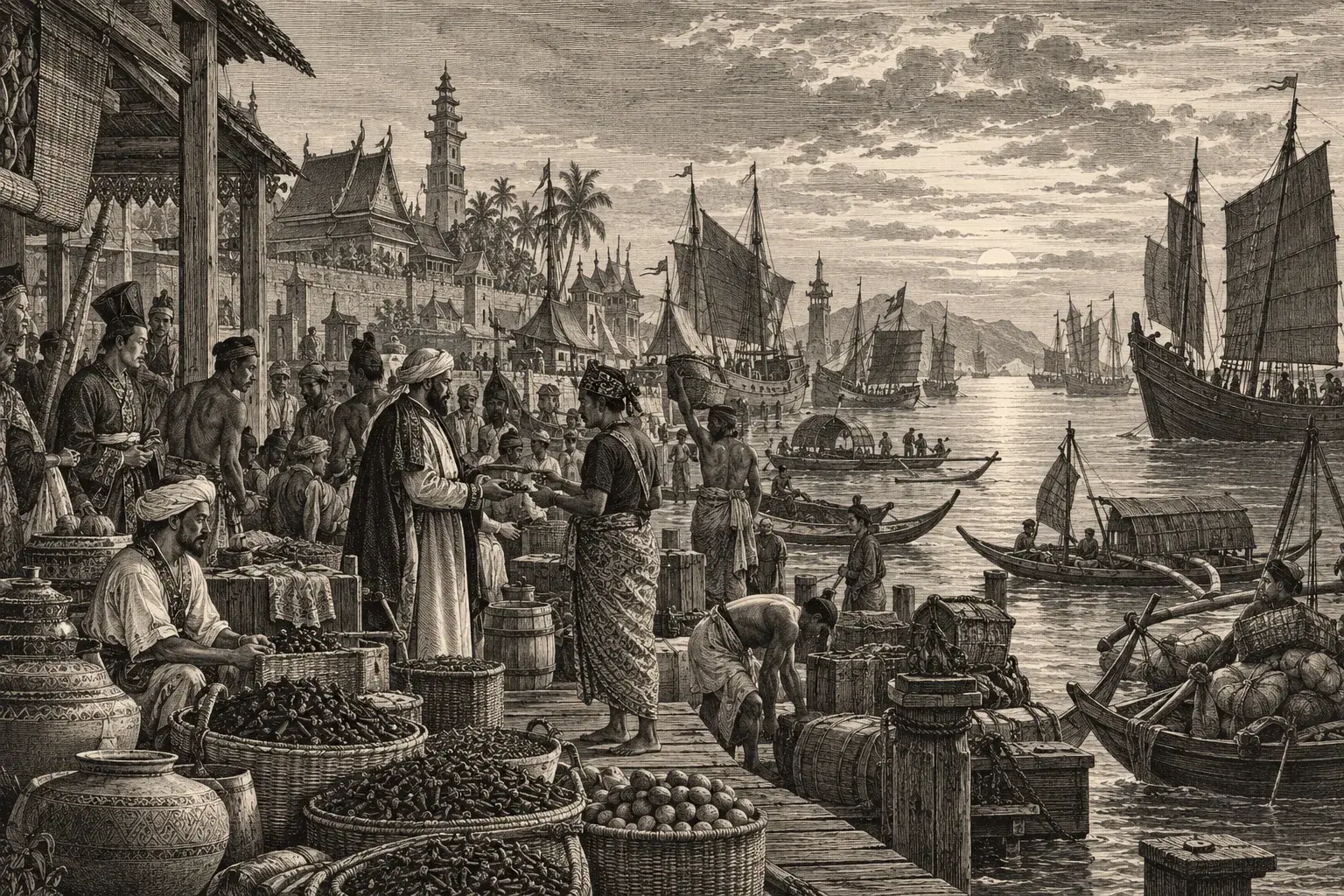
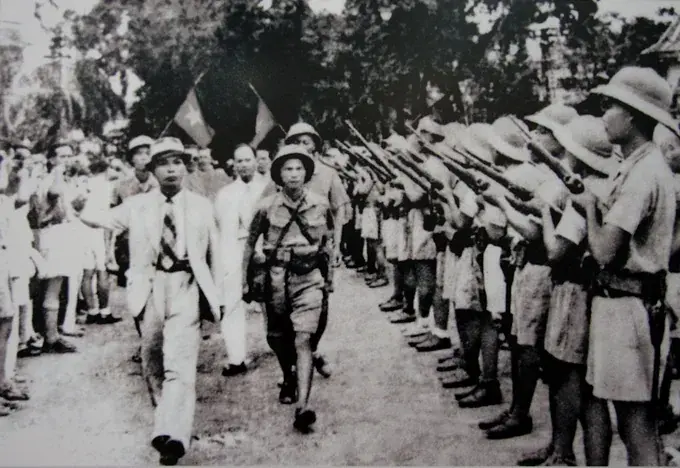
France had controlled Vietnam, along with Laos and Cambodia under the banner of French Indochina, since the 1880s. The colonial arrangement was extractive in the way that colonial arrangements tend to be — Vietnamese resources and labor benefited French interests, while Vietnamese political movements were suppressed as a matter of policy. Nguyen Sinh Cung, who would later take the name Ho Chi Minh, founded the Indochinese Communist Party in 1930. He was a nationalist first and a communist second, in the sense that driving out foreign control was always the primary goal; Marxism was the ideological framework he'd landed on for achieving it. That distinction matters, because American policymakers later spent years treating him as primarily a Soviet puppet when the reality was considerably more complicated. World War II cracked French Indochina open. Japan occupied the region starting in 1940, and Ho Chi Minh's Viet Minh movement — which the American OSS actually supplied with weapons and training to fight the Japanese — used the chaos to build real popular support and a functioning guerrilla organization. When Japan surrendered in 1945, the Viet Minh moved fast: they launched what became known as the August Revolution, seized Hanoi, and Ho Chi Minh declared an independent Democratic Republic of Vietnam on September 2nd. It lasted about three weeks. British forces arrived to supervise the Japanese surrender south of the 16th parallel, supported a French coup that took Saigon back, and the French moved to reassert their colonial authority across the country. By December 1946, the Viet Minh and the French were at open war. The First Indochina War ran for eight years. By the end, the US was paying about 80 percent of French military costs — already deeply financially entangled in a conflict it hadn't officially joined. The war ended at the Battle of Dien Bien Phu in 1954, when Viet Minh forces surrounded and destroyed a French garrison that French commanders had believed was defensible. France was done.
Geneva, the 17th Parallel, and a Peace That Wasn't
The 1954 Geneva Conference was supposed to settle things. What it actually produced was a temporary partition — a ceasefire line at the 17th parallel, with the communist Democratic Republic of Vietnam in the north under Ho Chi Minh, and a French-backed state in the south that the US quickly moved to support. The accords called for nationwide reunification elections in 1956. Those elections never happened. South Vietnam's new leader, Ngo Dinh Diem, refused to hold them. The Americans backed this decision. Eisenhower himself reportedly speculated that Ho Chi Minh might win as much as 80 percent of a nationwide vote, which tells you something about why Washington was unenthusiastic about letting the Vietnamese public weigh in. Diem was a complicated figure. He was genuinely anticommunist and had real nationalist credentials, which gave him some initial legitimacy. He was also authoritarian, deeply suspicious of anyone he saw as a rival, and prone to relying on family members — particularly his brother Ngo Dinh Nhu — in ways that created serious governance problems. His 1955 referendum on South Vietnam's political future, which he won with a reported 98 percent of the vote, including somehow over 100 percent in Saigon, wasn't what you'd call a credible exercise in democracy. Meanwhile, in the north, roughly 5,000 to 10,000 Viet Minh cadres had been deliberately left behind in the south when the post-Geneva regroupment happened. They weren't idle. By 1957 an organized assassination campaign against South Vietnamese officials was underway, and by 1959 Hanoi had formally approved a people's war strategy and started upgrading the supply trail through Laos — what would eventually become the famous Ho Chi Minh Trail.
The 1954 Geneva Conference split Vietnam at the 17th parallel as a temporary measure pending reunification elections. Those elections never happened — and the partition that was supposed to last two years ended up lasting more than twenty.
Kennedy's Escalation and the Overthrow of Diem
When Kennedy took office in 1961, he inherited a situation that Eisenhower had warned him about but hadn't solved. There were around 900 American military advisors in South Vietnam. By the time Kennedy was killed in November 1963, there were 16,000. Kennedy's instincts on Vietnam were genuinely uncertain, and historians still argue about what he would have done had he lived. What's clear is that he resisted full-scale military commitment. He rejected proposals to send combat troops disguised as flood relief workers. He privately worried about repeating French mistakes. But he also kept escalating the advisory mission, partly because the South Vietnamese military under Diem was performing badly and the political situation was worsening. Diem's government was alienating the people it needed to hold. His crackdown on Buddhist protesters in 1963 — including raids on pagodas that killed hundreds — was particularly damaging. Discontent among South Vietnamese generals grew to the point where a coup was being openly discussed in Washington. The CIA quietly let the plotters know the US would not stand in their way. On November 2, 1963, Diem was overthrown and executed, along with his brother. Kennedy, who had not anticipated Diem would be killed, reportedly looked physically stricken when he got the news. Three weeks later, Kennedy himself was dead in Dallas, and Lyndon Johnson was president, inheriting a South Vietnam that was now in political chaos — military governments toppling each other in quick succession, none of them able to establish any governing authority.
The Gulf of Tonkin and How America Got In Properly
On August 2, 1964, the USS Maddox — on an intelligence mission in the Gulf of Tonkin — was approached by North Vietnamese torpedo boats and exchanged fire. Two days later, the Maddox and another destroyer reported a second attack. That second attack almost certainly didn't happen. An NSA report declassified in 2005 confirmed there was no assault on August 4th. Johnson himself reportedly told Undersecretary of State George Ball that those sailors might have been shooting at flying fish. None of that stopped the Gulf of Tonkin Resolution from passing Congress on August 7th with near-unanimous support. It gave the president authority to use military force in Southeast Asia without a formal declaration of war. Johnson used it immediately, and kept using it for years. By early 1965, US airstrikes against North Vietnam had begun under Operation Rolling Thunder — a bombing campaign that would eventually drop more than a million tons of bombs over three years without achieving its stated goal of forcing Hanoi to stop supporting the southern insurgency. In March 1965, the first US combat troops — 3,500 Marines — landed near Da Nang. The American ground war had started. It escalated fast. 184,000 troops by end of 1965. 385,000 by 1966. 536,000 by 1969. General Westmoreland's strategy revolved around attrition — grinding down the Viet Cong and North Vietnamese forces through superior firepower until they couldn't sustain the fight. The measurement system was body count, which created enormous institutional pressure to inflate numbers and which, as critics at the time noted, said nothing about whether the US was actually winning the war politically.
Operation Rolling Thunder dropped over a million tons of bombs on North Vietnam between 1965 and 1968. The campaign failed to break Hanoi's will or significantly reduce support for the Viet Cong — one of several miscalculations that shaped the war's outcome.
The Tet Offensive: The Moment Everything Changed at Home
By late 1967, the Johnson administration had a credibility problem. Westmoreland was publicly saying the end was coming into view. Pentagon briefings used statistics suggesting the US was winning by every measurable metric. And then January 30, 1968 happened. The Tet Offensive was named after the Vietnamese lunar new year. North Vietnamese strategist Le Duan had planned it as the decisive blow — a coordinated assault on more than 100 cities simultaneously, designed to spark a popular uprising against the South Vietnamese government and knock the Americans back on their heels. Over 85,000 Viet Cong and North Vietnamese troops attacked in the early morning hours, hitting military installations, government buildings, and urban centers that had been considered relatively safe. Most of the cities were retaken within days. The former imperial capital Hue took 26 days of brutal street-to-street fighting to recapture, and when it was over, investigators found mass graves containing nearly 3,000 civilians that the Viet Cong had executed during their occupation. In pure military terms, Tet was a catastrophic defeat for the communist side — their losses were enormous, the popular uprising never materialized, and the Viet Cong as an effective fighting force was essentially broken. But militarily winning a battle and politically winning a war are two different things. The American public had been told for months that progress was being made, that the enemy was weakening. The images coming out of Tet — fighting in the courtyard of the US Embassy in Saigon, the street-level execution of a Viet Cong prisoner that CBS broadcast into living rooms across America — told a different story. Johnson's approval rating on the war fell off a cliff. The gap between what the government was saying and what people could see with their own eyes had become impossible to paper over. LBJ did not run for re-election. He announced it at the end of March 1968, alongside an offer to begin peace talks. The war had consumed his presidency.
Nixon, Vietnamization, and the Long Withdrawal
Richard Nixon won the 1968 election partly on the claim that he had a secret plan to end the war. The plan, when it emerged, was called Vietnamization — the idea of building up South Vietnamese forces to take over their own defense while American troops gradually pulled out. It was, in essence, the same thing the Kennedy administration had tried to do years earlier, now repackaged as an exit strategy rather than an escalation. Nixon also expanded the war in ways his public statements did not acknowledge. Operation Menu — a secret bombing campaign against North Vietnamese supply routes in Cambodia — was running from March 1969, with only five members of Congress informed. When the 1970 Cambodian coup brought a US-friendly government to power in Phnom Penh and North Vietnamese troops responded by pushing deeper into Cambodia, Nixon ordered an American ground incursion that triggered massive protests at home. Four students were shot dead by National Guardsmen at Kent State University in May 1970, and the country felt, briefly, like it might come apart. US troop morale during this period is a subject that military historians have written about extensively, and the picture isn't flattering. Drug use was widespread — one House subcommittee estimated 10 percent of soldiers were using heroin. Fragging incidents, where enlisted men tried to kill their own officers, numbered in the hundreds. Units ordered on patrol would radio in false coordinates from somewhere safe. The institutional rot was real and documented, not a Hollywood invention. The Paris Peace Accords were signed in January 1973. They ended direct American military involvement, created a ceasefire, and required a prisoner exchange. They also allowed 200,000 North Vietnamese troops to remain in South Vietnamese territory, which rather told you how the negotiations had gone. Nixon privately pressured South Vietnam's President Thieu to sign by threatening to cut off American support if he refused.
The Paris Peace Accords of January 1973 ended direct American military participation in Vietnam — but left 200,000 North Vietnamese troops on South Vietnamese soil, and fighting continued almost immediately after the ceasefire took effect.
The Fall of Saigon
The ceasefire lasted about as long as anyone paying attention had expected. Fighting resumed almost immediately. The North Vietnamese, freed from American bombing now that US forces had withdrawn, upgraded the Ho Chi Minh Trail into something approaching a real highway system and began planning the offensive that would end the war. In early 1975, North Vietnamese General Van Tien Dung launched what began as a limited offensive into the Central Highlands. The South Vietnamese forces collapsed faster than even Hanoi had anticipated. Dung urged the Politburo to keep pressing, arguing the window of opportunity was too good to waste on caution. They agreed. South Vietnamese President Thieu made a series of increasingly desperate decisions — ordering retreats, reversing them, ordering stands that couldn't be held. The military collapse became a rout. Da Nang fell. Hue fell. Province after province folded. The speed was staggering: what the North Vietnamese had planned as a two-year campaign they completed in weeks. By late April, 100,000 North Vietnamese troops had Saigon surrounded. The city was defended by perhaps 30,000 South Vietnamese soldiers. On April 29, US helicopters began the largest helicopter evacuation in history — Operation Frequent Wind — pulling American personnel and South Vietnamese who'd worked with them off rooftops and out of the embassy compound. The images of people clinging to helicopters, of crowds pressing against the embassy gates, are among the most recognizable photographs of the twentieth century. On the morning of April 30, 1975, the last US Marines left the embassy. Hours later, North Vietnamese tanks crashed through the gates of the Independence Palace. South Vietnamese President Duong Van Minh surrendered. The war was over. North and South Vietnam were officially reunified the following year under communist rule.
The Cost: What the Numbers Actually Mean
58,220 Americans were killed. That number is precise because the US kept meticulous records. The Vietnamese numbers are harder — estimates of total Vietnamese military and civilian deaths run from around 970,000 to three million, depending on methodology and who's counting. Somewhere between 195,000 and 430,000 South Vietnamese civilians died. The Vietnamese government's own 2013 figures put confirmed military deaths on the North Vietnamese and Viet Cong side at over 849,000, and that doesn't include the 300,000 listed as missing. And that's just Vietnam. Another 275,000 to 310,000 Cambodians died during the war years, including tens of thousands killed by US bombing. Between 20,000 and 62,000 Laotians died. Laos, as a country, received more tons of bombs per capita than any nation in recorded history — the US dropped two million tons on it between 1964 and 1973. Eighty million unexploded cluster munitions still sit in Laotian soil. They kill people every year. The chemical defoliant program — Agent Orange and similar herbicides sprayed across roughly six million acres of jungle and farmland between 1961 and 1971 — created health consequences that are still running. The Vietnamese government estimated over four million victims of dioxin poisoning. The most common birth defect linked to exposure is spina bifida, and the evidence strongly suggests the effects carry across at least three generations. In 2012, the US and Vietnam began cooperating on cleanup at Da Nang International Airport — the first time Washington formally acknowledged responsibility for Agent Orange contamination on Vietnamese soil. For the US military itself, the war left 150,000 wounded, at least 21,000 permanently disabled, and an estimated 830,000 veterans — about 15 percent of those who served — dealing with post-traumatic stress disorder at some point in their lives.
The Agent Orange defoliation program affected around six million acres of Vietnamese jungle and farmland. Its health consequences — cancers, birth defects, immune disorders — have been documented across multiple generations and are still ongoing.
What Came After: Vietnam, Cambodia, and the Refugee Crisis
Reunification in 1976 did not mean peace across the region. In Cambodia, the Khmer Rouge — which China had been funding partly as a counterweight to Vietnam — ran the country into one of the worst genocides of the twentieth century. Somewhere between one and three million Cambodians were killed under Pol Pot from a population of eight million, through execution, forced labor, starvation, and disease. Vietnam eventually invaded Cambodia in 1978 to oust the Khmer Rouge, which led China to invade Vietnam in 1979. Border conflicts between China and Vietnam continued until 1991. Southeast Asia did not settle into stability after the Americans left — it went through another decade and a half of connected violence. The refugee crisis that followed the communist victories was massive. Over three million people left Vietnam, Laos, and Cambodia. The Vietnamese boat people — families who fled in overcrowded and often barely seaworthy vessels into open water — became one of the defining humanitarian crises of the late 1970s and 1980s. Estimates from the UN High Commissioner for Refugees put the number who died at sea between 200,000 and 250,000. Most Asian countries refused to take them. The US, Canada, Australia, and France together resettled over 1.7 million people. Inside Vietnam, many South Vietnamese were sent to re-education camps — the numbers are disputed but range from 50,000 to over 400,000 people, held for periods ranging from weeks to more than a decade under conditions that included forced labor, poor food, and systematic abuse. The country's economy stagnated badly into the 1980s under a Soviet-style planned system and US economic pressure. The reforms of Doi Moi, beginning in 1986, slowly opened things up.
Why America Lost — And What People Still Get Wrong About It
The question of why the US lost has generated a lot of bad answers over the years, mostly because it's a politically loaded question and people are invested in particular conclusions. The media-lost-the-war argument — that negative coverage turned public opinion and undermined a winnable conflict — has been around since the 1970s. The evidence doesn't support it. Public opinion turned against the war because the war was going badly, not the reverse. The Tet Offensive shattered public confidence in government claims precisely because those claims had been so aggressively optimistic. The military brass version — that politicians tied the Army's hands by preventing an invasion of North Vietnam — has more logical appeal but runs into a significant problem: an invasion of North Vietnam risked Chinese intervention, as Korea had demonstrated in 1950, and the US was genuinely unwilling to fight that war. The constraint wasn't timidity; it was a rational calculation about escalation. What gets closer to the truth is simpler and less satisfying. The South Vietnamese government, despite enormous American investment, never developed the popular legitimacy or administrative competence to hold the country together. The Viet Cong and North Vietnamese were fighting for a cause — reunification under their terms — that gave them resilience the US side couldn't match. American military strategy was designed for a conventional European war and adapted poorly to a guerrilla conflict where territory meant less than political control of populations. And the body-count metric that Westmoreland championed was not just useless as a measure of progress; it was actively harmful, creating incentives to falsify records and kill civilians. McNamara, who had been one of the war's chief architects, said years later that a military victory for the US had been 'a dangerous illusion.' That's probably as honest an assessment as anyone on the American side ever gave.
April 30, 1975: North Vietnamese tanks at the Independence Palace in Saigon marked the end of the war. South Vietnam had ceased to exist. The reunification that Ho Chi Minh had sought since 1945 was complete.
What the War Left in Its Wake in America
The political fallout in the US was significant and lasting. Reagan coined the phrase Vietnam syndrome to describe the public reluctance to support overseas military interventions — a reluctance that persisted through the 1970s and 1980s and shaped American foreign policy debates for decades. A 1978 poll found nearly 72 percent of Americans describing the war as fundamentally wrong and immoral. By 1990, 70 percent said it was a mistake. That's a rare level of retrospective consensus on a major policy decision. The draft ended in 1973 and never came back. The relationship between the American military and the society it served changed; an all-volunteer force replaced conscription, which changed who fought wars and how the public related to them. The War Powers Act of 1973, passed over Nixon's veto, required congressional notification when presidents deployed troops — a direct response to the Gulf of Tonkin blank check that Johnson had used to fight an undeclared war for years. Vietnam veterans came home to a country that didn't know how to receive them — not the hostility of the spat-upon veteran myth (historians have found very little evidence that actually happened at scale), but something arguably harder to navigate: indifference mixed with ambient guilt. The PTSD rates among veterans were genuinely severe, and the VA system was not equipped to handle what was coming. The Vietnam Veterans Memorial in Washington, dedicated in 1982, became unexpectedly one of the most visited monuments in the country. The wall with 58,220 names cut into black granite was controversial before it opened — critics called it a black gash of shame. It turned out to be something people needed. Visitors leave things at the base of it: photographs, dog tags, medals, letters. More than four million people go there every year. The war the US fought in Vietnam is still being processed — in policy debates about intervention, in academic arguments about military doctrine, in the experiences of the people who lived through it on all sides. Vietnam did not make Americans pacifists. It made them, for a while, more cautious about the gap between what wars are promised to accomplish and what they actually do.