Japan in the sixteenth century was not one country in any meaningful sense. It was a collection of territories held by lords who fought, negotiated, betrayed, and occasionally cooperated with one another across decades of civil war. Into this fractured landscape, Portuguese and later Spanish missionaries arrived carrying a religion that had never existed in Japan before — and they found, somewhat to their surprise, that it spread. The timing matters. Christianity was gaining ground in Japan at exactly the moment when three men were climbing toward dominance over the whole country. Their names were Nobunaga, Hideyoshi, and Ieyasu, and each of them would have a completely different relationship with the foreign faith. Nobunaga was, by most accounts, genuinely friendly toward it — not because he believed any of it, but because he understood what it could do for him politically. Ieyasu, the last of the three to hold power, would eventually turn the full weight of the state against Christianity with a ferocity that nearly erased it from the country entirely. Between those two poles, the story of how Japan got consolidated under a single authority is one of the more fascinating stretches in the country's long history. And it starts with Nobunaga.
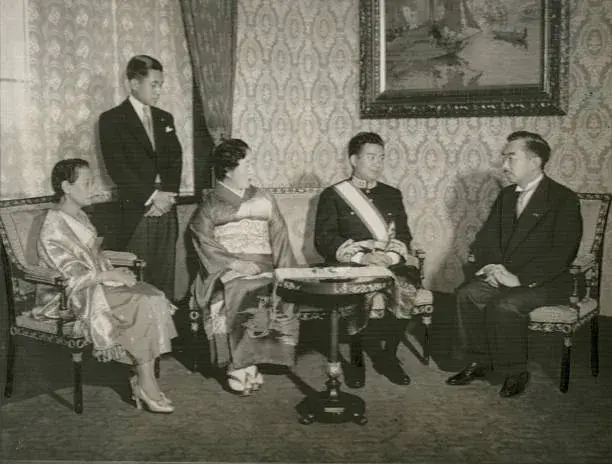
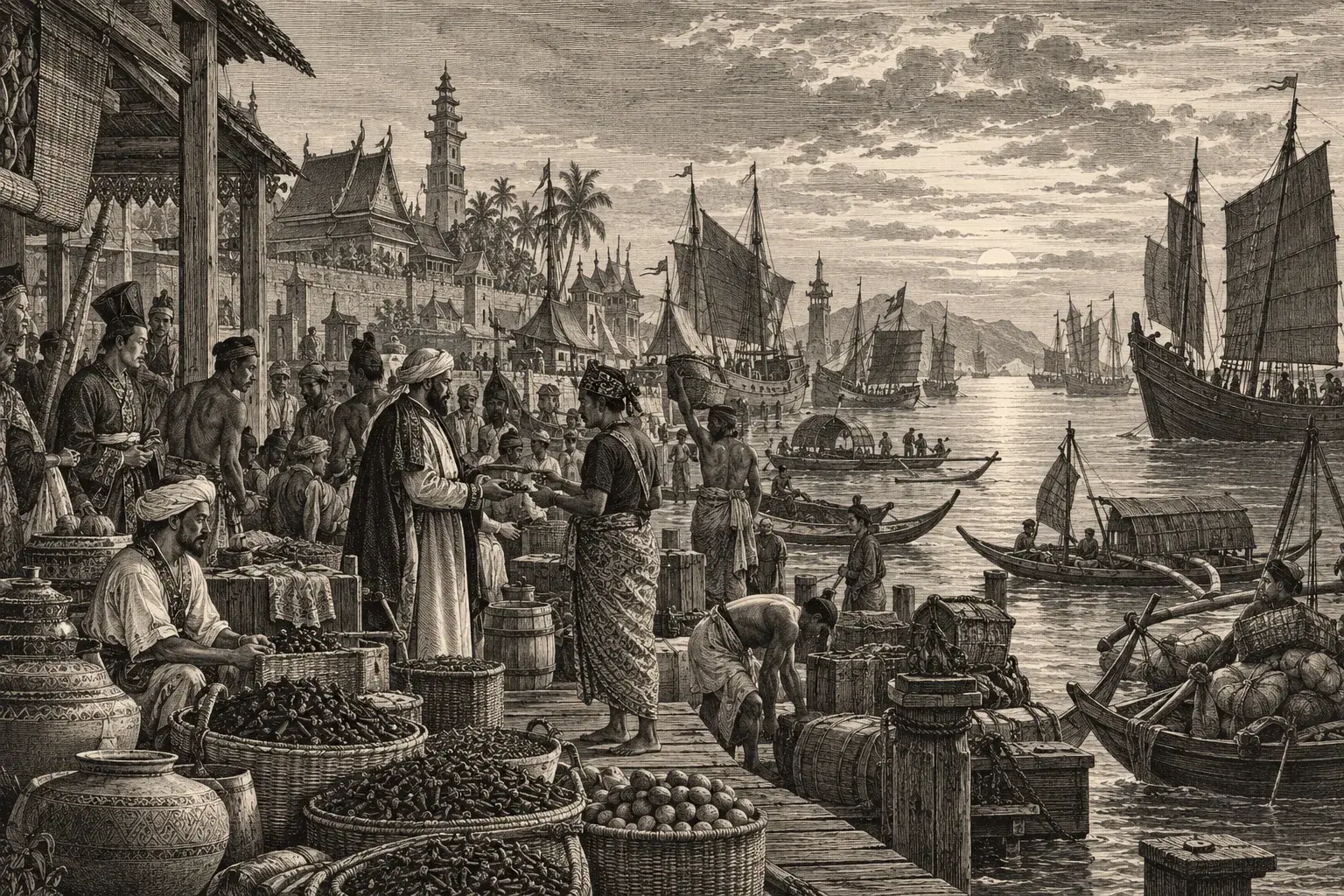
Japan during Nobunaga's rise was fractured into competing territories, each held by lords whose power depended as much on military skill and political cunning as on birth.
A Small Lord With Larger Ambitions
Nobunaga's starting position was not impressive. He was a daimyo — a regional lord — but not one of the top tier. His landholdings were modest. What he had going for him were a well-trained body of troops, a real talent for military command, and one other thing that turned out to matter more than either of those: Hideyoshi. Hideyoshi started out as a common soldier in Nobunaga's service. He was not from the nobility. He had none of the family connections that typically smoothed a path to leadership in feudal Japan. What he had instead was a particular kind of mind — restless, inventive, always looking for the angle that the other side hadn't thought of yet. He rose fast. By the time Nobunaga's campaigns were hitting their stride, Hideyoshi was functioning as his second-in-command, and people talked about his presence in an army the way you might talk about a secret weapon. The saying went that having Hideyoshi arrive to reinforce your side was worth an extra ten thousand men. That's not a small claim in a world where the size of armies measured in the thousands. It says something about how much his tactical creativity was valued, and how well Nobunaga understood the asset he had in him.
The Road to Kyoto
The opportunity Nobunaga had been watching for came through the dysfunction of the Ashikaga Shogunate. The Ashikaga shoguns had been mismanaging things badly enough that one of them was murdered, and a younger brother of the dead man came to Nobunaga for help. He wanted the position for himself. Nobunaga agreed. He marched on Kyoto with a large army, installed his candidate as Shogun, and was rewarded with the title of Vice-Shogun through the emperor's formal blessing. From that position, he and Hideyoshi set about bringing the capital back under workable control. There were great lords who refused to accept the new order, and Nobunaga moved against them. In these campaigns he had both Hideyoshi and a man named Ieyasu at his side — Ieyasu being from a branch of the old Minamoto clan, a name that carried considerable weight in Japanese aristocratic politics and one that would eventually produce its own line of shoguns. For now he was Nobunaga's ally, and the combined force was enough to break the resistance. But new enemies appeared almost immediately, and these ones had powerful backing — the Buddhist monks of a massive monastery just outside Kyoto.
Kyoto was the symbolic center of Japanese political authority. Whoever controlled the capital and the emperor's court held a legitimacy that no regional lord could manufacture on his own.
The Monks Who Picked the Wrong Side
Anyone who pictures Buddhist monasteries in feudal Japan as quiet places of contemplation is missing something important about how they actually functioned. The major monasteries were political and military powers in their own right. They had armies. Their warrior monks were known fighters, and a large monastery could put a meaningful force into the field. The monastery near Kyoto — described as essentially a small city, with three thousand buildings within its walls — had been interfering in the capital's affairs for years before Nobunaga came along. When his enemies moved against Kyoto, the monastery gave them shelter and resupplied them. Whether this was driven by genuine political conviction or simply an old habit of backing whoever seemed most useful is hard to say at this distance. What is clear is that Nobunaga dealt with it by surrounding his enemies so completely they had no choice but to negotiate and retreat — and then turned to the monastery. He burned it to the ground. He killed large numbers of monks and drove the survivors out. The year was 1571. It was not a measured response, and nobody at the time seems to have expected it to be. From that point forward, Nobunaga's relationship with organized Buddhism was one of sustained mutual hostility, and the monasteries knew they were dealing with someone who did not treat their walls as limits on what he was willing to do.
Why Nobunaga Liked the Christians
Nobunaga's support for Christianity makes more sense once you understand how he felt about Buddhism. He was not personally drawn to the Christian faith — by all accounts he had no interest in becoming a Christian himself. But he saw immediately that a growing Christian community represented a counterweight to the power of the Buddhist establishment, and that was worth a great deal to him. So he built churches. He extended his patronage. Under his protection, the Christian faith reached a level of prosperity in Japan that missionaries had hardly dared hope for. Nobunaga got, in return, a religious community that had every reason to stay loyal to the man keeping it safe. In 1573 he deposed the last Ashikaga Shogun, dispensing with the formality of the alliance that had brought him to power in the first place. He now ruled in the emperor's name, without any intermediary title needing to be managed. By most accounts he ruled well — he was not simply a destroyer. The administrative work of putting the capital in order, of establishing reliable governance across the territories he controlled, was real and sustained.
Nobunaga's support for Christianity was calculated rather than devout — he saw in the foreign faith a useful check on the political power of Buddhist monasteries that had long meddled in the affairs of the capital.
Hideyoshi and the Flooded Castle
In 1578 the powerful daimyo of Chosu refused to submit, and Nobunaga sent Hideyoshi to sort it out. What followed was five years of campaigning across five provinces, which tells you something about the scale of what Nobunaga was trying to hold together. The final target was a fortress of considerable reputation. It sat on ground surrounded by lakes, which meant that a conventional assault — bringing a large body of troops against the walls — was simply not feasible. The garrison presumably knew this and felt comfortable about it. Hideyoshi didn't attack. He looked at the terrain and noticed that a river carried off the water from the lakes. Then he had his troops build a dam across it. The water started climbing the castle walls. Hideyoshi waited. There's something almost comedic about it in retrospect — the garrison laughing at him from the walls, and then gradually watching the water rise. It was exactly the kind of solution that had made people say his presence was worth ten thousand extra men. Not more soldiers, not a frontal assault that would get people killed on both sides. Just a dam, and patience, and the castle coming to him.
The Grudge That Ended Everything
While Hideyoshi was managing the rising water at the castle, Nobunaga was marching reinforcements to him. He sent the army ahead by the direct route and took a less direct path himself, stopping in Kyoto on the way. He stayed at the temple of Honnoji, planning to follow his men within a few days. Among his generals was a man named Akechi. And Akechi had a grievance that had been sitting with him for a long time. It had started at a feast. Nobunaga was prone to rough humor — the kind of behavior that might get called boorish in one era and harmless in another, depending on who was on the receiving end. At some point during the celebration he grabbed Akechi, tucked the general's head under his arm, and used it as a drum, rattling on it with his fan. This is the kind of story that sounds invented until you consider that it appears to have genuinely happened and that people in the room apparently found it funny. Akechi did not find it funny. He never forgot it. On the march toward the besieged castle, Akechi ordered his troops to turn around. When his captains asked what was happening, he told them flatly: his enemy was in the Honnoji. He promised them rewards. They went with him. Nobunaga woke up to the attack. He looked out of a window, recognized the men coming for him, and understood immediately that there was no fighting his way out of this — his personal guard was nowhere near large enough. He made whatever fight he could, and when it was clear the end was coming, he did what a man of his time and position was expected to do. He went to an inner room, set it alight, and died by his own hand while the temple burned around him. That was 1582. He was forty-nine years old.
The Honnoji incident stands as one of the most dramatic moments in Japanese history — a powerful ruler brought down not by a rival lord or an outside invasion, but by one of his own generals nursing a wound to his dignity.
What Nobunaga Left Behind
The obvious question after a death like Nobunaga's is: what did it all amount to? He'd spent twenty-odd years fighting to consolidate Japan under central authority and was killed before he finished the job by a man whose feelings he'd hurt at a party. But the work he'd done didn't disappear with him. Hideyoshi moved fast after Honnoji — faster than anyone expected. He made peace with the Chosu campaign within days of hearing the news, marched back toward Kyoto, and defeated Akechi before the dust had even settled. The momentum of the unification project passed into his hands, and he carried it forward. The Christianity question, though, took a different shape under each successor. The churches Nobunaga had patronized continued for a time. Hideyoshi would eventually turn against them — not immediately, and not with the same thoroughness that Ieyasu would later bring. But the protection Nobunaga had extended was personal, tied to his specific political calculations. When he was gone, so was the guarantee. What Nobunaga built was a foundation — not a finished structure. Someone else would have to complete it, and they did, and the Japan that eventually emerged from all that fighting had Nobunaga's fingerprints on it even if his name wasn't on the door. He broke things that needed breaking. He made space for what came next. In a country that has tended to remember him as either a reformer or a brutal destroyer depending on who's doing the remembering, the honest answer is probably that he was both, and that the two things weren't entirely separable.