Here is a thing most people do not realize about the name Palestine: the Philistines, the group it is supposedly named after, were not even the first people there. Not close. By the time the Philistines showed up on the southern coast of the Mediterranean, around the 12th century BCE, the land they settled had already been farmed and traded and fought over for thousands of years. There were already cities. There were already trade routes connecting it to Egypt and Mesopotamia. There were already kingdoms in the process of rising and falling. The Philistines were newcomers in a land that was, by any honest measure, ancient long before they arrived. So how did a region named after a group that occupied only a small coastal strip end up giving that name to the entire territory? That question is actually a pretty good window into how the history of this place has worked for a very long time — outsiders applying their own labels, those labels sticking regardless of accuracy, and the people actually living there carrying on regardless.
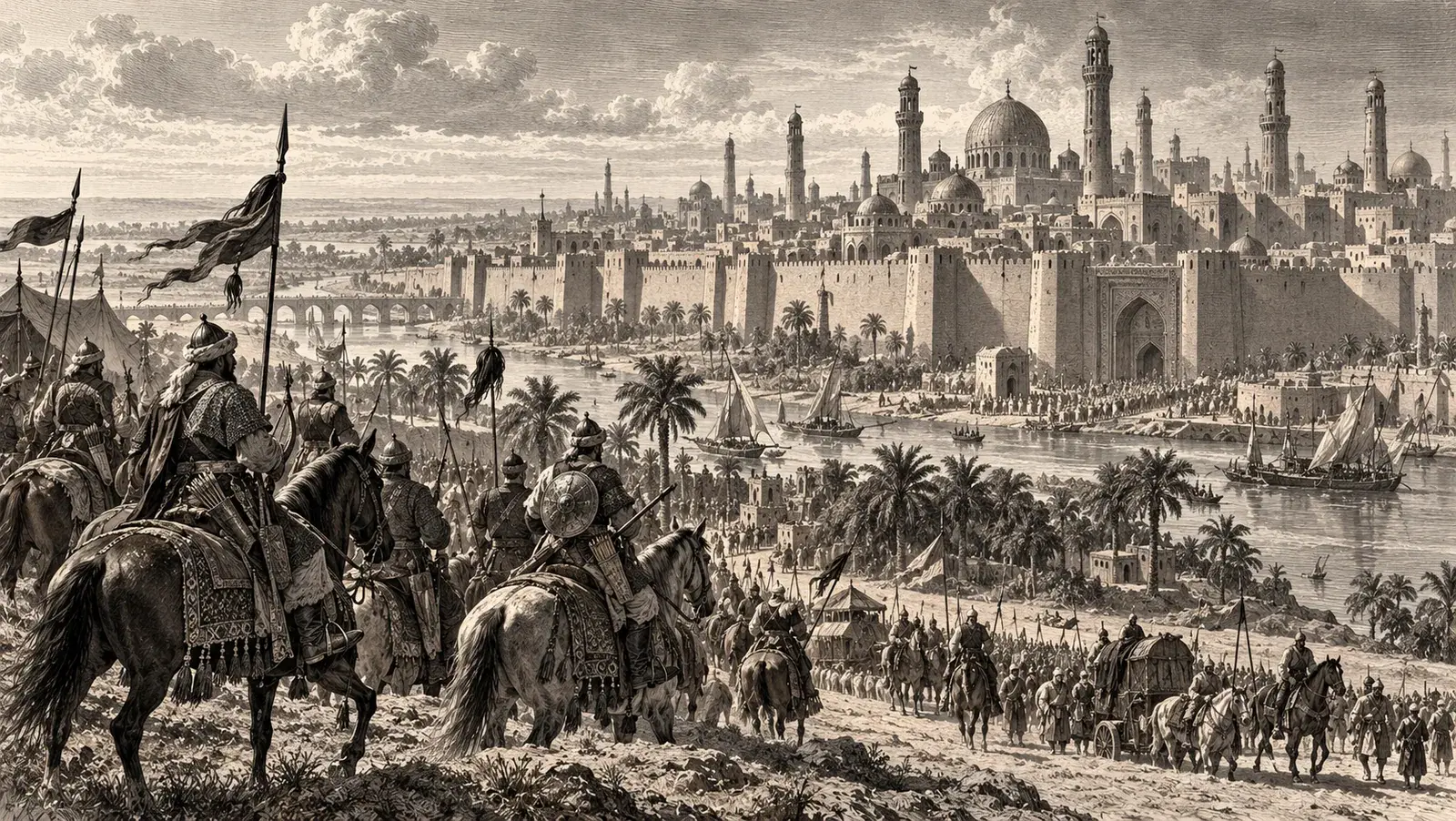
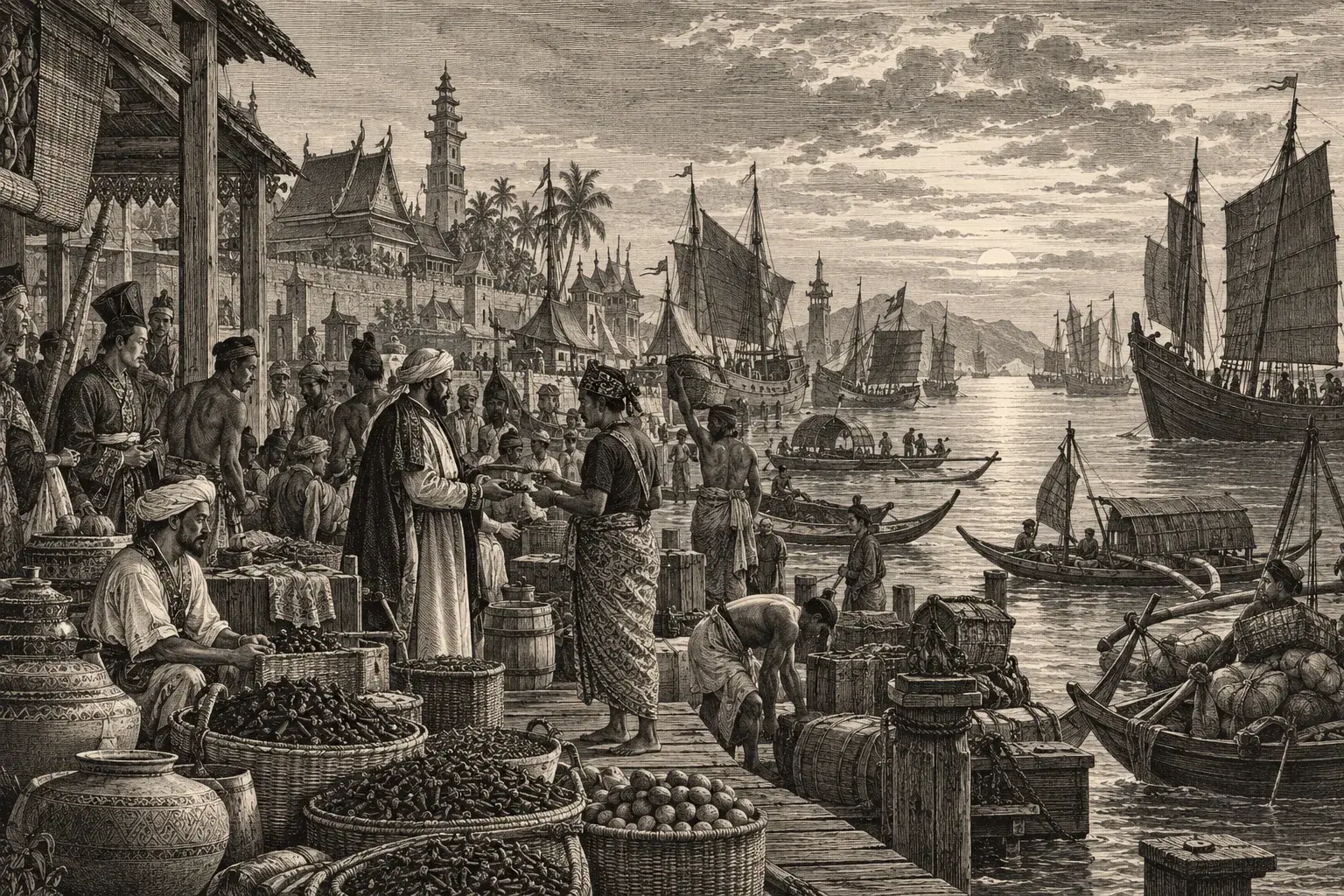
The region known today as Palestine sits along the eastern edge of the Mediterranean Sea, part of what ancient Mesopotamian records called Canaan — a name that appears in trade documents as far back as the 18th century BCE.
What People Were Actually Calling It
In the oldest records we have — trade documents from the ancient cities of Ebla and Mari, going back to around the 18th century BCE — the region is called Canaan. That name covered the whole territory. It shows up in Mesopotamian texts, in Egyptian records, in correspondence between rulers. Canaan was the word people used. The word Palestine does not appear anywhere in writing until the 5th century BCE, when a Greek historian named Herodotus used it in his Histories. He did not invent it. He was recording a name that had been circulating in the Greek-speaking world, one that seemed to come from the word Philistia, which simply meant land of the Philistines. After Herodotus used it, other Greek and Roman writers picked it up. Over the next few centuries, Palestine slowly pushed Canaan aside as the common name for the whole region. What is strange about that, if you think about it, is that the Philistines were not a dominant force by then. They had already been subdued, absorbed, and scattered by a series of conquering empires. Their cultural influence on the broader region was not enormous. But their name, slightly mangled through a few different languages, somehow ended up on a map much bigger than anything they actually controlled.
The First People, and What They Built
Human beings have been living in this part of the world for a very long time. Archaeological evidence puts people in the region before 10,000 BCE. They were hunter-gatherers then — moving around, following food, not settling down in any permanent way. That changed during the Early Bronze Age, roughly 3300 to 2000 BCE, when permanent settlements started appearing and people began farming. Once farming took hold, villages followed, then towns, then trade networks reaching out to neighboring regions. Because of where the land sits — between the river civilizations of Mesopotamia to the east and Egypt to the southwest — it became a natural stopping point for merchants and a natural target for ambitious rulers. Sargon the Great, who built the Akkadian Empire around 2300 BCE, absorbed the region into his growing territory. That brought a wave of investment and development — urban centers grew, trade expanded, the whole area prospered. Then Akkad fell to the Gutians in 2154 BCE, and much of that was undone. Cities were abandoned. People went back to smaller, rural ways of living. The Middle Bronze Age, roughly 2100 to 1550 BCE, brought another wave of growth. Egypt had become the most important trading partner in the region by around 2000 BCE, and that relationship shaped everything from burial practices to architecture. Canaan and Egypt were deeply linked economically, which meant that when Egyptian power wobbled, it affected everything north of the Sinai as well.
Canaan sat at the crossroads of the ancient world, connecting Egypt, Mesopotamia, and Arabia through trade routes that made it one of the most strategically valuable territories in the region for thousands of years.
Egypt Moves In — Then Everything Falls Apart
Around 1725 BCE, a group called the Hyksos — the name comes from an Egyptian phrase meaning foreign kings — moved into the region and eventually pushed into northern Egypt itself. They established themselves at a city called Avaris in the Nile Delta and held significant power in Lower Egypt for roughly 150 years, which was an enormous humiliation for a civilization that liked to think of itself as untouchable. The Egyptian pharaoh Ahmose I finally drove them out in 1570 BCE, then kept going. He chased the Hyksos north through Canaan and into Syria, and in doing so he effectively absorbed Canaan into what became the New Kingdom of Egypt — the most powerful period in Egyptian history. Later pharaohs including Hatshepsut, Thutmose III, Amenhotep III, and Ramesses the Great all invested in the region, built things, sponsored trade, and used Canaan as both a buffer zone and an economic asset. That arrangement worked reasonably well for about four centuries. Then everything collapsed at once. Around 1250 to 1150 BCE, the whole eastern Mediterranean fell into what historians now call the Bronze Age Collapse. It hit nearly every civilization in the region at roughly the same time — the Hittites, the Mycenaeans, the kingdoms of the Levant, Egypt itself, and Canaan. Exactly what caused it is still debated. Climate change, drought, disrupted trade routes, disease, invasion by groups called the Sea Peoples, internal rebellions — probably some combination of all of it. But the result was widespread destruction of cities and the effective end of the Late Bronze Age way of life.
The Philistines, and Who They Actually Were
The Philistines are thought to have come from the Aegean area — possibly Crete, possibly somewhere else in the Greek island world. They first appear in Egyptian records as part of the Sea Peoples, a broad label Egyptian scribes used for various groups attacking their coast from the sea. Ramesses III defeated them in a naval battle around 1175 BCE and managed to keep them out of Egypt proper. After that defeat, they settled on the southern coastal plain of Canaan. They built five main cities: Ashdod, Ashkelon, Ekron, Gath, and Gaza. These were organized city-states rather than a centralized kingdom, and the Philistines were materially sophisticated — their metalworking was notably advanced, which gave them a military edge over neighboring peoples who were still largely using bronze when the Philistines had moved on to iron. In the Hebrew Bible they show up constantly and not in a flattering light. They are the Israelites' persistent enemies — the people of Goliath, the people who captured Samson, the people who took the Ark of the Covenant in one of the more dramatic stories in Samuel. Whether those accounts reflect military reality or were shaped by later storytelling is a question historians argue about, but the hostility between the Philistines and the emerging Israelite kingdoms was clearly real enough to leave a long paper trail in multiple sources. What is easy to miss in all this conflict-focused history is that the Philistines also traded, intermarried, and gradually blended into the broader culture of the region over time. By the time the Assyrians arrived in force in 722 BCE, the Philistines as a distinct political and cultural entity were already fading. Their cities were absorbed, their autonomy ended, and eventually the people themselves became indistinguishable from the wider population of the region.
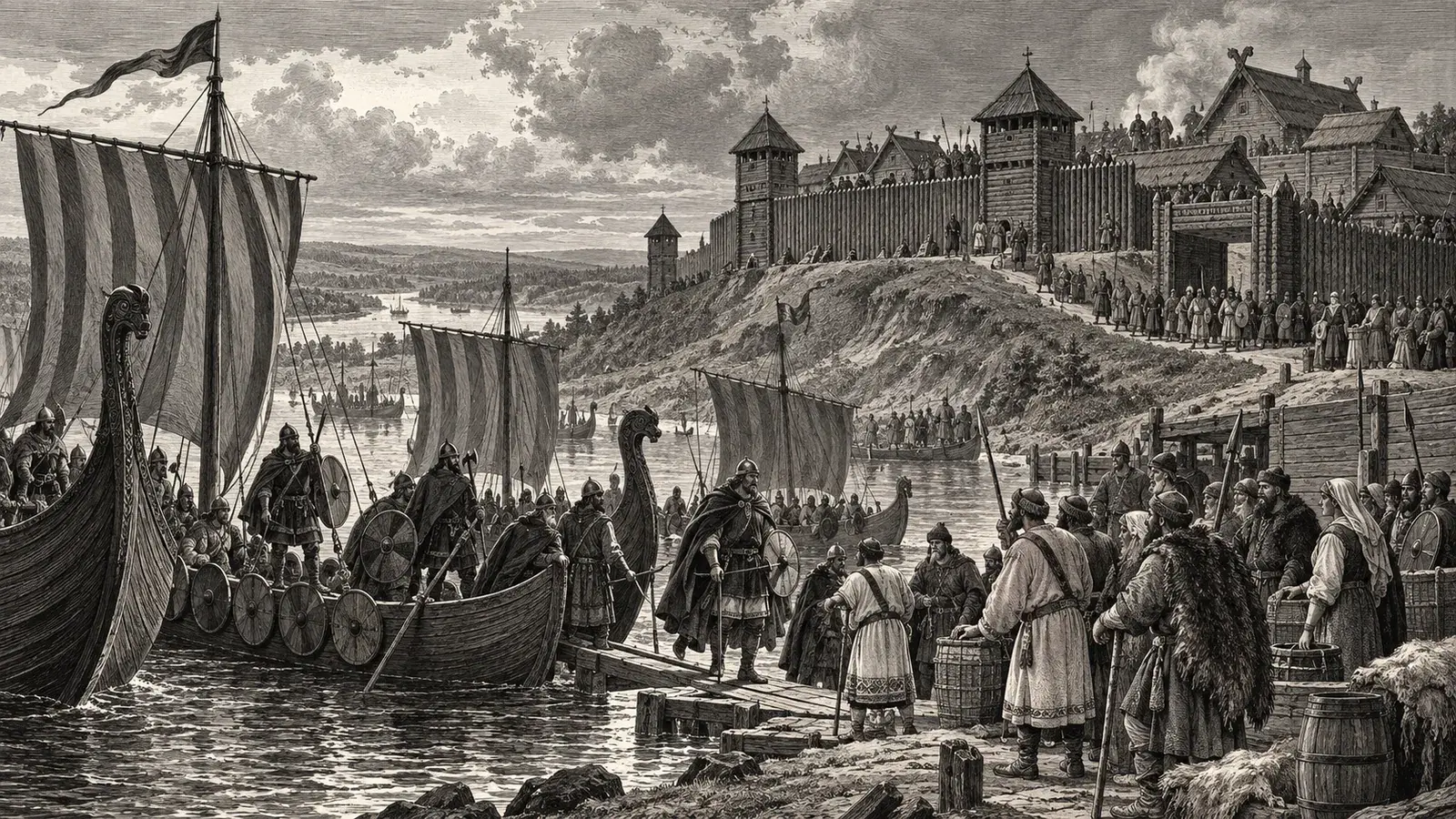
The Philistines settled along the southern coast of Canaan and built five major cities — Ashdod, Ashkelon, Ekron, Gath, and Gaza — that formed a loose federation rather than a unified kingdom.
The Kingdoms of Israel and Judah
While the Philistines were establishing their coastal cities, the Israelites were organizing themselves into something more politically coherent in the inland hill country. The Kingdom of Israel was founded around 1020 BCE under King Saul. His successor David consolidated the kingdom, reportedly defeated the Philistines decisively, and made Jerusalem his capital. Solomon, David's son, built the First Temple there and presided over what later tradition remembered as the kingdom's peak. After Solomon's death around 931 BCE, the united kingdom split into two. The Kingdom of Israel took the northern territory with its capital at Samaria. The Kingdom of Judah held the south, centered on Jerusalem. The two kingdoms coexisted uneasily, sometimes at war with each other and sometimes cooperating against common threats. Neither lasted. The Assyrian Empire under Tiglath-Pileser III started pressing into the region in the 8th century, and in 722 BCE the Assyrians conquered the northern Kingdom of Israel entirely, deporting much of its population — a practice Assyrian rulers used routinely to prevent rebellions in conquered territories. The Kingdom of Judah survived as a vassal state paying tribute to Assyria, just barely. When Assyria fell to the Babylonians and Medes in 612 BCE, Babylon replaced it as the dominant power. In 598 BCE the Babylonians invaded, sacked Jerusalem, destroyed the Temple of Solomon, and took the leadership class of Judean society back to Babylon as captives. They came back again between 589 and 582 BCE and finished the job, destroying what was left of the kingdom entirely. The Philistine communities were scattered at the same time. This deportation — the Babylonian captivity — became one of the defining events in Jewish history and religious development. The experience of exile, of practicing faith without a temple and without a homeland, shaped a religious tradition in ways that outlasted the Babylonians by thousands of years.
Persia, Alexander, and Rome Take Their Turns
Cyrus the Great of Persia defeated Babylon in 539 BCE and almost immediately did something that surprised a lot of people: he let the Jewish exiles go home. He also let them rebuild the Temple. Whether this was genuine tolerance or just smart politics — a way to win over conquered populations — it worked. The returning exiles rebuilt, and Judea continued as a Persian province for two centuries. Alexander the Great swept through in 332 BCE as part of his conquest of the Persian Empire. The region changed hands again after his death, caught between the Ptolemaic rulers of Egypt and the Seleucid rulers of Syria. Seleucid control tightened over time, and when the Seleucid king Antiochus IV tried to ban Jewish religious practices and convert the Temple in Jerusalem into a Greek shrine, he triggered the Maccabean Revolt in 168 BCE. The revolt succeeded. For a brief period, Judea was independent under the Hasmonean dynasty — the last time it would be self-governing for nearly two thousand years. Rome became involved in regional politics in 63 BCE when the general Pompey intervened in a Hasmonean succession dispute and effectively ended the dynasty's independence. By the time Augustus became emperor, Judea was a formal Roman province. Rome installed Herod the Great as a client king — technically Jewish, culturally and politically aligned with Rome, deeply unpopular with much of the population he ruled. He was a builder on a massive scale; the platform he constructed around the Temple Mount in Jerusalem is still there today. He was also, by most accounts, paranoid and brutal. When he died in 4 BCE, the region did not get more stable. It got worse.
Under Roman rule, Judea became one of the empire's most persistently troublesome provinces. Herod the Great's massive building projects — including the expanded Temple Mount — could not mask the deep resentment of Roman occupation.
Three Wars, and What Rome Did After
The Jewish population of Judea revolted against Roman rule three times over the span of about seventy years, and all three revolts ended badly. The First Jewish-Roman War ran from 66 to 73 CE. The Roman general Titus destroyed Jerusalem in 70 CE — burned the city, tore down the Second Temple, left only the outer western wall standing. The last holdouts retreated to the fortress of Masada, where, according to the Jewish historian Josephus, nearly a thousand defenders chose to die rather than surrender. Whether that account is historically accurate or shaped by later tradition is something scholars still argue about, but the fall of Jerusalem was real and devastating. The Kitos War followed in 115 to 117 CE, a broader revolt across the eastern Mediterranean that Rome crushed under the general Lucius Quietus. Then came the Bar-Kochba Revolt of 132 to 136 CE, named for its leader Simon bar Kokhba. This one lasted three and a half years and cost both sides enormously. Over 500,000 Jewish combatants were killed according to Roman sources, with the actual number probably lower but still catastrophic. The Romans lost enough men that Emperor Hadrian reportedly did not use the traditional formula when reporting to the Senate — he left out the opening line about the emperor and army being well. Hadrian's response after the revolt was suppressed was deliberate and systematic. He rebuilt Jerusalem as a Roman city called Aelia Capitolina and banned Jews from entering it. He also renamed the entire province Syria-Palaestina — combining Syria with Palaestina, derived from Philistia — specifically to sever the connection between the land and the people who had just spent years fighting for it. It was the name of their two oldest enemies, chosen on purpose. The name stuck. For centuries after, the region was Syria-Palaestina to the Roman and then Byzantine world. Which is, ultimately, how we got Palestine.
Byzantines, Islam, and the Crusades
When the Western Roman Empire collapsed in 476 CE, the Eastern half — what we call the Byzantine Empire — held on. Syria-Palaestina remained a Byzantine province, and when Constantine had made Christianity the state religion in the 4th century, the region's religious significance to Christian Europe grew considerably. Jerusalem, Bethlehem, the Sea of Galilee — these were not just places on a map anymore. They were places in the story at the center of the faith practiced across the entire Western world. That made what happened in 634 CE land particularly hard. Muslim armies from Arabia, newly united under the religion founded by the Prophet Muhammad, swept north and took Syria-Palaestina from Byzantium in a campaign that moved with startling speed. They renamed the territory Jund Filastin, roughly military district of Palestine, and proceeded to govern it. Churches became mosques in many places, just as pagan temples had become churches a few centuries earlier. European Christians watched this from a distance and did not accept it quietly. In 1096, Pope Urban II launched the First Crusade with the explicit goal of retaking the Holy Land. Jerusalem fell to the Crusaders in 1099 in a siege followed by a massacre of the city's Muslim and Jewish population that shocked even contemporaries who were not particularly squeamish about war. The Crusader states that followed were always fragile — European colonies in a region that was not interested in being colonized, requiring constant reinforcement from Europe to survive. They lasted roughly two centuries before being dismantled piecemeal. The last Crusader holding fell in 1291. The Byzantine Empire itself was gone by 1453, when the Ottomans took Constantinople. After that, Ottoman Turks held Palestine for the next four centuries.
The First Crusade's capture of Jerusalem in 1099 began two centuries of European attempts to hold the Holy Land — a series of military campaigns that ultimately failed to permanently change who controlled the region.
A Region That Never Stopped Being Contested
There is a pattern running through the entire history of this region that is hard to miss once you see it: whoever held it, someone else wanted it. That is partly geography. The land sits at the junction of three continents. Any empire building trade networks or military supply lines across the ancient and medieval world had a practical reason to control the territory. Egypt wanted it as a buffer. Assyria wanted it for expansion. Persia wanted it for access. Alexander wanted it because it was in the way. Rome wanted the whole Mediterranean world. Byzantium inherited Rome's ambitions. The early Muslim caliphates saw both strategic and religious reasons to hold it. The Crusaders came thousands of miles specifically because of its religious meaning. The Ottomans built an empire that wrapped around three seas, and Palestine sat in the middle of it. But it was not only geography. By the time Christianity and Islam were both fully established as world religions, this particular piece of land had acquired layers of religious significance that made it mean something beyond what any territory of its size and resources would normally justify. Jerusalem mattered to Jews, Christians, and Muslims simultaneously, for overlapping but distinct reasons. That combination has never stopped producing conflict. In 1915, during World War I, Britain entered the picture and helped set in motion the diplomatic arrangements that would eventually lead to the United Nations partition plan of 1947 and the establishment of the modern State of Israel in 1948. That chapter — and everything that has followed from it — remains, as the saying goes, ongoing. What the ancient history makes clear is that the region's contested nature is not a modern invention. It goes back past the Crusades, past Rome, past the Assyrians, past the Bronze Age kingdoms that first turned this crossroads of the ancient world into something worth fighting over. The names changed. The empires changed. The specific shape of the arguments changed. The arguments themselves never really did.