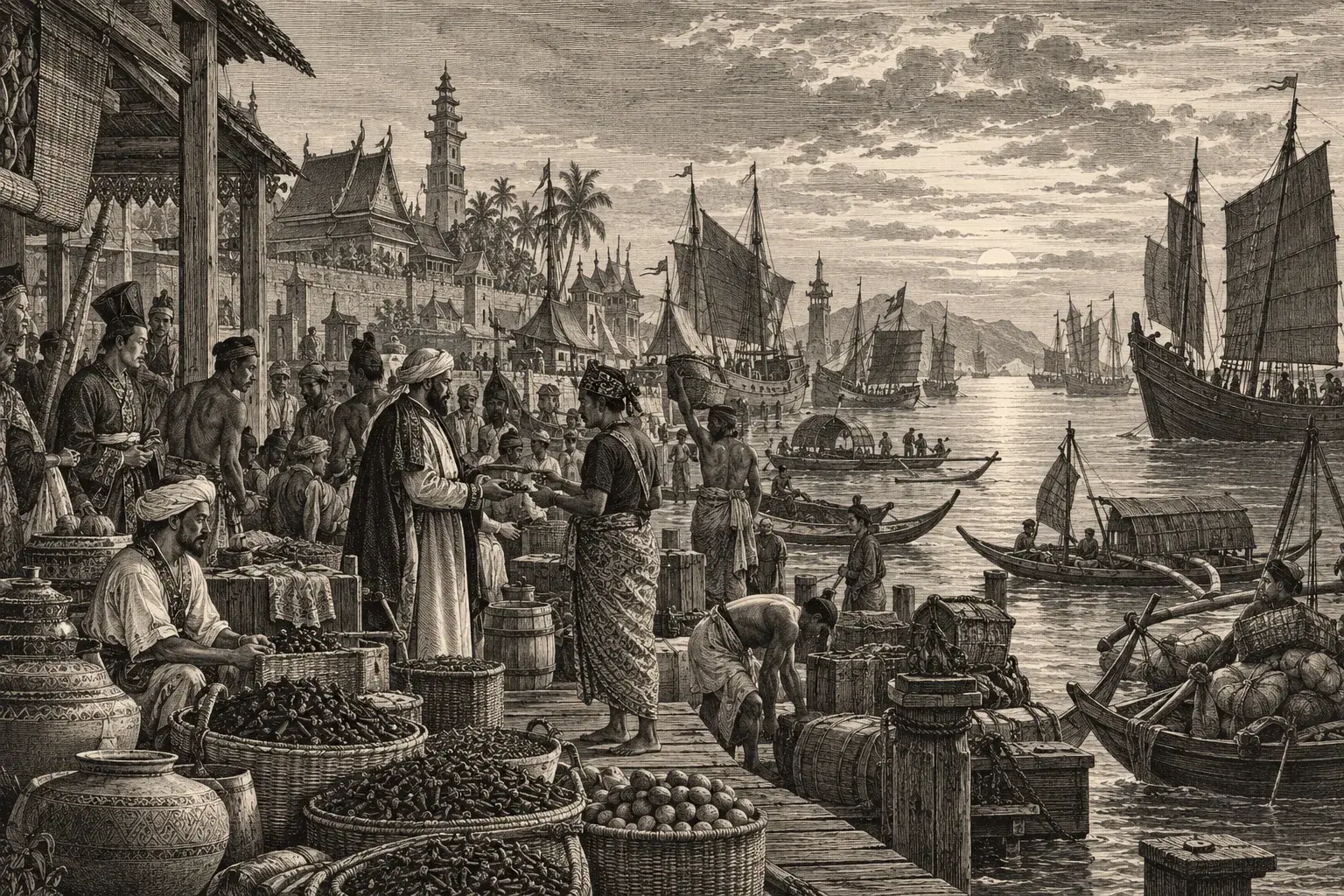
Most people, if they know anything about medieval trade, think of the Silk Road — the overland routes connecting China to Europe through Central Asia. But while merchants were loading camels in the desert, something just as busy and probably more profitable was happening on the eastern coast of Africa. For roughly six or seven centuries, the stretch of coastline running from present-day Somalia down through Kenya, Tanzania, and Mozambique was one of the most active trading zones in the world. Ships from Arabia, Persia, India, and China came every year with the monsoon winds, dropped off silk and porcelain and glassware, picked up gold and ivory and animal skins, and sailed back home. The people running that operation from the African side built cities out of coral stone, got very wealthy, developed their own distinctive culture and language, and connected the interior of the African continent to the wider world. This was the Swahili Coast. The word Swahili comes from an Arabic word meaning people of the coast, which tells you something right away — it was an outsider's name, applied from the sea. The people living there called themselves many things depending on which city they were from. But the culture that emerged from centuries of mixing African and Arab traditions into something new became one of the most interesting in the medieval world, and its influence did not disappear when the Portuguese showed up and started breaking things in the 1500s.
The Swahili Coast stretched along the eastern edge of Africa for over two thousand kilometers, with dozens of city-states connected by sea routes reaching all the way to Arabia, Persia, India, and China.
The Coast Before the Trading Cities
The famous trading cities did not appear out of nowhere. Long before Kilwa or Mombasa became wealthy port towns, people along the East African coast already had functioning communities and a certain amount of trade going on. The land was good. Regular rainfall made farming workable. The shallow coastal waters were full of fish. Coral reefs ran along much of the shoreline, which reduced the force of ocean waves and made coastal travel in small boats safer than it would have been on an open, unprotected coast. There were natural harbors and islands where sailors could anchor and rest. Even in the Iron Age, small boats and dugout canoes moved along the coast carrying goods between communities. Bantu-speaking people had been living in the interior for a long time, but gradually more of them moved toward the coast. They built settlements, shifted from wood and mud construction to coral stone as building material became available, and started trading with inland farming communities. Shell jewelry went one direction. Food and agricultural products came the other way. The network was small at first but it was there, and it grew. This coastal trade eventually connected all the way to Madagascar, the large island off the southeastern coast of Africa. Art styles, architectural ideas, and language features spread from settlement to settlement along this long coastline, which is part of why Swahili culture — when it finally developed fully — felt like a single culture across a very large geographic area rather than a collection of unrelated local traditions.
The Monsoon Made It All Possible
Starting in the 7th century, trade across the Indian Ocean picked up considerably. This was partly about religion — Islam had spread across Arabia and was moving outward in every direction, and Muslim merchants were among the most active long-distance traders in the world at that time. It was also about the winds. The Indian Ocean has a seasonal wind pattern called the monsoon. For part of the year, winds blow from the northeast — from Arabia and India toward East Africa. Later in the year, they reverse and blow from the southwest — back toward Arabia and India. For sailors in wooden ships with no engines, this was the difference between a viable sea route and an impossible one. Merchants could leave Arabia in the winter, arrive on the East African coast in a matter of weeks, do their business, and sail home in the summer when the winds turned. The schedule was predictable. The route was reliable. That predictability was what made the whole system work. The ships that made this crossing were called dhows — large wooden vessels with triangular sails that could use the wind efficiently on different points of sail. They became standard in the ports of the Swahili Coast, and their arrival and departure marked the rhythm of life in every trading city on the shore. By the middle of the 8th century, Arab and Egyptian Muslim merchants were not just visiting anymore. Many of them settled permanently on the coast, married into local families, and became part of the communities they had originally come to trade with. Persian settlers followed in the 12th century. Over generations, the mixing of African Bantu communities with these Arab and Persian arrivals produced what we now call Swahili culture.
Dhows — wooden ships with triangular sails — used seasonal monsoon winds to cross the Indian Ocean reliably, making them the backbone of the trade network that connected East Africa to Arabia, Persia, India, and beyond.
What the Trading Cities Actually Traded
By the 12th through 15th centuries, the Swahili Coast had grown into one of the most important trading regions on earth. More than 35 major city-states had developed along the coastline — Mogadishu, Malindi, Mombasa, Zanzibar, Kilwa, and many others. Each city-state was independent, governed by its own sultan and advised by wealthy merchant families. None of them controlled large inland empires. What they controlled was the coast, the ports, and the trade routes. Goods moved in two directions. Out of Africa went gold, iron, copper, ivory, timber, spices, incense, animal skins, grain, rhino horns, tortoise shells, and hardwoods like ebony. Slaves were also traded, a brutal part of the system that is easy to understate when focusing on the material goods. Into Africa came silk, fine cloth, jewelry, glassware, beads, porcelain from China, and pottery from Persia and Arabia. Most of this worked through barter — goods exchanged directly for other goods, without money changing hands. Some cities eventually created their own coins. Kilwa, which sat at the southern end of the trading network and had particularly good connections to the gold-producing regions of inland Africa near present-day Zimbabwe, eventually minted copper coins and became one of the wealthiest city-states on the coast. The cities depended on nearby farming villages for their food supply — rice, bananas, coconuts, grain, and yams came from the agricultural communities around each city. The city-states were not self-sufficient in food. They were wealthy because of trade, and that wealth allowed them to buy what they could not grow themselves.
The Language That Tied the Coast Together
Languages say a lot about the people who speak them and how those people got to where they are. Swahili is a good example of that. At its base, Swahili is a Bantu language — the grammar, the sentence structure, and most of the core vocabulary come from the African communities that were living along the coast before the Arab traders arrived. But over centuries of contact, a large number of Arabic words got absorbed into the language, along with some Persian and eventually some Portuguese and English terms too. The result is a language that sounds and works like a Bantu language but carries a lot of Arabic vocabulary, which reflects exactly how Swahili culture itself developed: African roots with Arab influence layered on top, not the other way around. Different towns along the coast had slightly different versions of the language. The Swahili spoken in Mombasa was not identical to what people spoke in Zanzibar or Kilwa. But the differences were small enough that people from one city could understand people from another, which made Swahili genuinely useful as a trade language across a very large area. That usefulness outlasted the trading city-states themselves. Today Swahili is the national language of both Kenya and Tanzania, spoken by tens of millions of people. It is one of the official languages of the African Union. The language that developed on medieval trading docks is now one of the most widely spoken in Africa.
How People Lived and What They Believed
Islam arrived on the Swahili Coast with the Arab traders in the 7th century. The earliest mosques were simple wooden structures built in the 9th century. By the 12th century, Sunni Islam had become the main religion across the coast, and being Swahili had become closely tied to being Muslim — the two identities went together in a way that was hard to separate. But older beliefs did not simply vanish. Many people continued to believe in spirits. Honoring ancestors remained important. In some Swahili communities, women had more rights and more social standing than they did in many other Muslim societies of the same period. The Islam practiced on the Swahili Coast was real and genuine, but it had been filtered through local traditions and customs until it had its own particular character. The physical look of the cities reflected wealth — and told you a lot about where in the social order a family sat. Poorer families lived in mud-brick or wattle-and-daub houses with palm-leaf roofs. Wealthier families lived in coral stone houses with narrow rooms and small windows, which kept the interior cooler in the heat. Better houses had courtyards, washrooms, gardens, and carved wooden doors that could be impressive enough to function as status symbols on their own. Streets between buildings were narrow and ran in complicated patterns — walking through a large Swahili city would have felt more like navigating a maze than walking along a grid. Society was layered. At the top were the sultan, wealthy merchants, craftworkers, and religious judges — many of them with mixed African and Arab ancestry. Below them were the farming communities surrounding the cities. At the bottom were enslaved people, mostly native Africans brought from the interior. Arab and Persian traders who came and went with the ships occupied their own temporary position somewhere outside the permanent social structure.
Swahili builders used coral stone extensively — it was durable, locally available, and gave the cities a distinctive look unlike anything else in the region. Wealthier homes had carved wooden doors and interior courtyards.
Kilwa: The Richest City on the Coast
Among all the Swahili city-states, Kilwa stood out. It sat on an island off the coast of present-day Tanzania, and its position gave it control over the southern trade routes that connected to the gold fields of the Zimbabwe plateau far inland. Gold was the most valuable export the Swahili Coast had, and Kilwa's control over that supply made it extraordinarily wealthy through the 14th and 15th centuries. The buildings it left behind say something about that wealth. The Great Mosque at Kilwa, built from coral stone in the 14th century, had large columns, arched ceilings, and a scale that put it among the most impressive religious structures in the region. It was not a typical mosque — it did not have the tall minaret towers common in Arab mosques — but it had its own architectural character that fit the Swahili Coast's habit of taking outside influences and doing something distinct with them. The Husuni Kubwa, which means Large Fort in Swahili, was even more striking. Built in the 1300s, it covered a large area and included courtyards, storerooms, audience halls, domed ceilings, a pool, and walls decorated with pieces of Chinese porcelain set into the coral stone. The porcelain decorations were not purely aesthetic — they were also a display of wealth, a way of showing visitors that Kilwa had enough money to import luxury goods from the other side of the Indian Ocean and literally build them into the walls. The Arab traveler Ibn Battuta visited Kilwa in the 14th century and wrote about it in terms that were not shy about admiration. He called it one of the most beautiful cities in the world. Given that Ibn Battuta spent decades traveling from Morocco to Mali to India to China, that was not a comparison made lightly.
The Great Mosque at Kilwa remains one of the best examples of Swahili architecture — built from coral stone with large arched columns, it shows a building tradition that took Islamic design influences and adapted them into something distinctly East African.
The Portuguese Arrived and Took What They Could
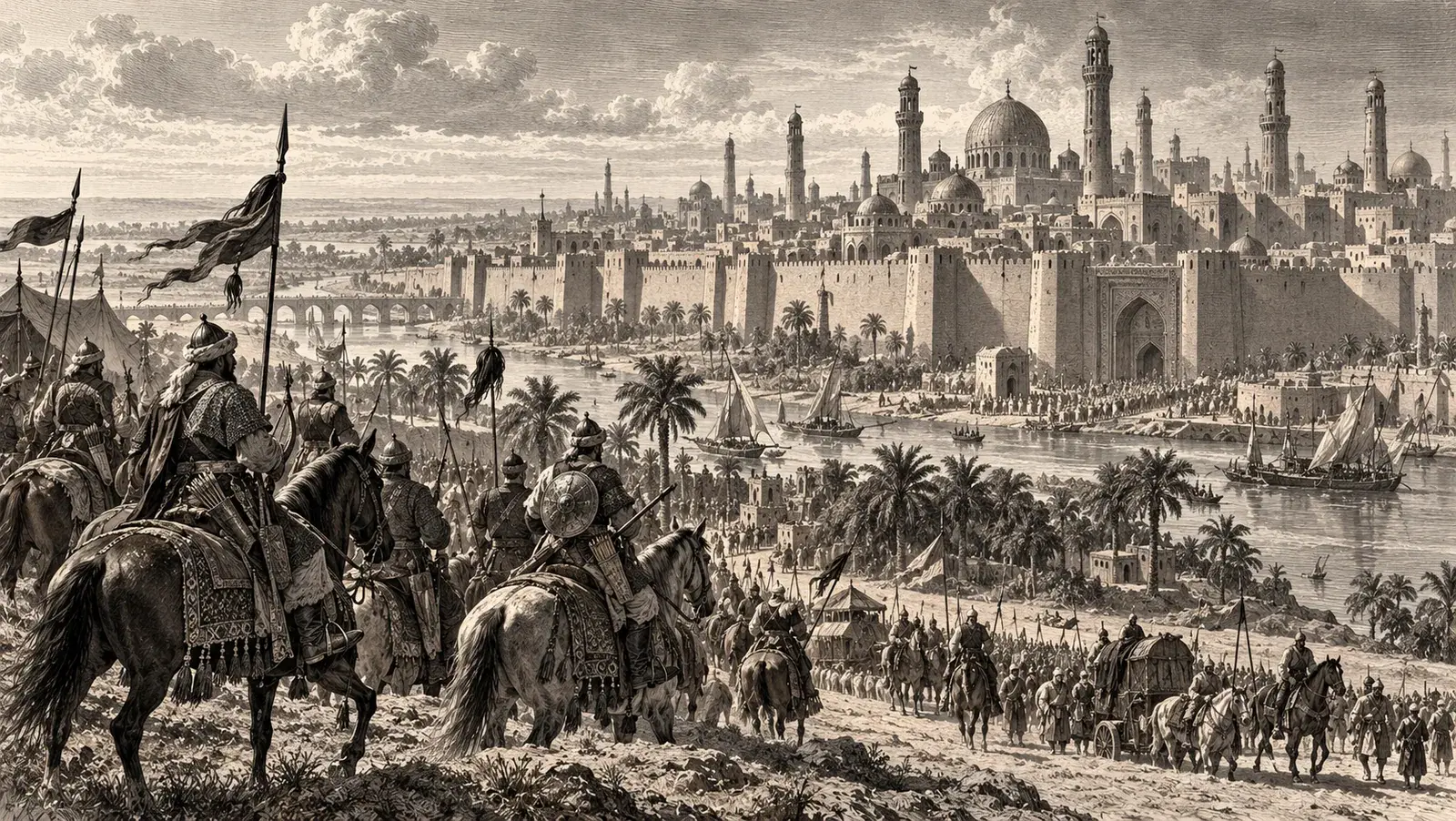
In 1498 and 1499, the Portuguese explorer Vasco da Gama sailed around the southern tip of Africa and up the East African coast on his way to India. He was not there to trade on equal terms. He was there to find a sea route to the spice trade, and the Swahili city-states were in the way of what Portugal wanted to control. The city-states were not well positioned to stop him. They were independent from each other — there was no Swahili alliance, no shared military force, no coordinating authority that could pull them together against a common threat. Each city faced the Portuguese alone. Their weapons were weaker. Their ships were not built for naval combat the way Portuguese ships were. One by one, the cities fell under Portuguese pressure. The Portuguese response was not careful. They attacked cities, looted goods, destroyed trade relationships that had taken centuries to build, and pushed rival merchants away from routes they had used for generations. They built forts at Sofala and Mozambique Island to lock down the southern sections of the coast. They pushed into the interior looking for gold in the kingdom of Mutapa in present-day Zimbabwe, expecting to find the source of the wealth that had been flowing through the Swahili port cities. They found much less than they expected. The gold was real but the operation was harder than anticipated. Disease hit their people hard in the interior. The whole venture became more costly and less profitable than Portugal had planned. The Omani Empire eventually pushed the Portuguese out of much of the northern Swahili Coast in the 17th and 18th centuries, and some Swahili cities continued trading under Omani authority for another hundred years or more. But the disruption the Portuguese caused to the trade networks was not easily repaired. Merchants had moved their business elsewhere. The political and economic structures that supported the great city-states had been damaged in ways that took generations to play out. The golden age of the Swahili Coast — the period between roughly the 12th and 15th centuries when its cities were among the wealthiest and most cosmopolitan in the world — was over by the time Portugal was done with the region.
What the Swahili Coast Left Behind
The coral stone ruins of Kilwa, Mombasa, and other Swahili cities are still there. Some are UNESCO World Heritage Sites. The Great Mosque, the Husuni Kubwa palace, the old town of Mombasa — these are physical reminders of how much was built before the Portuguese arrived and how sophisticated the culture that built them actually was. The language is the most visible legacy. Swahili is spoken today by somewhere between 150 and 200 million people across East Africa. It is the national language of Kenya and Tanzania, a major language in Uganda, Rwanda, and the Democratic Republic of Congo, and one of the African Union's official languages. A trading language that developed on medieval docks, built out of Bantu grammar and Arabic vocabulary, turned into one of the major languages of an entire continent. The story of the Swahili Coast matters partly because it pushes back on a lazy version of African history that skips straight from ancient Egypt to European colonization and leaves out everything in between. The Swahili city-states were not a footnote. They were a major chapter in world trade history. They connected Sub-Saharan Africa to the Indian Ocean economy for centuries. They built things that are still standing. They produced a culture and a language that never went away. The Portuguese disrupted the trade system. They could not undo what had already been built.