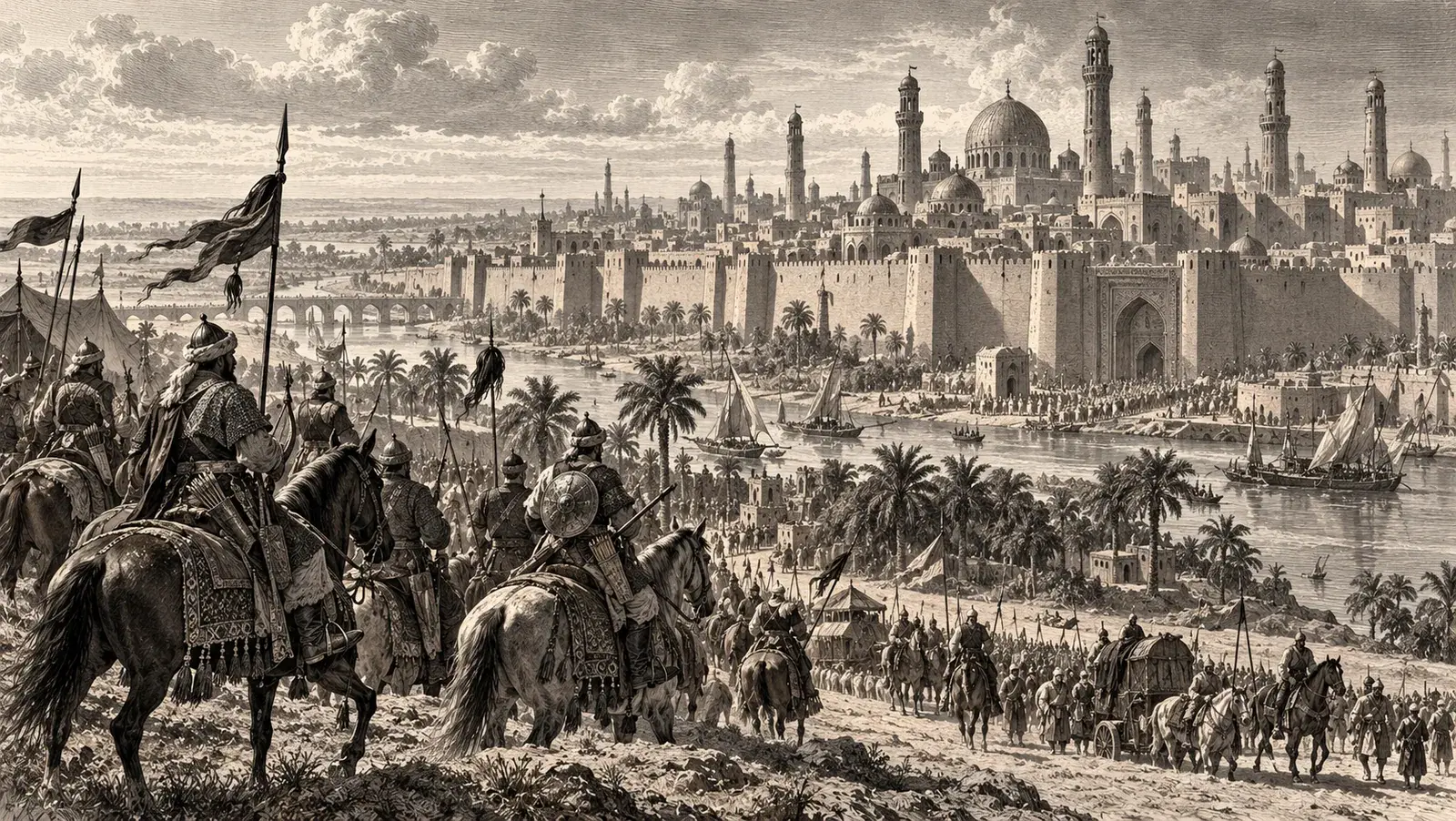
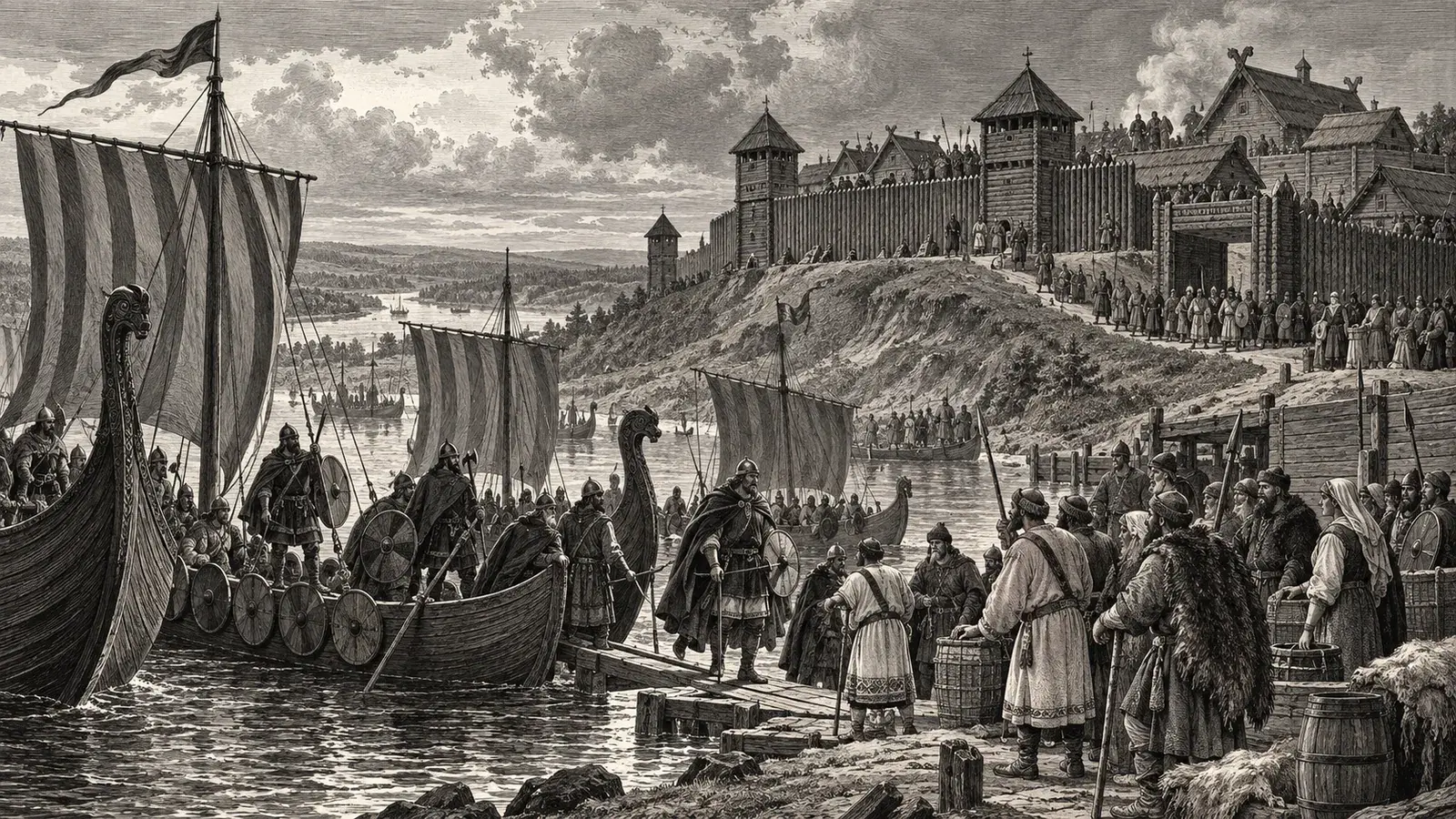
The story of the Slavic migrations into the Balkans is about groups of people slowly moving into a new region and changing it over time. Between the 500s and 600s, Slavic families and communities began spreading into Southeastern Europe. This was not one big invasion or a single event. Instead, it happened little by little over many years. As the Slavs settled in new places, they mixed with the people already living there. Over time, Slavic language and traditions became common across the area.
Early Slavic communities migrated into the Balkans slowly over generations, reshaping the region’s culture and population.
Crisis and Change in the Byzantine Balkans
This migration happened during a very difficult time for the Eastern Roman Empire, also known as the Byzantine Empire. The Balkans were hit by several major problems at the same time. One of the worst was the Plague of Justinian, a deadly disease that killed so many people that some towns were almost empty. Around the same period, starting in the year 536, the climate became colder and less predictable. This caused crops to fail, food to become scarce, and many people to struggle just to survive. As if sickness and climate problems were not enough, the empire was also fighting several long wars. In the east, the Byzantines battled the Persian Empire. In the north and west, fast‑moving warriors from the steppes raided the borders and made things even more unstable. With so many disasters happening at once, the empire could not protect the Balkans as strongly as before. This allowed new groups, including the Slavs, to move in and settle more easily.
The Plague of Justinian and climate change weakened the Balkans, leaving cities vulnerable to new migrations.
Avar Influence on Slavic Expansion
One important group in this story was the Pannonian Avars, who were skilled horsemen from the steppes. They arrived in Central Europe around the mid‑500s. Sometimes the Slavs moved on their own, but other times they traveled with the Avars or followed their lead. The two groups worked together when it benefited them, especially during raids into Byzantine lands. Their teamwork became clear during major attacks, such as the failed siege of Constantinople in 626. After this event and later rebellions, Slavic groups continued to live across the Balkans, from the Danube down to the Adriatic and Aegean Seas. While the Avars slowly lost power, the Slavs stayed. They farmed the land, raised families, and built new villages in places where older cities had once existed.
Byzantine Empire Struggles to Maintain Control
By the early 600s, the Byzantine Empire was no longer strong enough to protect the large inland areas it once controlled. It could only hold on to some coastal cities and a few mountain areas. Instead of fighting all the time, the empire began to accept that Slavic communities were living in the region. Byzantine writers called these communities Sklavinias. Sometimes the empire even worked together with Slavic groups when they faced the same enemies, such as the Avars or later the Bulgars. Long before the Slavs arrived, the Balkans were home to many different groups, including Greeks, Thracians, Illyrians, and people who followed Roman customs and spoke Latin or Greek. Germanic tribes like the Gepids, Lombards, and Heruli had also passed through the region. Earlier invasions by the Huns and Goths had already damaged many towns and cities. Emperor Justinian I tried to repair cities, rebuild walls and forts, and strengthen defenses along the Danube River. However, because the plague kept returning again and again, many of his rebuilding projects did not last for long.
Early Slavic Raids and Imperial Vulnerability
The first clear reports of Slavic activity near Roman borders appear during the time of Emperor Justin I. Under Emperor Justinian I, these raids started happening almost every year. They were very destructive, often burning villages, capturing people, and forcing many to leave their homes. Even though Slavic groups were sometimes smaller than the Roman armies, they moved quickly and were hard to catch. They crossed rivers easily, split into smaller groups to avoid being trapped, and outsmarted Roman soldiers who were heavier armed but slower. Forts that had once seemed safe suddenly became easy targets. Even coastal cities, which were usually protected by the empire’s navy, began facing more attacks. These raids were not random. Sometimes the Slavs supported exiled leaders or joined forces with the Goths. Other times, they were encouraged by the Persians or Avars, who wanted to distract Roman armies that were busy fighting in other places.
Justinian’s Attempt to Strengthen the Frontier
In response to the increasing attacks, Emperor Justinian ordered hundreds of new forts to be built across the Balkans. For a short time, this made the borders stronger and reduced the number of Slavic raids. But the improvement did not last. New enemies appeared, old defenses fell apart, and the Slavs continued moving into areas that had lost many people. After Justinian died, things became even worse for the empire. They stopped paying the Avars, friendships with neighbors collapsed, and new fights broke out with Persia in the east. This left the Balkans almost completely unprotected. Slavic groups then pushed deeper into regions like Thrace, Macedonia, and Greece. Some of them came close to reaching Constantinople itself.
From Invaders to Permanent Communities
By the early 600s, the Slavs were no longer just attackers who came and went. They began staying in the region and settling permanently. Places like Pannonia, Dalmatia, Moesia, Thrace, and Macedonia saw new Slavic communities forming. Many of these groups named themselves after local rivers, valleys, or natural features, which helped them build new identities based on the land they lived in. People who already lived in the area either mixed with the Slavs or slowly disappeared from written history. Some towns were completely abandoned because they could not recover from war, disease, and the loss of population. The empire tried several times to take back control of the Balkans. Emperors like Maurice won some battles and captured many Slavic fighters. But even these victories could not stop the bigger changes happening in the region. Cities like Sirmium and Salona were destroyed, and the city of Thessalonica went through long and difficult sieges. The major turning point came in 626 when the attack on Constantinople failed. After this, the alliance between the Avars and Slavs broke apart. The two groups began fighting each other, and many Slavic tribes freed themselves from Avar control. New groups, such as the Croats and Serbs, arrived in Dalmatia. According to Byzantine sources, the emperor allowed them to stay because it helped protect and stabilize the area. This cooperation marked the beginning of new political groups and future nations in the western Balkans.
Over time, Slavic groups shifted from raiders to settlers, forming permanent villages across the Balkans.
Daily Life and Social Structure Among the Slavs
Slavic society at this time was organized without powerful kings. Leadership rested with councils of elders or community assemblies. This structure helped them endure challenging conditions and adapt to new environments, but it also made it difficult for them to coordinate large-scale military campaigns without outside influence. Over time, contact with Byzantium introduced new military knowledge, especially siege tactics. Fortified towns that once resisted small raiding parties eventually fell to attackers who had learned how to breach walls and maintain longer assaults. As Roman authority withdrew from the interior, Slavic families moved into abandoned lands. They traveled with livestock, tools, and supplies, often settling only after storing enough food for winter. Most supported themselves through farming, animal husbandry, fishing, and woodworking. Eventually they developed skills in boatbuilding, allowing them to navigate rivers and expand further into new territories. Archaeological evidence traces their presence across Eastern and Central Europe from the 400s onward, with the deepest settlement in the Balkans occurring in the late 500s and 600s.
Slavic Migration Paths
To understand how the Slavs traveled such long distances, historians and archaeologists study objects they left behind, old writings, and clues from language. Most early Slavic groups came from areas that are now western Ukraine and southern Poland, near the Dniester and Vistula rivers. From this starting point, the Slavs moved in different directions. Some groups went south along river systems on the eastern side of the Carpathian Mountains. Others crossed mountain passes into the Carpathian Basin and then followed rivers like the Tisza toward the Danube. The group called the Sclaveni was mostly found near the middle Danube, while the Antae lived more often near the lower Danube. Archaeological sites in modern Romania show that these groups sometimes lived close together. They shared similar pottery, tools, and household items, which suggests they mixed with each other. Rivers acted like natural roads. They offered fresh water, good land for farming, fish for food, and easy travel. The Carpathian Basin became an important meeting place where different groups gathered, mixed, and then spread out again into the deeper parts of the Balkans. In places like Bulgaria, early Slavic settlers often lived near old Roman forts. This suggests they may have worked with Byzantine soldiers at times. Later, other groups moved further away from the forts and built new villages. Differences in pottery styles help archaeologists tell which settlements are older and which ones came later.
Multiple Paths and Overlapping Movements
The movement of Slavic groups into the Balkans did not happen all at once. It took a long time and happened in many different directions. Some groups traveled from east to west along the lower Danube River. Others moved from north to south across wide plains and valleys. Transylvania became an important meeting point where different groups entered from many directions, creating a mix of different settlements. Archaeologists study everyday objects like pottery, jewelry, and burial customs to understand these movements. When the same types of items are found in places far apart, it shows that people or ideas traveled between those areas. This evidence also shows that some Slavic groups followed the Morava and Vardar rivers into places like Macedonia, Greece, and even the Peloponnese. In the western Balkans, which includes modern Croatia, Bosnia, and Serbia, archaeologists find signs of both early and later Slavic settlers. Some sites show connections to groups from the middle Danube, while others match groups from the lower Danube. This proves that the Slavs moved into the region in many waves over a long period of time. Historians still argue about which artifacts belong to specific tribes like the Croats or Serbs. Most of these debates are based on interpretations, not on clear written records. Still, everyone agrees that Slavic migration was complicated and happened in many layers.
Language
Language clues support what archaeologists have found. Old river names and place names show where early Slavic speakers once lived and help trace the paths they took. These clues point to two main routes: one that went through Central Europe toward the western Balkans, and another that followed the eastern side of the Carpathian Mountains toward the lower Danube. Studies of language also show that the migrations were not separate or simple. Slavic groups mixed with each other as they traveled, sharing ideas and speech patterns. This explains why South Slavic languages have similarities to both East and West Slavic languages. Some differences in language existed before the migrations, while others developed later as people settled in new places and interacted with local communities.