The Frankish kings of the early 8th century had a nickname that says everything about their era: the Do-Nothings. They sat on ornate thrones. They were dressed in fine clothes and paraded through Paris in gilded chariots once a year, waving to cheering crowds and making short speeches that their own administrators had written for them. At the end of the ceremony, each Do-Nothing king retired to his country house for another twelve months and was not heard from again until the next parade. All the actual work of government was done by officials called mayors of the palace — men who had started as household managers and gradually accumulated every real power the king was too uninterested to exercise. They made war. They led armies. They raised and spent money. They ruled. The most important mayor of the palace who ever lived was a man named Charles, son of the previous mayor Pepin. He became mayor in 714 at twenty-five years old. He had been his father's soldier since he was a teenager and knew exactly how to fight. His men were devoted to him. History knows him as Charles Martel. Martel means hammer. He earned the name.
The Battle of Tours (or Poitiers) in October 732 AD stopped the northward advance of Islamic armies into Europe. Charles earned the nickname Martel — the Hammer — for his role in breaking the Saracen force.
The Army That Had Already Burned Bordeaux
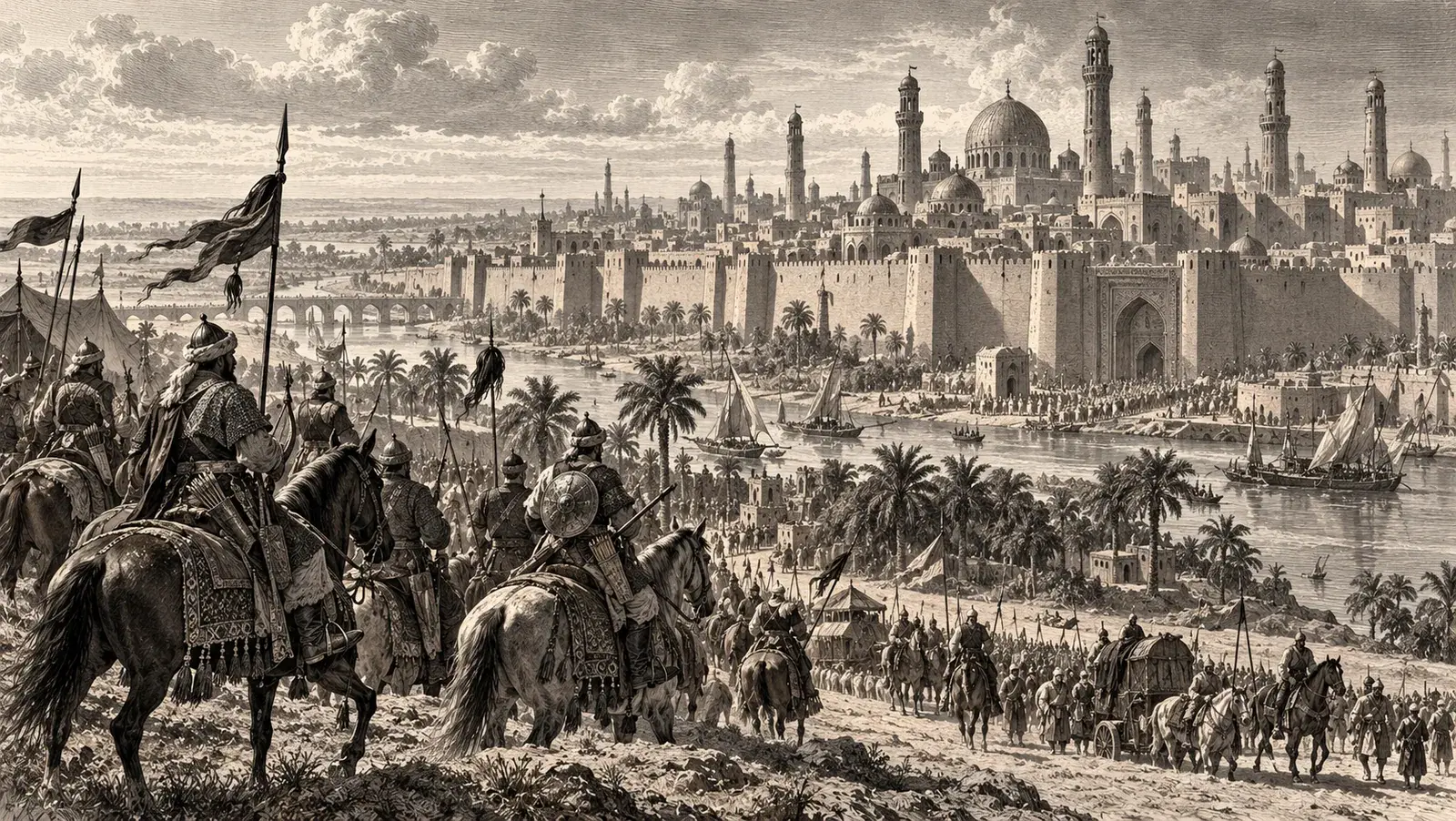
By 711 AD, the Saracens — Mohammedans, as contemporary Christian writers called them — had conquered nearly all of Spain. It had taken them less than a decade. They intended to take Gaul next, and then all of Europe. The Frankish king at the time of the invasion was one of the Do-Nothings. The Saracens thought this made the conquest easy. They were wrong about who was actually running things. Abd-er-Rahman, the Saracen governor of Spain, led his army across the Pyrenees into southern Gaul. He burned towns and villages. He killed inhabitants. He plundered Bordeaux — one of the richest cities in the region — so thoroughly that ancient accounts say every soldier in his army was weighed down with golden vases and cups and precious stones. He was driving north toward the monastery of Tours, which was enormously wealthy and an obvious target. Charles Martel was assembling an army as fast as he could. He pulled together Franks and Germans and marched south. The two forces met in October 732, between Tours and Poitiers.
The Day That Decided Europe
For six days after the two armies made contact, there was nothing but small skirmishes between scouting parties. On the seventh day, a full battle erupted. Both sides fought with everything they had. Ancient accounts say the field was covered with bodies by evening, and neither side had conclusively won. The Franks held their ground. The Saracens pressed hard. Then, toward evening, during a determined Frankish charge, Abd-er-Rahman was killed. His death broke the Saracen army's will. They gradually drew back to their camp. Charles Martel's men expected to fight again the next morning. At dawn they formed up and marched to the field. There was no one there. The Saracens had packed up in the night and retreated south, leaving behind all the plunder from Bordeaux and everything else they had accumulated. Abd-er-Rahman was dead. The army was gone. The battle was over. It was not quite the end of the Saracen presence in Gaul — Charles had to fight several more battles before they were fully pushed back across the Pyrenees. But the decisive moment was October 732. Historians have called it one of the battles that decided the character of Western civilization.
Pepin the Short: How a Mayor Became a King
Charles Martel died in 741, leaving two sons. The younger, Carloman, eventually retired to a monastery to live as a monk. The elder son, Pepin — small in stature, called Pepin the Short, possessed of exceptional physical strength and courage — became sole ruler of everything his father had controlled. Pepin was not the king. He was still technically the mayor of the palace, serving a Do-Nothing king named Childeric III. But Pepin did everything a king was supposed to do, commanded every army, made every decision. At some point he concluded this was absurd. He sent friends to Rome to ask the Pope a question: who ought to be king — the man who has the title, or the man who has the power and does all the duties? The Pope's answer was practical: the man who does the duties. The Pope consented to Pepin's coronation. Childeric III was deposed. The reign of the Do-Nothing kings ended. Pepin was crowned king of the Franks, beginning the Carolingian dynasty that would produce Charlemagne. Pepin went to Italy multiple times to defend the Pope against the Lombards, and gave the Pope the territories around Rome that he won from them. This gift — called Pepin's Donation — was the beginning of the temporal power of the papacy, the foundation of what became the Papal States. It shaped the political landscape of Italy for over a thousand years. Pepin died in 768. His son was Charles. History would call him Charlemagne.