The Arabian Nights does not tell you it is based on a real person. It just drops you into the stories: a caliph who goes out at night in disguise, who encounters beggars and merchants and lovers and thieves, who knows the city in ways his courtiers do not because he has walked it in the dark. The caliph in those stories is Harun-al-Rashid, and he was real. Whether he actually disguised himself and walked Baghdad's streets at night is the kind of thing historians debate without resolution, but the accounts in circulation during his lifetime and afterward all insist that he did — that he genuinely wanted to know whether the officials he had appointed were treating people fairly, and that ordinary gossip in markets and teahouses was the most reliable way to find out. What is certain is that he ruled one of the most remarkable periods in the history of Islamic civilization, that his Baghdad was the most sophisticated city in the world, and that his name has never entirely lost its luster in fourteen centuries.
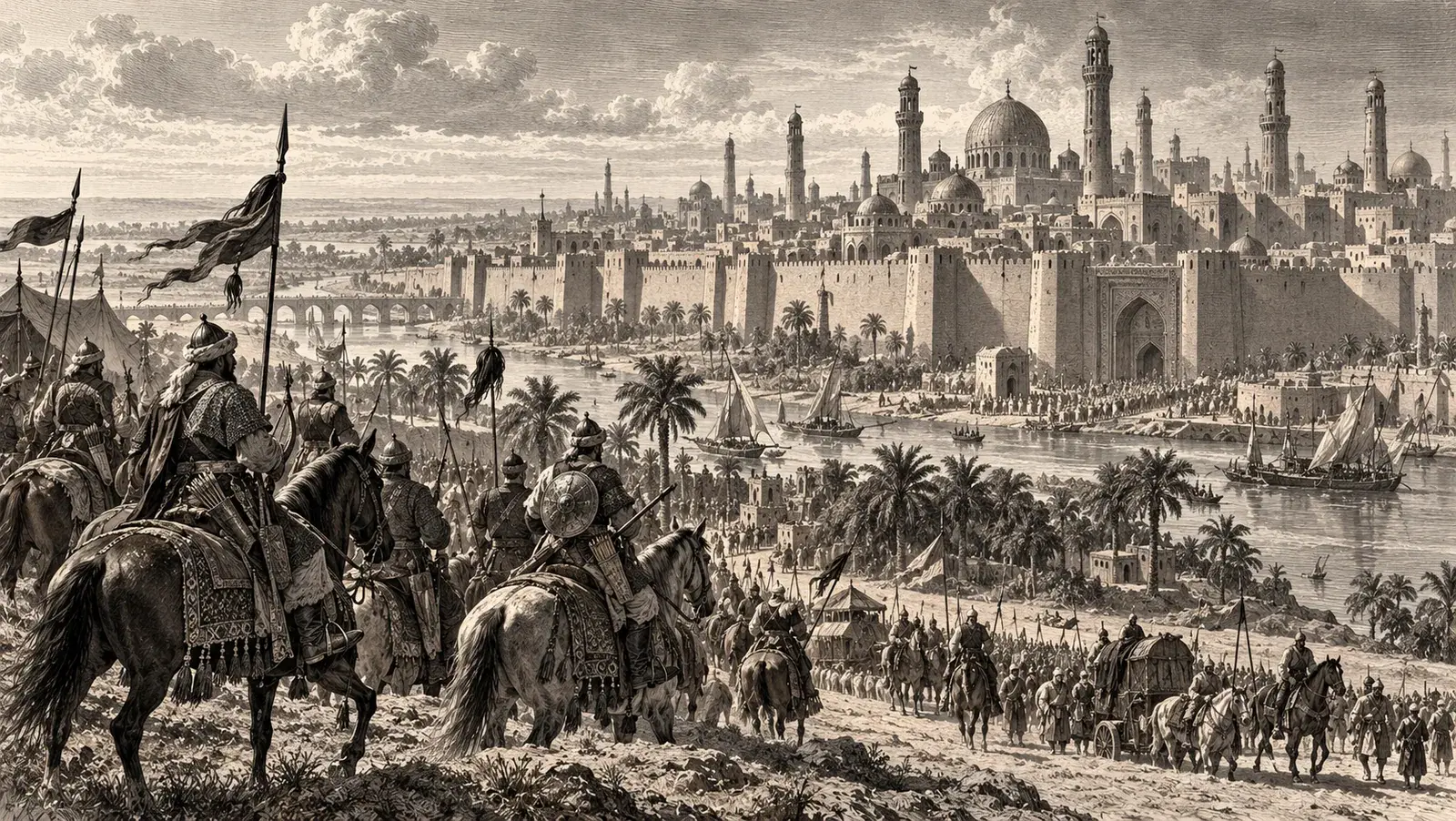
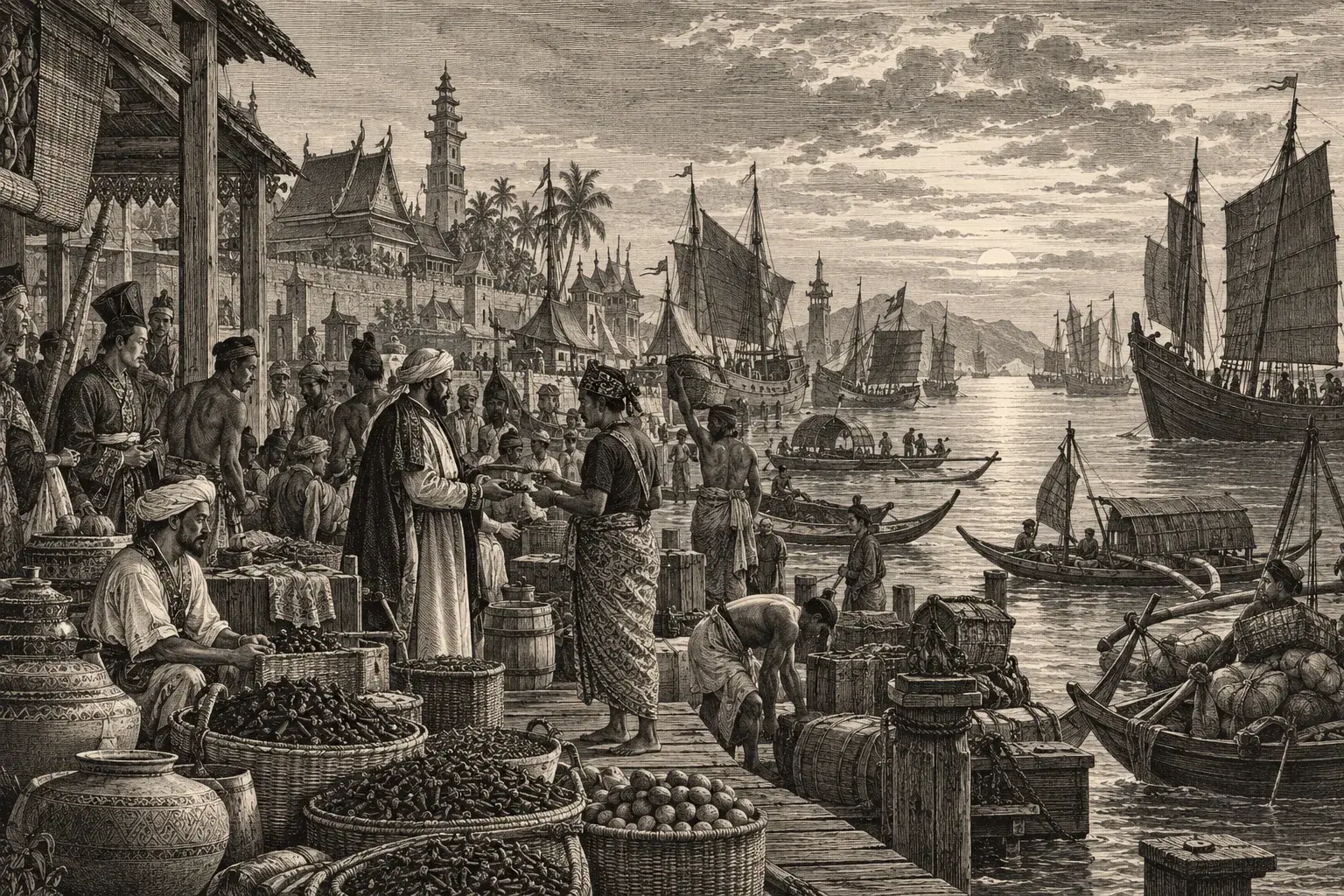
Harun-al-Rashid ruled from Baghdad at a time when his city was the undisputed center of world civilization, attracting scholars, poets, musicians, and ambassadors from every corner of the known world.
A Soldier at Eighteen, a Caliph Before Twenty-One
Harun was not yet twenty when his father — who was then caliph — sent him to lead an army against the Eastern Roman Empire. He won major victories, commanded an army of 95,000 Arabs and Persians, and marched it all the way to Chrysopolis on the Asian shore directly opposite Constantinople. From the heights above the city, his camp was visible to the Empress Irene inside her walls. Irene knew what this meant. She sent ambassadors to negotiate. Harun refused to discuss anything except immediate surrender. One of the ambassadors, trying a different angle, mentioned that the Empress had heard much of his abilities as a general and admired him. Harun walked to and fro in front of his tent, thinking it over. Then he named his terms: Constantinople would be spared if Irene paid him 70,000 gold pieces per year as tribute. If paid regularly, the city would not be harmed by any Moslem force. Irene agreed. The first tribute arrived. The great army turned and went home. Harun was not yet twenty-one. He became caliph shortly after.
Baghdad Under His Rule
Harun built his palace in Baghdad and established a court of extraordinary splendor. He appointed able ministers who administered the caliphate efficiently enough that ordinary people's lives genuinely improved. Baghdad and the Mohammedan cities of Spain were, in Harun's time, the centers of learning in the western world. While Charlemagne was struggling to get Frankish noblemen to take an interest in reading, Arab teachers had been developing algebra and introducing new mathematical notation into their scholarship for generations. The figures we use in arithmetic today — what we call Arabic numerals — came from this world. The word algebra is Arabic. Harun actively encouraged learning. He was a scholar and poet himself, and whenever he heard of an educated man anywhere in his kingdom or in neighboring countries, he invited him to court and treated him with genuine respect. The result was a court culture where intellectual achievement was valued alongside military prowess — a combination that was genuinely unusual in the 8th century.
The Letter to the Roman Dog
In 802, a usurper named Nicephorus seized the Byzantine throne from the Empress Irene. He sent Harun a letter announcing that the tribute would no longer be paid. The letter's tone was deliberately insulting: Irene was weak and faint-hearted to have paid. She should have demanded tribute from him. Return what she paid, or settle the matter by the sword. Nicephorus's ambassadors had brought the letter and, to underline the point, a bundle of swords which they threw at Harun's feet. Harun picked up his own sword and cut every Roman sword in two with a single stroke, without injuring the blade or even dulling the edge. Then he dictated a reply: Harun-al-Rashid, Commander of the Faithful, to Nicephorus, the Roman dog. I have read your letter. You shall not hear — you shall see — my reply. He marched that same day with a large army into Roman territory, ravaged the countryside, and took and sacked a city on the Black Sea coast within a week. Nicephorus agreed to pay the tribute. Almost immediately, having reached his palace in Baghdad, Harun received word that Nicephorus had refused again. He marched back into Roman territory with 15,000 men. Nicephorus came against him with 125,000. In the battle that followed, the emperor was wounded and 40,000 of his men were killed. Nicephorus agreed to pay. Again. Harun never did get to finish dealing with Nicephorus. A revolt in one of his own cities required his personal attention. He was on his way to put it down when the illness he had been carrying for years finally took him.
The Elephant and the Clock
The most famous exchange of Harun's reign was with Charlemagne — the two greatest rulers of East and West exchanging gifts and correspondence across the breadth of the known world. Harun sent the Frankish emperor a clock that struck the hours. The Franks had nothing like it. They told time with water-clocks — vessels where a float rose as water trickled in — or hourglasses, where fine sand fell through a narrow glass neck. A clock that struck the hours on its own, without anyone watching it or moving anything, seemed almost magical. Charlemagne's court was astonished. The elephant was, if anything, more astonishing. No one in Frankland had ever seen one. The stories the Franks told afterward suggest they were not entirely sure what to make of it. The two men never met. They corresponded. Each acknowledged in the other something that mutual recognition across cultural and religious boundaries — it says a great deal about both rulers that they reached for each other's regard rather than simply dismissing what they did not fully understand.