He never became king. That is the first thing worth knowing about Edward the Black Prince — that for all his fame, all the battles won and prisoners taken and banners planted on captured walls, the crown always stayed just out of reach. He died in 1376, a year before his father Edward III, and his son Richard II inherited the throne instead. What he left behind was something harder to measure than a reign. His name was, for a generation, synonymous with English military power — the man French mothers reportedly invoked to quiet frightened children, the prince whose sixteen-year-old performance at Crécy left the most experienced commanders in Europe talking for decades afterward. He was called the Black Prince, most historians believe, because of the black armor he wore in battle. No contemporary source uses the name — it appears in chronicles written after his death. But it stuck, and it fits. There was something about the way he fought that suited the description.
Edward the Black Prince — named for the black armor he wore in battle — was the son of Edward III and the most celebrated English soldier of the fourteenth century, winning decisive victories at Crécy and Poitiers before dying at age forty-six, one year before his father.
The Wars His Father Started
To understand what Edward was fighting for, you need to go back a generation. The English kings from William the Conqueror onward had held lands in France — not as foreign possessions but as French dukes and lords who owed fealty to the French crown. By the time Edward III came to the throne, the English still held a portion of Aquitaine in southwestern France, and Edward still technically had to bow his knee to the French king for it. That arrangement chafed. Edward III was a proud man, and when the French throne fell vacant and his own claim through his mother gave him a plausible case for it, he decided to press that claim rather than keep performing ceremonies of submission. The Salic Law — an old French rule barring inheritance through the female line — technically blocked him, but Edward argued the point anyway. Out of this dispute came the Hundred Years War, a conflict that would run, in fits and starts, from 1337 to 1453. Edward III's son was born into it and grew up knowing that France was where English kings proved themselves.
Crécy, 1346: The Making of a Legend
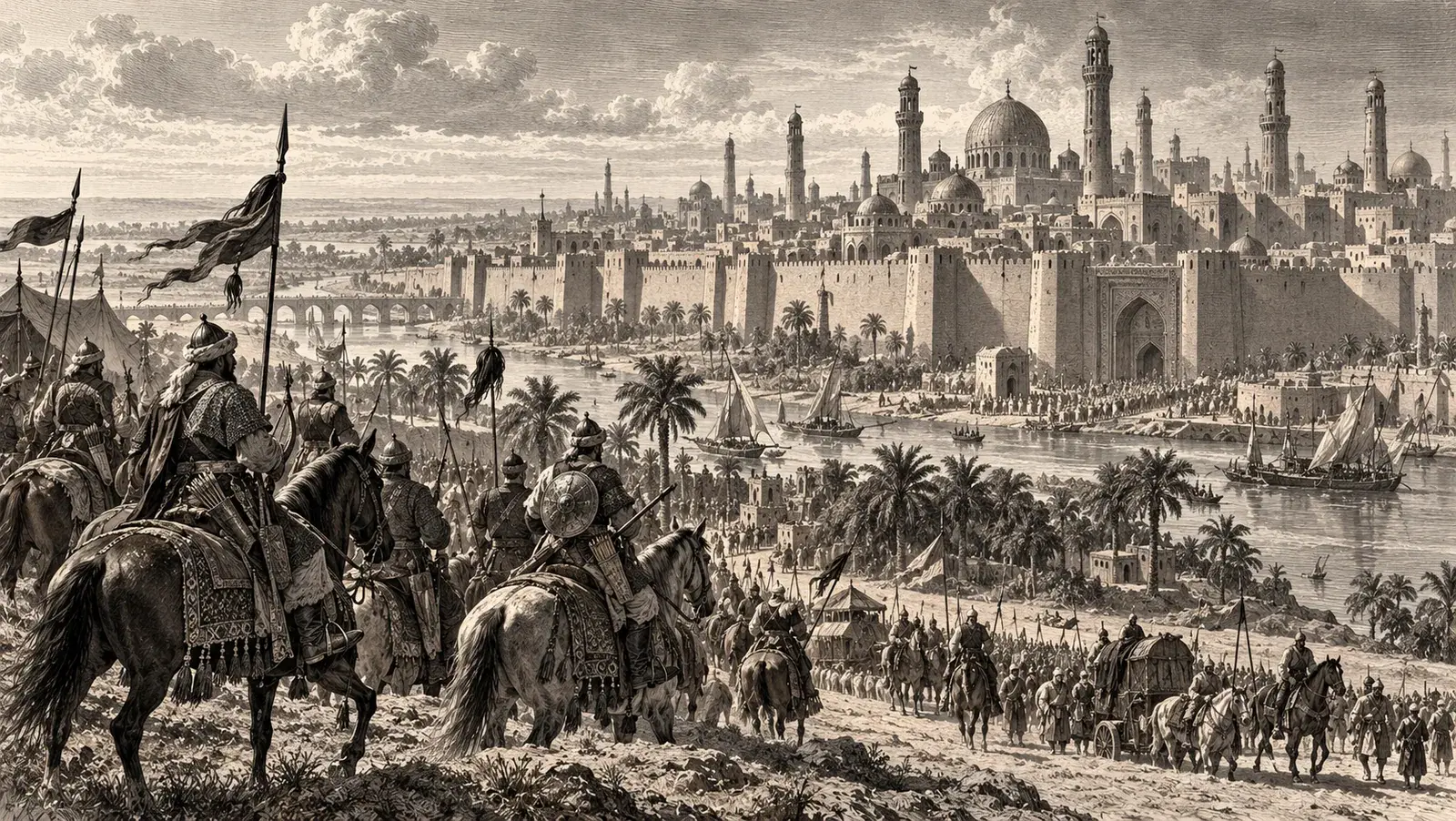
Edward the Black Prince was sixteen years old when his father put him in command of the vanguard at Crécy on August 26, 1346. That was not as reckless as it sounds — the vanguard was an honor, and the boy had been trained for exactly this. But the battle that followed was harder than anyone planned. The English army of perhaps ten to twelve thousand faced a French force considerably larger, led by Philip VI himself. The French also had Genoese crossbowmen as a professional vanguard — seasoned mercenaries who should have been able to soften up the English lines before the cavalry charged. They didn't. A combination of wet bowstrings, exhaustion from a long march, and withering fire from English longbowmen tore the Genoese to pieces. Then the French cavalry, impatient and contemptuous, rode through their own retreating infantry to get at the English — and the longbows found them too. Through all of it, the prince's division held its ground. At one point the fighting around his position grew serious enough that his commanders sent a rider to Edward III asking for reinforcements. The king's response has been repeated ever since: Is my son dead or unhorsed or so wounded that he cannot help himself? No? Then return to your post. Let the boy prove himself a true knight and win his spurs. He did. The French lost forty thousand men that day, including the blind King of Bohemia, who had ordered his companions to lead him into the fighting so he could strike at least one blow. The young prince retrieved the dead king's three white feathers from his helmet and made them his own emblem — the same Prince of Wales feathers that appear on the badge to this day.
At Crécy in August 1346, English longbowmen devastated the larger French army while the sixteen-year-old Black Prince commanded the forward division without asking his father for reinforcements — earning his spurs on the bloodiest day of the early Hundred Years War.
Poitiers, 1356: Capturing a King
Ten years later, near the city of Poitiers in central France, the Black Prince pulled off something rarer than a battle victory: he captured the king of France alive. The situation before the fighting looked bad for the English. The prince had led a large raiding expedition deep into France, gathering plunder and stripping the countryside, but disease and attrition had cut his force to around ten thousand by the time the French army caught up with him. John II of France brought fifty-five thousand, well armed, and in confident spirits. God help us, the prince is reported to have said when he surveyed the French lines. What followed on September 14, 1356, was one of the most tactically remarkable battles of the medieval period. The English held a strong defensive position with vineyards and hedgerows protecting their flanks. The French cavalry, attacking uphill through narrow gaps, was checked by English bowmen working the flanks. Wave after wave came on and was thrown back. Then the Black Prince saw something the French commanders had missed — a gap forming in the enemy line. He threw his cavalry at it and attacked simultaneously from another direction. The French broke. John II fought on after most of his army had fled, surrounded by a knot of loyal knights, until an English man-at-arms got hold of his horse's bridle. The captured king was brought to the prince's tent. Accounts from the time describe the prince serving the king at table himself, refusing to sit in John's presence, telling his prisoner that he had fought more bravely than any man on the field. Whether this was genuine respect or calculated chivalric theater is hard to say. Probably both.
The Prince Who Never Became King
After Poitiers, Edward was given the principality of Aquitaine to rule. It should have been a crowning achievement. Instead it became the beginning of his long decline. He administered Aquitaine for nearly a decade, but governance proved harder than war. Heavy taxation to fund a campaign in Spain on behalf of a deposed Castilian king turned the local nobility against him. A formal complaint was lodged with the French crown, giving the French king legal grounds to intervene. The territory Edward had been given to secure began bleeding away. Worse, his health was failing. He had contracted some illness — probably dysentery, though the medieval records are vague — during the Spanish campaign, and it never left him. By the early 1370s he was too sick to ride. He returned to England, continued to exercise what political influence he could, died in June 1376 at age forty-six. His father outlived him by less than a year. The crown passed to the prince's son, who became Richard II at age ten — and whose troubled reign ended with his deposition and death in 1399, setting off a fresh century of dynastic conflict. The Black Prince's story sits at a peculiar angle to English history. He was the most celebrated warrior of his age and the direct cause of some of the most famous English victories of the fourteenth century. He also never ruled, never governed anything very effectively, and left a son too young and temperamentally unsuited to hold what his father had won. The feathers are still there. The rest is complicated.
The Black Prince was buried at Canterbury Cathedral, where his tomb effigy in full armor has survived more than six centuries. His helmet, shield, and surcoat — replicas of the originals now preserved separately — hang above the tomb in one of the most visited medieval memorials in England.