The story of how England got its name begins with an exile. In 784 AD, Egbert had a legitimate claim to the throne of Wessex — the most powerful Anglo-Saxon kingdom in southern Britain — and instead found himself fleeing for his life when the people elected someone else and made his continued presence dangerous. He left and went to the court of Charlemagne, where he stayed for years. He was there in Rome in 800 AD, among the witnesses when Pope Leo III placed the crown of Holy Roman Emperor on Charlemagne's head on Christmas morning. He watched the most powerful ruler in the western world receive the title that had been vacant for three centuries, and he filed away what he saw. Soon after came word from England: the people of Wessex had changed their minds. They wanted Egbert as their king. He went home and did not waste what he had learned.
Egbert of Wessex became king in 802 AD after years of exile at Charlemagne's court. By 829, he had made himself overlord of all the Anglo-Saxon kingdoms in Britain — the first man to rule what could genuinely be called England.
How Britain Became England
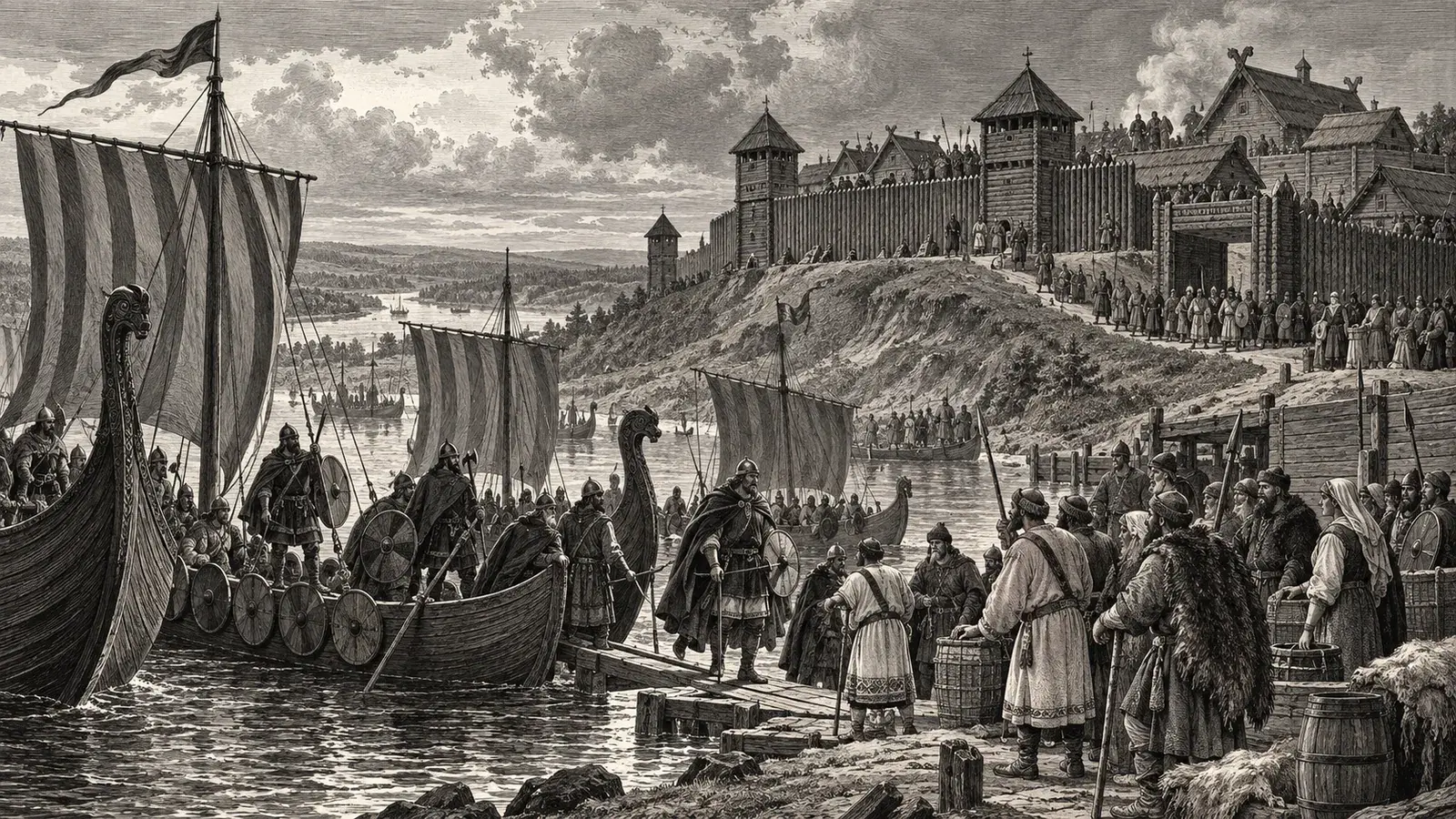
The island was British long before it was English. The Britons — the Celtic people who gave Britain its name — had been there for centuries when Julius Caesar arrived in 55 BCE. Rome occupied the island for nearly four hundred years, building roads and walls and walled cities, bringing Christianity with them, changing the place in ways that were still visible when the Romans withdrew their legions in 410 AD. The vacuum they left filled quickly. Jutes, led by two chieftains named Hengist and Horsa, landed on the southeastern coast. Angles and Saxons followed. The Britons resisted — their leader was King Arthur, whose round-table fellowship at Caerleon fought with genuine ferocity to push back the invaders. It was not enough. The Britons were driven into Wales and Cornwall, and nearly all of England came under the control of the Germanic invaders. For the next two centuries the Saxons, Angles, and Jutes worshipped the old Norse gods on British soil. Christianity had been in Britain since Roman times, but the new masters were not interested in learning religion from people they had just conquered. Seven separate kingdoms gradually coalesced across southern Britain — Wessex, Mercia, Northumbria, East Anglia, Kent, Essex, Sussex — each with its own king, its own rivalries, its own identity.
The Angels Who Should Have Been Angels
The conversion of the Anglo-Saxons came from a strange direction. A monk named Gregory passed through the slave market in Rome around 575 AD and saw some fair-haired captives being sold. He asked who they were. The answer: Angles. Oh, said Gregory. They would be angels, not Angles, if they were Christians — for they certainly have the faces of angels. Years later, when Gregory had become Pope of Rome, he remembered this conversation and sent a monk named Augustine to Britain to convert the savages with the angel faces. Augustine and the British missionaries working from the western side of the island eventually brought Christianity to the Anglo-Saxons, and the process was complete before the German Saxons on the continent had begun. But Christian or not, the seven kingdoms kept fighting. For over two hundred years they warred, formed alliances, broke them, and made them again, with various chiefs trying and failing to establish lasting dominance.
What Egbert Learned from Charlemagne
Egbert had watched Charlemagne do something that seemed nearly impossible — take a collection of quarreling Germanic tribes and kingdoms and beat, persuade, bribe, and govern them into a functioning unified empire. He had seen how it was done: you needed military superiority, you needed patience, and you needed the wisdom to know when to fight and when to negotiate. Back in England as king of Wessex from 802, Egbert spent years building his position before he moved. When he finally acted, he either persuaded the other Anglo-Saxon kingdoms to recognize his authority or forced them to. By 829 he had made himself overlord of all England — Mercians, Northumbrians, Kentishmen, East Anglians — the first man who could genuinely be said to rule the whole country. Then he made a decision that tells you a great deal about his political intelligence. He was himself a Saxon. He could have called the country Saxonland or Saxonia. Instead he advised that to please the Angles — the second-largest and historically important people of the island — the country should be called Anglia. Angleland. England. Saxon king. Angle country. A choice designed to make unity feel like recognition rather than conquest. The name stuck.