When Genghis Khan divided the world in 1227, he handed his second son a very large piece of it. Not the flashiest piece. Chagatai didn't get the wealthy cities of Persia that his brother Hülegü would eventually rule. He didn't get the gateway toward China that Ögedei received. He got the middle — a vast belt of steppe grasslands, deserts, and oasis towns stretching across Central Asia, from the Aral Sea to the Altai Mountains. Middle turned out to be more than enough. The Chagatai Khanate eventually became one of the longest-lasting political entities to come out of the Mongol conquests. It outlasted the Ilkhanate in Persia. It survived longer than the Yuan dynasty in China. In its fragmented, later forms, it kept Chagatai's descendants on thrones in Central Asia until the 20th century. That's nearly 700 years of staying power — from a dynasty that started on horseback in a land most of the world had barely heard of.
Who Was Chagatai? The Son Who Got the Middle
Chagatai was the second son of Genghis Khan by his primary wife Börte. The historical records describe him as tough, deeply loyal to Mongol tradition, and famously difficult to deal with. He held fierce attachment to the Yasa — the Mongol customary legal code — and enforced it with a severity that even Genghis sometimes found excessive. He also had a long-running feud with his older brother Jochi, whose legitimacy as a true son of Genghis he refused to accept. That stubbornness cost him: Genghis passed Chagatai over for the main succession and chose the more politically flexible Ögedei as Great Khan instead. But he wasn't left empty-handed. When Genghis died in 1227, Chagatai inherited the enormous territory that had once belonged to the Qara Khitai — covering roughly what is today Xinjiang, Kazakhstan, Kyrgyzstan, Tajikistan, and Uzbekistan. The land sat at the crossroads of the Silk Road routes connecting China, the Middle East, and Europe. It wasn't glamorous by Mongol standards. But its geographic position would matter more than anyone initially realized. Chagatai died in 1242, before he had much chance to put a lasting stamp on his khanate. What followed was two decades of instability — regents, widows ruling on behalf of underage khans, and rulers installed and removed by whoever held power back in Karakorum. His grandson Qara Hülegü was briefly put in charge, then removed, then reinstated. His mother Ebuskun served as regent. Other khans came and went based on political winds from Mongolia. Nobody in Chagatai's lands was really running things independently yet. That changed — in the most Mongol way possible — during the civil wars of the 1260s.
The "Middle Empire" — What Was This Place, Actually?
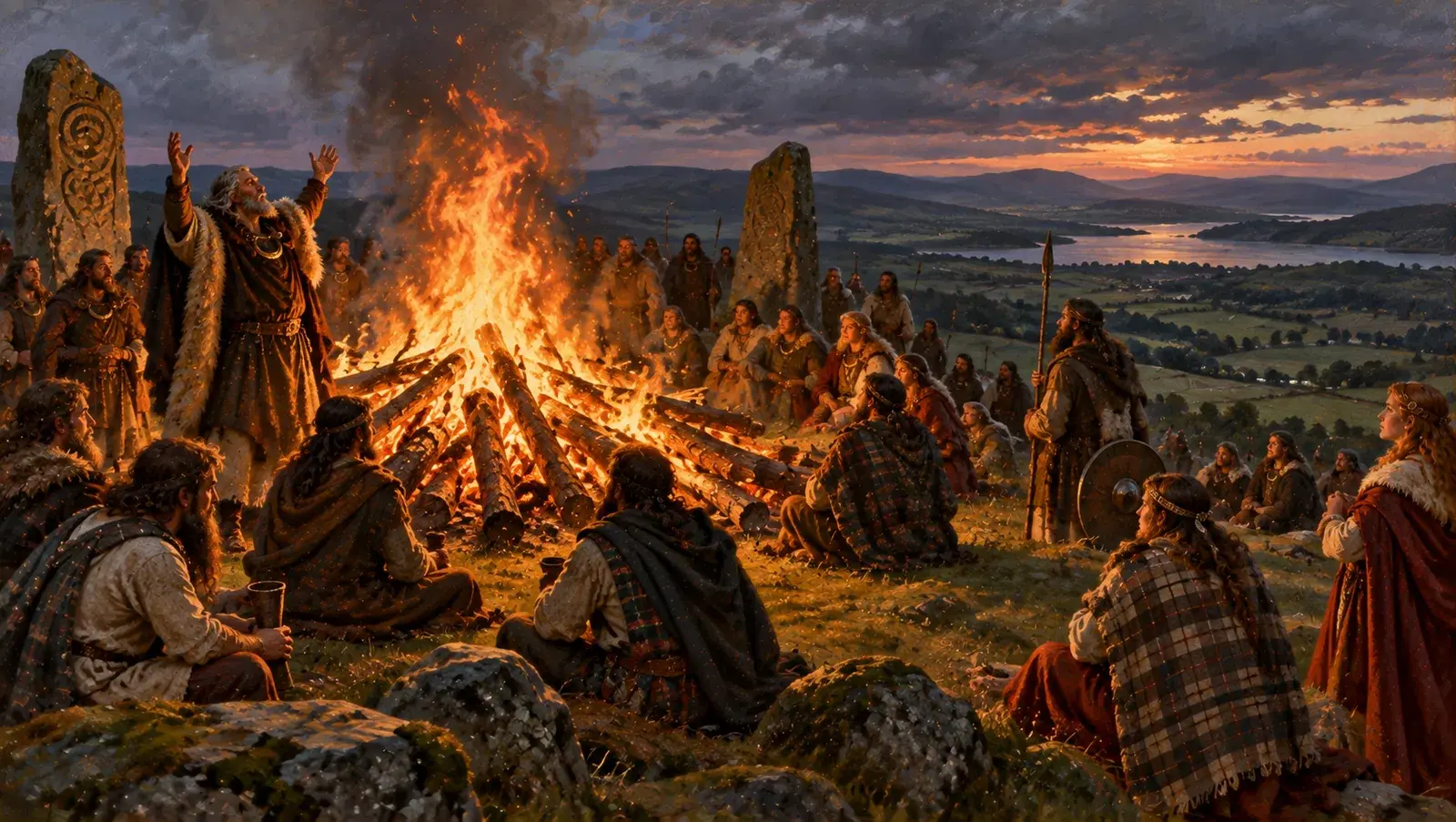
Before getting into the political chaos, it helps to understand where the Chagatai Khanate sat and why medieval observers kept calling it the Middle Empire. The Arab traveler Ibn Battuta explained it simply: the Chagatai ruler's country was located in the middle between four of the most powerful kings on earth — the kings of China, India, Iraq, and the Golden Horde. He wasn't wrong. Geographically, the khanate was the landlocked center of Eurasia, with major powers pressing in from every direction. Medieval European sources picked up the same label. Giovanni de' Marignolli, an Italian friar who passed through in the 1340s on his way to the Yuan dynasty's court in China, called the Chagatai capital Almaliq the city of the Imperium Medium — the Middle Empire. The 1375 Catalan Atlas labels the same region Imperium Medorum. Scholars have found the phrase in Mongolian-language documents from Turfan as well, suggesting this was an actual self-description the Chagatai rulers used for their own state. Almaliq, the official capital, sat in the Ili Valley near what is now the border between Kazakhstan and China's Xinjiang region. But the khanate's most economically important cities were Samarkand and Bukhara — ancient oasis cities that the Mongols had conquered and were now trying to tax without ruining too badly. (They didn't always succeed at the second part.) The population was a mix that the nomadic Mongol rulers never quite reconciled. Steppe herders — Mongol and Turkic — lived alongside sedentary Iranian, Turkic, and Uyghur farmers and craftspeople in the river valleys and oasis towns. These two worlds operated on entirely different economic and cultural logics. Managing both at once was a challenge the khanate grappled with for its entire existence.
At its greatest extent, the Chagatai Khanate stretched across a huge belt of Central Asia, sitting at the crossroads of the Silk Road between four major medieval powers.
Baraq, Kaidu, and Thirty Years of Somebody Else Calling the Shots
The 1260s brought the collapse of unified Mongol rule. When Möngke Khan died without a clean succession plan, the Mongol Empire fractured. The four khanates became functionally independent — and immediately started fighting each other. Ghiyas-ud-din Baraq came to power in the Chagatai lands in the mid-1260s with support from Kublai Khan. He wasted no time pushing back against Kublai's authority. When Kublai sent an agent to govern the Tarim Basin, Baraq drove him out. When Kublai followed up with 6,000 horsemen, Baraq met them with 30,000 and forced them to retreat. He then quarreled with Kaidu — a grandson of Ögedei who was building his own power base in Central Asia. Kaidu enlisted the Golden Horde against Baraq. Faced with an army of 50,000 Golden Horde soldiers at his back, Kaidu forced Baraq to flee into Transoxiana, where Baraq eventually accepted peace, surrendered territory east of the region, and was then coerced into attacking the Ilkhanate in Persia. That campaign ended badly. The Ilkhanate ruler Abaqa defeated Baraq near Herat on July 22, 1270. Retreating, Baraq fell from his horse, was crippled, and died in Bukhara shortly after. He converted to Islam before he died — the first Chagatai ruler to do so. After Baraq's death, Kaidu essentially ran the Chagatai Khanate as a client state for the next thirty years. The actual Chagatai khans during this period served mainly as political fronts. Kaidu made the decisions. He used Chagatai military strength primarily as a western partner in his long, grinding war against the Yuan dynasty — a series of invasions into China that went on for decades and never produced any lasting results. In September 1298, Chagatai and Kaidu forces captured one of the Yuan emperor's sons-in-law and executed him — but they immediately suffered a major defeat by Yuan forces afterward. In 1301, another attack on Karakorum ended in defeat, and Kaidu died during the retreat. With him gone, the Chagatai Khanate had its first real chance to operate on its own terms.
Duwa and the Years of Constant Political Turnover
After Kaidu's death in 1301, his son Chapar and the Chagatai khan Duwa initially recognized Yuan authority together in 1303. Duwa then turned against Chapar. He joined the Yuan dynasty in attacking Chapar, eventually forcing him to surrender his entire territory in 1306. With Kaidu's shadow finally lifted, Duwa was the dominant figure in Central Asia. He kept fighting — raiding the Delhi Sultanate in 1297 and 1303, expanding into Afghanistan — and he held things together long enough that it resembled actual independence. He died in 1307. What followed was a political carousel that would make anyone dizzy. Duwa's son Könchek ruled for eighteen months and died. A man named Taliqu seized power. Duwa's family killed Taliqu at a banquet. One of Duwa's sons, Kebek, took over, then stepped aside for his brother Esen Buqa I. Esen Buqa invaded the Ilkhanate in 1315 and pushed as far as Herat before the Yuan attacked him from the east and forced a retreat. He died in 1318, and Kebek came back. Kebek was probably the most capable ruler of the whole era. He made peace with both the Ilkhanate and the Yuan dynasty, reigned for seven stable years, and even began building a palace complex near Samarkand — a small but meaningful step toward more settled governance. He died in 1325. His three brothers then ruled in succession. Two of them lasted only a few months each.
The Turn Toward Islam — And the Franciscan Massacre
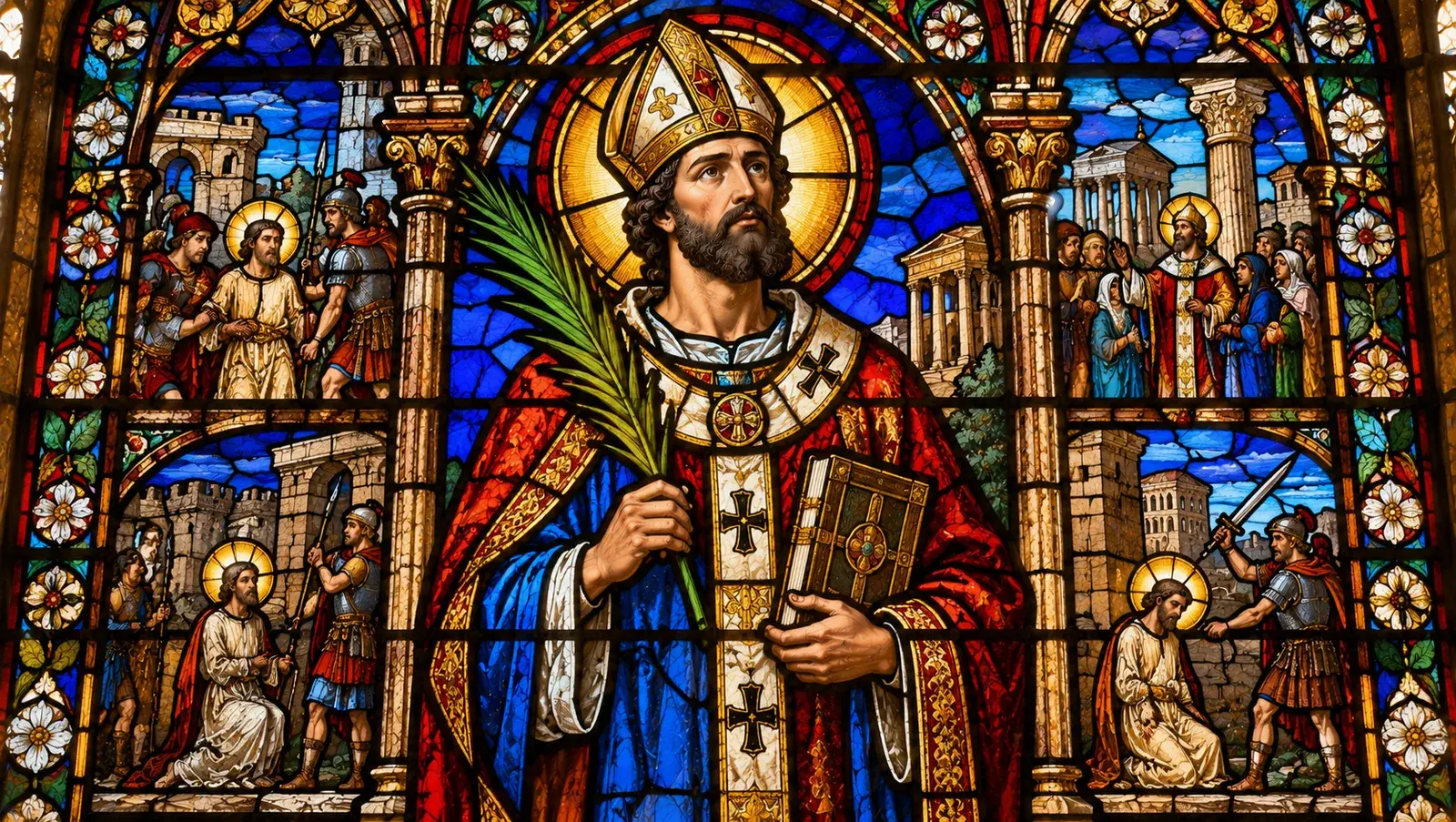
The religious transformation of the Chagatai Khanate happened slowly at first, then in a sudden violent rush. The Mongols had traditionally practiced their own shamanistic customs and maintained broad tolerance for other religions — Christianity, Buddhism, Islam, and others all had followers at the Mongol court. But as the Chagatai khans ruled over populations that were overwhelmingly Muslim — in Transoxiana, in the Tarim Basin oasis towns, in the cities of Samarkand and Bukhara — the pressure to convert was constant and growing. Mubarak Shah, who briefly ruled in the 1260s, was the first Chagatai khan to convert to Islam. But his conversion didn't shape state policy — he was deposed quickly. Tarmashirin Khan, who took the throne after Kebek's brothers in the late 1320s, made the break real. He converted to Islam, governed in a more Islamic style, raided the Delhi Sultanate deeply enough to reach Delhi itself, and began stepping back from traditional Mongol practices that the nomadic eastern tribes still expected. That last part got him killed. The eastern steppe warriors who formed the military backbone of the khanate rose up in an anti-Muslim rebellion in 1334 and deposed him. They wanted a khan who would respect the old Mongol ways, not one who prayed five times a day and stopped honoring the traditional rites. The political tension between nomadic traditionalists and an increasingly Islamized settled population kept pulling the khanate apart for the next decade. The final, violent punctuation came in 1339, when a usurper called 'Ali-Sultan seized the throne and decided Christianity had no place in his territory at all. He ordered the killing of the entire Franciscan congregation at Almaliq — six monks, including Bishop Richard of Burgundy, Pascal of Spain, and Raymond of Provence. The Italian painter Ambrogio Lorenzetti depicted the killings in a 1342 painting, The Martyrdom of the Franciscans. Pope Benedict XII had only just appointed Bishop Richard of Burgundy to his position in Almaliq the year before the massacre. A papal legate named Giovanni de' Marignolli arrived in the Ili Valley the following year anyway, built a church, baptized some converts, and kept going east. Christian communities in the region held on through the rest of the Mongol era — but 'Ali-Sultan's purge made clear which direction things were heading.
Ambrogio Lorenzetti's 1342 painting documented the massacre of Franciscan missionaries in Almaliq — a turning point that marked the end of meaningful Christian presence in the Chagatai Khanate.
The Khanate Splits — And Timur Picks Up the Pieces
By the 1340s, the khanate had split in two. The western portion — Transoxiana — fell into a cycle of assassinated rulers and tribal chiefs holding real power while puppet khans sat on the throne. In 1346, a tribal chief named Amir Qazaghan killed the reigning khan Qazan and installed his own puppet. Qazaghan was assassinated in 1357. His son Abdullah killed the puppet khan a year later. A coalition of local lords, including the uncle of a young warlord named Timur, drove Abdullah out to the Hindu Kush, where he died. From that point, the Chagatai khans of Transoxiana were political prisoners in all but name — confined to their palaces in Samarkand with no real authority over anything. In the east, a more functional state emerged. A son of Esen Buqa I named Tughlugh Timur was enthroned in Moghulistan — the eastern portion of the former khanate — in 1347. He converted to Islam in 1350 and governed with enough authority to invade and temporarily retake Transoxiana in 1360. Among the people who entered his service during this period was a young Barlas Turk named Timur — the same man the world would later know as Tamerlane. Tughlugh died in 1363. Timur and his ally Amir Husayn stepped into the vacuum, pushing Tughlugh's son Ilyas Khoja out of Transoxiana. Then Timur eliminated Amir Husayn as well. By 1369, Transoxiana was his. Timur was not Chagatai by blood. He was a Barlas Turk. But the tradition of Mongol-Chinggisid legitimacy still mattered enough that he maintained a series of puppet Chagatai khans on paper — first Soyurgatmish (1370–1388), then Sultan Mahmud (1388–1402). The real power was clearly Timur's. It was the same system that had been used on the Chagatai khans themselves during Kaidu's era, now turned against the dynasty by the man replacing it.
Timur was not Chagatai by blood, but he maintained puppet Chagatai khans to legitimize his rule — the same trick the khanate's own rulers had endured under Kaidu a century earlier.
Moghulistan — The Eastern Remnant Keeps Going
When Timur absorbed Transoxiana, the eastern portion of the former Chagatai Khanate — now called Moghulistan — kept running on its own. It was smaller, more nomadic, and under constant pressure from outside powers. But it had genuine Chagatayid rulers who governed in their own right and didn't answer to Timur. Timur attacked Moghulistan repeatedly — in 1375, 1376, 1383, 1389, and 1390. None of his invasions resulted in lasting control. The Moghul khans proved difficult to pin down. Their nomadic mobility made them hard to catch and harder to destroy. Timur eventually made peace by marriage alliance: Khizr Khoja, the Moghul ruler, gave his daughter to Timur in 1397. After Timur's death in 1405, Moghulistan continued under a series of khans. Uwais Khan, who came to power in 1418, spent much of his reign being captured and released by the Oirats — the western Mongol confederation that was building serious power to the north. He was taken prisoner twice. Both times his royal Chinggisid lineage earned him respectful treatment and eventual release. He died in 1429 having never solved the Oirat problem. A succession fight between his two sons, Yunus Khan and Esen Buqa II, dragged on for decades. External powers, including the Timurid ruler Abu Sa'id Mirza, backed different sides. Eventually Yunus prevailed and became the sole ruler in 1472. Then Yunus did something unexpected: in 1484, he moved to Tashkent and settled down permanently, giving up the nomadic way of life his people had maintained for centuries. His steppe followers, alarmed by this, departed for the grasslands and took his second son Ahmad Alaq with them. When Yunus died in 1486, the realm split between his two sons — Mahmud Khan in the west at Tashkent, Ahmad Alaq in the east on the steppe. The western half didn't survive long. Muhammad Shaybani, the Uzbek ruler who had seized Transoxiana from the Timurids, turned on Mahmud Khan. He captured both brothers, released them, kept the cities of Tashkent and Sairam, then captured Mahmud again in 1508 and executed him. It was the last time a Chagatayid held any authority in Transoxiana.
The Yarkent and Turpan Khanates — Two Smaller Successors
In 1514, what remained of the Chagatai world split permanently into two separate states. Mansur Khan's brother Sultan Said Khan captured Kashgar, Yarkand, and Khotan and founded the Yarkent Khanate in the west. Mansur Khan stayed in Turpan and ran the Turpan Khanate in the east. The two branches went their own ways from that point. The Yarkent Khanate lasted nearly two centuries, but its later decades were consumed by something that had nothing to do with Mongol dynastic politics. The Khojas — Muslim families claiming descent from the Prophet Muhammad or the early Arab caliphs — had been politically influential in the khanate since the early 1500s. A particularly powerful Khoja named Makhdum-i Azam arrived in Kashgar in 1533 and had two sons who despised each other. Their feud became institutional. Two lineages emerged: the Aq Taghliq (White Mountain) faction in Kashgar, and the Qara Taghliq (Black Mountain) faction in Yarkand. The hatred passed down through generations and eventually split the khanate between two religious-political blocs fighting for dominance. The end came from outside. A Khoja leader named Afaq, expelled by the ruling faction, fled to Tibet in the 1670s. The Fifth Dalai Lama sent him on to the powerful Dzungar Khanate to the north. In 1680, the Dzungar leader Galdan Boshugtu Khan led 120,000 soldiers into the Yarkent Khanate with Afaq as political cover. The Moghul defenders never had a real chance. Ismail Khan was taken prisoner. A puppet Chagatayid was installed. Two years later, he was deposed by riots. A replacement tried to get help from the Qing dynasty, Bukhara, and the Mughal Empire — none arrived in time. By 1705, a non-Chagatayid appointee of the Dzungars was running things. The Chagatai line in the Yarkent Khanate was finished. The Turpan Khanate ran a parallel course of its own — constant battles against Oirats, Kyrgyz, Kazakhs, and the Ming dynasty. Its last confirmed contact with the wider world appears to have been embassies sent to Beijing in 1647 and 1657, which the Qing dynasty acknowledged as coming from a genuine Chagatayid state. After that, the historical record on Turpan goes quiet.
The Yarkent Khanate survived nearly two centuries before being swallowed by the Dzungar Khanate in 1680 — a conquest aided by internal religious factionalism that had been building for generations.
1930 — The Very Last End
The Chagatai dynasty didn't quite die with the Yarkent Khanate in 1705. It held on in one more, much smaller form. The Kumul Khanate — a small autonomous region in what is now the Xinjiang area of China — was established under the Qing dynasty in 1696. Its rulers were formally recognized as descendants of Chagatai Khan, and they were given limited authority over the Hami oasis in exchange for loyalty to the Qing emperors. It was a remnant of a remnant — a tiny recognized political space for the very last of Chagatai's line. The Republic of China abolished the Kumul Khanate in 1930 and dissolved its autonomous status. With that, the last political unit with any formal connection to the son of Genghis Khan was gone. From the original inheritance in 1227 to the abolition in 1930 — that's 703 years. Not a bad run for a dynasty that spent most of its history being pushed around by more powerful neighbors, fighting itself nearly as often as its enemies, and watching its religion, language, and borders constantly change. One more legacy the Chagatai line left behind: a language. Chagatai Turkish — the literary language that developed in the khanate and flourished between the 15th and 19th centuries — became the major written tongue of Central Asian Islamic culture. The poet Alisher Navoi wrote in it. So did Babur, founder of the Mughal dynasty, in his remarkable memoir the Baburnama. Modern Uzbek and Uyghur both trace significant ancestry to Chagatai Turkish. Chagatai Khan got the middle. The middle shaped an enormous amount of what Central Asia became.
The Kumul Khanate was the final political remnant of the Chagatai dynasty — a small autonomous domain that survived under Qing patronage until the Republic of China ended it in 1930.
The Chagatai Khanate doesn't get talked about as much as it probably should. It doesn't have the single dramatic story that tends to stick in general memory — the Mongol conquest of China, the sacking of Baghdad, the Golden Horde and Russia. Instead, it's a long, layered history of political fragmentation, religious change, battles against neighbors on every side, and the slow grinding-down of a nomadic dynasty by the settled world it never fully joined. But that complexity is also what makes it worth knowing. The khanate's story runs through almost everything happening in medieval Central Asia for four centuries. It connects the peak of Mongol power to the rise of Tamerlane. It documents the Islamization of the Mongol ruling class. It preserves the Chinggisid political tradition long after the main Mongol Empire had broken apart. And it kept the Silk Road's central corridor politically functional — however chaotically — through one of the most turbulent stretches in Eurasian history. Somewhere under the old streets of Samarkand, Bukhara, Kashgar, and the Ili Valley, the layers of that history are still there.