Saint Patrick is the most famous patron saint of Ireland, and there is hardly any information about him that is not surrounded by controversy. He did not bring Christianity to Ireland because there were already Christians there when he arrived. He was not Irish, there is no confirmation of him explaining the Trinity with a shamrock, and his dates of birth and death are unknown.
However, what is known is much more interesting than the legendary tales about St. Patrick. The patron saint of Ireland was a Roman citizen from Britain who was captured at the age of 16 and spent six years in Ireland as a slave. After escaping, he prepared to return to Ireland as a bishop and spent the rest of his life there, despite the family's protests.
Most of the information about St. Patrick comes from his own writing, the Confessio. He wrote it when someone accused him of committing a crime from his youth, to which he confessed later, responding to the accusations with a defense speech.
Early Life in Roman Britain
St. Patrick was born Patricius, a Roman citizen of Britain, his exact birthdate is unknown, but it is dated to the fifth century. He wrote the story of his life many years later, calling his homeland Bannavem Taburniae, a place that has not been identified by modern historians. Possible options for the location of his birthplace include Dumbarton or Ravenglass in Britain or several cities in Brittany, Scotland, and Wales. His father, Calpurnius, was a Roman magistrate, and his mother, St. Conchessa, was reportedly the niece of St. Martin of Tours. However, it is not known for sure; this detail was added to the legend by medieval hagiographers.
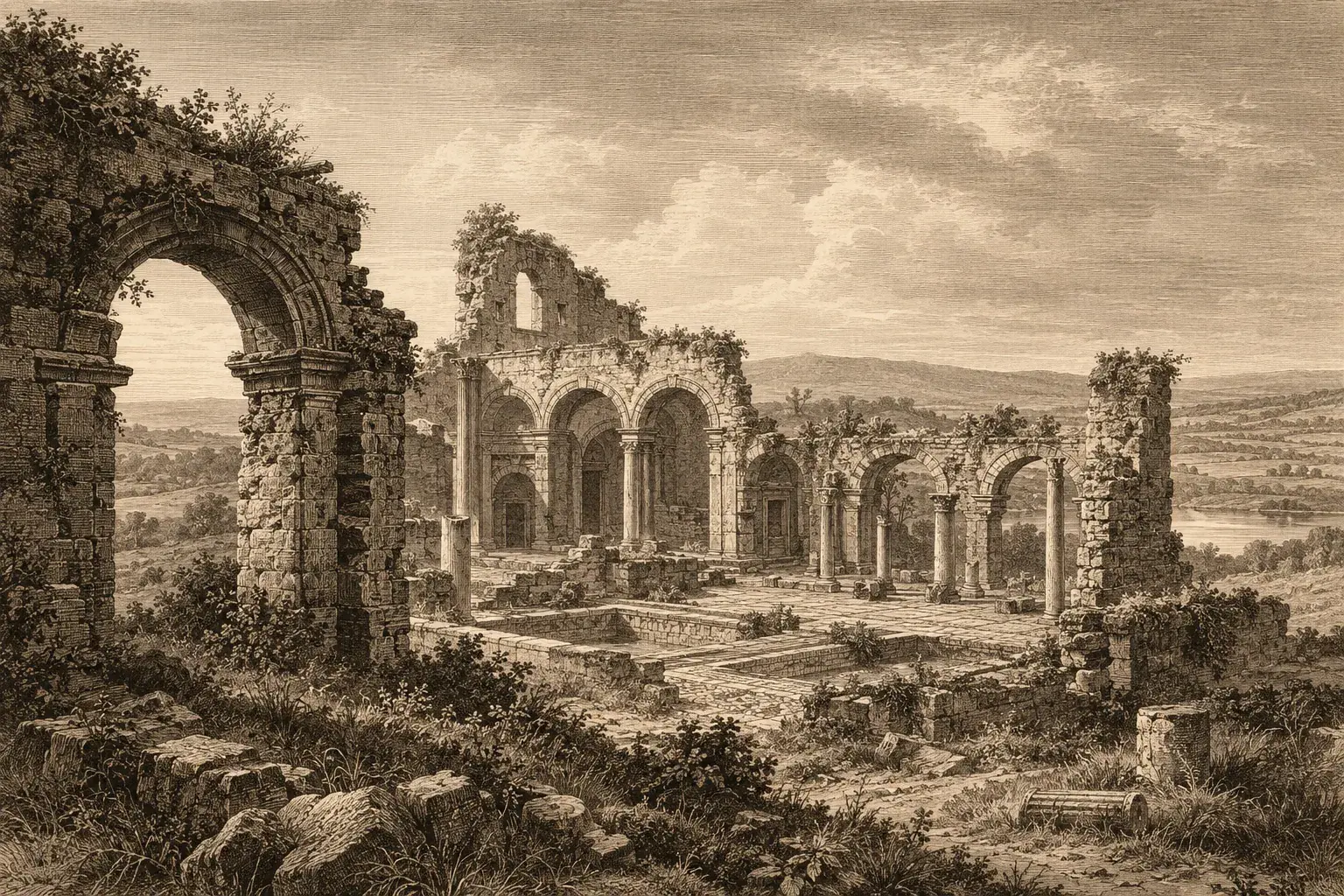
Patrick's family lived on a small country estate, a villula, near the unidentified settlement he called Bannavem Taburniae.
St. Patrick himself pointed out that he was a precocious and disrespectful boy who was far from religion. He said, “I was in my youth, I was a follower of vanities and had no faith in the True God.” These words are significant for the history of Ireland because they demonstrate that St. Patrick did not always believe in Christianity.
Captivity and Escaping into Ireland
At the age of 16, Patrick was kidnapped by pirates and taken to Ireland as a slave. Six long years he survived in captivity in the north of Ireland, near the modern city of Antrim. He took care of sheep in the mountains, often walking around completely naked. “It was a savage life,” he later wrote, and “I was in the greatest danger if I strayed from the path or came too close to the local chief, Miliue of Antrim, or Miliucc, as he was also called.”
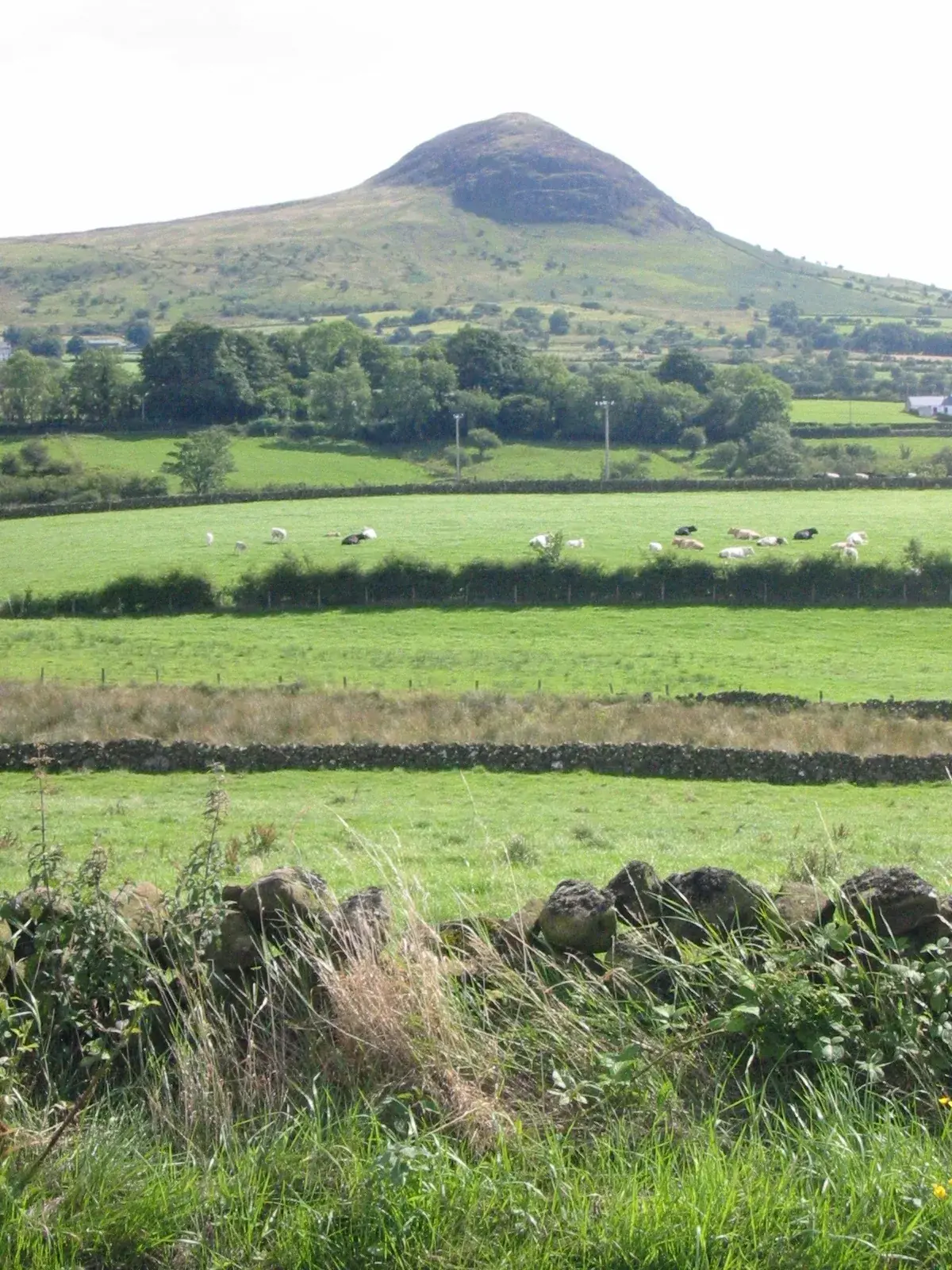
Tradition places Patrick's six years of captivity, herding sheep for the local chieftain Miliucc, on the slopes of Slemish Mountain.
Image Credits: Man vyi, via Wikimedia Commons (Public domain)
The historian Thomas Cahill notes that during these six years, Patrick turned to God. He was forced to live in isolation, without friends or family, and therefore began to pray to the Creator. He later wrote that he was overwhelmed with faith and found a source of strength. He prayed more than a hundred times a day and as many times at night, but nothing could stop him. He stood in the snow, cold, and rain without feeling any discomfort due to the power of God, who gave him faith and courage.
The Dream, the Escape, and the Voyage Home
According to Patrick's writings, a dream encouraged him to escape. He saw a mysterious voice telling him that his prayers had been heard, and his journey would soon begin. He had a chance to return to Britain on a merchant ship, but the sailors did not let him get on board. Patrick prayed again, and the captain agreed to take him, but the journey was challenging. They crossed open seas for three days when the current brought them to land.
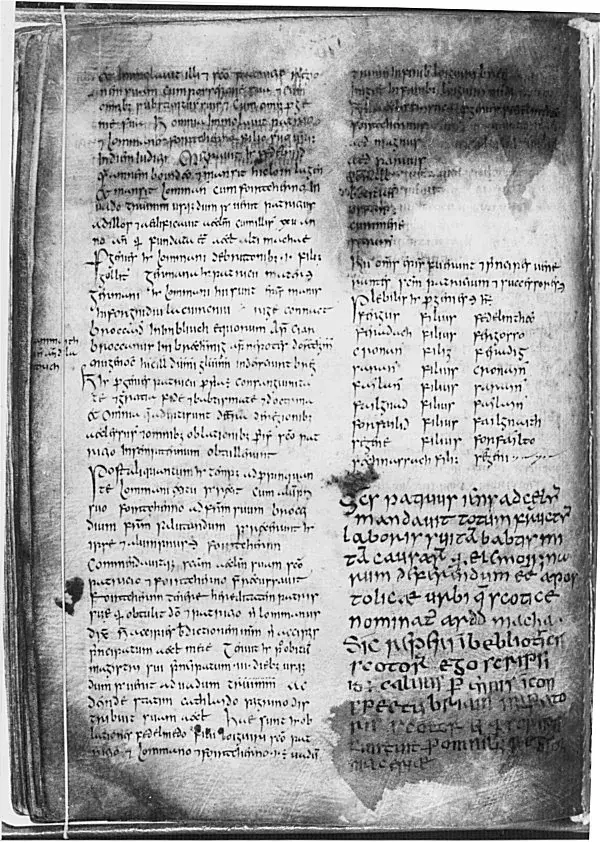
The ninth-century Book of Armagh preserves the oldest surviving copy of Patrick's own account of his life, the Confessio.
Image Credits: Wikimedia Commons (Public domain)
According to Patrick's account, they landed on desolate shores, and it took them twenty-eight days journeying through the wilderness to reach the nearest people. When the sailors made fun of Patrick's belief, saying it could not protect them from hunger, he told them to pray to God and show them mercy. Soon after, a herd of pigs appeared before the group, but whether it was a miracle or coincidence remains unknown.
Patrick traveled to his homeland with the sailors, reached their village, and decided to go to his parents to be with them. However, as Cahill writes, Patrick was no longer the carefree Roman youth that left home. He was a wiser but angrier man who could not settle down for good.
The Vision of Victor and the Voice of Ireland
In Patrick's writings, this journey was not predestined. He fell victim to his second vision when he saw a man named Victor or Victorious, who had been in Ireland with him, returning from the west with a bundle of letters. When Victor opened the letter addressed to Patrick, the saint heard a voice coming from the document. The voice said that the residents of the Focluit Wood near the western sea were crying and begging the holy youth to return to them. Patrick could not bear the pain and grief and stopped reading the letter.
Victor's vision haunted Patrick for a long time, and he decided to go back to Ireland, despite his family's protests. He spent several years studying and was ordained as a bishop in Auxerre. It is traditionally believed that St. Patrick could have stayed in Gaul or returned to Britain. However, he went back to Ireland because he felt he had a great mission there.
Before leaving for the second time, he confessed the crime from his youth to the bishop in Auxerre. It is unknown what exactly Patrick had done, but his confessor revealed the details of the story to the world many years later, humiliating Patrick. In response, St. Patrick wrote the text known as the Confessio, most of which describes the time he spent in Ireland.
Correcting the Most Common Myth About St. Patrick
A popular myth claims that St. Patrick brought Ireland out of paganism, but, as mentioned earlier, there were already Christians when he arrived. Moreover, Palladius was the first Christian missionary to Ireland and the first bishop there. He was sent to Ireland by the Pope, and there were already lay Christians and churches when St. Patrick appeared in the fifth century. According to the research of the scholar T. F. O'Rahilly, there may have been two Patricks, and Palladius's biography has been confused with Patrick. This assumption cannot be correct because Palladius's legend does not have the same legendary halo, and the archaeology of that time does not support the claim that there was a mass conversion during his time. This may be because Palladius was sent by the church to convert the Irish, while St. Patrick went to Ireland on his own and was familiar with the local traditions and the mentality of the Irish people. St. Patrick converted the Irish to Christianity not by force but by convincing them that faith in Christ can bring them happiness and spiritual strength.
It is believed that St. Patrick was not welcomed to Ireland. He probably landed near Wicklow but was met with such disdain that he left for the north. There he began his mission, using the knowledge he had gained during his years as a slave.
The Shamrock and the Irish Goddess of the Triple Aspect
The claim that St. Patrick used a shamrock to explain the concept of the Trinity is one of the most disputed. Both historians and theologians have tried to prove that St. Patrick could not have used this method because it is impossible to equate the Christian Trinity with the pagan symbol. However, this is not entirely correct. The idea of threefold divinity was familiar to the Irish, as was the concept of the Trinity itself.
There was a popular belief in Ireland about the goddesses of the triple aspect, known as the Irish Trinity. The Irish Celts worshipped three goddesses – Eriu, Fodla, and Banba – who were regarded as different faces of the same deity. Ériu's name endures as the everyday Irish name for the country (Éire), while Banba and Fódla survive as poetic names for the island as a whole. The triple aspect was also associated with the goddess Brigid, who was known in Ireland long before St. Patrick's arrival. It is possible that he recognized the similarity between the Irish and Christian ideas of the Trinity and decided to use it to explain the faith.
The Fire on the Hill of Slane and the Battle with Druids
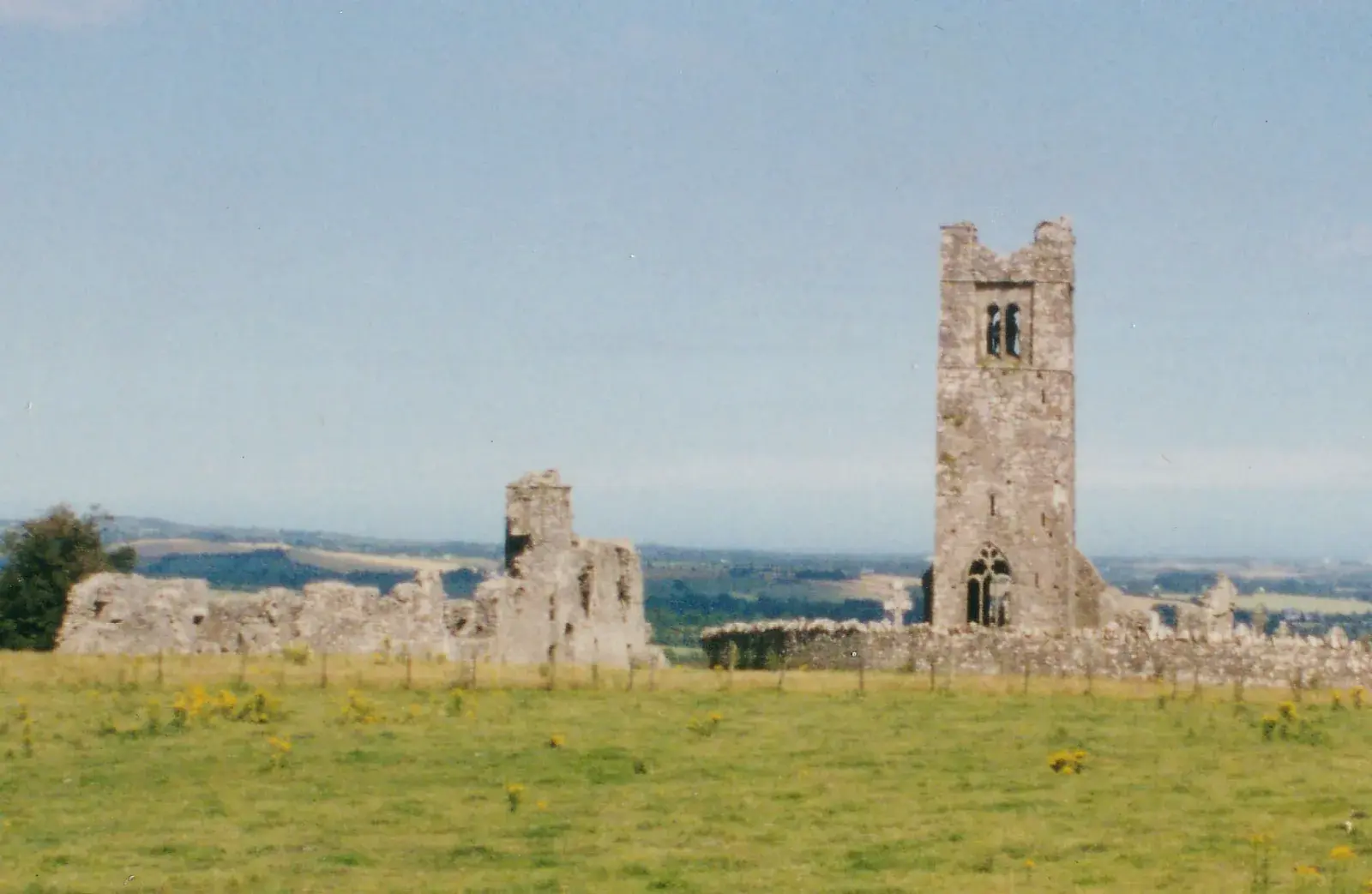
Legend places Patrick's defiant Easter fire on the Hill of Slane, lit in view of the High King's own bonfire at Tara.
Image Credits: Patleahy, via Wikimedia Commons (Public domain)
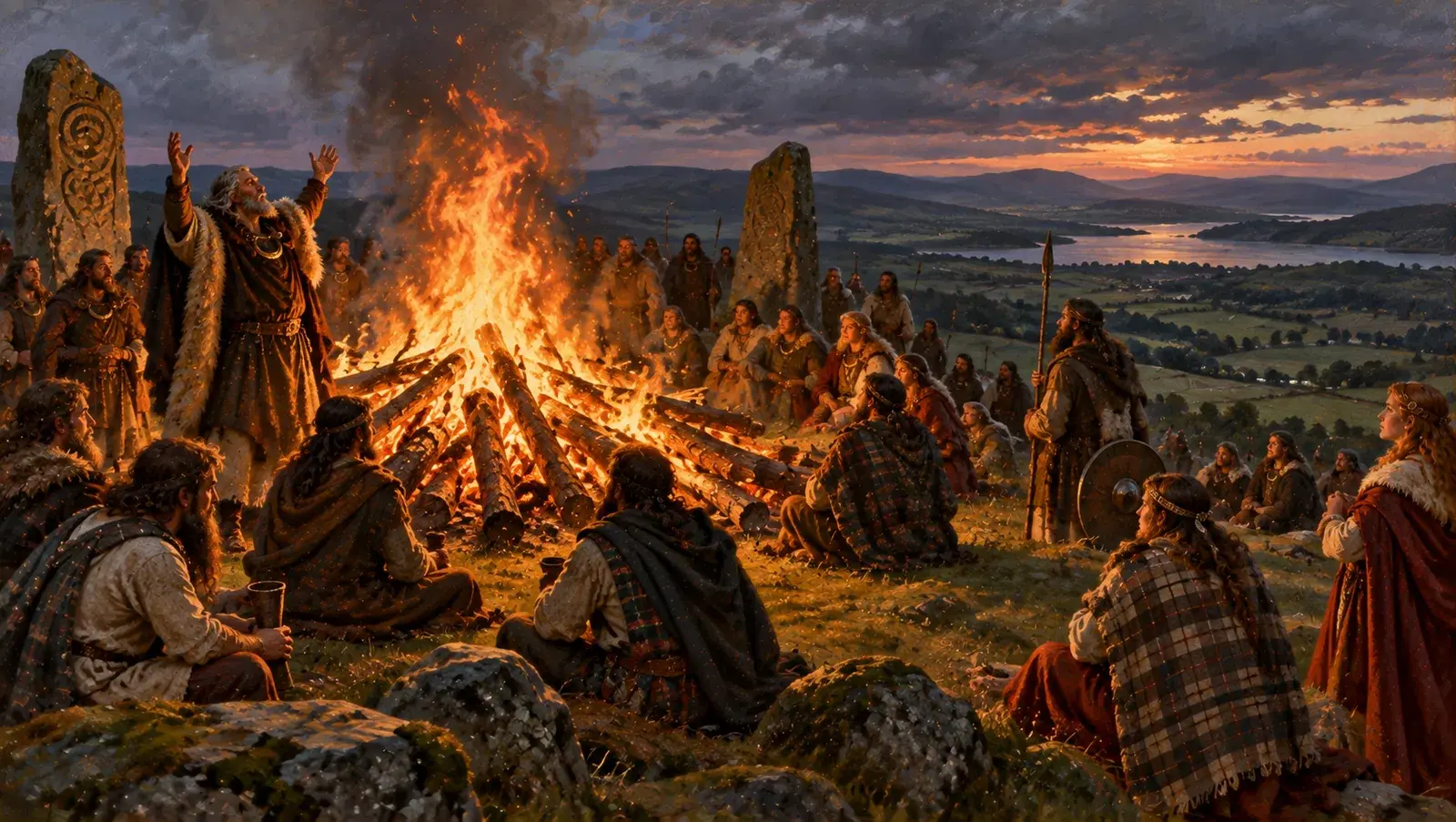
The most famous story from the biography of St. Patrick is the one about the Hill of Slane. It is said that during the pagan spring festival, the High King of Tara forbade lighting fires until the bonfire on the Hill of Tara was ignited. St. Patrick and his followers lit a fire on the Hill of Slane, which was visible from the capital. The king ordered the druids to put out the fire and arrest Patrick, but the saint and his followers chanted the Saint Patrick's Breastplate prayer, also called the Deer's Cry, and miraculously escaped the soldiers as if they were deer. St. Patrick then confronted the druids in a theological debate, convincing them and the king that he had divine wisdom. As a result, St. Patrick was permitted to preach in the kingdom. When the soldiers returned to the Hill of Slane, they found that the fire had not gone out. Many of the king's courtiers converted to Christianity, but the king and his druids remained firm in their paganism.
Armagh, Brehon Laws, and Celtic Church
St. Patrick built a church in Armagh, which he most likely considered his home. He wrote the Confessio, taught the people, studied the Brehon laws, and finished his days in Armagh. St. Patrick was one of the most important figures in medieval Ireland. He was a legislator and judge who defended the oppressed, including women, the poor, and even slaves, many of whom he once was himself. At the same time, he was also an adviser to the king and a bishop with the power to appoint judges.
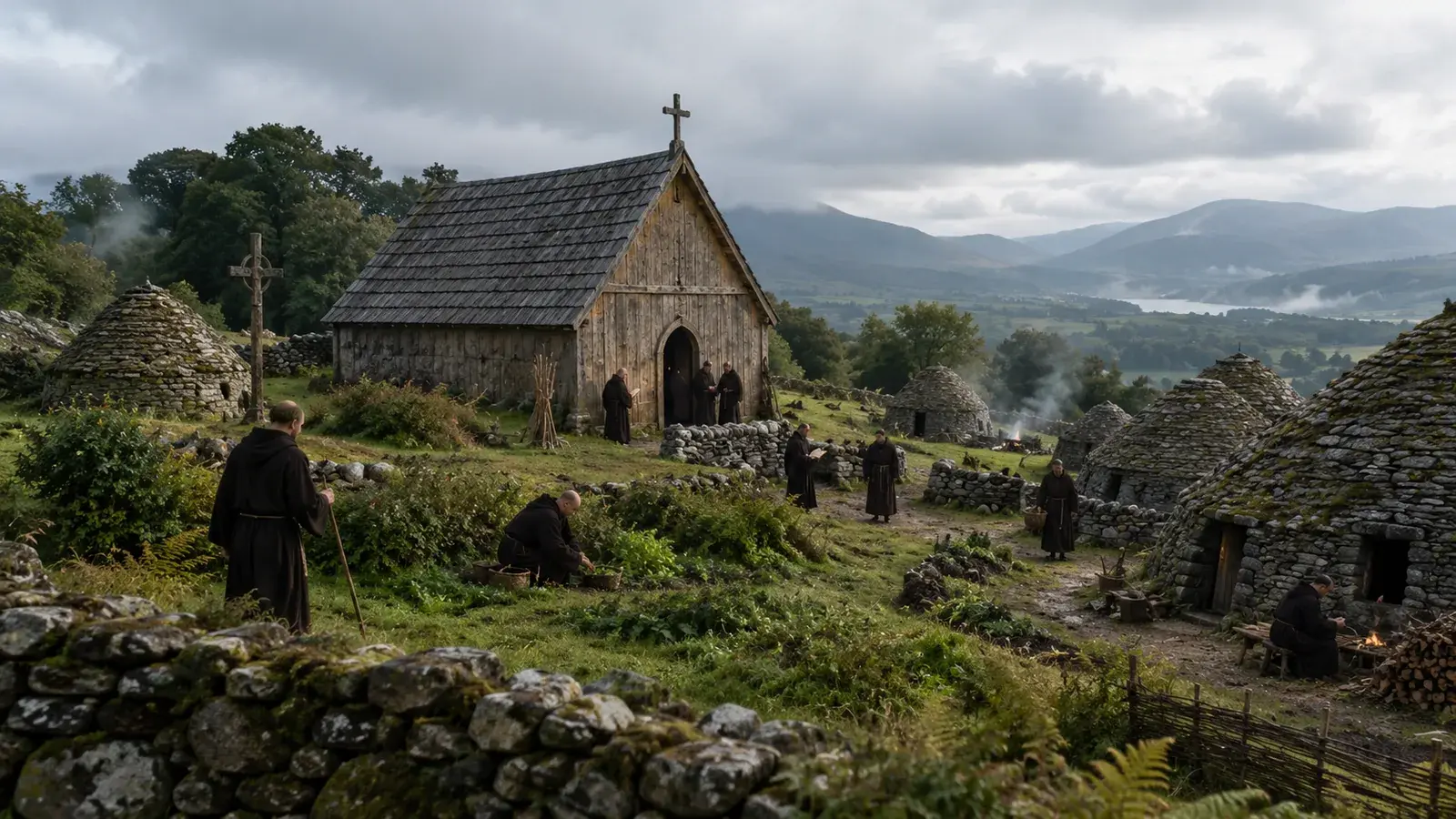
Armagh, the church Patrick built and where he is said to have spent his final years, became the traditional ecclesiastical capital of Ireland.
According to Cahill, St. Patrick was the first to understand how to transfer the virtues of the Irish pagan faith to Christianity. St. Patrick developed his sermons and speeches to resonate with the Irish about their national pride, connecting the Celtic virtues with Christian ones. As a result, the Celtic Church emerged, which was primarily focused on devotion, faith, and charity.
The most controversial aspect of the Celtic Church is its distinction from the Roman one. The believers followed the orders of the Celtic Church, not the Roman one. Women played a significant role in the Irish Church, and the monasteries were ruled by abbesses. The Irish Christians kept the Celtic calendar, and the date of Easter was different from the one accepted in Rome. In addition, the Irish followed the Scottish tradition of the tonsure, which was different from the Roman practice. There is no agreement on whether these differences were significant, and historians have debated the unique nature of the Celtic Church for centuries. However, most scholars have concluded that the Celtic Church did not have a fundamentally different concept of Christianity from the Roman one.
The Legacy of St. Patrick: The Monks and Ireland's Literacy
It is hard to overestimate the contribution of St. Patrick to Ireland. One of the most enduring legacies includes the monasteries. St. Patrick and his followers established them throughout Ireland. They became centers of learning and preserved hundreds of manuscripts. Ireland was one of the few European countries to withstand the collapse of the Roman Empire. Although the Roman legions did not reach Ireland, the country's isolation meant that it was one of the last countries to experience the Roman withdrawal. Thus, while much of Europe became dark ages, Ireland's monks were saving the remnants of the old world.
According to historian Murray Pittock, “It was the Gaelic Irish who created the only fully developed medieval culture in Western Europe between the fall of the Roman Empire and the opening of the Renaissance.” St. Patrick and his monks were responsible for Ireland's written history. They translated many ancient manuscripts from Greek and Roman authors, preserving knowledge about the world. Eoin MacNeill argued that the Irish monks created a unique culture and civilization that was a sanctuary of sanctity and science. It is hard to disagree with this assessment because without them, much of the literature and philosophy of ancient Ireland would have been lost.
However, St. Patrick was not the only medieval Irish scholar. His legacy lives on in the memory of people because he was the first to preach Christianity in Ireland and lay the foundation for its churches and monasteries. It is said that the patron saint of Ireland did not write much, but what he did write changed history. It is unknown for sure when St. Patrick died, but it is believed to be on March 17, somewhere in the fifth century. Ireland remembers him, along with St. Brigid and St. Columba, its patron saints. The most remarkable thing about St. Patrick is that as a teenager, he was kidnapped and enslaved in Ireland. He escaped and returned to his home country, but some time later, he went back to the land of his captivity and significantly influenced the history of Ireland.