Thanksgiving is a holiday based on a legend about a harvest feast in old Plymouth in the autumn of 1621. In fact, the feast most Americans imagine simply did not happen. For one thing, there were probably no pies, since the colonists had neither ovens, nor butter, nor wheat. Neither did the settlers save cranberries – they simply did not exist yet. Perhaps there was turkey, perhaps not; and most importantly, the supposedly central feature of the celebration – an invitation to the local Native Americans to share in the feast – does not appear in any of the surviving accounts of the feast.
The holiday itself was also not established by the Pilgrims in the seventeenth century: national days of thanksgiving were proclaimed for other reasons, and the Pilgrim tradition became firmly entrenched only in the middle of the nineteenth century. This happened thanks to two long-forgotten documents that were published in the middle of the nineteenth century.
It does not mean, however, that the legend about the first Thanksgiving is not significant. This episode does indeed appear to have happened, but it was much more modest, ambiguous, and complex than the popular story makes it out to be.
The Voyage of the Mayflower and the Founding of the Plymouth Colony
Plymouth colony was founded by Puritans – separatists who called themselves pilgrims – and Anglicans, who were hired or invited to join by the merchant adventurer Thomas Weston. He managed to get a patent from the Virginia Company of London and provided the Mayflower with a voyage to the New World. The ship ran aground in New England, rather than Virginia, but the Pilgrims did not despair.
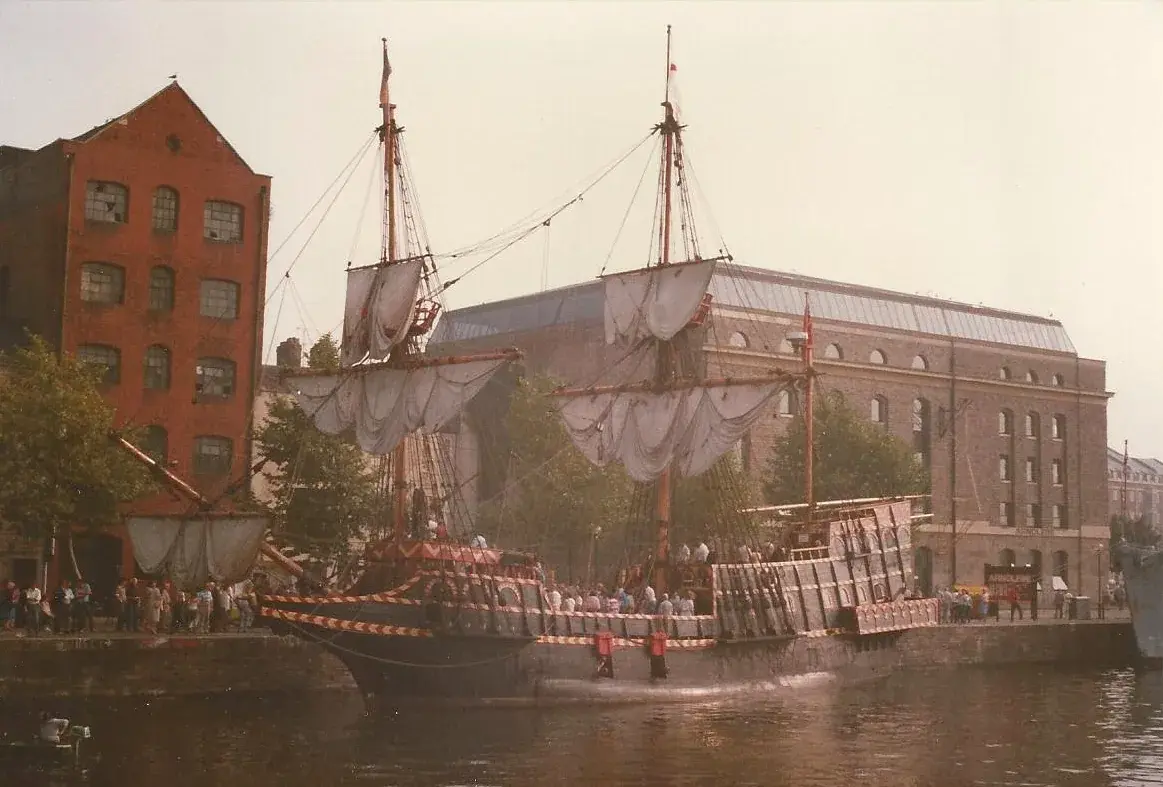
The Mayflower, chartered for Virginia, instead ran aground in New England in November 1620.
Image Credits: Hugh Llewelyn, via Wikimedia Commons (CC BY-SA 2.0)
On November 11th, 1620, the Mayflower arrived at Cape Cod. The 102 pilgrims and adventurers who survived the crossing were stranded with winter approaching, with no crops harvested. They scavenged the local Indian cornfields, found what food they could in the burial tumbs, and survived several months of hunger and cold. By March of 1621, half of them had died of exposure and malnourishment.
Samoset, Squanto and Massasoit
However, the arrival of Samoset – a local Indian who knew English – brought new and welcome news. He led the colonists to his acquaintance, Tisquantum, also known as Squanto, and to the leader of the neighboring Wampanoag tribe, Massasoit. The latter agreed to let his men stay with the colonists, teaching them the local language and helping them survive the winter.
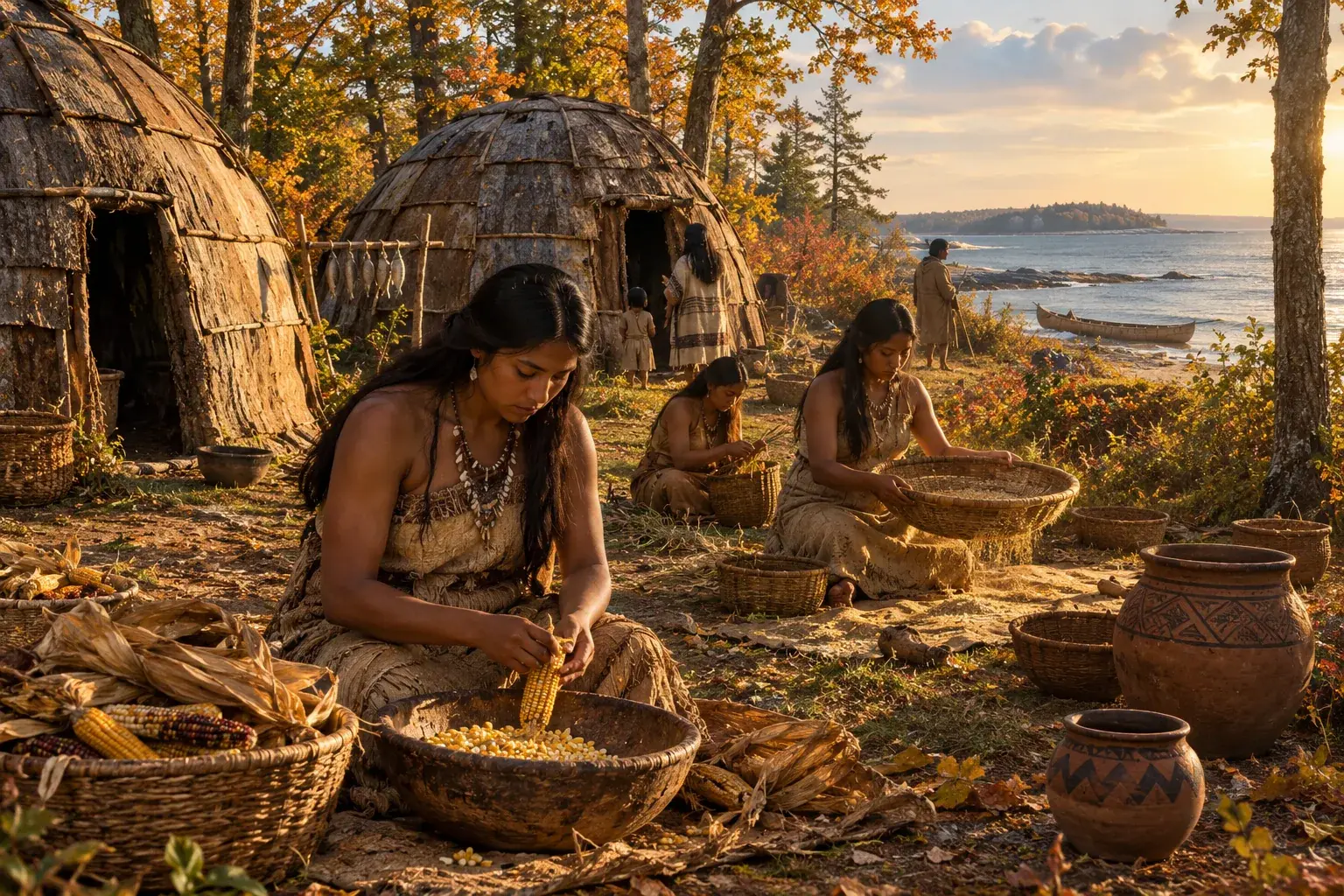
Massasoit's Wampanoag people taught the surviving colonists how to plant corn and where to fish, without which the colony would likely not have survived.
Governor Carver of the newly founded colony even signed a peace treaty with Massasoit to formalize mutual aid. At the end of the winter, and with the help of Squanto, the colonists managed to secure a good harvest of corn. Thus, by the fall of 1621, the colony was able to celebrate.
The Sources of the First Thanksgiving
The sources that describe this event are also few and far between. There are only two surviving primary accounts of the autumn 1621 gathering. Mourt's Relation was written primarily by Edward Winslow, with contributions from William Bradford, and published in 1622. It contains a fairly detailed description of the event that happened in the autumn of 1621. The second source is the more extensive Of Plymouth Plantation, also written by Bradford, which mentions the event only briefly.
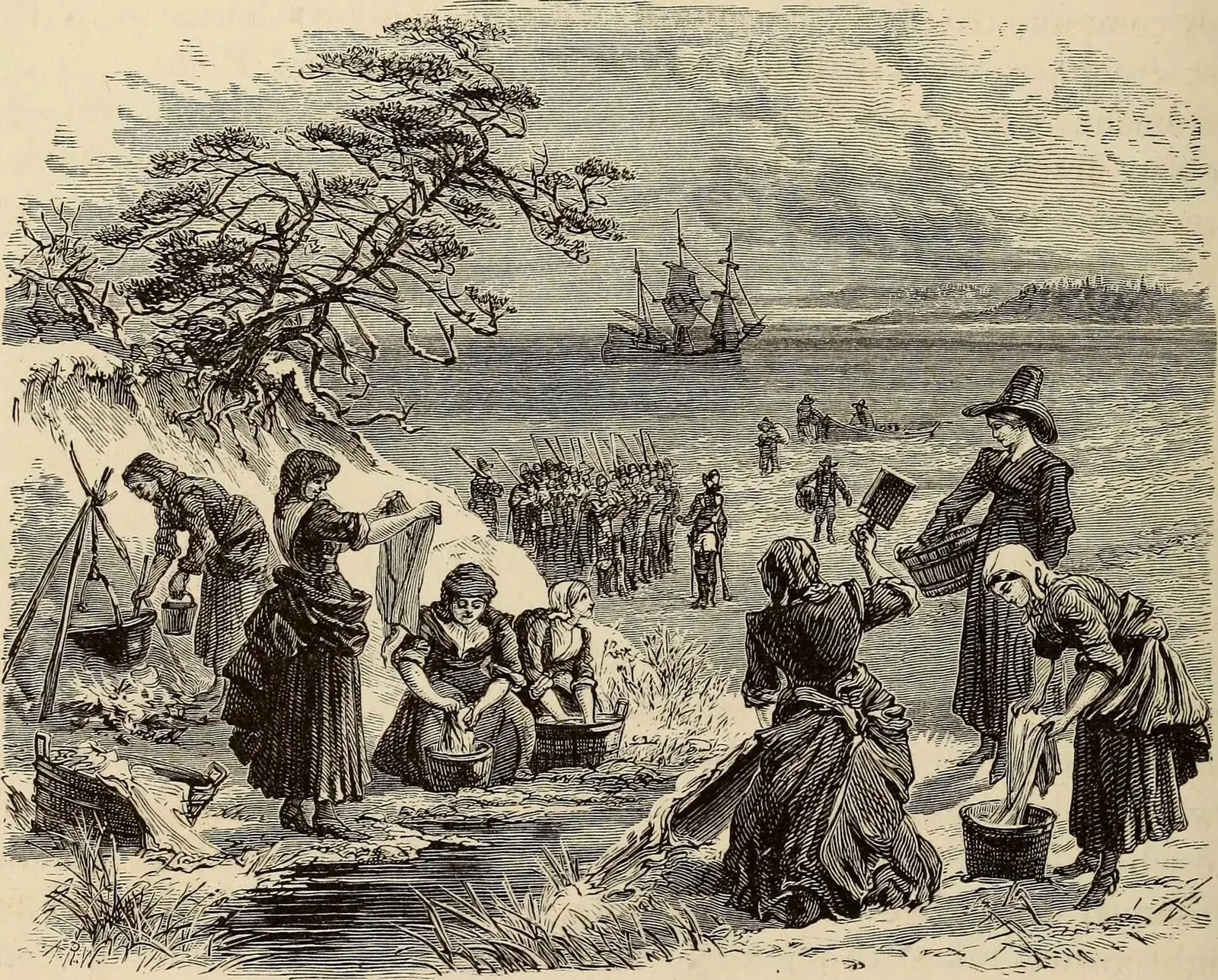
Mourt's Relation, published in London in 1622, is the more detailed of only two surviving firsthand accounts of the 1621 harvest gathering.
Image Credits: Internet Archive Book Images, via Wikimedia Commons (No restrictions)
Mourt's Relation tells of the eves of the harvest, when the Governor sent four men to collect the fowls so that the whole colony could rejoice.
They bagged enough birds to feed everyone for nearly a week. The colonists held a festival in the center of the settlement, where they displayed their weapons. The local Indians, together with Massasoit and about ninety men, arrived at the festival, being entertained and fed for three days. The Wampanoag even went hunting, finding five deer, which they presented to the Governor, Standish, and the rest of the colony.
In addition, according to Bradford, the colonists spent the summer fishing for cod and bass. In the fall, they were able to collect wild fowl, including turkey, and venison. He notes that, to the glory of God, they did not experience any famine. He also wrote that, far from being general, the scarcity was localized in cases.
Some documents mention that the Pilgrims held a day of Thanksgiving. This addition does not appear to be in the original text, having been inserted by a later editor. Mourt's Relation, which provides a detailed description of the holiday, makes no mention of the establishment of a day of Thanksgiving.
The Myths about the First Thanksgiving in Plymouth
The version of the story that has been entrenched in books and history textbooks was made in 1945 by the historian George F. Willison in his book Saints and Strangers. He reworked the original texts of Bradford and Winslow, attributing a more festive and prosperous look to the holiday. According to him, the Pilgrims prepared a meal consisting of venison, roasted ducks and geese, clams, shellfish, eels, white and Indian bread, leeks, watercress, wild plums, berries, and wine made from wild grapes. Willison admits that turkey was not mentioned, while cranberry sauce and pumpkin pie were not only absent but impossible to prepare.
Nevertheless, it does not mean that they were not there. Bradford mentions the presence of turkey, so it is safe to say that it was there. It is highly unlikely that the Pilgrims had the ingredients for pies and pastries, since they did not have access to ovens, wheat, and butter to make them. Cranberries could have been picked in the local bogs, but no one knows for sure if they were.
| Popular legend | What the sources actually say | |
|---|---|---|
| Pumpkin pie / pastries | Part of the feast | Impossible to make — no ovens, wheat, or butter |
| Cranberry sauce | A featured dish | Cranberries were locally available, but no source mentions a sauce, and sugar wasn't on hand |
| Inviting the Wampanoag | The Pilgrims invited Massasoit as honored guests | No source mentions an invitation; the two sides may have simply avoided a fight |
| Turkey | The centerpiece of the meal | Mentioned by Bradford among the wildfowl hunted, but not singled out as central |
| Attendees | A cozy Pilgrim family gathering | About 53 colonists and roughly 90 Wampanoag men — the guests likely outnumbered the hosts |
The biggest misunderstanding concerns the supposed invitation of the Indians. Mourt's Relation, as well as Winslow's Good News from New England, do not mention this. What the Pilgrims did say is that in preparation for the celebration, they fired guns “exercising their arms.” When Massasoit and ninety Indians arrived, armed as well, the two sides could hardly recognize each other.
It is possible that Massasoit turned out to be mistaken about the threat. Perhaps the Pilgrims and Indians fought for some time, and the harvest feast began right after. Remember that in March 1621, Governor Carver and Massasoit signed a mutual defense agreement. So, the Indians may have come to help the Pilgrims, whom they now considered allies.
Of course, this does not detract from the feat of the colonists, who managed to hold a three-day feast. It only makes this episode even more remarkable, demonstrating that this harmony was achieved against a background of discord and intermittent conflicts.
The View of the Wampanoag and Other Native Americans
According to Of Plymouth Plantation, there may have been a second harvest festival in 1623. After that, apparently, it was abandoned. The peace that made it possible was not eternal either – it ended with the death of Massasoit. Mourt's Relation and Good News from New England convinced many Englishmen that it was a good idea to settle in New England. Thus, between 1630 and 1640, twenty thousand new emigrants arrived in the Old Colony.
The pact between Carver and Massasoit was renewed several times, but already after the death of the Wampanoag leader in 1661, the agreements between the Indians and the settlers ceased. Native Americans were gradually displaced from their lands and forced to sell them to the English, whether they wanted to or not. The remaining part of the Wampanoag and other tribes were forced to retreat to the interior.
Later, the Pequot tribe resisted the settlements' expansion and the harassment of their lands, leading to the Pequot War of 1636-1638. After their defeat, they were massacred and sold into slavery. The Massachusetts Bay colonists declared a day of thanksgiving for their victory, but many Native Americans see this as the real beginning of the holiday. It also marks the Day of Mourning for the loss of ancestral land, language, and culture. Besides, many colonists declared days of thanksgiving both before and after the attacks on the Indian villages, especially during the time of King Philip's War of 1675-1678.
Yvonne Wakim Dennis and her colleagues write about the Native American perspective on the first Thanksgiving in the article The Truth About the First Thanksgiving: “The popular story of an idyllic harvest feast ignores that the event occurred only once, that the Pilgrims stole Indian corn stores and tombs, that Indians brought most of the food, that the Pilgrims considered the Indians heathens, and that the Pilgrims did not actually call it Thanksgiving. It also fails to note that most Native nations had their own traditions of holding thanksgiving celebrations to honor the Creator before encountering the English.” Colonial writers and early historians did not want to dwell on the events of the Pilgrims and the Indians, whose memories were already fading away. Perhaps this explains why the Pilgrims' observations were published later than the documents themselves, and the Indians were completely silent.
From the Declaration in 1777 to Lincoln: Thanksgiving Becomes a National Holiday
The first day of Thanksgiving was proclaimed by the Continental Congress in 1777 – and it had little to do with the Pilgrims. It was celebrated on Thursday, December 18th, as a day of “solemn humiliation, fasting, prayer, and confession before God.” It was similar to the Day of Fasting and Prayer that the Puritans observed every year.
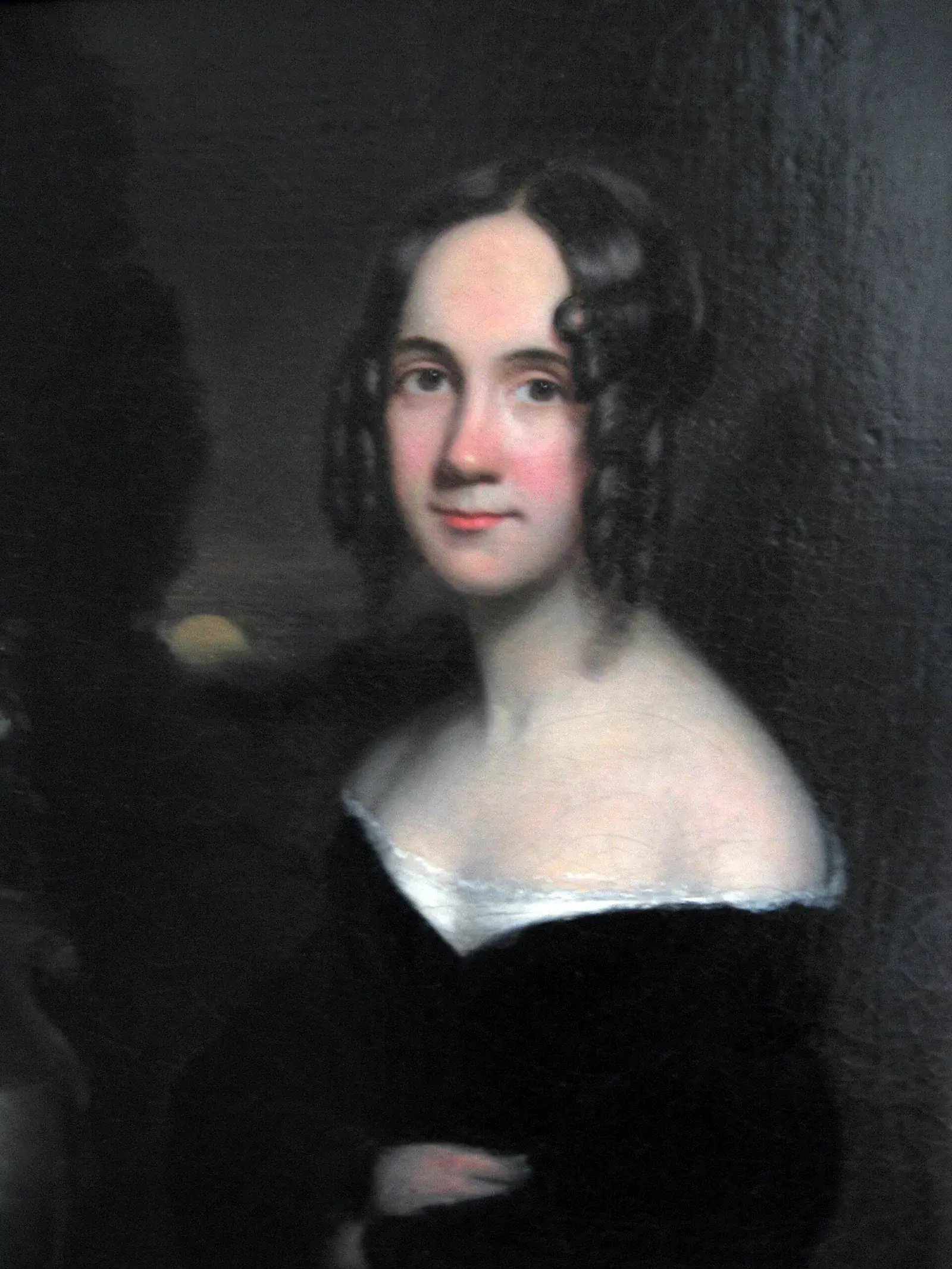
Sarah Josepha Hale spent roughly seventeen years lobbying US presidents before Lincoln finally agreed to her proposal for a fixed national Thanksgiving.
Image Credits: painted by James Reid Lambdin (1807-1889), via Wikimedia Commons (Public domain)
By the middle of the nineteenth century, the myth of the Pilgrims and the first Thanksgiving had entered the public consciousness. The reason for this was the publicist Sarah Josepha Hale, who probably had more influence on the fate of Thanksgiving than anyone else. After roughly seventeen years of writing letters to sitting presidents, from Zachary Taylor onward, Hale was able to convince Lincoln to declare the holiday. Her influence can be seen not only in Thanksgiving: Hale actively promoted the abolition of slavery and the improvement of women's rights, popularized cats, and brought the Christmas tree to New England.
Perhaps she would have succeeded earlier if she had not been so fixated on the Pilgrims. It was her articles published in the Godey's Lady's Book that first pointed out the significance of the first harvest feast. However, it seems that, for the most part, no one was interested in it at the time. Thus, although Hale's Thanksgiving Day proclamations were widely popular, they did not immediately gain official recognition. In 1863, President Lincoln followed her lead and called for a day of thanksgiving and prayer to be held on the last Thursday of November. In fact, it was not a national holiday for most Americans, especially for the Southern states.
Congress made Thanksgiving one of the country's first official federal holidays in 1870, though the date still shifted from president to president each year. It was not until 1941, when Congress passed a joint resolution fixing the observance to the fourth Thursday of November, that the modern, permanently dated holiday was finally settled – and even then, only after President Franklin D. Roosevelt's attempt to move the date a week earlier for retailers' benefit caused several years of public confusion.