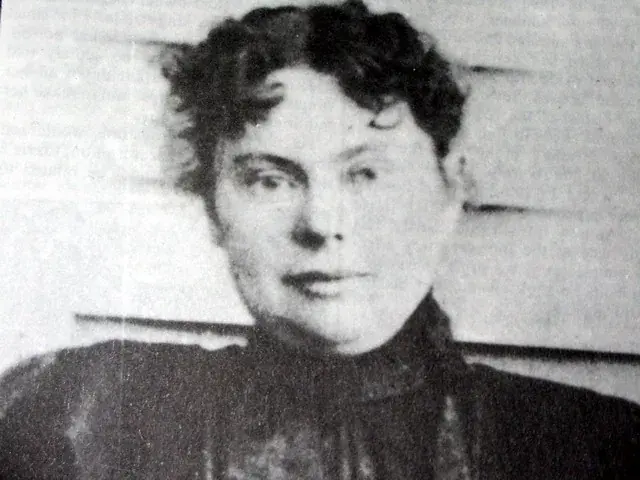
Elizabeth Báthory is often referred to as history's most prolific female murderer, and the detail that she bathed in the blood of virgins to preserve her youth is not found in her case records. It first appears in print in 1729, more than a century after her death, in the history by a Jesuit scholar.
Removing that leaves behind a genuinely difficult case. Báthory and four servants were accused of torturing and killing girls and women between roughly 1590 and 1610, and over three hundred witness statements were gathered during investigations. The servants were tried, convicted and, with one exception, executed; Báthory was never formally tried at all, but spent her last three and a half years confined at Csejte Castle, dying in 1614.
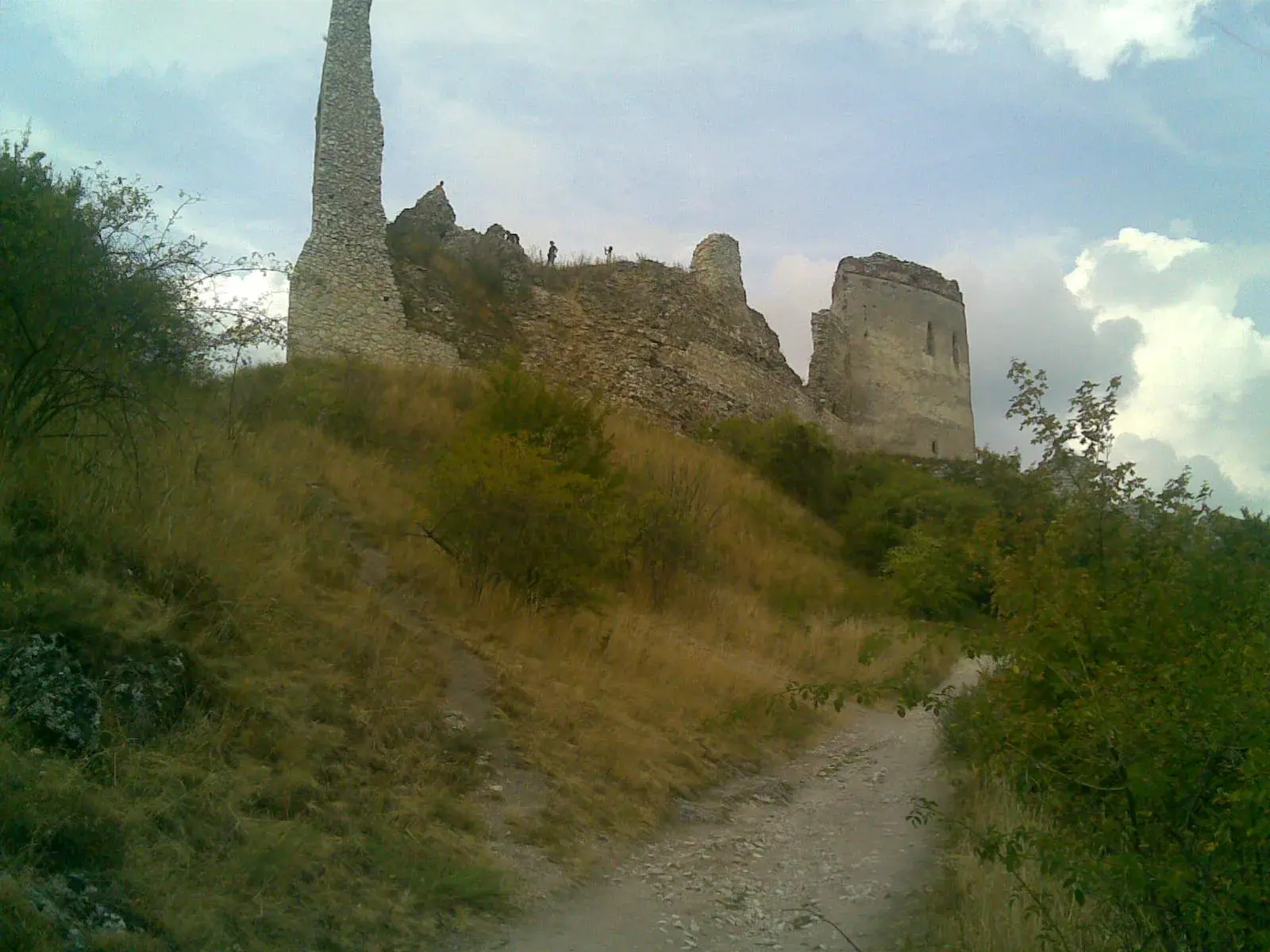
Csejte Castle, now Čachtice in Slovakia, was Ferenc Nádasdy's wedding gift to Elizabeth Báthory, the site of her arrest in 1610 and the place where she was confined until her death.
Image Credits: I would appreciate being notified if you use my work outside Wikimedia. Do not copy this image illegally by ignoring the, via Wikimedia Commons (CC BY-SA 3.0)
The house of Báthory and Elizabeth's early life
Elizabeth was born in 1560 on a family estate at Nyírbátor in Royal Hungary and raised at Ecsed Castle, and her lineage is the single most important fact about her.
Her father, Baron George VI Báthory of the Ecsed branch, was the brother of Andrew Bonaventura Báthory, a ruling Voivode of Transylvania. Her paternal great-grandparents included Anna Radziwiłł of the Polish-Lithuanian Radziwiłł family and Konrad the Red, Duke of Masovia and Warsaw, of the Piast dynasty. Her mother, Baroness Anna Báthory of Somlyó, was the daughter of a Palatine of Hungary and thus Elizabeth was the niece of Stephen Báthory, Prince of Transylvania and later King of Poland and Grand Duke of Lithuania. Her older brother Stephen served as Judge Royal of Hungary.
She was raised a Calvinist and learned Latin, German, Hungarian and Greek. This religious detail will matter later, because the Habsburgs were Catholic and the man who eventually investigated her was Lutheran.
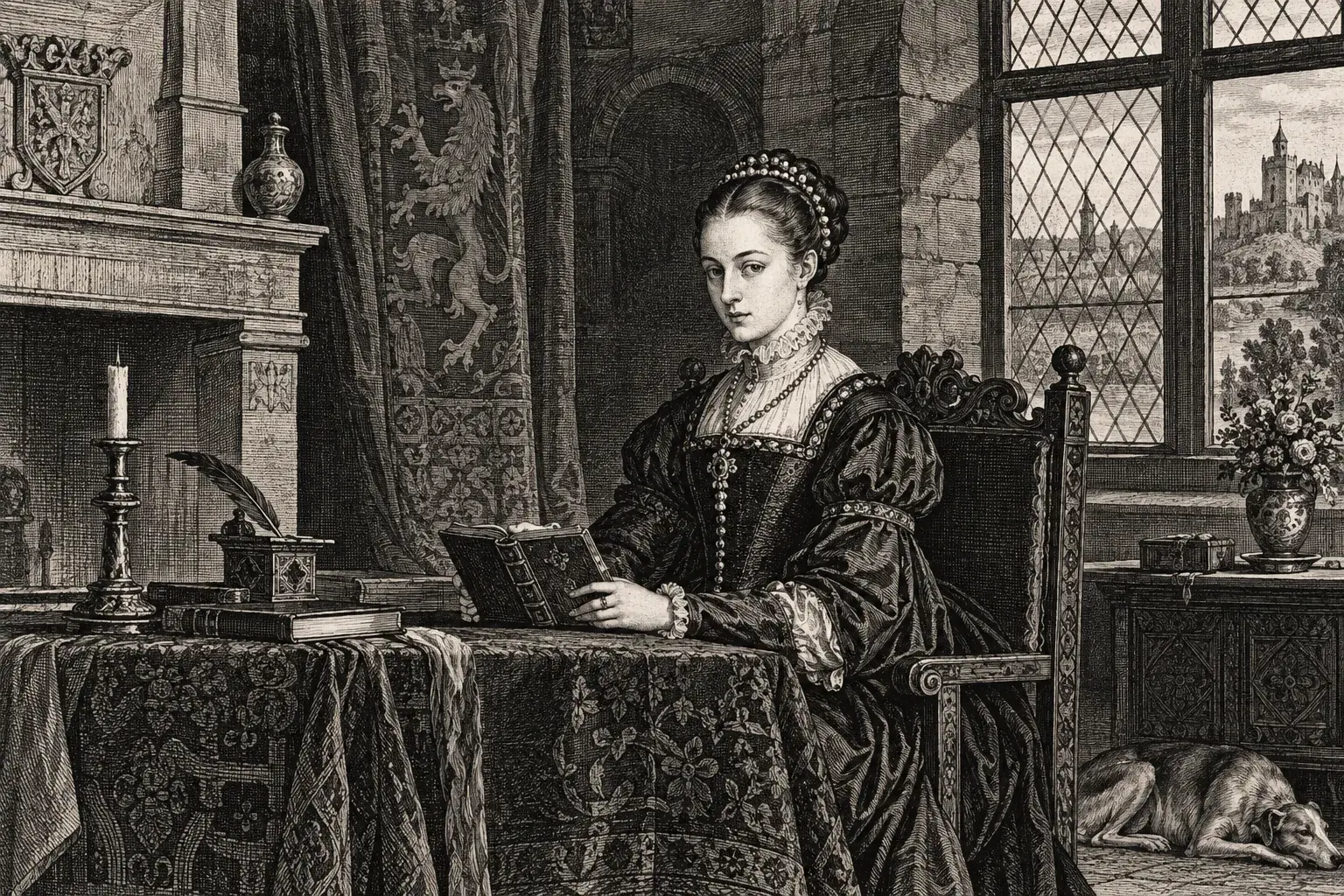
Born in 1560 into the powerful House of Báthory, Elizabeth was raised a Calvinist and educated in four languages.
As a child she suffered multiple seizures, possibly epileptic. Contemporary treatment for what was then called falling sickness included rubbing a non-sufferer's blood on the patient's lips, or administering a mixture of blood and powdered skull as an episode ended.
Two claims about her youth circulate widely, and should be treated carefully. One holds that her family deliberately trained her to be cruel, and the sourcing for that is thin. The other is that at thirteen, before her marriage, she gave birth to a child fathered by a peasant boy, who was handed to a woman trusted by the family and taken to Wallachia. Evidence for the pregnancy surfaced long after her death via peasant rumour and its validity is disputed.
Marriage to Ferenc Nádasdy and the Csejte estates
In 1573 Elizabeth was engaged to Count Ferenc Nádasdy in a straightforward political arrangement between aristocratic houses, and they married on 8 May 1575 at Varannó. The marriage combined land holdings across Transylvania and the Kingdom of Hungary.
Nádasdy's wedding gift was his household at the Castle of Csejte in the Little Carpathians, along with the Csejte country house and seventeen adjacent villages. The castle itself belonged to King Maximilian II at the time, with Ferenc's mother installed as official steward in 1569; Nádasdy only bought it outright from Rudolf II in 1602.
In 1578, three years into the marriage, Nádasdy became chief commander of Hungarian troops against the Ottomans, and from then on he was largely absent. Elizabeth ran the business affairs and the estates. That role carried real public responsibility, including providing medical care to the Hungarian and Slovak people during the Long War of 1593 to 1606, and defending her husband's estates, which sat on the route to Vienna. The threat was not theoretical: Csejte village had already been plundered by the Ottomans and Sárvár, near the border with Ottoman-occupied Hungary, was more exposed still.
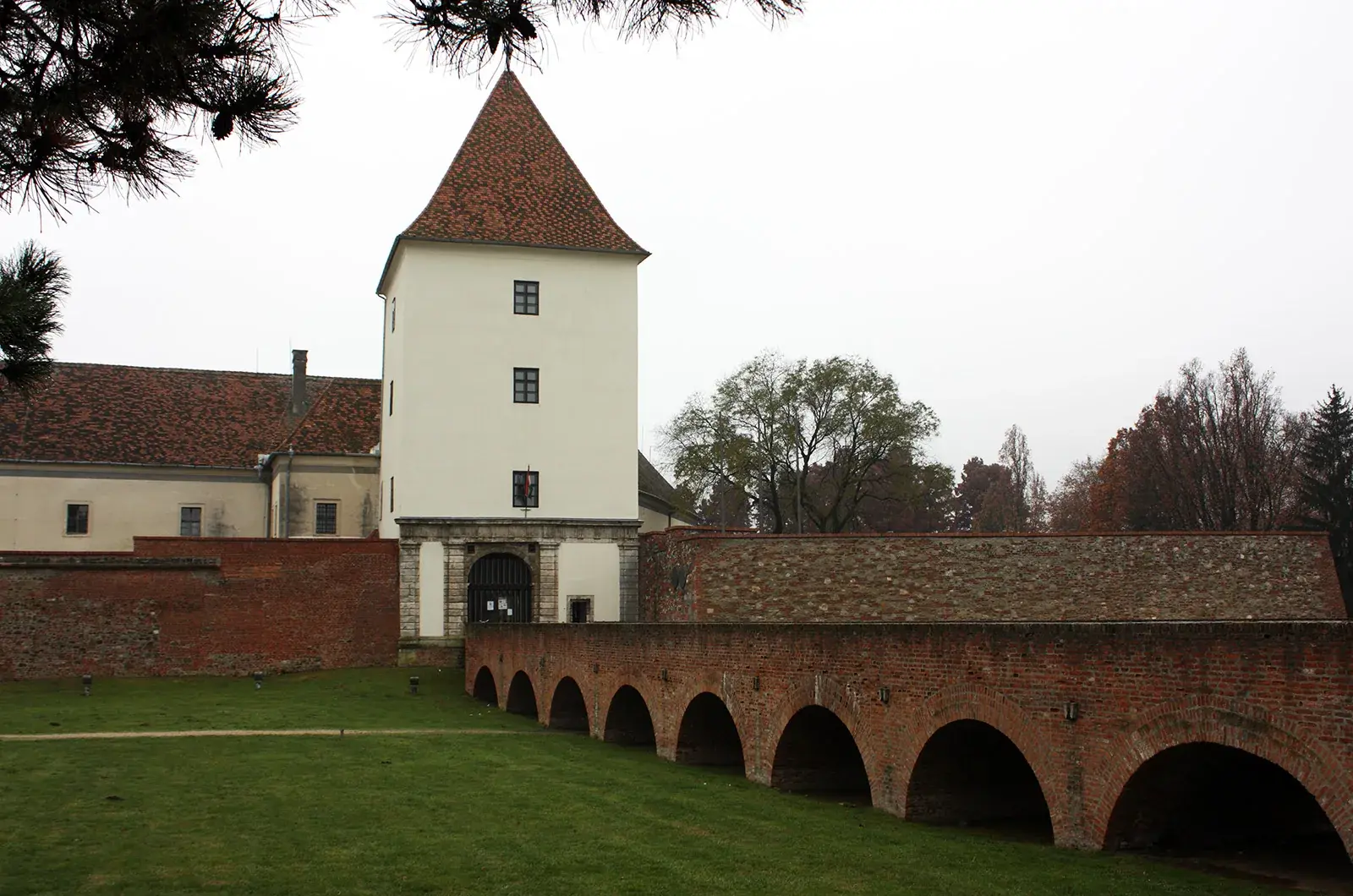
After the wedding the couple lived at the Nádasdy castle in Sárvár, which lay close to the border with Ottoman-occupied Hungary.
Image Credits: János Tamás, via Wikimedia Commons (CC BY 2.0)
The obligation to provide medical care becomes important when weighing the evidence later, as landowners were responsible for treating tenants, and female landowners specifically for female patients. Sick and injured women were routinely brought to her castles.
The couple had several children, including Anna, born 1585, who married Nikola VI Zrinski; Orsolya; Katalin; András, who died in childhood; and Pál, born 1598, whose own son Franz III Nádasdy later helped lead the Magnate conspiracy against Emperor Leopold I.
Ferenc Nádasdy died on 4 January 1604, aged forty-eight, after an illness that seems to have begun in 1601 with debilitating leg pain and left him permanently disabled by 1603. Before dying he entrusted his widow and heirs to György Thurzó — the man who would go on to lead the investigation into her crimes.
The complaints of István Magyari and Thurzó's investigation
Rumours spread through the kingdom between 1602 and 1604, and the Lutheran minister István Magyari made complaints against Báthory both publicly and at the court in Vienna.
In 1610, King Matthias II assigned György Thurzó, the devoutly Lutheran Palatine of Hungary, to investigate. Thurzó ordered two notaries, András Keresztúry and Mózes Cziráky, to gather evidence from March 1610. There is a surviving instruction to Cziráky to question members of the ecclesiastical state, the nobility and honourable people of all classes and both sexes across five counties, and to explore the whole pure truth.
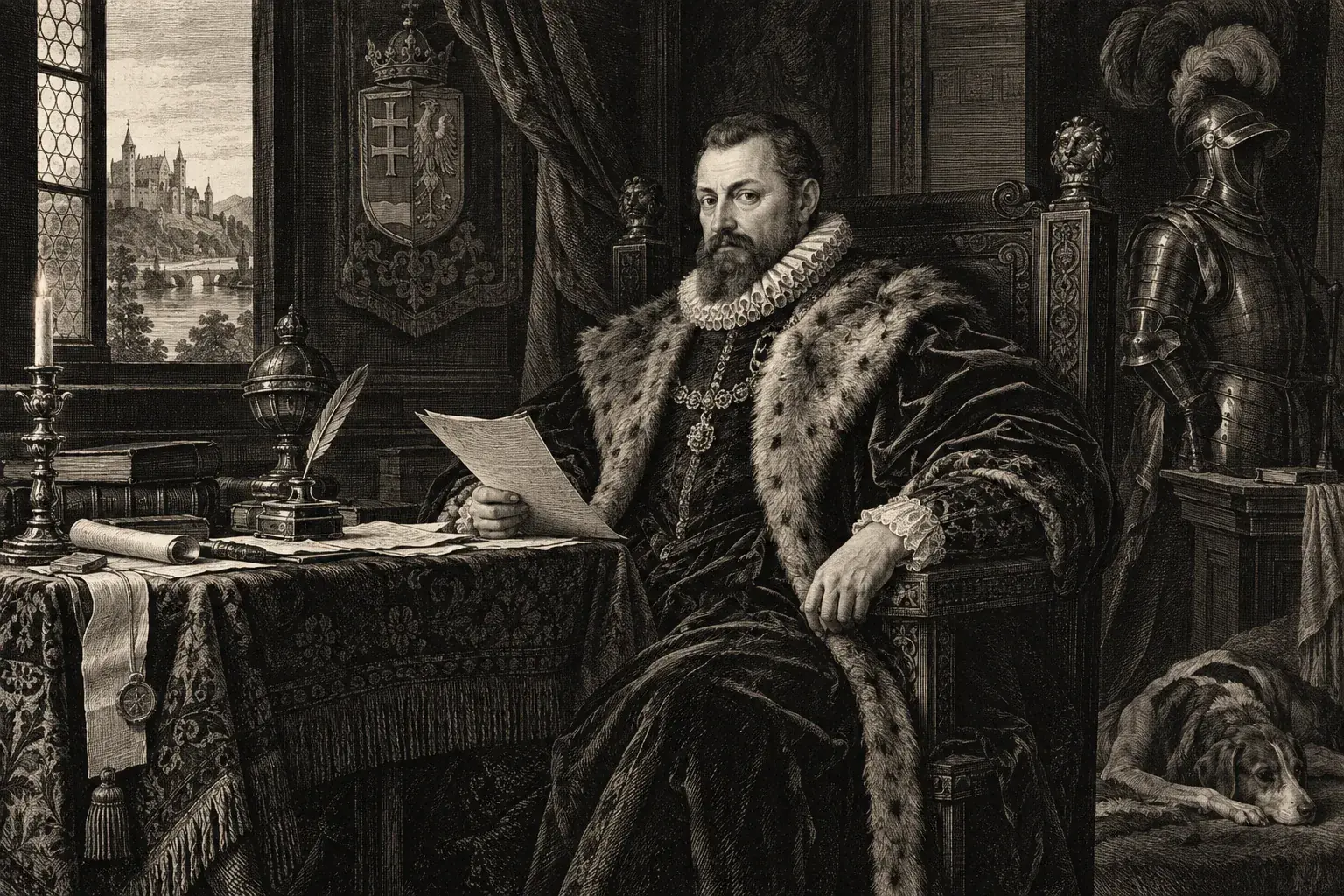
Thurzó, a devout Lutheran and Palatine of Hungary, was assigned by King Matthias II to investigate the accusations against Báthory.
By October 1610 the notaries had fifty-two witness statements. By 1611 the number exceeded three hundred.
What the witnesses described
The testimony breaks into two categories, and the distinction is vital.
The first is the confessions of Báthory's four accused servants — Dorottya Szentés, Ilona Jó, Katarína Benická and János Újváry, known as Ficzkó. They were extracted under torture, which is reason enough to treat them with heavy scepticism.
The second category is different, and it is the one that makes the frame-up argument difficult to sustain cleanly. A number of witnesses gave first-hand accounts without being tortured.
Benedek Deseő headed the lord's staff at Csejte and was responsible for castle operations, meaning he was around Báthory constantly. He described her tormenting a shoemaker's daughter with a knife and a burning candle until the girl died, and testified that she would withhold food and water from the victims until they became desperately thirsty. Gergely Paztory, a court judge at Sárvár, described a married woman from Bratislava named Modl whom Báthory forced to dress and behave as a young girl; when Modl protested that she had a husband and child, according to Jakab Szivassy's testimony, Báthory had her flesh cut out and tormented her until she died.
Two accounts concern relatives trying to retrieve girls already in Báthory's household, and these are the most affecting material in the record. Martinus Chanady of Beckov testified that he accompanied Janós Belanczky to recover Belanczky's sister; Báthory refused to release her, and when Janós insisted on at least seeing her, she appeared after nearly an hour so weakened she could barely hold out her hands. She died soon after. Janós Deseő, castellan of Castle Keresztúr, intercepted Báthory's travelling party to check on his niece Kata Berényi and found her crying, dejected and freezing. He begged for her release and reported the reply — that Báthory would not give her back, because the girl had already escaped three times, and all the more she would kill her. Kata never came back.
Lady Barbara Bixi, an attendant who had travelled with Báthory for four months, described beatings, cuts, stabbing with needles and stinging nettles pushed into open wounds, and said she did not know the girls' names because they were generally seized from anywhere and brought in. Ficzkó corroborated the practice of luring or outright kidnapping girls and delivering them to the various castles.
The catalog of alleged methods is consistent in outline across the testimony: beatings with cudgels, needles driven into the hands and lips, flesh cut from the body and burned, prolonged starvation in the castle dungeons, scorching with hot irons, and girls left naked in winter cold and doused with water until they froze.
The gynaeceum and the daughters of the lesser gentry
For years Báthory's alleged victims were peasants, whose disappearances were unlikely to prompt an investigation. What changed everything was that she began taking the daughters of the lesser gentry.
In the winter of 1609 she opened a gynaeceum, essentially a finishing school for highborn young women. It solved two problems at once; it brought in funding, and it provided a new source of girls after the peasant families in the surrounding villages stopped letting their daughters work at the castles, as her reputation had spread. Noble families, on the other hand, were eager to send their daughters to learn courtly etiquette and gain a connection to a high-ranking countess.
Then the daughters stopped coming home, and the parents went to the King.
Anna Zelesthey, a noblewoman of fifty-four, testified that her daughter Zsuzska was accepted at Báthory's court and was tortured and beaten to death at the gynaeceum. Dorottya Jezernyczky testified the same about her daughter Erzsébet. Anna Köszeghy, who made numerous trips there, described seeing girls with broken fingers and scorched hands, who told her Báthory had burned them with red-hot irons. Michael Horvath, castellan of Csejte, said he knew of at least seven girls who had died at the gynaeceum and been buried in a small garden behind the courtyard — not deeply enough, since the dogs dug up the corpses and were seen carrying body parts.
According to the testimony, Báthory's explanation to the pressing nobles was that one girl in the gynaeceum had gone mad out of greed for jewellery, killed all the other attendants and then killed herself.
Here the complaints from the Hungarian nobles flooded the courts of the King and the Palatine, and the King could no longer ignore them.
The arrest at Csejte on 29 December 1610
On 13 December 1610, Nikola VI Zrinski confirmed an agreement with Thurzó covering Báthory's imprisonment and the distribution of her estate — which tells you the disposal of her property was settled before she was taken.
On 29 December, Thurzó went to Csejte and arrested her along with the four servants. According to his letter to his wife, the unannounced visit found one dead girl and another living victim in the castle, though there is no record of anyone asking her what had happened. She recovered and never testified.
The popular image has Thurzó catching Báthory red-handed mid-torture. She was having dinner. He did initially declare to her guests and the villagers that he had caught her in the act, but she was arrested and detained before any victims were discovered or presented, and the image of Thurzó finding her covered in blood is most likely an embellishment from fictionalized accounts.
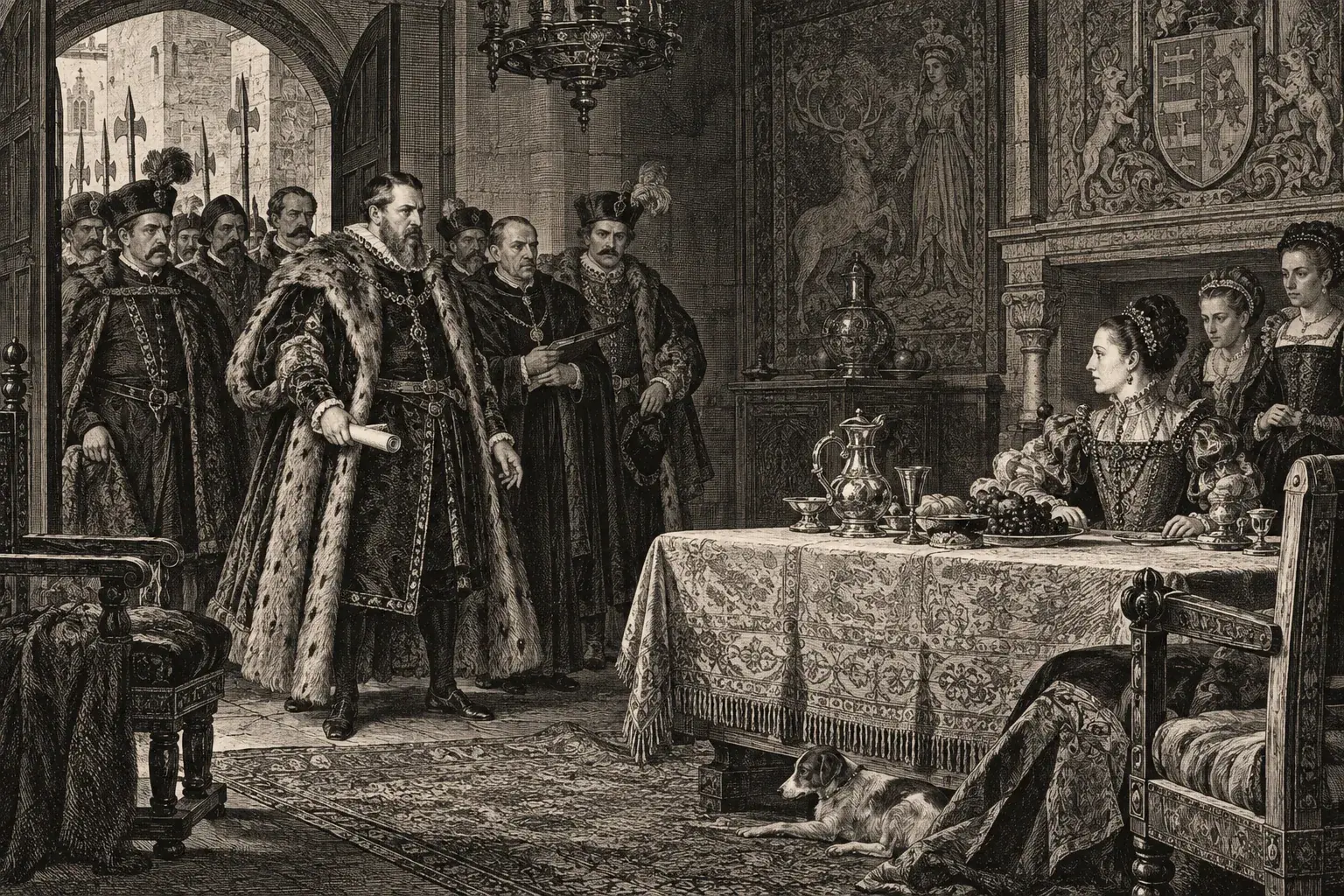
Popular retellings have Thurzó catching Báthory mid-torture, but she was arrested while having dinner.
One exchange from the night of the raid deserves attention because it wasn't extracted under torture. After Báthory attempted to blame her accomplices for the bodies, Pastor Barosius asked why she hadn't stopped them. Her answer, as recorded was that she did it "Because even I myself was afraid of them".
Thurzó then debated how to proceed with her son Pál and two sons-in-law, Zrinski and György Drugeth. The family's priority was to avoid the seizure of her property by the crown following a public scandal. The original plan was to send her to a nunnery; as accounts of her actions spread, they settled on strict house arrest instead.
The trials of January 1611 and the servants' executions
Two trials followed, on 2 and 7 January 1611. Seventeen witnesses testified at the first, including the four servant-suspects, who had been tortured beforehand. They confessed and said they had acted on Báthory's orders.
The executions were brutal even by the standards of the period. Ilona Jó and Dorottya Szentes had their fingers torn out with red-hot pincers and were burned alive. János Újváry was beheaded — a less painful death granted on account of his youth and the idea that he bore less responsibility — and his body burned on the same pyre. Another servant, Erzsi Majorova, escaped initially and was burned alive after being caught. Katarína Benická received a life sentence after evidence showed the others had abused her.
Báthory herself was never put on trial. That absence is central to every subsequent argument about the case.
The argument that Báthory was framed
Since the 1980s, scholars have begun to seriously question the accusations, and authors including László Nagy and Irma Szádeczky-Kardoss have argued she was the victim of a politically motivated frame-up.
The political context supports the suspicion. Hungary is caught in overlapping religious and political conflicts — wars with the Ottomans, the spread of Protestantism and Habsburg efforts at centralization at the expense of the noble houses. Báthory was a Calvinist; the Habsburgs were Catholic. Her nephew Prince Gábor Báthory ruled Transylvania, a centre of the Ottoman-backed movement for Hungarian independence from Habsburg rule and he wanted the Hungarian throne, making him a direct threat to King Matthias. Elizabeth's vast holdings included fortresses that could have supported a Transylvanian army moving against Matthias.
Then there is the money. Matthias, who ordered the investigation, owed Báthory a large financial debt — which was cancelled when she was arrested. He also believed that if she received the death penalty her property would pass to the Crown and his debts would clear. By January 1611 he was visibly angry that the death penalty was not being discussed, and wrote to Thurzó on the 14th demanding he summon her to Csejte and see judgment carried out in fulfilment of the law.
Thurzó himself had his own motives. An ally of Matthias, he had been involved in an assassination attempt on Prince Gábor, and he had ambitions for his own son to become Prince of Transylvania — in competition with Báthory's son.
Szádeczky-Kardoss also attacks the physical evidence directly, arguing that Thurzó exaggerated what he found and misrepresented dead and wounded patients as victims. Given that landowners were obliged to provide medical care and female landowners specifically treated female patients, a castle containing sick and injured women is not by itself evidence of anything.
Two complications work against the cleanest version of the frame-up theory. The investigation was sparked by persistent complaints from a Lutheran minister, and Thurzó was himself Lutheran, which sits awkwardly with a Catholic-Habsburg conspiracy against a Protestant family — though Calvinist-Lutheran tension was real enough to keep religion in play. The untortured first-hand testimony of people like Deseő, Szivassy, Paztory and Barbara Bixi have to be explained rather than waved off.
The correspondence points somewhere more specific than a simple frame-up. Báthory's son-in-law Zrinski wrote to thank Thurzó on 12 February 1611, saying that in choosing a penalty he had picked the lesser of two evils and that his judgment had preserved the family's honour and shielded them from too great a shame — adding that when the family learned the King's will included punishment by horrible judicial torture, they felt they must die of shame. Her son Pál wrote on 23 February arguing that a court summons was now inappropriate, that his mother's present punishment was worse than death, and that there was no need to fear for the property because she had transferred it to the three children before her arrest.
Taken together, these letters describe a negotiated outcome. Thurzó was working to keep the crimes out of the public eye and the Báthory name intact, the family was working to keep the estates, and the King was pushing for a trial that would have delivered both a spectacle and his cancelled debt. Quiet confinement served everyone except Matthias — and, it's worth saying, except anyone who wanted the evidence tested in open court.
Counting the victims
The numbers attached to this case range from eighty to six hundred and fifty, and none of them are secure.
The charge was eighty counts of murder. The highest figure cited at the accomplices' trial was 650, but that comes from a servant named Susannah claiming that Jakab Szilvássy had seen the number in one of Báthory's private books. The book was never produced and Szilvássy never mentioned it in his own testimony. King Matthias, in his January 1611 letter wrote of more than three hundred innocent virgins and women.
Several factors make a real count impossible. The accomplices gave different figures and were tortured into their confessions. Not every body would have been found. Distinguishing girls who died directly at Báthory's hands from those who died of her tortures or of unrelated causes is beyond the evidence.
Two castellans at Sárvár offer the most concrete testimony. Benedek Bicsérdy stated in October 1610 that he knew of at least 175 girls and women who had died there, while adding that he knew nothing about how, since he was not permitted into the Lady's house unless called. Baltazar Poby testified that he had heard the Sárvár figure was over 200, possibly approaching 300. Both figures cover one castle only, excluding Keresztúr and Csejte.
Confinement, Death, and the Blood Bath Legend
Thurzó wrote to Matthias on 25 January 1611 confirming that Báthory was captured and confined with her for the rest of her days at Csejte, and she is to be sealed in a bricked room, but the documents of the priests' visit in July 1614 show that she had the freedom to roam the castle at will. She had written a will in September 1610 that gave her possession to her children, and another arrangement in the last month of that year for the estate division.
On the evening of 20 August 1614 she complained to her bodyguard of her cold hands, and he told her to leave and lay down that it was nothing. She was found dead the next morning, aged fifty-four, and she was buried in the church at Csejte on 25 November 1614, but some say that it was the villagers that had such upset with her in their cemetery that her corpse was taken away to the family crypt at Ecsed, the place of her burial is unknown today.
As for the blood baths, what made her famous and almost everyone believes, the time frame is crucial. The legend came about first print in 1729, László Turóczi's Tragica Historia, the first written account of the case, 115 years after her death, when the witness accounts, which had come about in 1765, finally got published in 1817, with no mention of bathing in blood at all, and John Paget's 1850 Hungary and Transylvania provides an origin story to the blood-bathing that is essentially a fictionalized recitation of the local oral history.
Sadistic pleasure seems a much more likely motive than the more common cosmetic vampirism, which is both a more mundane and a far worse sort of crime. It has been credited to have inspired Bram Stoker's Dracula, but there is no direct evidence in Stoker's own notes.
What we are left with is a case that neither side can close. The untortured testimony is enough that dismissing the crimes altogether would require one to explain away a lot of people with no real motive for lying. The political machinery surrounding the arrest is pretty blatant that you can ignore the verdict if you treat it as sound. Báthory was never tried, so the evidence was never tested, which is exactly what everyone except the King wanted.