Did modern humans evolve revulsion toward near-human faces to survive encounters with rival hominin species? We evaluate the hard fossil, genetic, and neurological evidence behind the uncanny valley—separating survival science from internet folklore.
The uncanny valley is the unpleasant feeling you get when faced with a near-human face. The thought of a realistic robot, a lifelike wax figure or even a digital mask can fill you with discomfort - and you may not even be consciously aware of why. Why does this disquiet manifest itself?
Some people have speculated that the uncanny valley is a leftover evolutionary trait based on humans' past encounters with various, threatening predators. But just as we can't be absolutely sure that the human fear of snakes is an evolutionary leftover from when primates shared the Earth with actual cobras, we can't be sure if the uncanny valley is the result of humans encountering other hominins and facing a specific set of decisions.
What Is the Uncanny Valley?
This concept is named by Japanese roboticist Masahiro Mori, who wrote a paper about the relationship between robots and humans in 1970. Basically, when we see a robot that looks more and more human, we feel progressively more comfortable around it - up to a point. At the point where this robot appears almost but not exactly human, we feel the most discomfort, unease or even revulsion. Then, as this robot becomes indistinguishable from a human, our level of discomfort decreases once more.
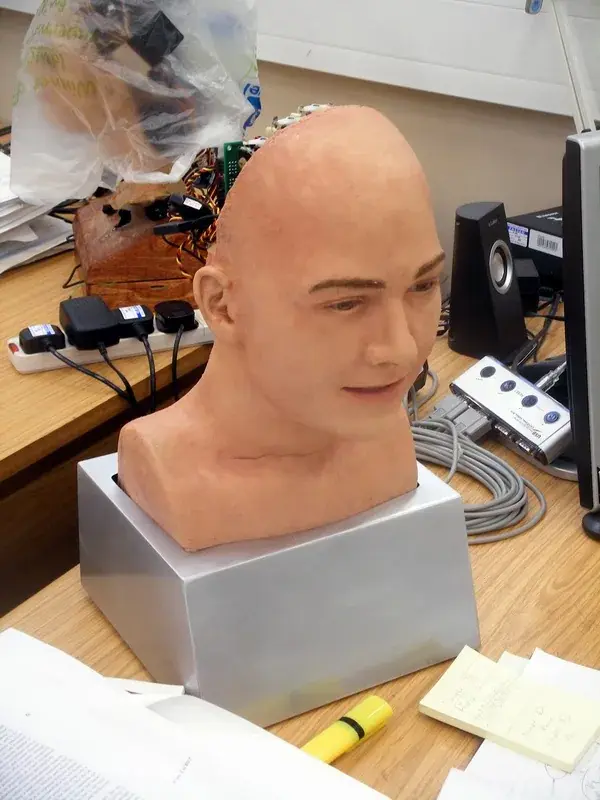
As robots and digital humans approach, but don't quite reach, a fully convincing human likeness, most people report a spike in discomfort or unease, the dip at the bottom of Masahiro Mori's uncanny valley curve.
Image Credits: Anders Sandberg from Oxford, UK, via Wikimedia Commons (CC BY 2.0)
A graph of this trend looks like a cursive "V," hence the name "uncanny valley." People can also experience the uncanny valley around other seemingly human but unhuman objects, such as lifelike wax museum figures, certain prosthetic limbs, dolls or even computer-animated faces (the results of some of these studies are controversial, inconclusive or both). Humans are not alone in the animal kingdom in being able to experience the uncanny valley - as discussed in the following section, some studies show that monkeys experience a similar, primate-specific version.
Is the Uncanny Valley Unique to Humans?
According to research, yes. In 2009, Princeton University scientists Shawn Steckenfinger and Asif Ghazanfar presented monkeys with images of real monkey faces, obviously artificial synthesized monkey faces and realistic, but not perfect, synthetic faces and measured their reactions. The monkeys reacted more negatively to the realistic but not perfect synthetic faces than all other types of faces, demonstrating what the researchers call an "uncanny valley" effect in primates. Researchers believe that this indicates some kind of deeper evolutionary basis for the effect that is not only specific to humans.
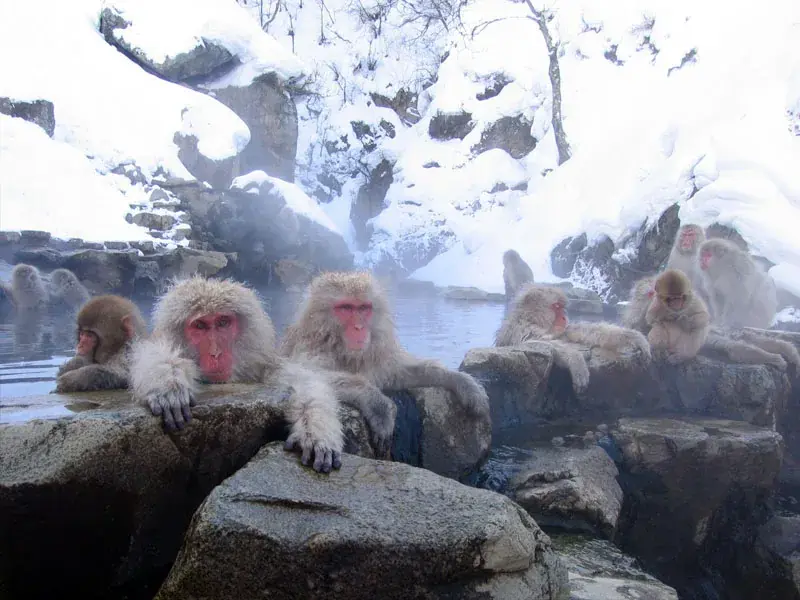
When Princeton researchers showed macaques realistic but imperfect synthetic monkey faces, the animals reacted more negatively to them than to obviously fake or fully real faces, an uncanny valley effect in a non-human primate.
Image Credits: Yosemite, via Wikimedia Commons (CC BY-SA 3.0)
Are We Hardwired to Spot Certain Dangers?
Some primates have evolved to react instinctively to some dangers. One well-documented example is snakes - primates can spot them almost instantly, and some researchers believe that a fear of snakes is actually encoded into the primate brain. Another example is the uncanny valley itself - a somewhat realistic face that appears almost, but not exactly, human can trigger some primal unease or fear in us. Realistic, but abnormal, eyes or strange movements could be warning signs of some sort of danger. Our primate brains are incredibly good at analyzing faces for these cues.
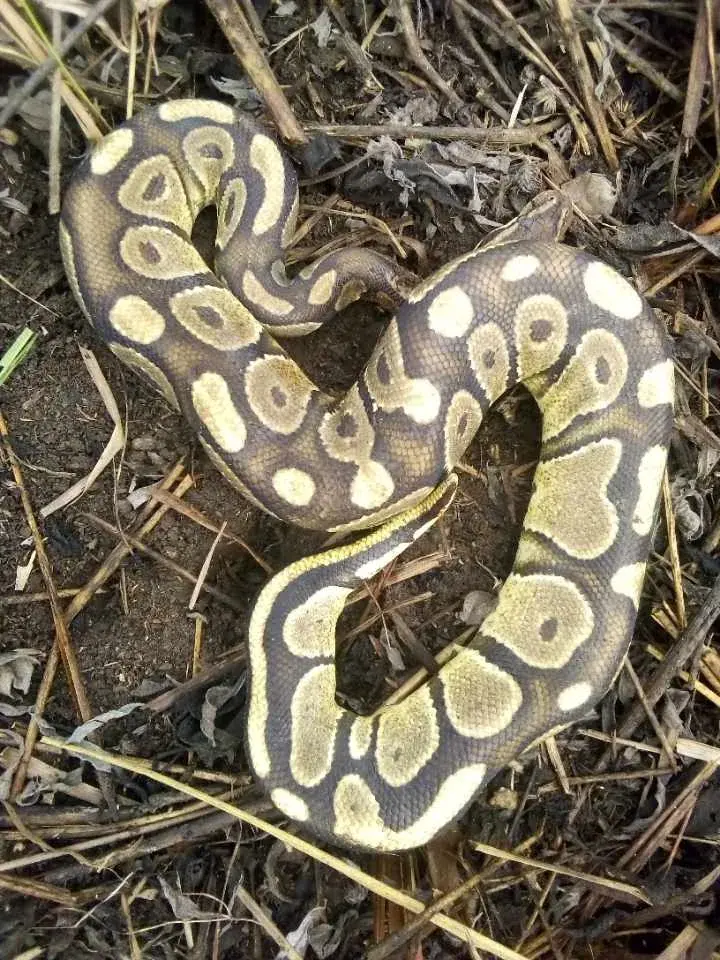
Primates, including humans, are unusually fast at spotting snakes, a response many researchers believe is hardwired into the brain rather than learned, similar to how the uncanny valley may tap into an old threat-detection system.
Image Credits: Oliversamson1, via Wikimedia Commons (CC0)
The fact that the uncanny valley could be triggered by some primal, reptilian part of the brain does not mean that it definitely was caused by that part of the brain. But it gives us an idea as to where that unease we feel in the presence of almost-human faces might come from.
Humans Evolved Alongside Other Humans
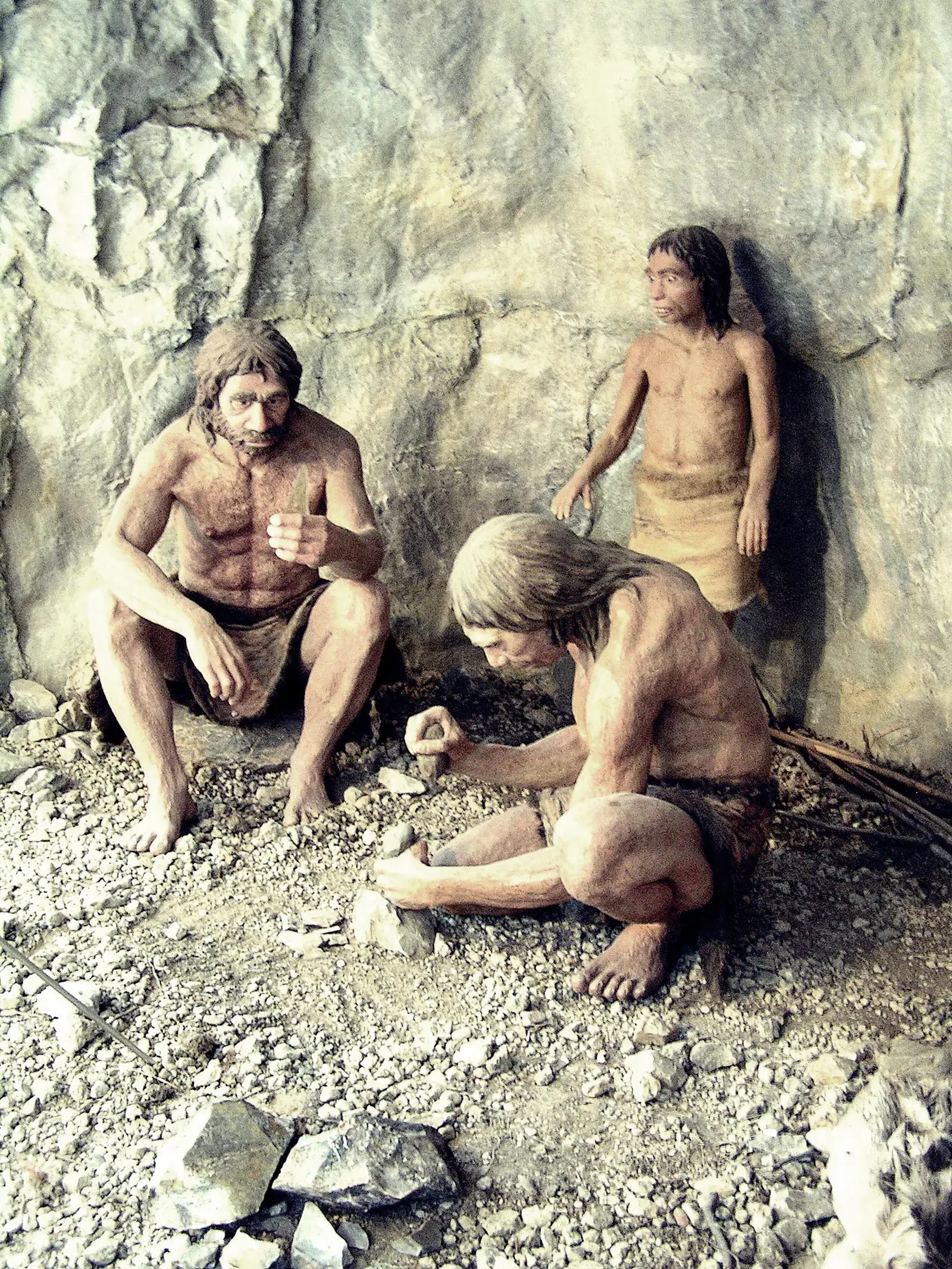
Humans are not the only primates on planet Earth, and for a long time, we were not the only hominin, either. Roughly two million years ago, several different hominin species, including early Homo, Paranthropus and (in some regions) late Australopithecus, inhabited Africa. Earlier forms of Homo (such as Homo ergaster) had migrated out of Africa a long time ago, and modern humans were in coexistence with Neanderthals in Europe and western Asia, and with Denisovans in Asia. In 2025, researchers linked the Harbin skull found in China to the Denisovan hominin through ancient proteins and DNA, providing an in-depth look on what one kind of Denisovan might have looked like. Recently, hominin species with smaller body sizes such as the Flores hominin - better known as "Homo floresiensis" - in Indonesia and the similarly small "Homo luzonensis" in the Philippines, coexisted with modern humans. In Africa, however, the hominin species Homo naledi shared the Earth with early Homo sapiens for a short while around 236,000 years ago to 335,000 years ago.
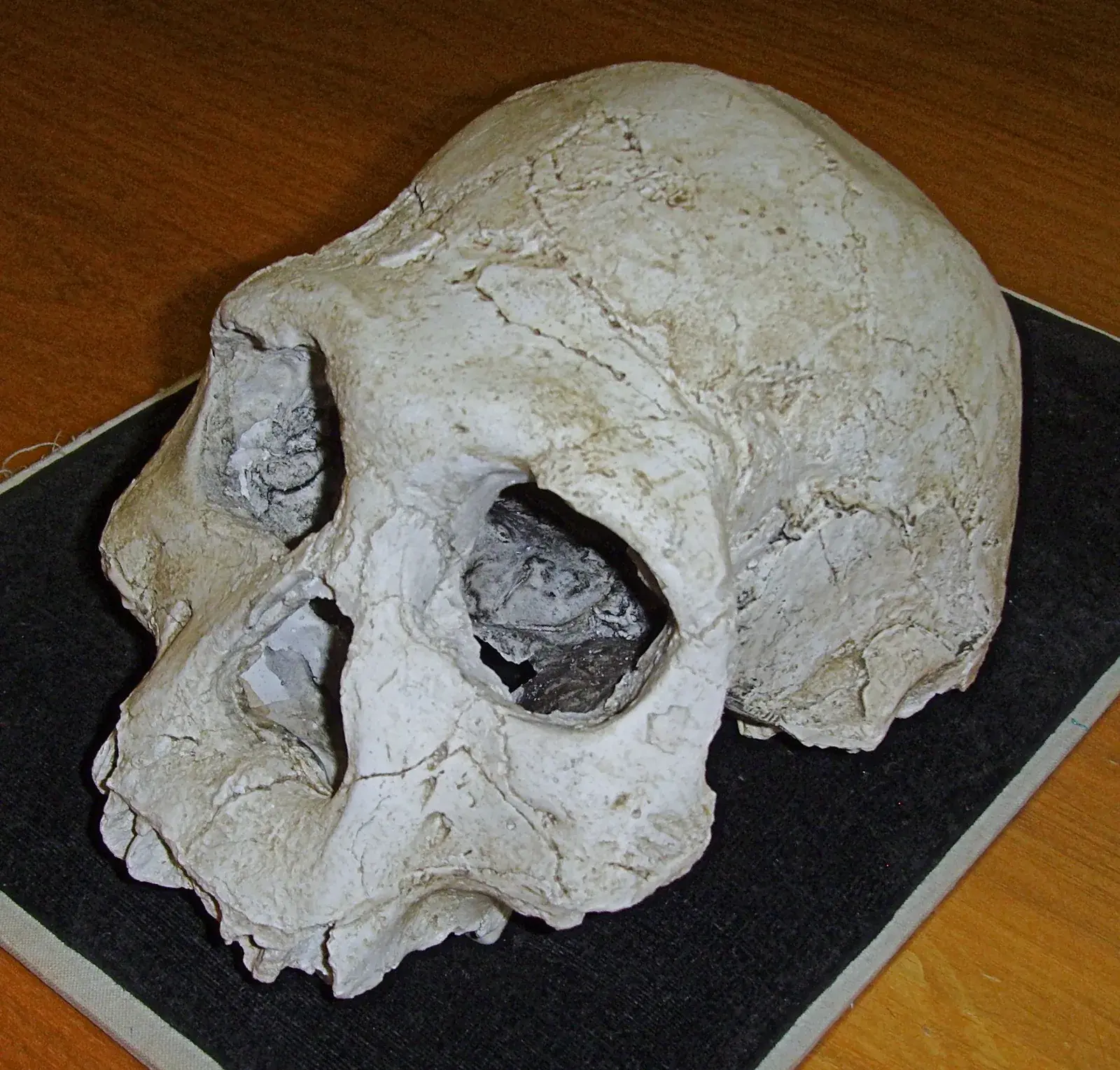
In 2025, ancient proteins and mitochondrial DNA recovered from the Harbin skull in China confirmed it belonged to a Denisovan, finally putting a face to a hominin group previously known mainly from DNA.
Image Credits: Gerbil, via Wikimedia Commons (CC BY-SA 3.0)
Some modern Western Africans have genetic traces of an unknown "ghost" population with which ancient humans interbred with. We might not have known much about it, had it not been for its traces in our DNA.
The Hypothesis: A Fear of Other Hominins
Some people have speculated that the reason behind our discomfort around almost-human faces is that our early ancestors were afraid of the other hominin species they encountered. The theory goes that if their lives or safety could be threatened by another type of early human that looked similar to them, a sudden, instinctual feeling of fear around a strange-looking face would help protect them.
This is, of course, fascinating and could definitely be the case. But at this point, we do not have enough evidence to support it. We do not know much about how other hominin species interacted with each other except for modern humans and Neanderthals, and the uncanny valley has yet to be shown to have a direct relationship to coexisting hominin species. After all, we are not inherently evil towards other hominin species - in fact, we interbred with Neanderthals, Denisovans and possibly other hominin species too. We do not have a built-in instinctual fear of other humans - in fact, people outside of Africa today are genetically about 1 to 2 percent Neanderthal, and some Oceanic populations are several percent Denisovan. That certainly does not sound like a relationship built on instinctual fear.
Theory One: Disease Avoidance
One theory about why we experience the uncanny valley is that it helps us avoid disease.
The human brain is good at spotting signs of illness in other people - things such as odd skin color or texture, abnormal or strange faces or abnormal movements. This is useful, as illness can be dangerous, especially in an isolated community with no medicine. This sort of sickness might even be contagious.
Some researchers believe that almost-human faces could be a subconscious signal of potential sickness, since a stranger with an obviously artificial appearance might have similar, abnormal facial features as someone who has an illness. A robot with an obviously sick look or strange movements might trigger this same fear of disease.
Disease can also be a factor in the way humans interact with one another, including other hominin species. While the evidence has yet to be solid, one interesting study suggests that the virus that causes genital herpes may have originally infected humans from an unknown (and now extinct) hominin species around 1.6 million years ago. This could show the ways disease spreads between hominins with similar anatomy and potentially similar or overlapping immune systems.
Theory Two: Our Reaction to Death
Another theory is linked to death in a very similar way. A dead body looks somewhat like a living (and healthy) one, but there are significant differences that mark it as dead. Disease avoidance is obviously important, but so is avoiding danger, such as a predator, in some cases. This theory suggests that the human discomfort with almost-human faces may originate from a primal, subconscious fear of death.
Psychologist Karl MacDorman has suggested that the uncanny valley effect might be related to the idea of mortality, claiming that the features of an uncanny robot or figure often resemble the look of a dead person. A lot of horror movies use similar concepts to evoke feelings of death or the supernatural, such as unnatural or pale skin, unnatural movement or a dead stare.
Theory Three: Mismatched Human Cues
One theory is a bit simpler. It states that we're used to seeing certain things in human faces and bodies. If we see something that doesn't quite fit, we get uncomfortable.
That sounds pretty simple, doesn't it? It actually has some interesting psychological backing to it, though - as humans are arguably the animals most used to analyzing faces and body language, we have a deep feeling of discomfort surrounding mismatched ones. Studies have shown that people tend to find faces that have a mix of human and nonhuman characteristics the most unpleasant to view and the most likely to trigger some form of the uncanny valley.
The Dangerous World of Our Ancestors
Early humans definitely lived in a dangerous world. In Africa, they encountered large, predatory animals like big cats and hyenas. They also interacted with other, large primates - including the giant, now-extinct geladas of the genus Theropithecus.
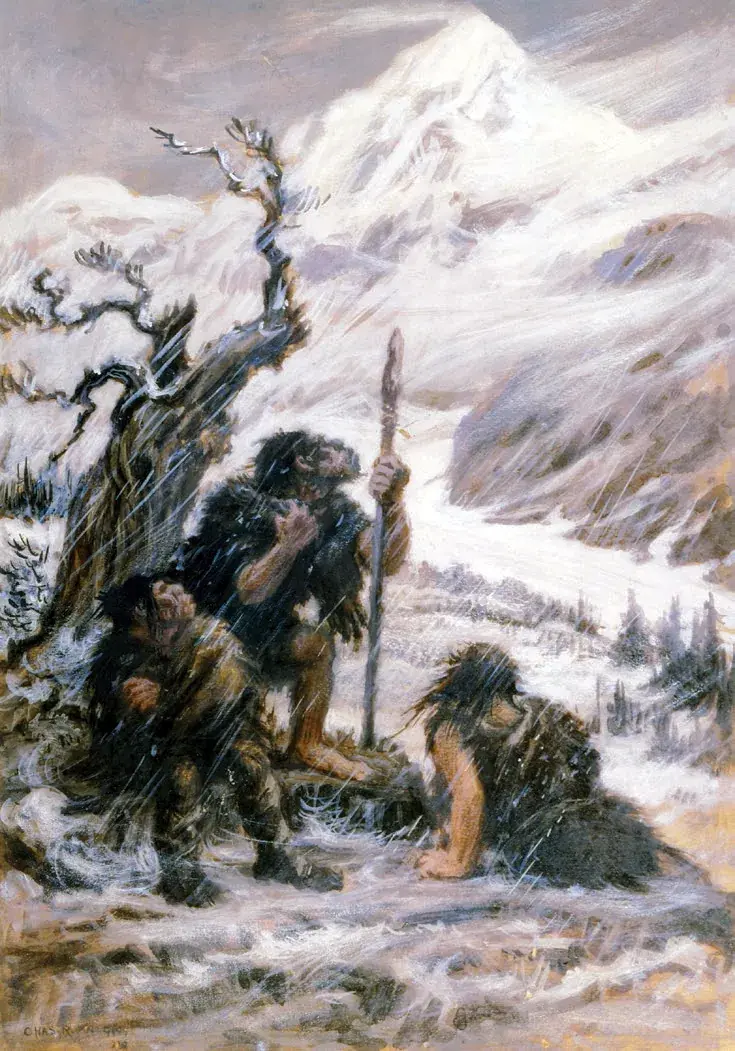
You might be thinking, "Wait! Early humans weren't the only primates, were they?" and you would be right. In fact, we do not know much about how early humans and other primates interacted with each other except for Neanderthals and Denisovans, though all of these hominin species co-inhabited the same region, the Levant, at one point. At one specific excavation site in Kenya, called Olorgesailie, researchers have actually found evidence of hominins killing large numbers of Theropithecus monkeys around a million years ago. Early humans were not passive creatures in the face of danger - they actively hunted and killed big cats as well as other large primates, taking advantage of the resources their bodies provided. Early humans competed with Theropithecus primates for food. They fought with the big cats for food, and some of their numbers were even hunted by these cats.
This kind of scenario makes it easy for us to imagine sinister interactions between early humans and other hominin or primate species, but we don't know a lot about early human interactions with other hominin species, and that lack of evidence limits what we can say about it with certainty. We have no evidence to suggest that the uncanny valley was definitely the result of early humans and other hominin species interacting with each other.
But, just as we've learned a lot about humans through the uncanny valley, so can we learn about early humans through their interactions with other similar-looking primates and hominins.
An Ancient Instinct or a Modern Mystery?
We know a lot about the ways the uncanny valley interacts with the human psyche. It has some interesting evolutionary possibilities; it might be related to primate instincts about potential dangers that we still have today, such as a fear of disease or death. We know that humans did not live alone on this planet. We might never know for sure what role early hominin interactions and coexistence had on some of the instincts and behaviors we see in humans today, including the uncanny valley. But what we do know is that a sense of discomfort with near-human faces is something that humans have had for millions of years. It's an incredibly fascinating example of how sensitive our brains are to the fine details of a human face.