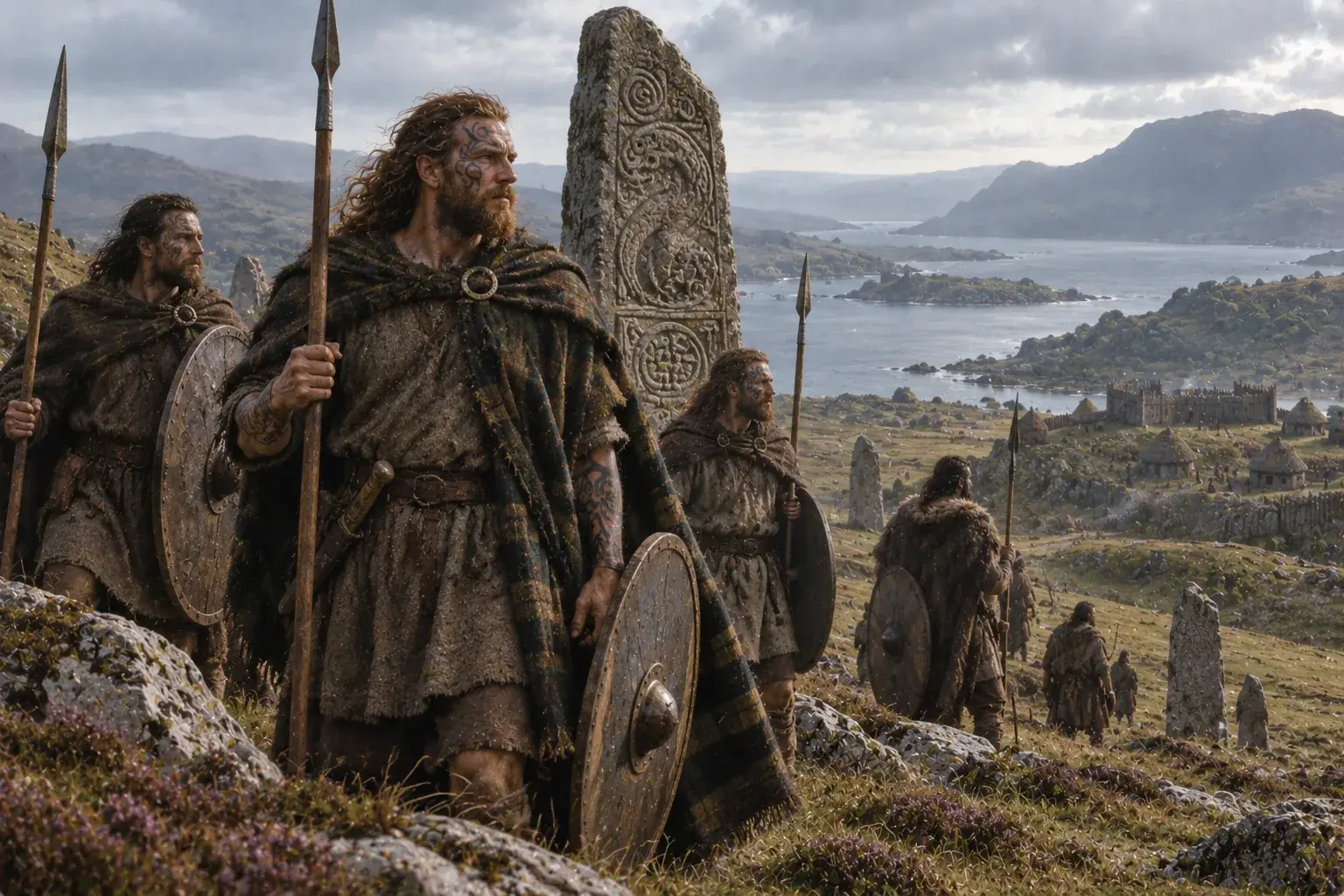
For decades Neanderthals were dismissed as dim-witted brutes. The evidence now tells a different story: toolmakers who hafted spears with birch tar, built fire-lit stone rings deep underground, and nursed their injured back to health. Around 40,000 years ago they disappeared from the fossil record, but not entirely, since most people alive today still carry a trace of their DNA.
Neanderthals were once pictured as hunched, grunting cave brutes. The real Neanderthals were skilled hunters, toolmakers and survivors who lived across Europe and western Asia for hundreds of thousands of years. They made glue, controlled fire, cared for their injured and buried some of their dead. Some researchers even credit them with the oldest known cave art in Europe.
Then, around 40,000 years ago, they vanished from the fossil record. Or did they? Most people alive today carry a small piece of Neanderthal DNA, which means their story never fully ended. It became part of ours.
Where Neanderthals Came From
Neanderthals belong to our genus, Homo, which first appeared in Africa nearly 3 million years ago. Over time, human populations spread out of Africa and slowly diverged. Genetic evidence suggests the ancestors of Neanderthals and their eastern cousins, the Denisovans, separated from the lineage leading to modern humans hundreds of thousands of years ago. Neanderthals and Denisovans then split from each other somewhere between about 470,000 and 380,000 years ago.
Neanderthal features appear gradually in the fossil record. Remains around 430,000 years old from Sima de los Huesos in northern Spain already show many Neanderthal traits. By about 130,000 years ago, the "classic" Neanderthals, with the full set of features scientists recognize today, were living across Europe and western Asia.
Were they a separate species? That's surprisingly hard to answer. Neanderthals and modern humans could interbreed and produce fertile children, which by some definitions makes them the same species. But they were also separated for hundreds of thousands of years and developed distinct anatomy. As paleoanthropologist Gilbert Tostevin explains, speciation is a gradual process rather than a single event, so the boundary between species is fuzzy by nature. Many scientists call them Homo neanderthalensis, while others treat them as a subspecies of Homo sapiens.
What Neanderthals Looked Like
From a distance, a Neanderthal would have looked broadly familiar. Up close, the differences stood out. They were shorter and stockier than most modern people, with wide barrel-shaped chests, shorter limbs and heavier muscles. Based on long bone measurements, males averaged about 165 centimeters (5 feet 5 inches) and females about 152 centimeters (5 feet).
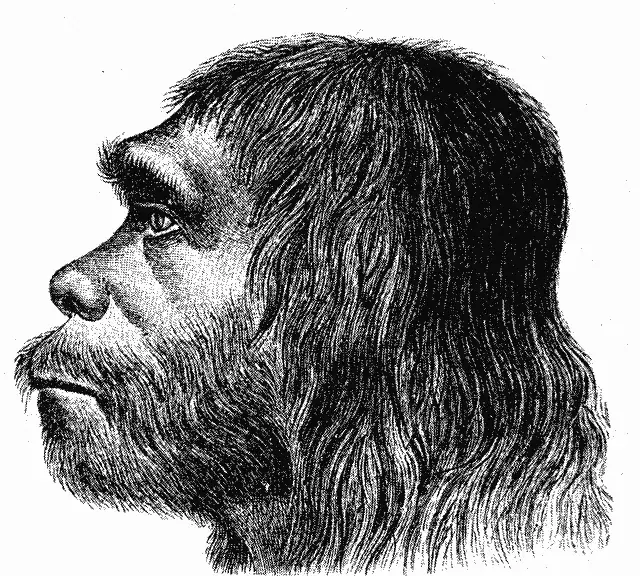
Reconstructions like this one are built from skeletal measurements, and show the short, powerfully muscled frame typical of Neanderthal males.
Image Credits: Hermann Schaaffhausen, via Wikimedia Commons (Public domain)
They were also heavy for their height. Their bones were thick and dense, reflecting both genetics and a physically demanding life. On average they were around 15 percent heavier than modern humans of the same height.
Their faces had large brow ridges and big, wide noses with large sinuses. They had no chin, a feature that's actually unusual in our own species rather than theirs. Their skulls were long and low, often with a bulge at the back called an occipital bun, and their eye sockets were large.
Why were they built this way? The traditional explanation is cold. Shorter, stockier bodies lose less heat, a pattern also seen in modern Arctic peoples. But Neanderthals living in warmer Mediterranean and Middle Eastern regions had the same build, so cold probably wasn't the whole story. Some researchers argue that their powerful bodies were also suited to short bursts of speed and strength during close-range hunting.
Neanderthal Brains: Bigger but Different
Neanderthal brains were, on average, as large as or larger than those of modern humans. That doesn't mean they were smarter. Brain size scales with body size, and relative to their heavy bodies, Neanderthal brains weren't especially large.
Organization matters more than raw size. Neanderthal skulls suggest that more of their brain was devoted to vision and body control, possibly linked to their large eyes. Modern humans, by comparison, have more rounded skulls and seem to devote relatively more tissue to other areas. Neanderthal children also appear to have grown up somewhat faster than modern human children.
Skin, Hair and Eye Color
Neanderthals weren't all pale-skinned redheads, as some popular images suggest. They lived across a huge range, and ancient DNA shows real variation. Some Neanderthals studied from southeastern Europe and western Asia had darker skin and brown eyes. A 2007 study found a variant of the MC1R gene in two Neanderthals from Italy and Spain that likely produced red hair and pale skin, although that variant hasn't been found in later sequenced individuals.
Light skin was not automatically common in northern latitudes. Among modern Europeans, lighter skin became widespread only in the last several thousand years, linked partly to the shift toward farming diets lower in vitamin D.
Neanderthal Tools and Technology
Neanderthals were expert stoneworkers. They are closely associated with the Levallois technique, which appeared around 300,000 years ago. Instead of simply chipping away at a hand axe, a toolmaker carefully shaped a stone core so that one well-placed strike produced a thin, sharp flake of a predictable shape. This method used raw material very efficiently and produced excellent cutting tools.
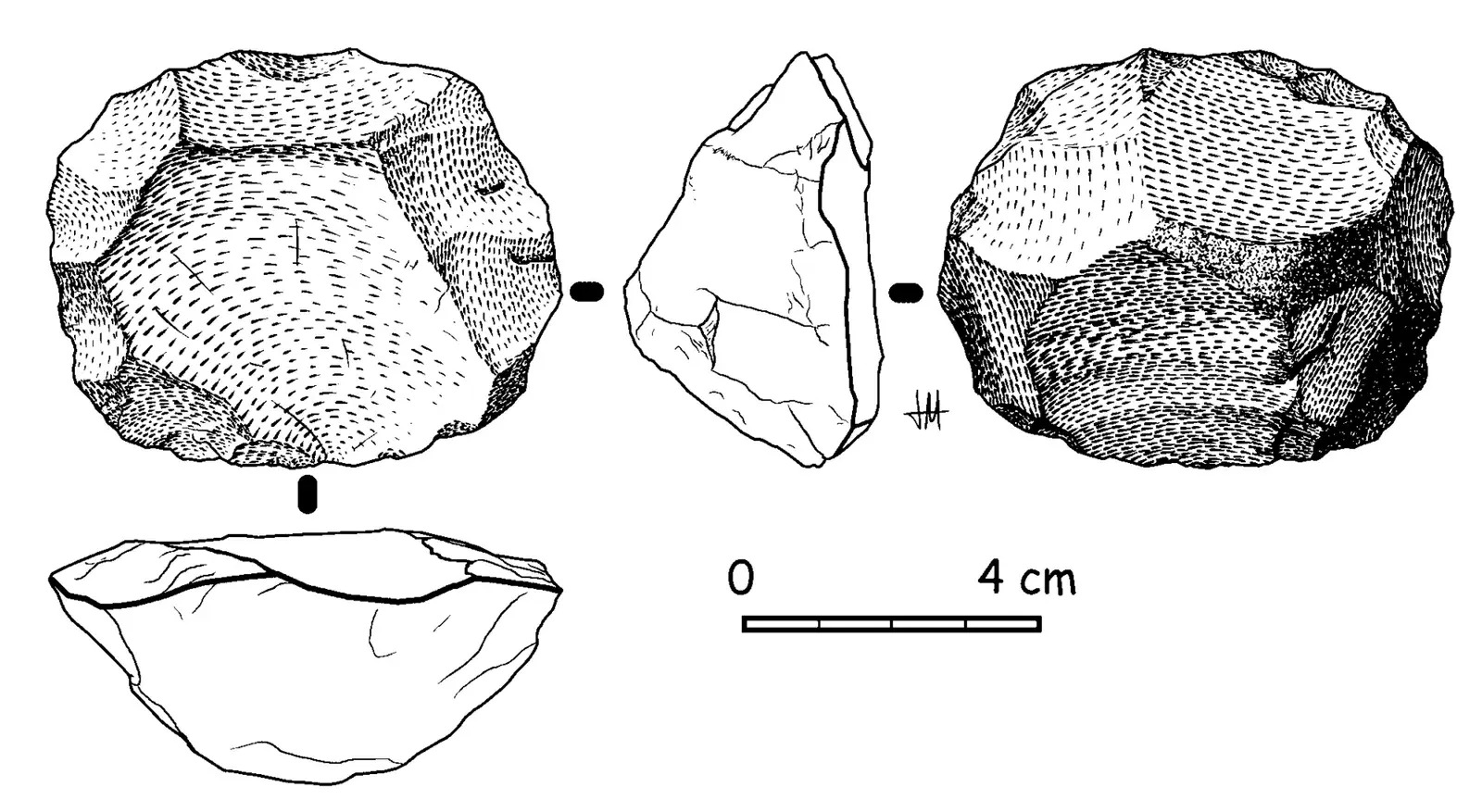
The Levallois method let a toolmaker predict the exact shape of the flake before it was even struck free of the core.
Image Credits: José-Manuel Benito, via Wikimedia Commons (CC BY-SA 2.5)
Many of those stone points were attached to wooden handles or spear shafts. Neanderthals made adhesives to hold them in place. Birch tar found at sites in Italy dates to around 200,000 years ago, and one lump from Königsaue in Germany even preserves the fingerprint of the Neanderthal who shaped it. They also used pine resin, beeswax and natural bitumen.
Wood was just as important as stone, although it rarely survives. The famous Schöningen spears from Germany are the oldest complete wooden weapons ever found, finely balanced and up to about 2.5 meters long. They were long dated to around 300,000 years ago, though a 2025 study argued they're closer to 200,000 years old. Either way, they show that the ancestors of Neanderthals, or early Neanderthals themselves, were making sophisticated hunting weapons.
They made bone tools too, including smoothing tools called lissoirs used to soften leather, and in parts of Italy they even shaped clam shells into cutting tools.
Fire, Clothing and Shelter
Neanderthals regularly used fire for warmth, cooking and light. Charred bones and plant remains show they cooked food, and some sites preserve carefully organized hearths. Whether they could make fire whenever they wanted is still debated. A 2018 study found wear marks on some stone tools from France consistent with striking pyrite to create sparks, and other research suggests they collected manganese dioxide, which makes wood easier to ignite.
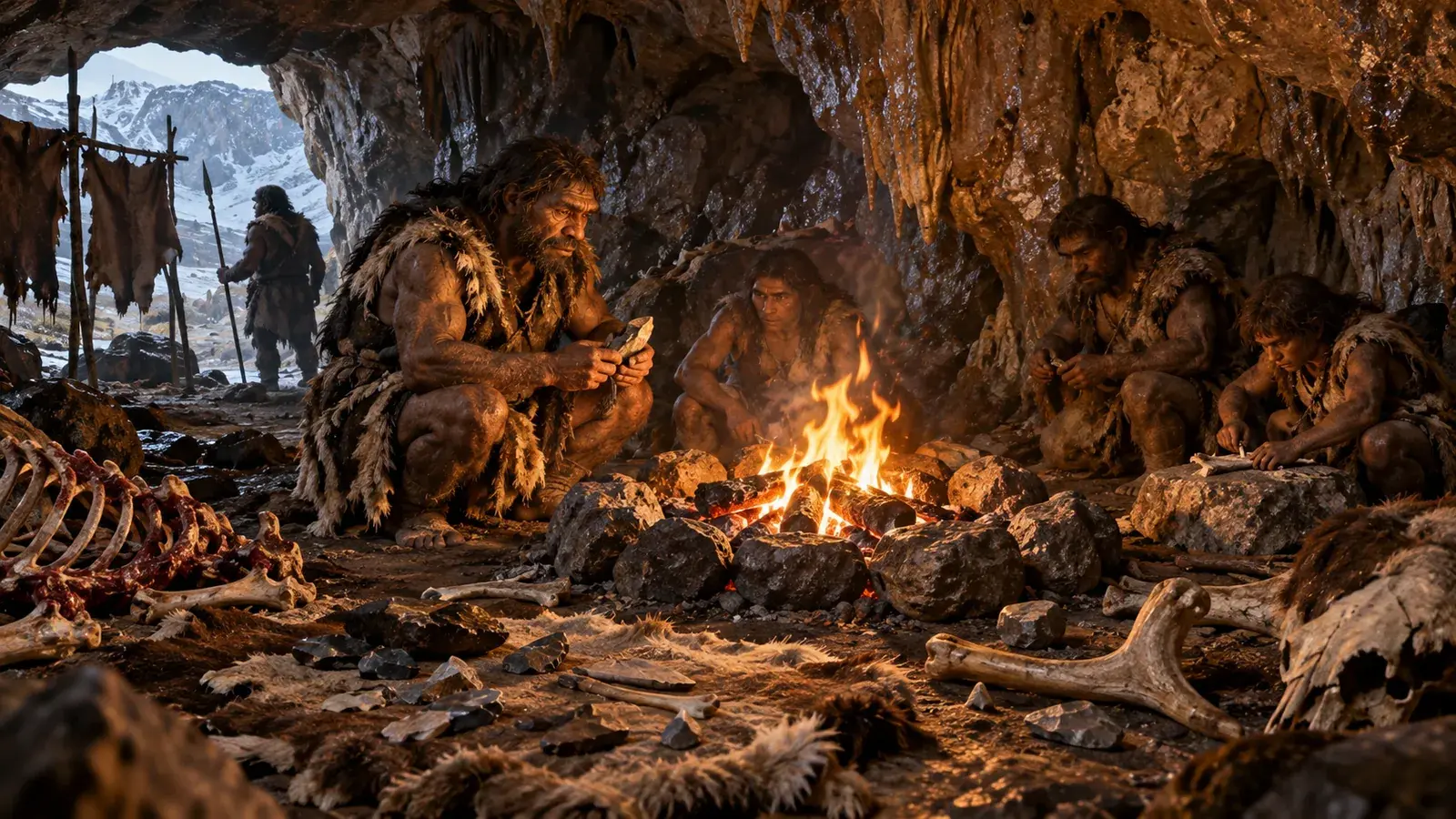
Charred bone and organized hearths like this show fire wasn't an occasional find for Neanderthals but a routine part of daily life.
Clothing doesn't survive, but indirect clues are strong. Cut marks show they carefully removed animal skins, and wear patterns on stone tools and even their front teeth suggest they spent long hours processing hides. Researchers have estimated that during cold periods, Neanderthals in parts of Europe would have needed to cover most of their bodies to survive winter. A small fragment of twisted plant-fiber cord, about 50,000 years old, from Abri du Maras in France shows they could make string, which could have been used for binding, carrying or sewing.
Neanderthals are famous for living in caves, and many caves preserve organized living spaces with separate areas for hearths, sleeping and butchery. But caves preserve evidence unusually well, so they're overrepresented. Neanderthals were highly mobile and also built simpler open-air shelters.
How Neanderthals Hunted
Neanderthals were formidable hunters. They took large animals such as horses, bison, red deer, reindeer and aurochs, and sometimes much bigger game like rhinoceros and young mammoths. Most hunting seems to have been done at close range with thrusting spears, although evidence from Syria, where a stone point was found embedded in the neck vertebra of a wild ass, suggests spears were sometimes thrown.
Close-range hunting was dangerous, and Neanderthal skeletons often show healed injuries. For years scientists believed their injury rates were unusually high, but later studies found that early modern humans living similar lifestyles had comparable rates of trauma. A hard life, in other words, wasn't unique to Neanderthals.
A More Varied Diet Than Once Thought
Neanderthals were once seen as specialized big-game carnivores. That picture has broadened considerably. They also caught rabbits, birds and tortoises. At sites in Gibraltar, researchers have identified remains of many bird species, including eagles and vultures.
Coastal Neanderthals ate seafood. At Figueira Brava in Portugal, they collected shellfish and also ate crabs, fish and even seals and dolphins, probably scavenged or taken near the shore. Some Neanderthal skulls show bony ear growths similar to "surfer's ear," which may point to regular exposure to cold water.
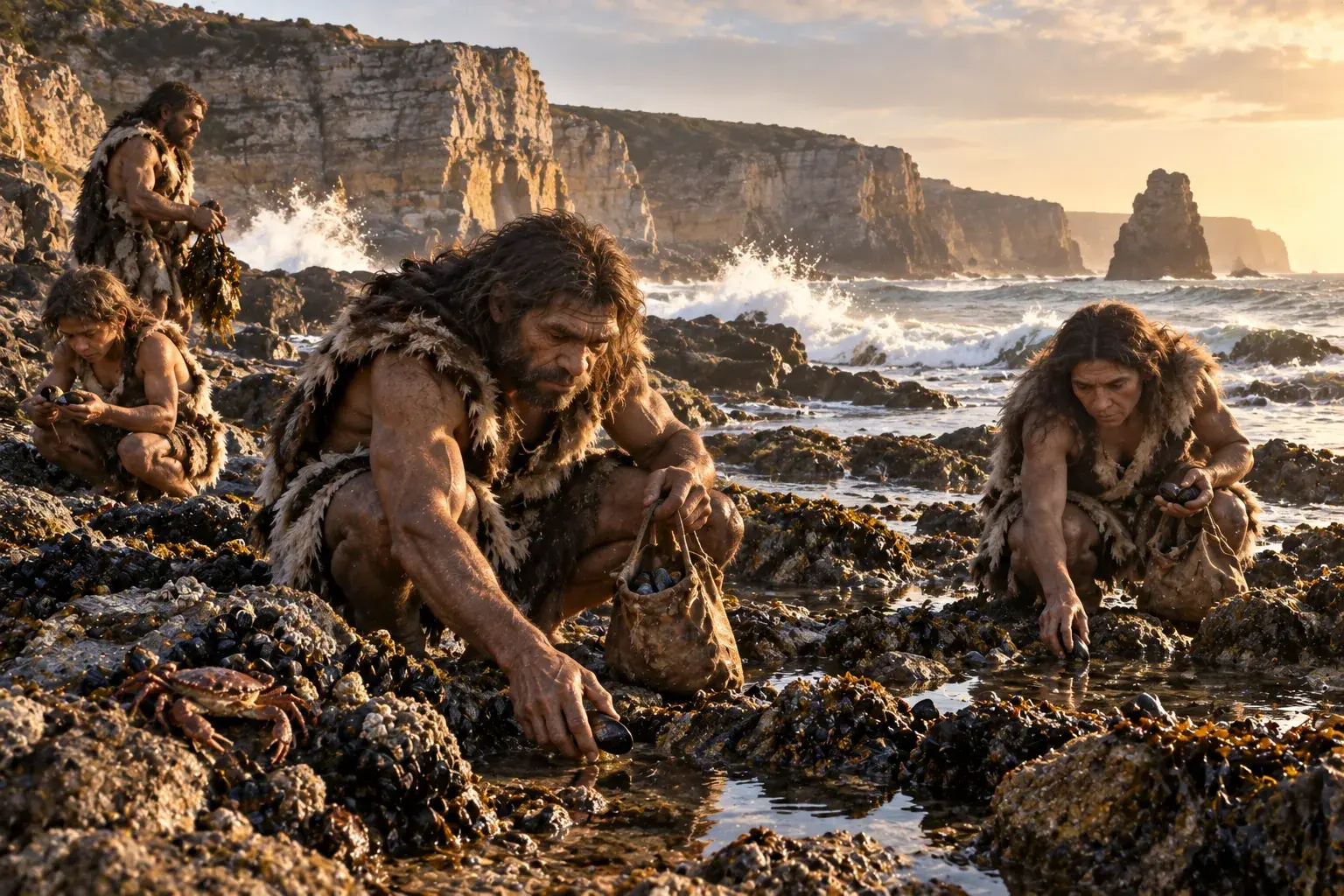
At Figueira Brava, Neanderthals living along the Portuguese coast turned to mussels, crabs and even the occasional seal or dolphin.
Plants mattered too, especially in warmer regions. Charred remains at Middle Eastern sites include acorns, pistachios, nuts, grasses and legumes. Dental calculus from El Sidrón in Spain even contains traces of plants such as chamomile and yarrow, which have little nutritional value but may have been used as medicine.
Cannibalism happened as well, but it was not an everyday habit. At Moula-Guercy in France, at least six individuals were butchered around 100,000 to 120,000 years ago. At El Sidrón, 13 members of what appears to be a single family group were killed and eaten. Such cases likely reflect starvation or conflict, much as cannibalism has occurred occasionally among modern humans.
Neanderthal Society and Family Life
Neanderthals generally lived in small groups of perhaps 10 to 30 people, spread thinly across a vast landscape. Genetic evidence suggests their total population was always small, and some groups show signs of inbreeding.
The El Sidrón family offers rare insight into social structure. DNA showed that the adult males were closely related while the adult females came from different maternal lines. That pattern suggests women may have moved into their partners' groups, a practice called patrilocality, though other groups may have lived differently.
They almost certainly had some form of language. A Neanderthal hyoid bone from Kebara Cave in Israel, which supports the tongue, is nearly identical to ours, and their ear anatomy suggests similar hearing ranges. They also carried a version of the FOXP2 gene, which is associated with speech, though exactly how their language compared with ours remains unknown.
Caring for the Sick and Injured
Some of the most moving evidence comes from Shanidar Cave in Iraq. A man known as Shanidar 1 lived into his 40s despite a crushing blow to his head that likely blinded him in one eye, a withered right arm, severe hearing loss and injured legs that left him with a limp. He couldn't have survived without the support of others.
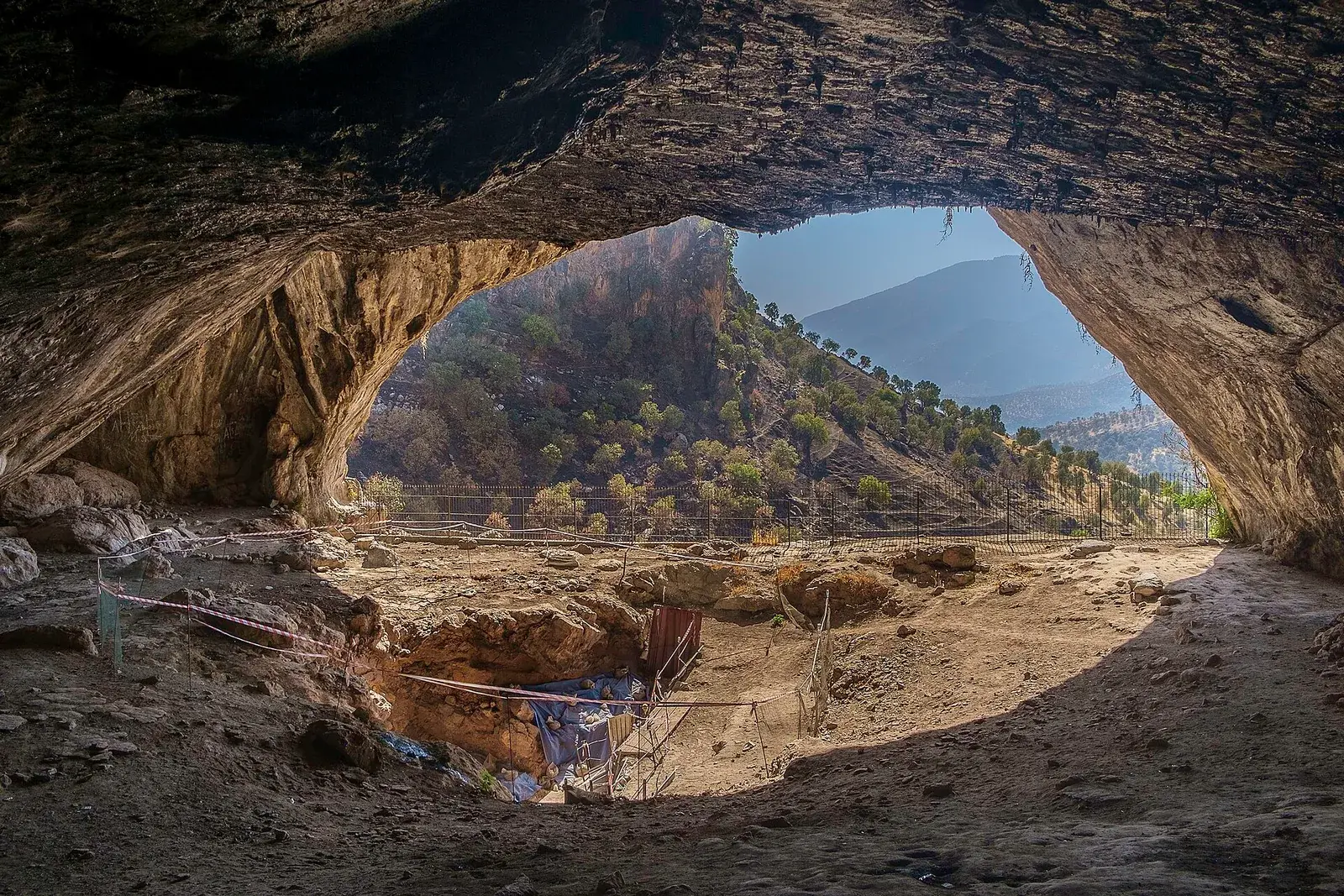
Shanidar Cave has yielded some of the clearest evidence that Neanderthals looked after injured and disabled members of their group.
Image Credits: Hardscarf, via Wikimedia Commons (CC BY-SA 4.0)
Many Neanderthal injuries healed well, which suggests group members helped each other recover. Traces of plants with medicinal properties in their dental calculus support the idea that they had practical knowledge of healing.
Symbolism, Art and Ornament
For a long time, symbolic behavior was considered a uniquely modern human trait. That view has shifted. Neanderthals collected and used red ochre, and at Krapina in Croatia, around 130,000 years ago, they appear to have modified eagle talons, possibly to wear as jewelry. Painted and perforated shells from Spain, dated to about 115,000 years ago, may also have been ornaments.
The most striking evidence comes from Bruniquel Cave in France. Around 176,000 years ago, Neanderthals broke off about 400 stalagmites deep inside the cave and arranged them into large rings, lighting fires on and around them. It's hard to imagine a purely practical reason for such effort hundreds of meters from daylight.
Cave art is more controversial. A 2018 study dated red markings, including a ladder-like shape and hand stencils, in several Spanish caves to more than 64,000 years ago, before modern humans are known to have reached Europe. If correct, Neanderthals made them. Some researchers question the dating method, so the debate isn't settled.
Burying the Dead
Neanderthals did sometimes bury their dead, although it wasn't universal. Burials seem to become more common in later periods. At Shanidar Cave, excavations since 2018 uncovered a partial skeleton known as Shanidar Z, which lay in what appears to be a deliberately dug grave. The famous "flower burial" once thought to show flowers placed on a body is now considered doubtful, since pollen may have been carried in by burrowing animals or bees.
Children in particular were sometimes buried with apparent care, and some graves appear to contain objects such as stone tools. Whether these reflect ritual beliefs, grief or simply practical attempts to protect bodies from scavengers remains open to interpretation.
When Neanderthals Met Modern Humans
Neanderthals and modern humans met more than once. Genetic evidence shows interbreeding in western Asia long before modern humans spread widely into Europe. At Grotte Mandrin in France, stone tools and a child's tooth suggest modern humans briefly lived there about 54,000 years ago before Neanderthals returned, possibly a failed early migration.
Later, modern humans spread across Europe from roughly 45,000 years ago. A 2022 study suggested the two groups overlapped in France and northern Spain for somewhere between about 1,400 and 2,900 years. A jawbone known as Oase 1, found in Romania and dated to around 40,000 years ago, came from a modern human who had a Neanderthal ancestor only four to six generations back.
Why Did Neanderthals Go Extinct?
There was no single cause. Neanderthal populations seem to have been small and low in genetic diversity long before modern humans arrived in large numbers, which may have made them more vulnerable to disease, inbreeding and bad luck. Rapid climate swings, such as the harsh cold phase known as Heinrich Event 4 around 40,000 years ago, would have added stress.
Modern human groups were larger and had broader social networks, which helped them share ideas and survive setbacks. They probably competed with Neanderthals for food and territory, and occasional violence can't be ruled out. But interbreeding also played a major role. Many Neanderthal groups may have been absorbed into much larger modern human populations until distinctly Neanderthal groups no longer existed. Most evidence points to their disappearance around 40,000 years ago, with later dates being rare and controversial.
The Neanderthal DNA Inside Us
Neanderthals may be gone as a distinct people, but their genes remain. Most people of non-African ancestry carry roughly 1 to 2 percent Neanderthal DNA, with East Asians carrying slightly more on average than Europeans. African populations also carry a smaller amount, largely brought back by later migrations of people from Eurasia into Africa.
Some Neanderthal gene variants may have helped modern humans adapt to new environments, including genes related to immunity and skin. Others are linked in modern populations to conditions such as type 2 diabetes. In 2020, researchers found that a stretch of Neanderthal-derived DNA on chromosome 3 was associated with a higher risk of severe COVID-19, while another Neanderthal variant appeared protective.
Interestingly, living humans carry no Neanderthal mitochondrial DNA, which is passed down through mothers. Scientists are still investigating why, but it may reflect patterns in which hybrid lineages survived.
A Different Kind of Human
Neanderthals weren't failed early drafts of modern humans. They were a remarkably successful lineage that survived ice ages and adapted to environments from Mediterranean coasts to the edge of Siberia for hundreds of thousands of years. They made tools, controlled fire, cared for each other, and may have created some of the earliest art in Europe.
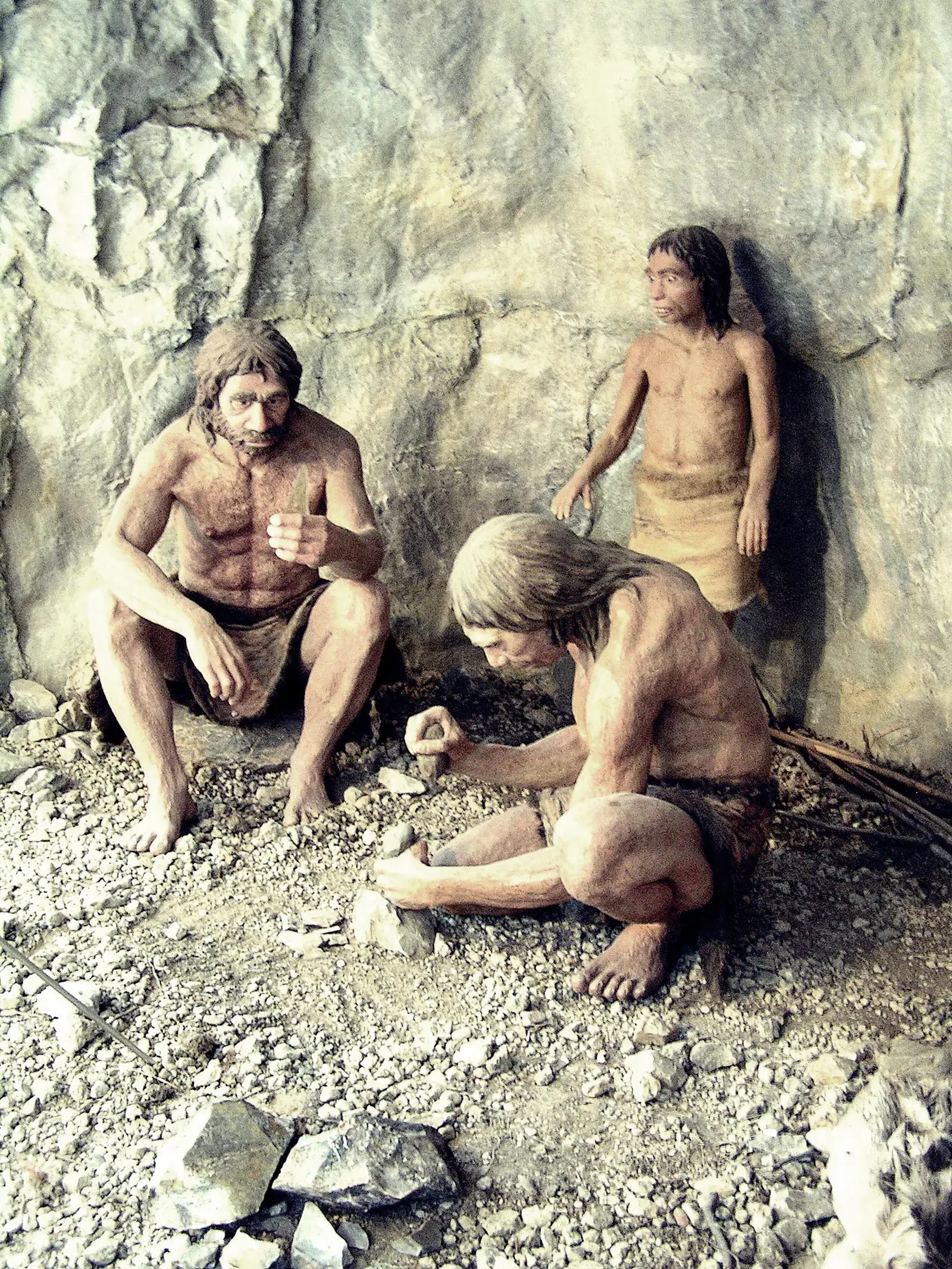
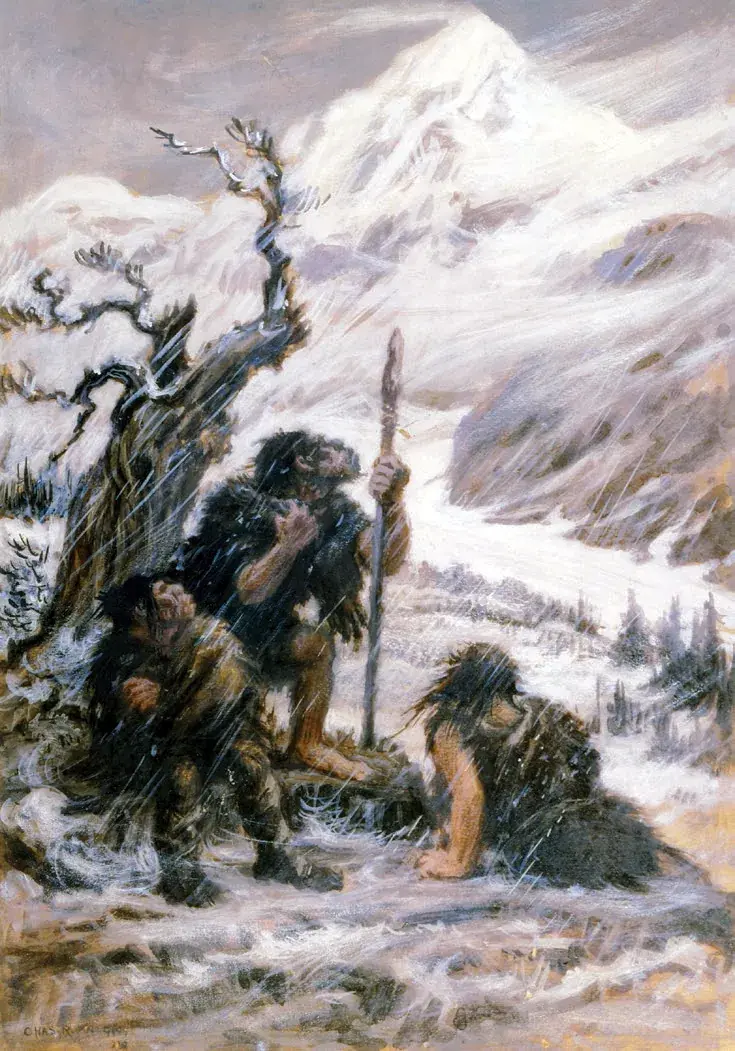
Small, tightly knit groups like this one were the norm for Neanderthals, and it's through them that a trace of that world survives in us today.
Image Credits: Jaroslav A. Polák from Brno, Czech Republic, via Wikimedia Commons (CC0)
Their disappearance probably had more to do with small populations, a changing climate and absorption into a much larger human population than with any lack of intelligence. And because their DNA still lives in billions of people today, the Neanderthal story isn't only about extinction. In a very real way, it's part of ours.