He was born into a world where nobody was safe. His father was poisoned when he was eight. His clan abandoned his family and left them to starve. Rivals kidnapped his wife. He was taken prisoner more than once. And somehow, through all of this, he became the ruler of the largest contiguous empire in the history of the world. His name at birth was Temüjin. History knows him as Genghis Khan — and eight hundred years after his death, people are still arguing about whether he was a monster, a genius, or something that doesn't fit neatly into either word. This is his story.
A Rough Beginning — Born Clutching a Blood Clot
Temüjin was born around 1162 on the banks of the Onon River in what is now northeastern Mongolia. The exact year is debated — different sources give 1155, 1162, or 1167, and historians still argue about it. The legend says he came into the world clutching a blood clot in his fist, a sign in Mongolian folklore that the child would become a warrior. His father Yesügei was a minor chieftain of the Borjigin clan. Not a great lord — just a local leader in a world of constant tribal warfare, where clans raided each other for cattle, women, and horses, and nobody was safe for long. When Temüjin was eight, Yesügei stopped to share a meal with some Tatars while riding home alone — relying on the steppe tradition of hospitality to strangers. The Tatars recognized their old enemy and slipped poison into his food. He made it home but died soon after. Yesügei's death shattered everything. The clan abandoned the family. His wife Hö'elün and her children were left on their own — reduced to collecting roots and berries, hunting small animals, and fishing just to survive. Temüjin went from the chief's son to a half-starved orphan in weeks. Things got worse. He and his younger brother killed his older half-brother Behter — a brutal act that even the ancient Mongolian chronicles don't try to defend, though they record that Temüjin's mother was furious. He was captured by a rival tribe and escaped during a feast by hiding in a river. He survived because strangers — a man named Sorkan-Shira, who had seen him in the river and stayed quiet, and a boy named Bo'orchu who helped him recover stolen horses — took risks to help someone with nothing to offer in return. These early years shaped everything that came later. Temüjin never forgot a kindness, and he never forgot an injury.
The Onon River valley where Temüjin grew up — a beautiful but brutal landscape where survival depended on your clan, and losing your clan meant almost certain death.
Building Something From Nothing
When Temüjin reached adulthood, he went back to the family his father had arranged a marriage with and claimed his bride — a girl named Börte, whose father had been impressed with the young man years before. Börte came with a gift: an expensive sable fur cloak. Temüjin used the cloak brilliantly. He gave it to Toghrul, khan of the Kereit tribe, who had been friends with his father. This single gift launched a political alliance. Toghrul had a large territory but distrusted many of his followers. Temüjin had nothing but loyalty to offer — and Toghrul needed exactly that. The two grew close, and Temüjin began to build a following. Börte was kidnapped within months of their marriage — raided by the Merkits who wanted revenge for something Temüjin's father had done years earlier. Temüjin got her back by calling on Toghrul and his childhood friend Jamukha, who each fielded armies of twenty thousand men. Börte was recovered and gave birth to a son, Jochi, shortly after — the boy's parentage was uncertain given the timing of the kidnapping, a fact that followed Jochi his entire life. For a while, Temüjin and Jamukha were close friends — they swore the traditional blood-brother oath and camped together for over a year. But their personalities were too different. Jamukha was ambitious in a traditional way, seeking power through the old tribal structures. Temüjin was doing something different: promoting people based on what they could do, not on who their family was. He attracted followers who had been born to nothing but who were capable and loyal. The split was inevitable. Around 1187, they clashed at a battle called Dalan Baljut, and Temüjin lost badly. He may have spent the years afterward as a subject — some historians believe even as a slave — of the Jin dynasty in northern China. This was quietly left out of most Mongol accounts later; nobody wanted to remember that period. But around 1196 he was back, and he was gaining power fast.
The Final Battles — Alone on the Steppe
Over the next decade, Temüjin fought and outmaneuvered every rival on the Mongolian steppe. He and Toghrul defeated the Tatars. He absorbed the Kereit tribe after Toghrul turned on him in a surprise attack. His lowest point came after that betrayal — retreating to an unknown lake or river called Baljuna with just a handful of followers, including men from nine different tribes and several religions. There, he swore an oath of loyalty to his faithful companions that became legendary: "If I am able to achieve my 'Great Work', I shall always share with you men the sweet and the bitter." The men who swore the Baljuna Covenant with Temüjin became the core of his empire. They were a deliberately mixed group — Christians, Muslims, Buddhists, and Shamanists, united only by personal loyalty. One by one his enemies fell. Toghrul was killed by a Naiman warrior who didn't recognize him. In May 1204, at the Battle of Chakirmaut in the Altai Mountains, the Naimans were crushed. Their prince Kuchlug fled west. And Jamukha — Temüjin's childhood blood-brother, his friend for decades, and his bitterest rival — was betrayed by his own companions and delivered to Temüjin. According to the Secret History of the Mongols, Temüjin had him executed honorably — the one mercy he offered a man who had been his greatest enemy. Temüjin was now alone at the top. There was no one left to fight on the steppe.
The kurultai of 1206 was the moment everything changed — a poor orphan who had survived slavery and defeat was now ruler of all the Mongols, with a title that may have meant 'Universal Ruler.'
The Assembly of 1206 — And the Revolution That Followed
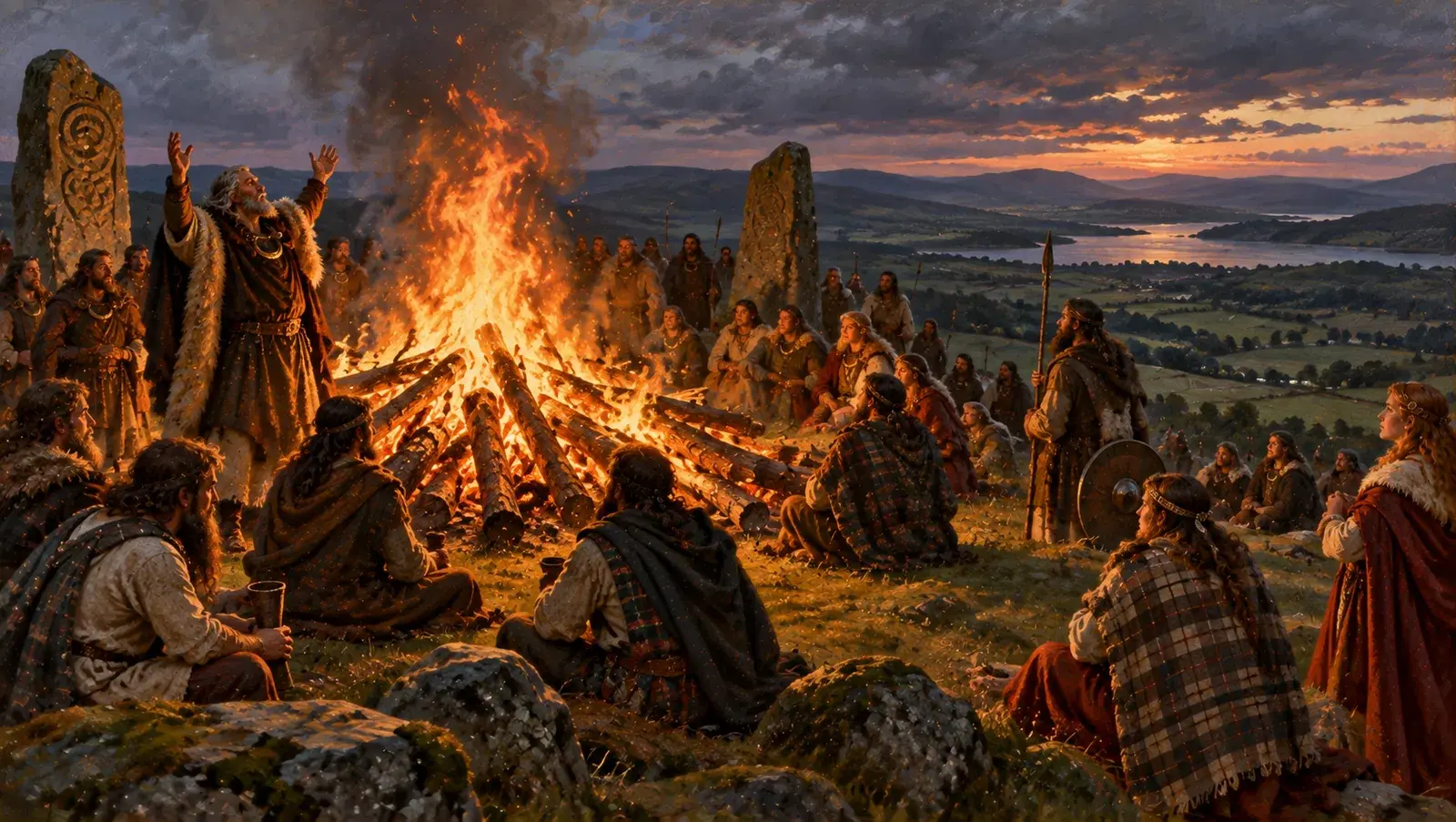
In 1206, at the source of the Onon River, Temüjin held a great assembly of all the Mongol tribes — a kurultai. Here he formally adopted the title "Genghis Khan." The exact meaning of the word is still debated. Some historians connect it to the Turkic word for ocean, meaning something like "Universal Ruler." Others think it conveys strength or firmness. Nobody's completely sure. What happened next was, in historian Timothy May's words, a social revolution. Temüjin knew the old tribal system was the reason every previous steppe confederation had eventually collapsed. Loyalty to your clan, your tribe, your blood relatives — all of that could be used against a central ruler. So he smashed it. He reorganized the entire Mongol people into a military decimal system. Every man between fifteen and seventy was assigned to a unit of ten, which grouped into units of a hundred, which grouped into thousands. These units deliberately mixed people from different tribes. Warriors who had previously fought each other were now shoulder to shoulder in the same minqan. Your old tribal identity was supposed to disappear. What replaced it was loyalty to the "Great Mongol State" — and to Genghis Khan. The commanders of these units were chosen for merit and loyalty, not for birth. Jelme and Subutai — two of the greatest generals in Mongolian history — were the sons of blacksmiths. Bo'orchu, who had helped Temüjin recover stolen horses as a boy, was given command of ten thousand men. A carpenter got a command. A shepherd got one too. Even the two herdsmen who had warned Temüjin of a betrayal in 1203 received honors. This reform proved extraordinarily effective. Even after the Mongol Empire eventually split into successor states, it never fractured along tribal lines. The descendants of Genghis continued to reign for centuries, and even powerful warlords like Timur had to legitimize themselves by claiming connection to his bloodline.
Why the Mongol Army Was Unstoppable
The Mongol army wasn't the biggest force in the world. The Jin dynasty in China could field 600,000 soldiers against Genghis's smaller force. The Khwarazmian Empire in Central Asia vastly outnumbered the Mongols. And yet the Mongols beat everyone. Here's what made them different. First, speed. Mongol armies moved at a pace their enemies simply couldn't match. Every soldier had multiple horses and rotated between them constantly. They could cover distances in days that would take other armies weeks, appearing where they weren't expected and attacking before defenders could organize. Second, intelligence. Before any major campaign, Mongol scouts — and a network of spies and merchants — gathered detailed information about the enemy's defenses, politics, and terrain. They knew where the weak points were before the first arrow was fired. Third, psychological warfare. The Mongols deliberately cultivated a terrifying reputation. Cities that surrendered quickly were spared and often treated well. Cities that resisted were destroyed completely, their populations scattered. Word spread fast. When a Mongol army appeared at the walls, many cities simply gave up rather than face what resistance had brought to others. Fourth, discipline. The Mongol code was brutal but simple: follow orders or die. Deserting a battle was punishable by death — not just your death but your unit's death. This created an army that held its formations under conditions that would have broken most forces. Fifth, learning. Genghis sought knowledge obsessively. He hired Chinese engineers for siege warfare after his first campaign against the Jin showed he couldn't crack walled cities on his own. He adopted the Uyghur alphabet for writing. He listened to advisers from conquered territories. He had a practical man's absolute contempt for cultural pride that might get in the way of using what worked.
Every Mongol warrior had multiple horses and a composite bow that outranged most opponents. Speed, discipline, and intelligence made the Mongol army the most effective fighting force of its era.
Taking China — The Campaign Against the Jin
In 1210, when the new Jin emperor sent envoys demanding the usual annual tribute, Genghis responded by spitting at them and riding away. This was a declaration of war in everything but name. The Jin had 600,000 soldiers. Genghis had far fewer. But the Jin were defending a long border against multiple threats, and their northern defenses were guarded by a tribe called the Ongud — who were Genghis's allies and simply let the Mongols through. The invasion began in 1211. Mongol forces swept through northern China in three prongs, plundering vast territories and securing the mountain passes that controlled access to the interior. Town after town fell. The Jin lost battle after battle, and key tribes defected. Genghis was wounded by an arrow at the siege of Xijing in 1212 and had to pull back. But he used the pause wisely — hiring five hundred Jin siege engineers and learning exactly what he needed to know to crack the cities he couldn't take by storm. By 1213 his forces had broken through the great Juyong Pass, the gateway to the Jin capital. The Jin government started collapsing from the inside: a general staged a coup, killed the emperor, and put up a puppet. Genghis, unable to take the capital directly with his exhausted army, opened peace talks in 1214 and extracted enormous tribute — three thousand horses, five hundred slaves, a Jin princess, and vast amounts of gold and silk — before withdrawing. The new Jin emperor then moved his court south to Kaifeng. Genghis interpreted this as preparing to restart the war and returned immediately. The Jin capital Zhongdu — modern Beijing — fell in May 1215 and was thoroughly sacked. Genghis left his general Muqali in command and returned to Mongolia, but Muqali waged a steady, brutal campaign against the Jin until his death in 1223. Northern China was effectively the Mongols' now.
The Khwarazmian Catastrophe
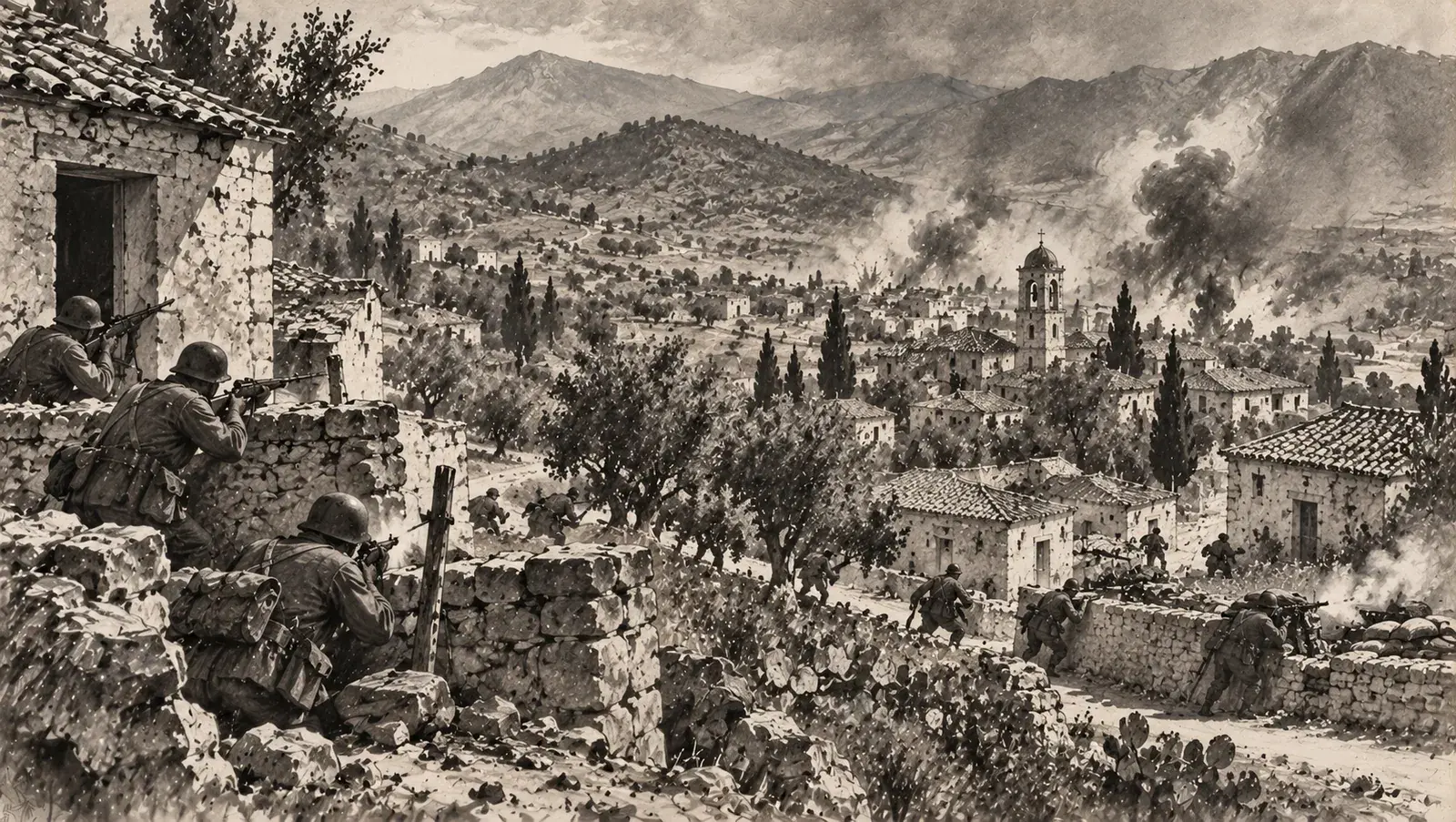
If one single decision cost the most lives in Genghis Khan's entire career, it was this: in 1218, a Khwarazmian governor named Inalchuq massacred four hundred and fifty Mongol merchants traveling through his territory and seized their goods. The Khwarazmian Shah Muhammad II apparently supported this or at minimum looked the other way. Genghis sent an ambassador to demand justice. Muhammad killed him. Killing an envoy was the worst thing you could do to Genghis Khan. It overrode everything else. He pulled most of his army from China, leaving Muqali with a smaller force, and turned the full weight of the Mongol military toward Central Asia. The Khwarazmian Empire was large but brittle — Muhammad ruled uneasily alongside his own mother, his nobles were discontented, and his army was too unreliable to meet the Mongols in open battle, so he garrisoned his forces in his major cities instead. This was exactly the wrong decision. It gave the mobile Mongol armies total freedom to move between the cities and reduced the Khwarazmian military to passive defenders waiting to be picked off one by one. The fall of the empire was swift and terrible. Genghis split his forces and moved with dazzling speed across the Kyzylkum Desert to surprise the garrison at Bukhara from behind. Samarkand fell the following month. Muhammad fled and was chased down by two generals — Jebe and Subutai — who pursued him until he died of dysentery on a Caspian Sea island. His son Jalal al-Din gathered what forces he could, defeated a Mongol unit in Afghanistan, and was eventually driven across the Indus River into India. The cities that resisted were annihilated. Nishapur, Merv, and Herat — three of the largest and wealthiest cities in the medieval world — were destroyed. Contemporary Persian historians put the death toll from just those three sieges at over five million. Modern historians think that's a gross exaggeration, but even conservative estimates suggest a catastrophe on a scale that left parts of Central Asia depopulated for generations. Jebe and Subutai meanwhile continued on what historians now call the Great Raid — a seven-thousand-kilometer expedition that circled the Caspian Sea, passed through Georgia, and reached Kievan Rus', giving Europe its first terrifying glimpse of the Mongol military.
The Khwarazmian campaign was one of the most catastrophic military events in medieval history. Cities that had stood for centuries were leveled. The ancient trade networks of Central Asia were shattered and took generations to recover.
Death on Campaign — and a Carefully Kept Secret
Genghis Khan's last campaign was against the Western Xia — a kingdom that had failed to send promised troops for the Khwarazmian invasion and then disobeyed his general Muqali. Genghis attempted to resolve things diplomatically first. When diplomacy failed, he launched a massive invasion in early 1226. The campaign went well. The Xia cities fell one by one. But Genghis had fallen from his horse while hunting the previous winter and never fully recovered. His health deteriorated through 1227, and his commanders urged him to return to Mongolia. He refused. He died on either August 18 or 25, 1227 — the sources disagree. His death was kept secret from everyone, including the besieged Xia capital, which fell the following month. The nature of his death has been disputed for eight centuries. The most credible accounts suggest illness — possibly malaria, typhus, or plague. Marco Polo claimed he was shot by an arrow. Carpini thought he was struck by lightning. Mongolian legend has him killed by a vengeful princess. He was buried near the sacred Burkhan Khaldun peak in the Khentii Mountains, on a site he had chosen years before. The burial place was a carefully guarded secret. The mountain was declared a prohibited zone. His exact resting place has never been found.
What He Left Behind — The Complicated Legacy
The numbers are staggering. The Mongol Empire at its peak stretched from the Pacific coast of Asia to the eastern edges of Europe — roughly the size of the African continent. Estimates of the death toll from the Mongol conquests range from 30 million to 80 million people. The population of China fell by roughly half during Mongol rule. And yet. The Mongol Empire also created the largest free-trade zone the medieval world ever saw. For roughly a century, the Pax Mongolica — the Mongol peace — made it possible to travel safely from one end of Eurasia to the other. Merchants, diplomats, scholars, and technologies moved along roads that had never been so open. The Black Plague may have spread along those same roads, but so did silk, paper money, gunpowder technology, and ideas that would eventually contribute to the Renaissance. Genghis himself was ruthless toward enemies and intensely loyal to followers. He divided plunder equally between himself and his soldiers — something most rulers didn't do. He actively encouraged criticism and sought out knowledge from every source available. He established religious tolerance across his empire at a time when religious wars were tearing Europe apart. He created a rule of law through an independent judiciary. He also destroyed Nishapur and Merv and commissioned slaughters that killed millions. The Washington Post called him the "Man of the Millennium" in the 1990s — the figure who, for better and worse, most shaped the modern world. In Russia and the Arab world, he is remembered as the most destructive conqueror in history. In Mongolia, he is the founding father of the nation, a hero whose face appears on banknotes, beer bottles, and the country's international airport. He was an orphan who built the largest empire in history. He was a man who rewarded loyalty with extraordinary generosity and answered betrayal with annihilation. He was both things at once, and no single story about him is the whole story.