For over a decade, Saudi Arabia and Yemen's Houthi movement have fought a devastating border war that drew in Iran, crippled global oil infrastructure, and caused a massive humanitarian crisis. Here is how the conflict evolved and why peace remains elusive.
The Houthi-Saudi conflict is one of the longest standing and most devastating proxy-wars in the Middle East. Saudi Arabia and Yemen's Houthis have been fighting along the border, across Yemen's cities and farmlands, and recently with long-range missiles and drones striking deep into Saudi territory.
While the war has long been viewed as the latest proxy battle between Saudi and Iran, which backs the Houthis, it has also been rooted in Yemen's internal politics, tribal and religious conflicts, and historical tensions along one of the most rugged frontiers in the Arabian Peninsula.
Following a UN-brokered and years-long truce, the war erupted anew in 2026. Here's what you need to know about the origin, development and impact of the fighting.
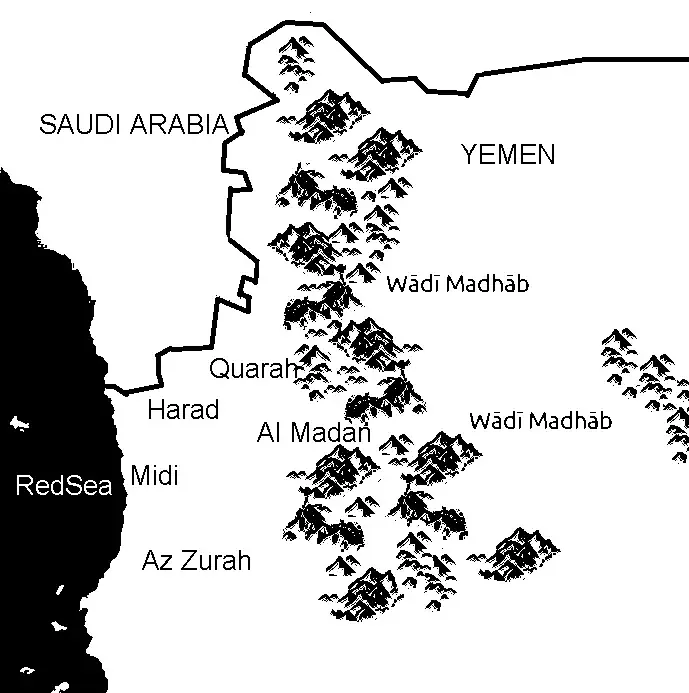
The rugged mountain frontier between Saudi Arabia and Yemen has been a battleground on and off for more than a decade.
Image Credits: Underlying lk, via Wikimedia Commons (CC BY-SA 3.0)
Who are the Houthis?
The Houthis, officially Ansar Allah, are a Zaidi Shia Muslim group that emerged in 1990s and early 2000s from northern Yemen's Saada region. Zaidis, who are distinct from Iran's Twelver Shia Islam, have ruled much of northern Yemen for centuries, prior to the 1962 revolution that overthrew an imamate dynasty.
The group is named after Hussein Badreddin al-Houthi, a prominent religious and political figure who condemned the Yemeni government, the United States and Israel. Following his death at the hands of Yemeni security in 2004, the Houthis engaged in a series of wars with the Yemeni government of Ali Abdullah Saleh, between 2004 and 2010.
The Houthis accused Saudi Arabia of backing Saleh's military campaigns against the Houthis, and in 2009 and 2010, fighting broke out across the border, with Saudi forces clashing against Houthi militias in the mountainous frontier area.
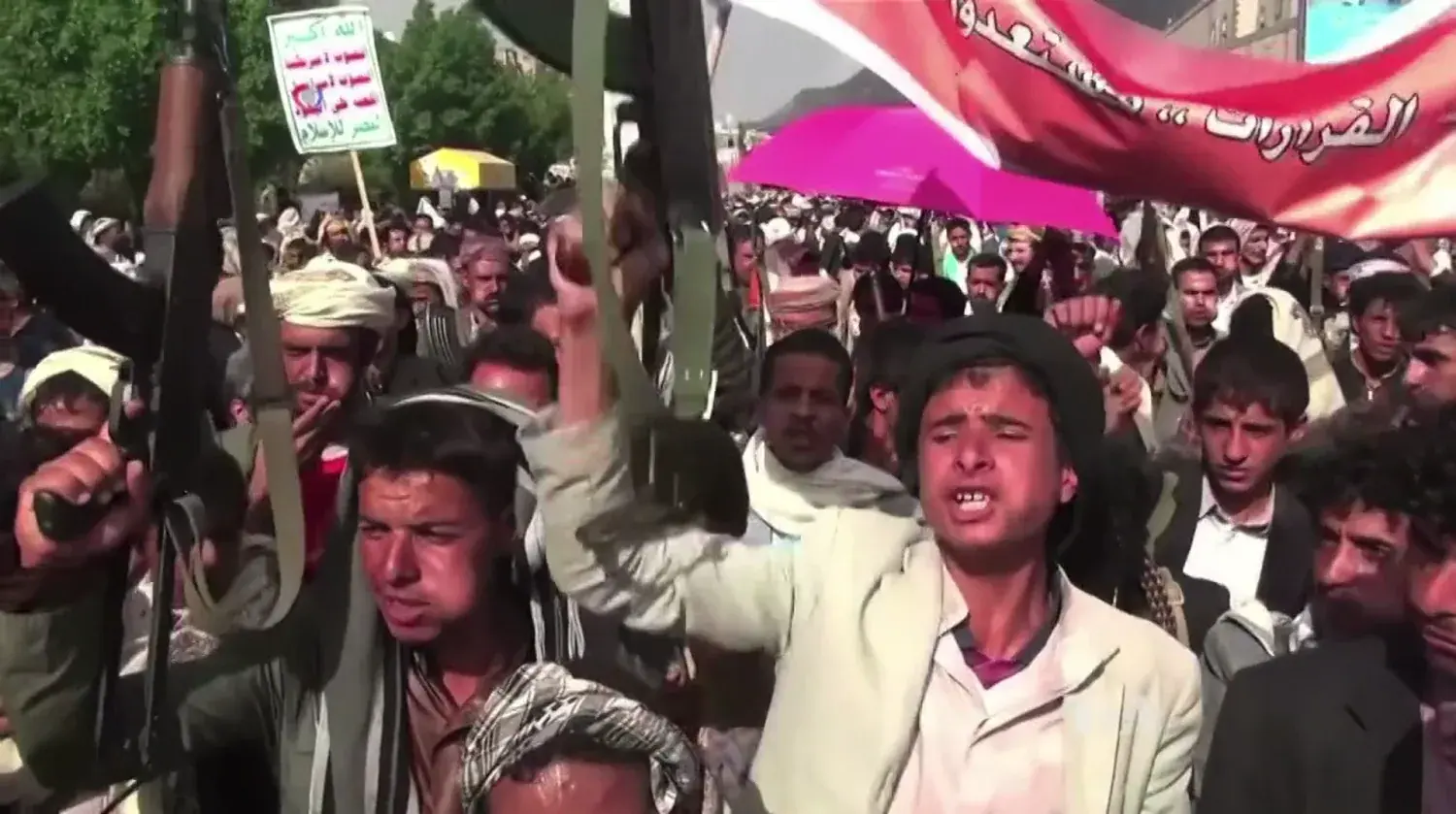
Saada, the Houthis' historic stronghold in northern Yemen, has been the movement's base since its founding.
Image Credits: Henry Ridgwell (VOA), via Wikimedia Commons (Public domain)
How did the Yemen war start?
Yemen's 2011 popular uprising led to a power transition deal, which seated Abd Rabbuh Mansur Hadi, Saleh's deputy, as president. However, Hadi's government was plagued by economic crises, corruption scandals, southern separationist movements and security challenges, including al-Qaeda.
The Houthis, with the help of Saleh's forces, took advantage and captured the capital, Sanaa, in September 2014. By early 2015, Hadi's government had collapsed, and he fled south and later to Saudi Arabia.
Saudi Arabia viewed the Houthi takeover of Sanaa as a direct security threat and a sign of deepening Iranian influence on its southern border. In March 2015, it launched a coalition campaign of Arab states, which intervened in Yemen in an effort to restore Hadi's government.
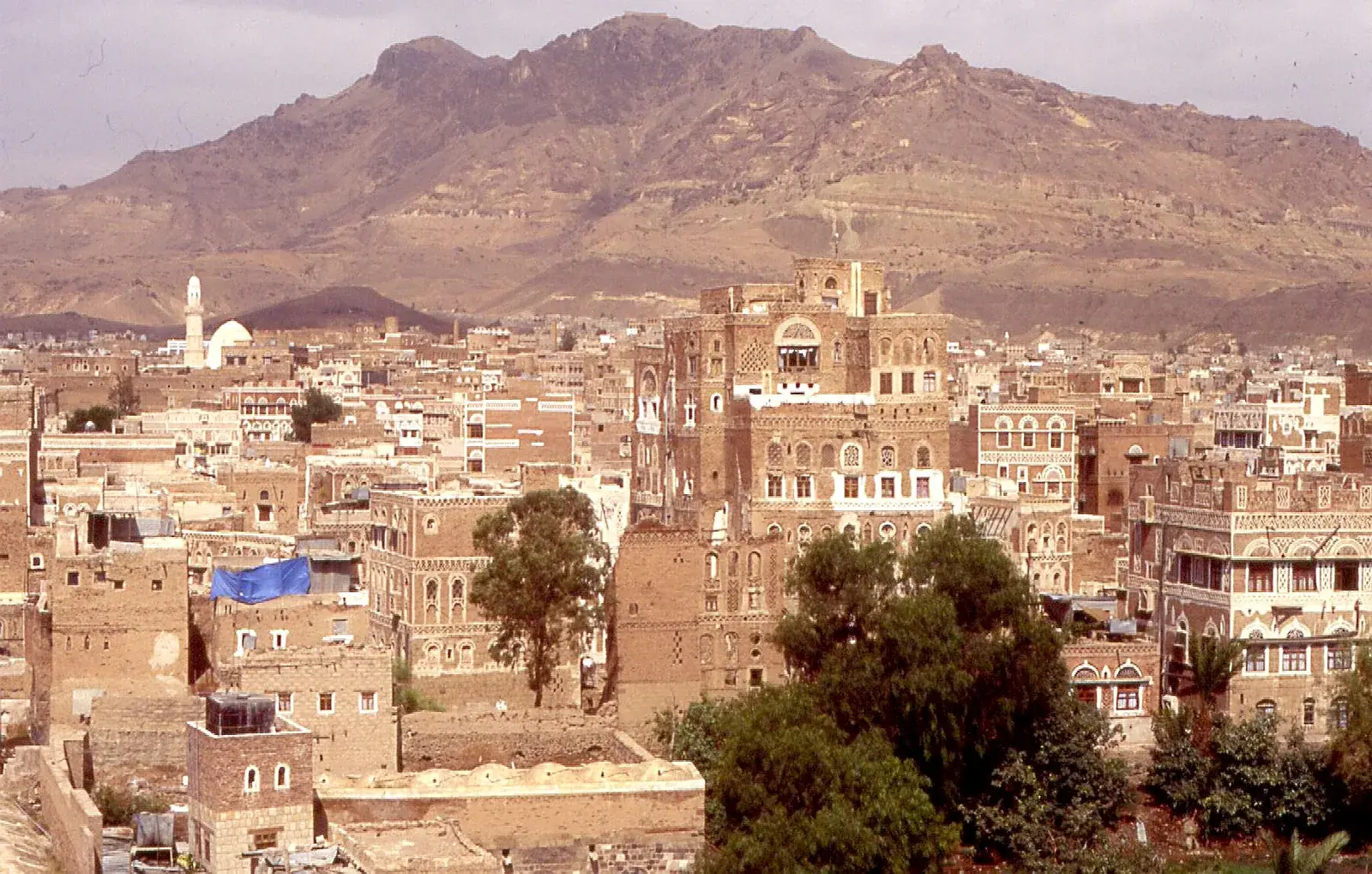
Houthi forces, backed by units loyal to former president Ali Abdullah Saleh, captured Sanaa in September 2014.
Image Credits: loose_grip_99, via Wikimedia Commons (Public domain)
Iran's role in the Houthi movement
Iran's role in the Houthi uprising has been a matter of contention, as UN investigators and Western governments have uncovered Iranian origin weapons, technology and training, which have found their way to the Houthis.
At the same time, there is also an argument that the Houthis are not an Iranian puppet, but a local phenomenon with its own political and military agenda. In fact, some reports suggested that Iran was hesitant to the idea of the Houthi takeover of Sanaa in 2014. Nevertheless, Iranian support has allowed the Houthis to develop increasingly sophisticated missile and drone technology.
The war comes to Saudi's border
With the Saudi-led intervention, the Houthis took the fight to Saudi Arabia's border. In May 2015, Houthis shelled Saudi's Najran, forcing the closure of schools and the regional airport.
Najran, Jazan and Asir border provinces became battlegrounds, where Houthi forces engaged Saudi border posts, conducted cross-border raids and fired rockets and mortars at military and civilian sites. Saudi Arabia responded with airstrikes, artillery and ground offensives, which caused numerous casualties on both sides.
Saudi authorities regularly reported soldiers and civilians killed by shelling, landmines and projectiles from Yemen, while coalition airstrikes caused heavy damage to Houthi-controlled areas.
Missiles and drones strike Saudi cities
The Houthis not only engaged in border raids, but began striking further into Saudi territory, using increasingly sophisticated missiles and drones.
On November 4, 2017, Houthis fired a ballistic missile towards King Khalid International Airport in Riyadh, which Saudi Arabia claimed to intercept. The Houthis claimed the missile hit its target, while Saudi Arabia accused Iran of providing the missile, which Iran denied.
In March 2018, Houthis fired several missiles towards the Saudi capital and other cities, where debris from one of the intercepted missiles killed one person. Targeting of Saudi airports became common in Houthis' attacks, including in Abha International Airport, which resulted in numerous civilian casualties in 2019.
Attacks on Saudi oil infrastructure
Saudi oil infrastructure became a frequent target. In May 2019, drones struck the kingdom's East-West oil pipeline. The most significant attack was carried out on September 14, 2019, when drones and missiles targeted Saudi Aramco's facilities at Abqaiq and Khurais, temporarily cutting Saudi oil production by about 50%. The Houthis claimed responsibility, but the United States and Saudi Arabia blamed Iran, which denied involvement.
Attacks continued in following years, with Houthis' drones targeting refineries, storage facilities and distribution centers in cities, including Riyadh, Jizan, Ras Tanura and Jeddah. On March 25, 2022, a strike on an Aramco facility in Jeddah city caused a plume of smoke over the city just days before the Saudi Arabian Grand Prix.
Coalition airstrikes and humanitarian impact
Inside Yemen, the war has caused untold humanitarian suffering. Coalition airstrikes not only targeted military sites, but also markets, weddings, hospitals and school buses, drawing condemnation from human rights groups and the United Nations. The Houthis were also accused of a number of war crimes, including shelling civilian areas, child recruitment and obstruction of humanitarian aid.
In January 2022, after a Houthi missile strike on the United Arab Emirates' Abu Dhabi, coalition airstrikes hit a detention center in Saada, killing dozens of people. Another strike cut off Yemen's internet connection.
A naval and air blockade by the coalition prevented imports of fuel, food and medicine into Houthi-controlled areas. Combined with economic and health challenges, the war pushed millions of Yemenis to famine. By the end of 2021, the UN estimated that 377,000 people in Yemen have died due to the war's direct and indirect consequences.
International pressure and shifting US position
The US has initially offered logistical and intelligence support to the Saudi-led coalition. However, as civilian casualties mounted, the support came under increased scrutiny and criticism in Congress.
The 2018 murder of journalist Jamal Khashoggi backfired on the Saudi monarchy and led the US Senate to vote to halt US support for the war, which was vetoed by the President. In February 2021, President Joe Biden announced the end of US support for offensive operations in Yemen, and the commitment to continue aiding Saudi Arabia's defense against Houthi attacks.
The 2022 truce brings rare calm
After years of stalemate, Yemen's warring factions agreed to a nationwide truce brokered by the UN that took effect on April 2, 2022. The truce allowed fuel ships into Houthi-controlled Hodeidah and resumption of some commercial flights from Sanaa airport.
While the official truce expired in October 2022, there was a significant reduction in hostilities, with the two sides engaging in direct talks, prisoner exchanges and, in 2023, Houthi delegations visiting the Saudi capital. The overall geopolitical environment also improved, after Saudi Arabia and Iran re-established relations in March 2023. Optimism abounded that a détente might finally end the war in Yemen.
Gaza, the Red Sea and uneasy containment
After the Hamas attack on Israel in October 2023, the Gaza war and the Houthi attacks on Israel and ships in the Red Sea, the United States and Britain carried out airstrikes on Houthi sites. Saudi Arabia generally kept out of the confrontation, avoiding the involvement in a confrontation with Israel, which it did not recognize. It also declined to join the US-led naval coalition, in order to preserve the truce with the Houthis. For the most part, the Houthis avoided attacking Saudi, with the exception of a September 2023 Houthi drone attack that killed Bahraini soldiers serving with the Saudi-led coalition near the Saudi-Yemeni border.
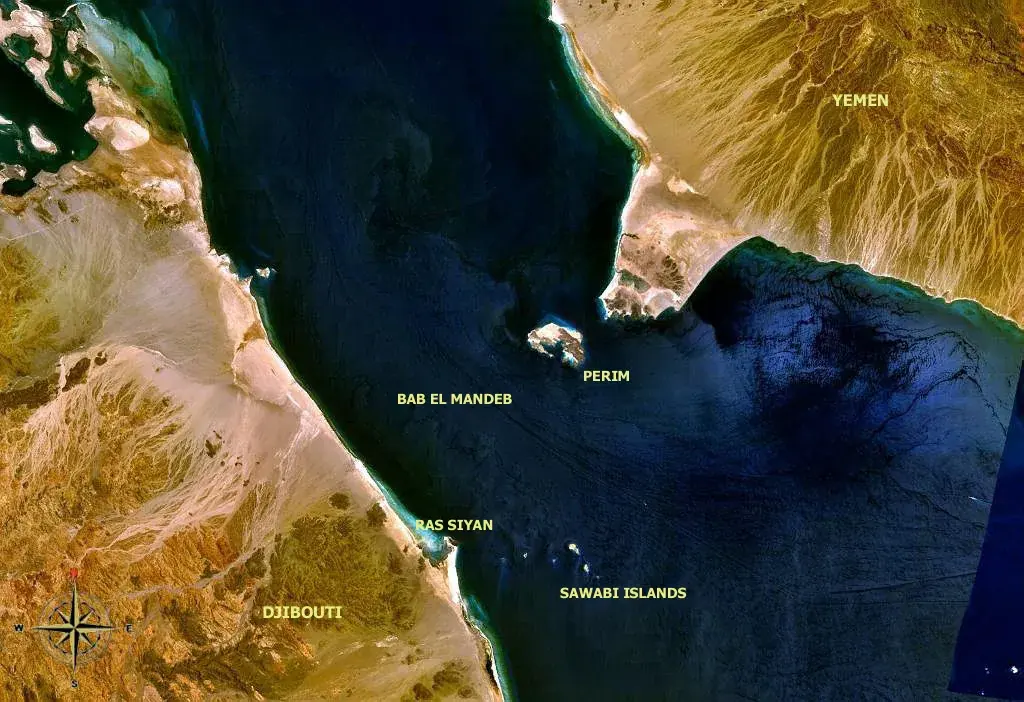
The narrow Bab al-Mandeb Strait, a chokepoint for global shipping, sits at the heart of the Houthis' Red Sea campaign.
Image Credits: From WorldWind software, via Wikimedia Commons (Public domain)
The 2026 return to open conflict
The fragile calm disintegrated in 2026, amidst the greater regional tensions, including the war between the US and Iran that started in February. According to news reports, a provocation was carried out by the Houthis, who attempted to fly an aircraft from Tehran to Sanaa, thus challenging the coalition's restrictions. A coalition airstrike hit the airport's runway, to which the Houthis responded with a missile and drone attack on Saudi Arabia, effectively ending the truce that had been mostly in place since 2022.
In July 2026, Saudi Arabia's air defenses intercepted a Houthi ballistic missile launched towards the south of the kingdom. Inside Yemen, hostilities also intensified, with the Houthis attacking government forces in Marib and Hadramout and advancing towards the Red Sea coast of Yemen.
The fighting escalated sharply in September, with a wave of Houthi missile and drone attacks on southern Saudi Arabia, which wounded more than 70 people, according to Saudi authorities, and caused fires at oil facilities and utilities. The Houthis said the attacks were in retaliation for Saudi airstrikes across Yemen. Saudi-led and Yemeni government forces responded with increased air and ground operations, including around the strategically important Bab al-Mandeb Strait.
Why the Houthi-Saudi conflict matters
The Houthis-Saudi conflict matters far beyond Yemen and Saudi Arabia, as the Bab al-Mandeb, the strategic strait which connects the Red Sea to the Gulf of Aden and Indian Ocean, may be affected by fighting. The conflict is also tied to the larger Iran-Saudi rivalry, as well as regional proxy wars involving Israel, the United States and Gulf states. Each step up in hostilities risks involving other regional powers.
Most importantly, the conflict has devastating impact on Yemenis. A decade of war has decimated the local economy and made one of the poorest Arab countries dependent on humanitarian aid.
Can the war end?
The 2022 truce demonstrates that negotiations are possible and necessary. Saudi Arabia seeks to secure its borders and focus on its economic transformation agenda, while the Houthis seek wider international recognition, economic relief and territorial integrity. Iran, Oman, the UN and other regional players all have a role to play.
However, the war's renewed outbreak in 2026 demonstrates the fragility of such negotiations, particularly amid the regional tensions. Any lasting peace would require not only an agreement between Saudi Arabia and Houthis, but also an inclusive political settlement, which would address the concerns of Yemen's many factions, as well as economic reconstruction efforts in a country ravaged by war.