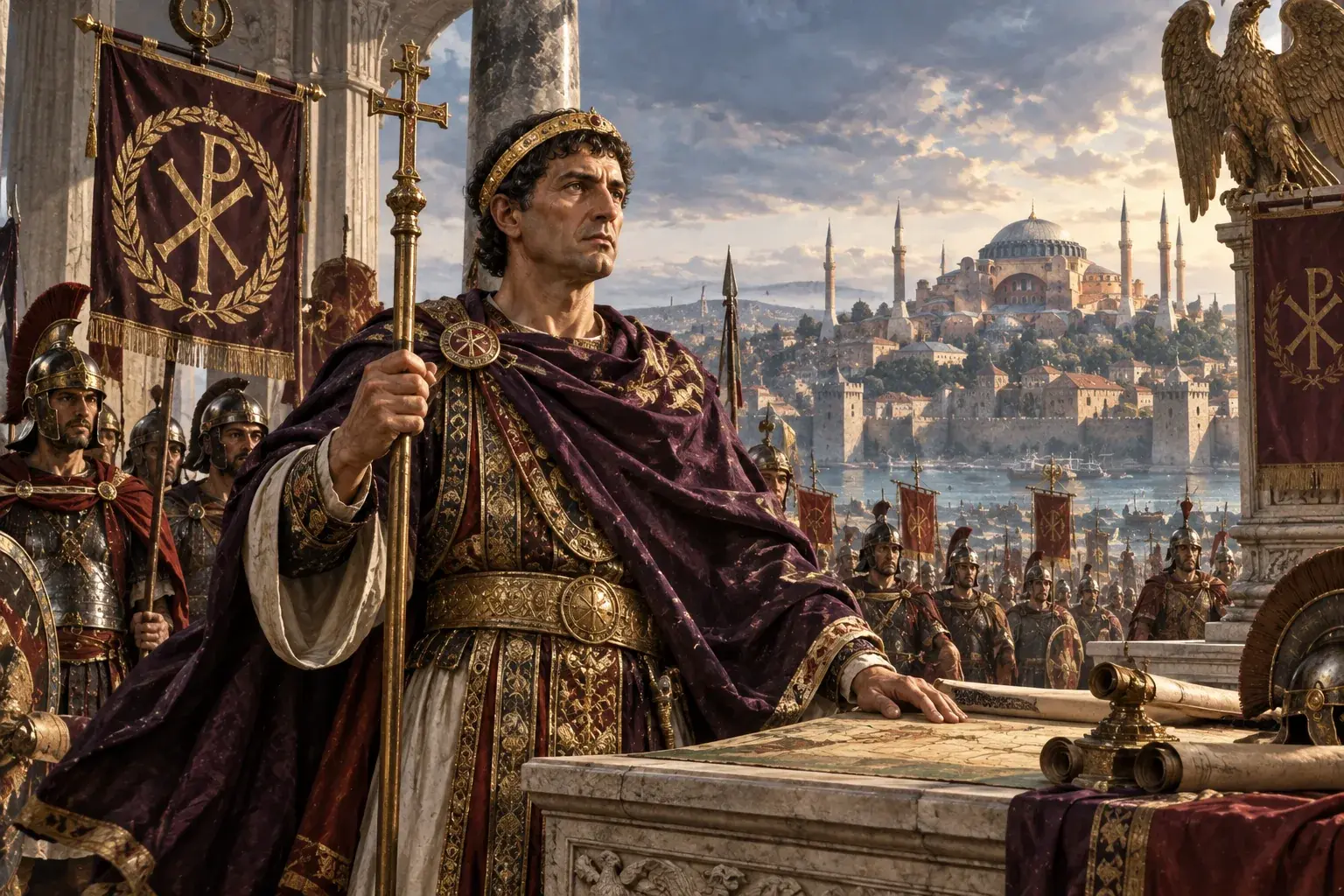
Theodosius I was the last man to rule the whole Roman Empire from a single throne, and he held it for barely four months before his death split it for good between his two sons. Medieval legend remembers a saintly emperor who once knelt in penance at a cathedral door. The real story, historians now argue, is messier: a pragmatic ruler who inherited a military disaster, cut a deal with the Goths that would haunt his successors, and fought two civil wars to secure his family's throne.
Theodosius I was the last man to rule the entire Roman Empire, east and west, from one throne. He held on for just a few months. After a decisive victory in a civil war in September 394, he died in Milan the following January, and the empire was split between his two young sons. It was to no longer be united.
For centuries, Theodosius has been acclaimed as a model Christian emperor, whose piety was unmatched and who had the humility to kneel in prayer to a bishop. Modern scholars have been less charitable, and most of his supposed virtues turn out to be fictions created by medieval scribes. The real Theodosius was a pragmatic emperor, who inherited a military disaster, compromised where he should have stood his ground, and waged two civil wars in part to promote his own family.
Early Life: Son of a General from Hispania
Theodosius was born on January 11, 347, in Hispania, which comprised modern Spain and Portugal. His father was also called Theodosius and was a successful general under Emperor Valentinian I, and his mother was Thermantia. The family were minor aristocrats in Hispania, and ancient writers liked to compare Theodosius to the famous Spanish-born Roman emperor Trajan.
Little is known about Theodosius's early life. One historian has speculated that he spent his youth as a soldier on the frontiers, following in the footsteps of his father. Another ancient author claimed he had a good education, and took an interest in history as a guidebook for life. Remarkably, he never returned to Spain after becoming emperor.
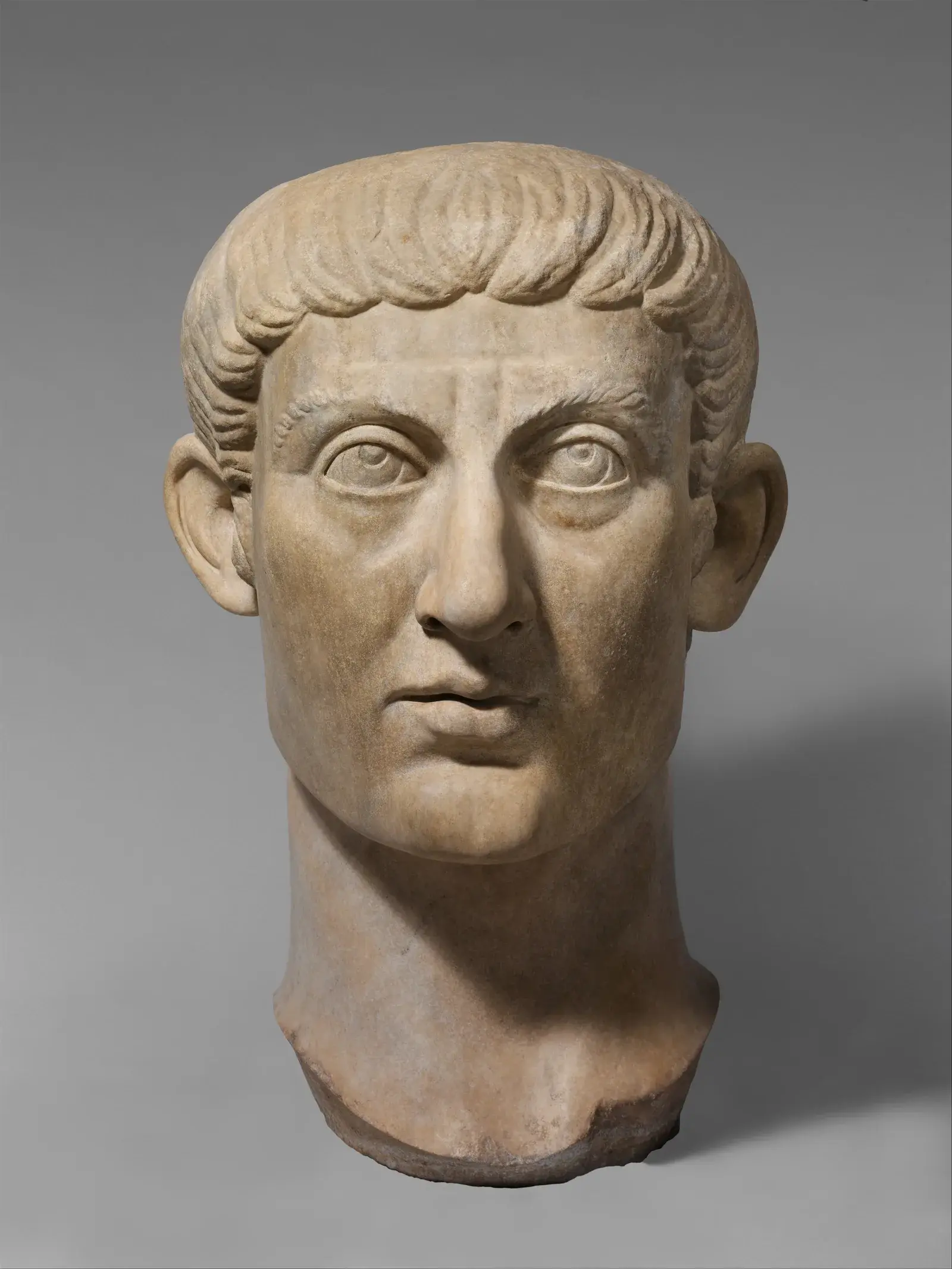
Little survives about Theodosius's youth in Hispania, but portrait busts like this one give us our best sense of how the emperor was depicted in his own lifetime.
Image Credits: The Metropolitan Museum of Art (CC0)
Military Career, Disgrace and a Comeback
The first historical reference to Theodosius comes in 368, when he accompanied his father on a campaign to Britain to crush a revolt known as the "Great Conspiracy" by various barbarian tribes. By 374 he had his own command as military governor of Moesia Prima on the Danubian frontier, and that autumn he defeated an invasion by the Sarmatians.
His life took a downhill turn around 375, when his father fell out of royal favor and was murdered in mysterious circumstances. The younger Theodosius retired to the family estates in Spain, escaping the wrath of those responsible for his father's death. Modern historians blame a court favorite named Maximinus for the purge, although some people have linked it to the turbulent accession of the underage emperor Valentinian II.
The fall from grace was not permanent. Maximinus himself was deposed and executed around 376 and Theodosius's kinsmen were given prominent posts by the emperor Gratian. By 377 Theodosius was once more in a military post, facing the Sarmatians.
The Battle of Adrianople and Theodosius's Rise to Power
Disaster struck in August 378, when the eastern emperor Valens was killed in battle against the Goths at Adrianople, along with many of the Roman army's commanders. With the western emperor Gratian still a young man, and many of the eastern generals dead, disgraced or of barbarian origin, Theodosius - despite a modest record - was the safe choice to succeed Valens. On January 19, 379 a council of officials elected him emperor at Sirmium, with Gratian's reluctant blessing.
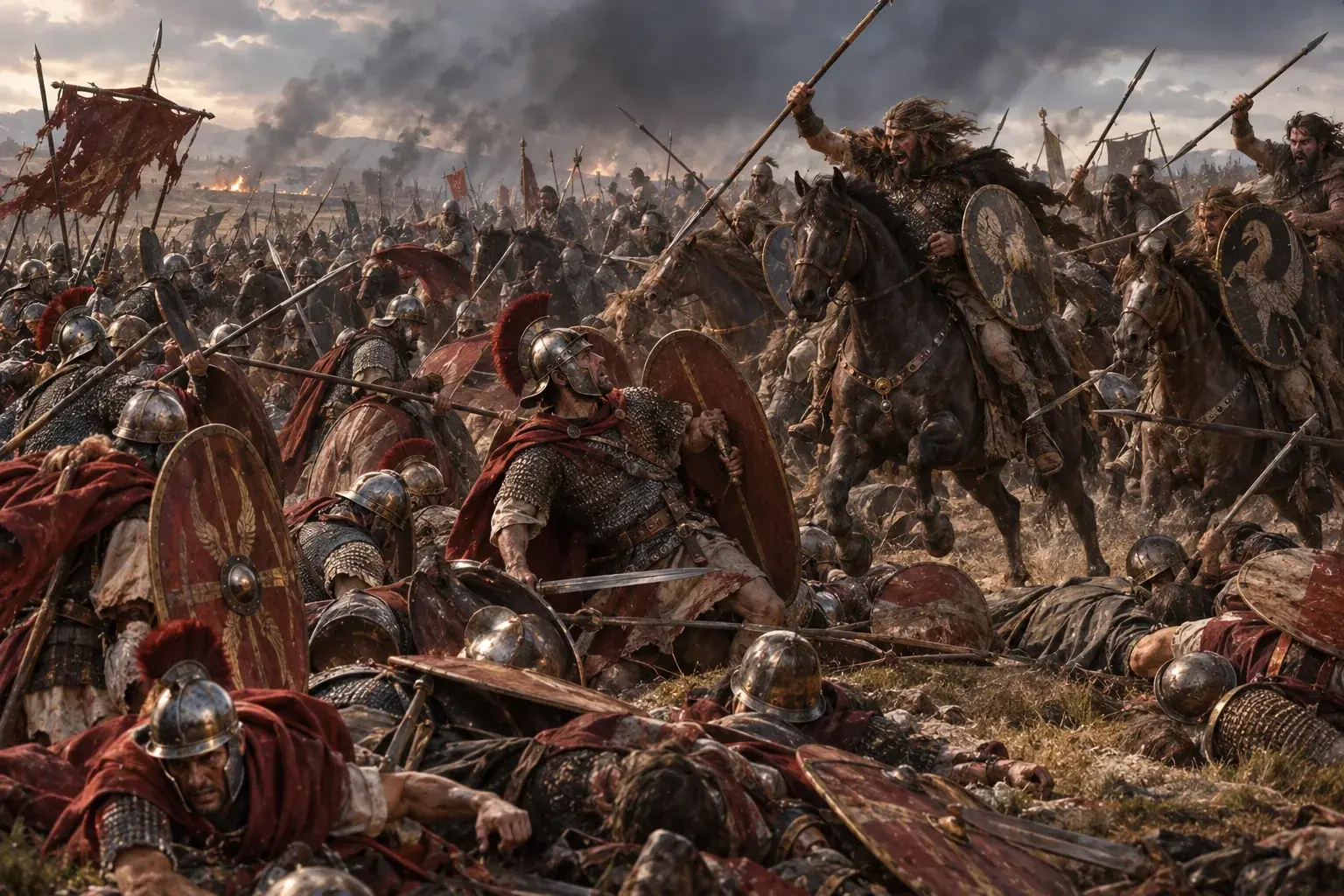
The catastrophic Roman defeat at Adrianople in 378, where Emperor Valens and much of his army perished, opened the door for Theodosius's rise to power.
Ending the Gothic War on Gothic Terms
The task facing the new emperor was a thankless one. Bands of Goths were ravaging the Balkans, and Theodosius's resources were limited. He enforced harsh recruitment rules, impressing peasants and miners into the army and fining them if they failed to hand over deserters. He also recruited large numbers of non-Roman soldiers, including Goths who had defected across the Danube.
The campaigning was slow progress. Theodosius's generals scored some small victories in 379, but suffered at least one major defeat in 380, blamed on the undisciplined new recruits. That autumn Theodosius fell seriously ill and was baptized, a public sign that he was a man of Christian faith. He recovered, and by November he felt well enough to move his court to Constantinople.
In January 381, he scored a propaganda victory when the Gothic leader Athanaric visited Constantinople and submitted to Roman authority. When Athanaric died that month, Theodosius arranged a magnificent funeral - a sign that he was willing to make peace with the Goths. The new emperor now realized that the Goths were a permanent feature of the Balkans.
The treaty with the Goths was signed on October 3, 382. They would be allowed to settle south of the Danube in return for military service, a generous deal by Roman standards. Instead of ruling directly over the Goths, Theodosius accepted their submission to the Roman Emperor, but allowed them to retain their internal autonomy and fight for Rome as a self-governing force. It would prove a temporary respite for the empire, but the presence of a large, well-armed and autonomous people group within the empire would cause future problems for Theodosius's successors.
Peace With Persia and Life at Court
Theodosius was successful in securing the eastern frontier too. After prolonged negotiations with the Sasanian king Shapur III, the two powers agreed to divide the disputed Kingdom of Armenia, a peace treaty later called the Peace of Acilisene. It was traditionally dated to 387, and marked the beginning of a long period of friendly relations between the Roman and Persian Empires.
His personal life was filled with both happiness and heartbreak. His first wife, Aelia Flaccilla, bore him two future emperors, Arcadius and Honorius, and a daughter, Pulcheria. In 383 he named Arcadius co-emperor. Flaccilla and Pulcheria both died by 386, and their funeral orations were given by the theologian Gregory of Nyssa. Meanwhile, Theodosius's niece, Serena, married the general Stilicho, who would play a leading role in the western empire after Theodosius's death.
He was a generous benefactor to his capital city. Most famously, he greatly enlarged the ancient Forum of Taurus in Constantinople, decorating it with a triumphal column and arch in his own honor.
The First Civil War Against Magnus Maximus
In 383, a general named Magnus Maximus was proclaimed emperor in Britain, and had crossed into Gaul and killed Gratian at Lyon. Theodosius was hard-pressed, and in 384 he made a truce with Maximus, allowing him to retain his western territories beyond the Alps while Valentinian II, the underage son of Gratian, ruled Italy.
The uneasy peace collapsed in 387, when Maximus invaded Italy. Valentinian fled east with his mother Justina and appealed to Theodosius for help. That autumn at Thessalonica, Theodosius married the emperor's sister, Galla, sealing an alliance between the two courts.
In 388 Theodosius marched west and defeated Maximus at Poetovio, and had him executed on August 28. The young son of Magnus Maximus, Victor, was also killed not long afterwards. Theodosius celebrated his victory in Rome in 389 and remained in Milan until 391, filling the key posts with his own men, including the Frankish general Arbogast.
Historian Peter Heather believes we can read Theodosius's actions in the west as a deliberate strategy. Heather argues Theodosius avoided choosing a single western co-emperor, in order to leave his two sons, Arcadius and Honorius, to inherit both sides of the empire. The move led to resentment in the west, and the growth of a tradition of usurpation in subsequent decades.
The Massacre of Thessalonica in 390
The darkest episode of Theodosius's reign - and perhaps of his life - took place in Thessalonica, while he was away campaigning. According to the church historian Sozomen (widely regarded as the most reliable of his contemporaries), a mob rose up in April 390. Butheric, the local commander stationed at Thessalonica, had imprisoned a popular charioteer accused of attempted rape. The charioteer's supporters demanded his release, but Butheric refused, and the crowd killed him.
The Roman authorities responded by massacring thousands of civilians in the city's hippodrome. Beyond establishing that a massacre had taken place, little is known with certainty. The primary sources are all later church historians, and give widely varying accounts of what happened. No ancient author present at the event gives us anything more than his interpretation of what may have occurred.
Who is to blame for the massacre remains a matter of dispute. Some historians believe Theodosius gave orders to massacre the people of Thessalonica, while others think it was a case of excessive punishment authorized by the emperor. The historian Neil McLynn feels Theodosius could not control the actions of his troops so far away, and invented the orders as an excuse. He was probably not responsible for the deaths that occurred.
Ambrose, Theodosius and the Myth at the Church Door
One of the most famous episodes in Christian history took place in the aftermath of the massacre. Ambrose, the Bishop of Milan, refused to give Theodosius communion until he had performed public penance for his sins. Subsequent medieval legend, and 17th century painter Anthony van Dyck, would turn this into the story of how a pious bishop had blocked the doors of the cathedral to a repentant emperor.
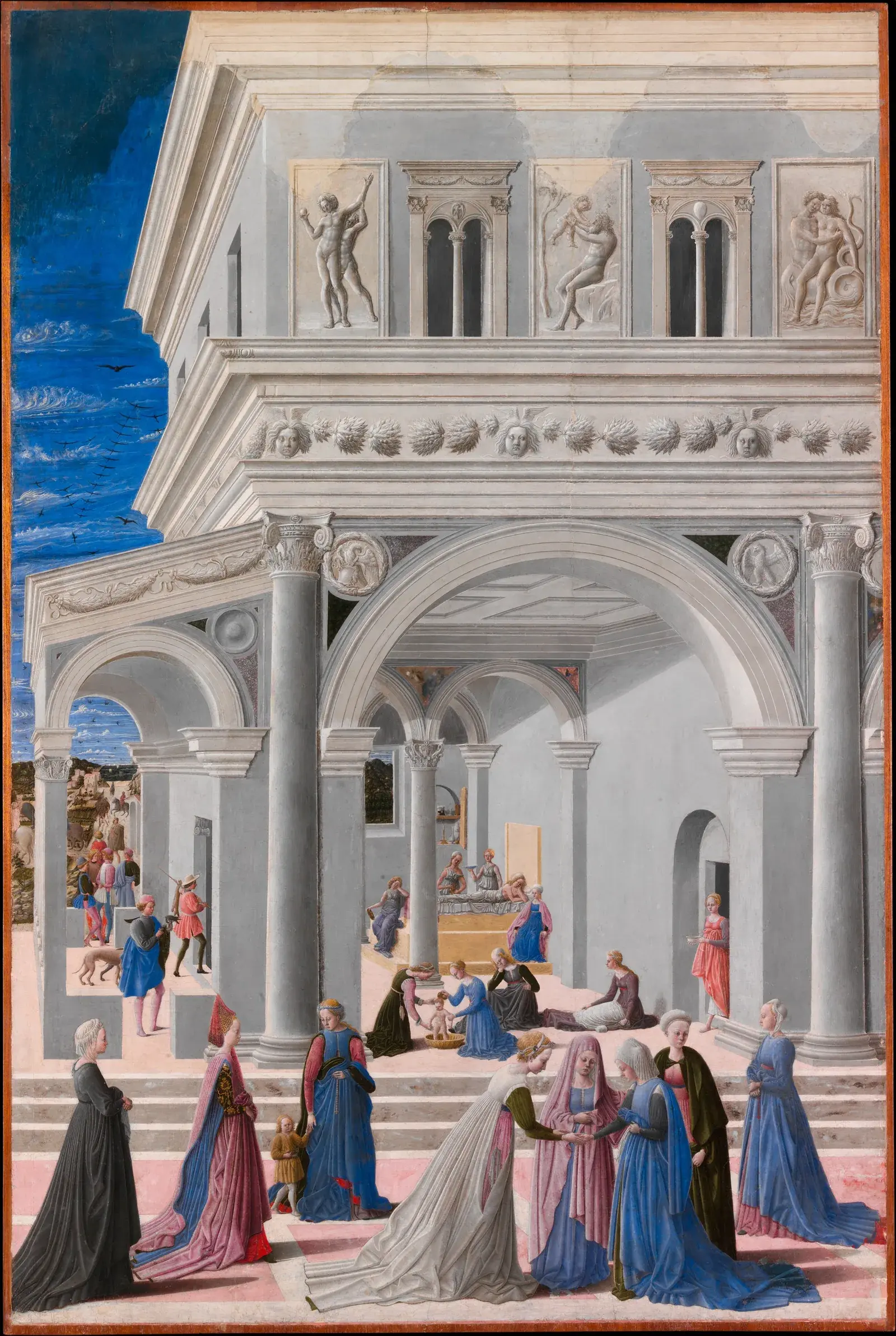
Legend and later art, including a famous 17th century painting by Anthony van Dyck, depicted Ambrose physically blocking Theodosius from the cathedral - a dramatic scene historians now consider a later invention.
Image Credits: Fra Carnevale (Bartolomeo di Giovanni Corradini), via The Metropolitan Museum of Art (CC0)
This dramatic scene never happened. Both historians - most notably Peter Brown and McLynn - and modern scholars consider the church-door episode to be a literary fiction created by the 5th century theologian Theodoret. According to Ambrose's own writings, he had privately offered Theodosius an alternative route to redemption through a private act of penitence, rather than a public display of humiliation. Theodosius complied, and for some time wore his beard and prayed at the altar without his imperial robes. He was readmitted to communion at Christmas.
Since its publication in 1776, Edward Gibbon's History of the Decline and Fall of the Roman Empire has interpreted the episode as a sign that the Christian church had acquired too much power over the Roman state. Modern scholars such as Alan Cameron maintain it was not unusual for contemporary emperors to consult bishops on theological and political matters. McLynn adds that the two men's letters to each other resemble more the negotiations between two political entities, the Roman state and the church in Italy.
The Second Civil War and the Battle of the Frigidus
Unrest in the west grew, and on May 15, 392, Valentinian II was found dead in his chamber at Vienne in Gaul. Arbogast, with whom he had recently had a public falling out, declared the death to be a suicide. Since he was a Frank, not a Roman, he could not claim the throne himself, and in August 392 a court favorite named Eugenius was appointed emperor.
Theodosius responded with ambiguous messages to Eugenius's envoys, and in January 393 he named his younger son Honorius as co-emperor, making it clear who he intended to succeed him. Both sides prepared for war, and in 394 Theodosius mustered a great army that included the Gothic allies he had settled inside the empire, and auxiliary troops from the Caucasus and Arabia.
On Sept 5, 394, the two forces clashed at the Frigidus River (modern Vipava in Slovenia). The battle was a disaster for Theodosius, with thousands of his Gothic troops dying on the first day of fighting. On the second day a strong Bora wind blew directly into the faces of Eugenius's troops, scattering them. Eugenius was captured and executed, and Arbogast committed suicide a few days later.
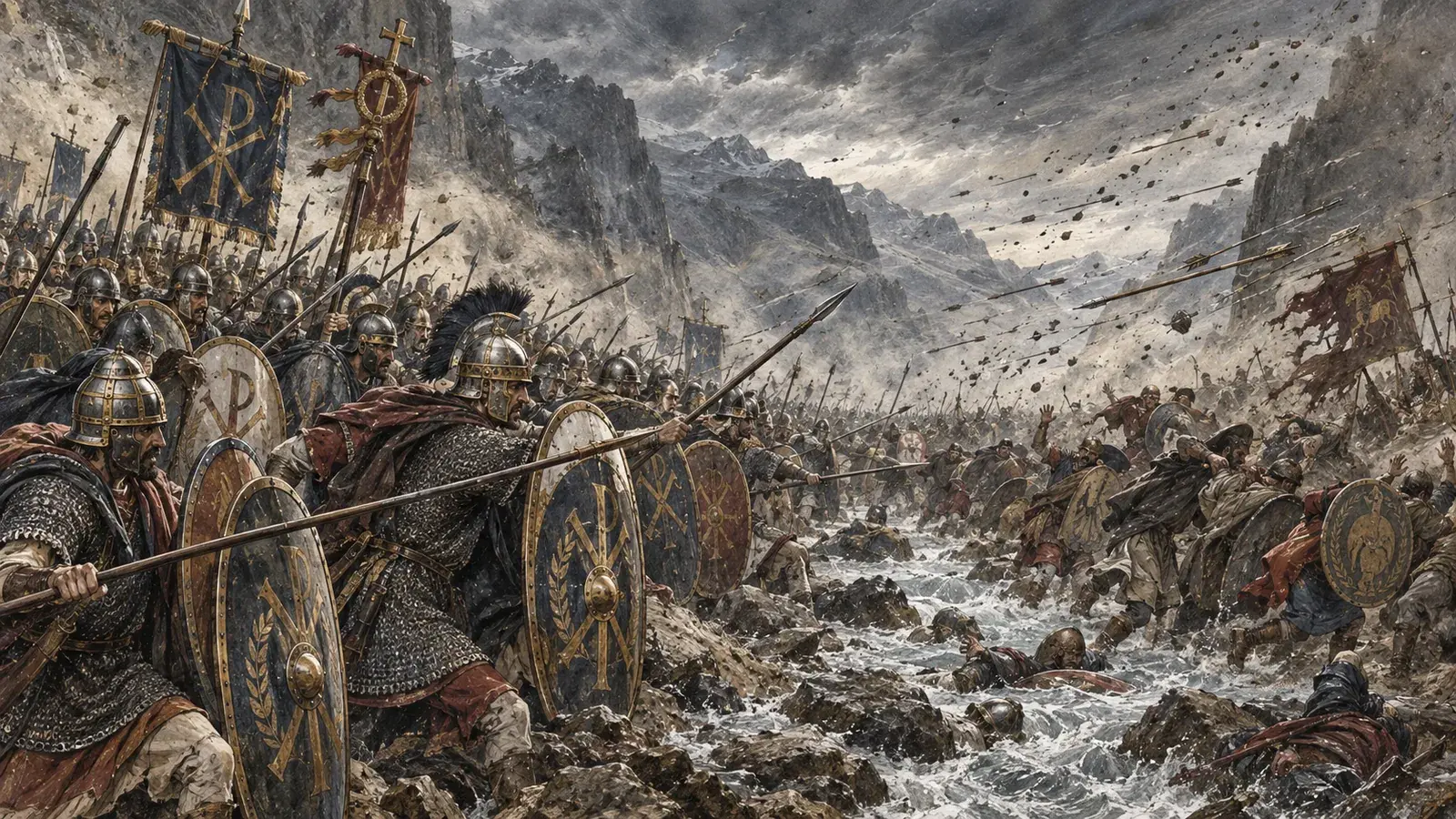
At the Battle of the Frigidus in 394, a sudden Bora wind is said to have turned the tide, blowing directly into the faces of Eugenius's troops on the battle's second day.
Christian writers later interpreted the Battle of the Frigidus as a sign of the pagan reaction against Christianity. Many modern historians consider this reading to be the stuff of medieval romance. Cameron states that the most important source for the career of Eugenius is demonstrably fraudulent. Scholars such as Michele Renee Salzman and Maijastina Kahlos maintain that religion was not at the heart of the conflict. It was a struggle for political power rather than a spiritual one.
Death and Burial
Theodosius's great triumph was short-lived. He died of an illness featuring severe swelling on January 17, 395 in Milan. His body remained in state for forty days, and Ambrose delivered a eulogy for the man who had chosen to promote Nicene Christianity and persecuted the Arians. In November his body was taken to Constantinople and buried in the Church of the Holy Apostles in a sarcophagus of porphyry. His two sons took over the empire, Arcadius ruling in the east and Honorius in the west.
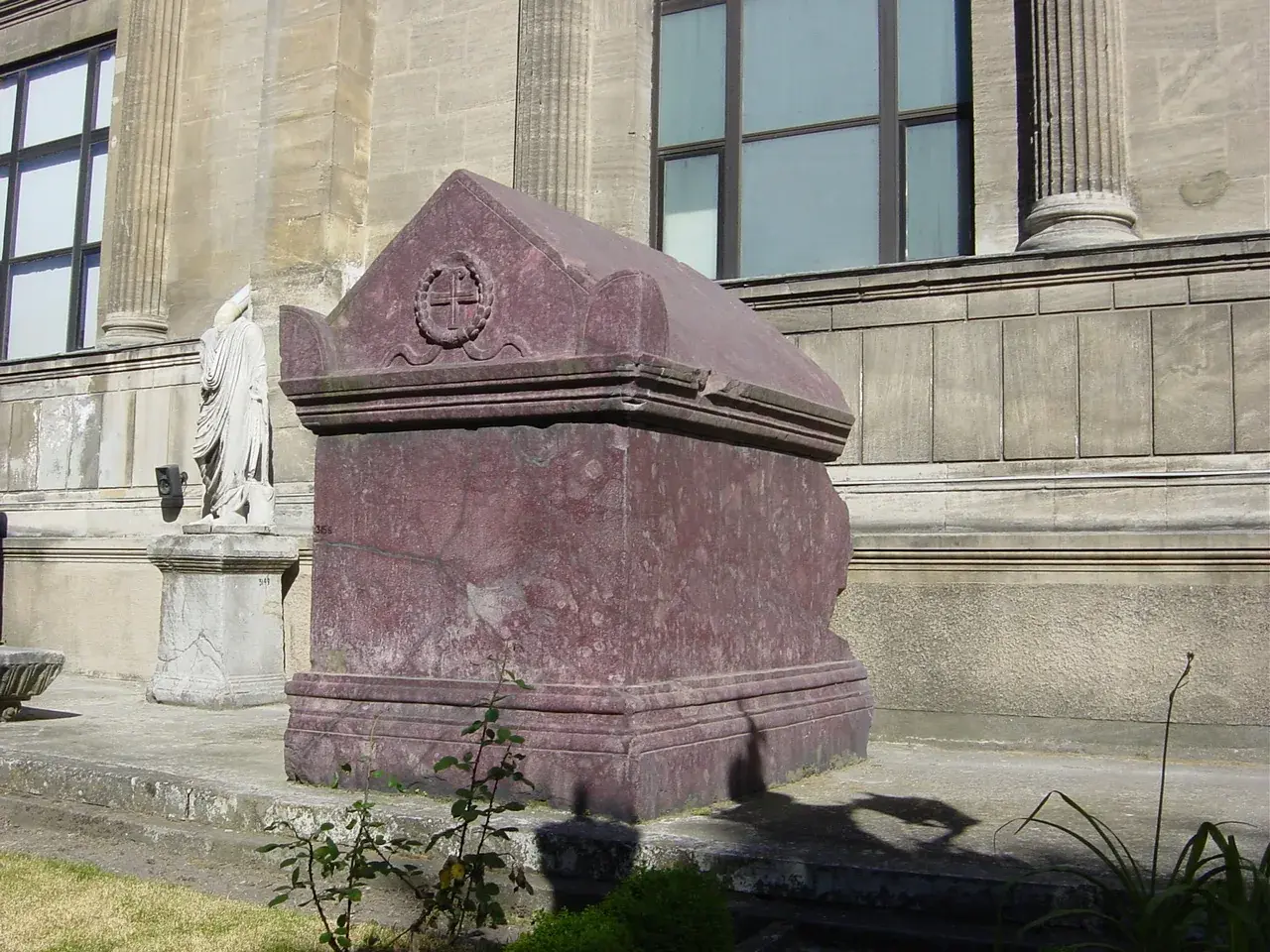
Theodosius was buried in Constantinople's Church of the Holy Apostles in a sarcophagus of porphyry, the deep purple stone reserved for imperial burials.
Image Credits: G.dallorto, via Wikimedia Commons (Attribution)
Religious Policy: Nicene Christianity and the Council of Constantinople
Theodosius's most enduring legacy is his impact on the Christian world. Christianity was bitterly divided in his lifetime, and especially over the Arian controversy, which pitted the orthodox Nicene Christians - who believed Christ the son was equal to God the Father - against the Arians, who believed he was a lesser divine being. Theodosius was a Nicene Christian, and a committed one.
On February 28, 380, he and his co-emperors Gratian and Valentinian II issued the Edict of Thessalonica, which named the Nicene faith as the only acceptable form of Christianity. The edict, addressed to the people of Constantinople, declared that all those who did not accept the Nicene creed were heretics. Some modern scholars urge caution in reading too much into this document. It appears to have been aimed at Constantinople rather than the empire as a whole, it seems to have made little impact on the population, and it did not require Jews and pagans to convert. Nevertheless, it was the first known Roman law defining religious orthodoxy.
On his arrival in Constantinople in late 380, Theodosius expelled the city's anti-Nicene bishop, and replaced him with Gregory of Nazianzus. In 381 he called the First Council of Constantinople, which affirmed the Nicene position and declared the Holy Spirit to be of equal divinity to the Father and the Son. The council also ranked Constantinople as second in importance to Rome.
Did Theodosius Really Destroy Paganism?
This question is probably the biggest flashpoint between the traditional view of Theodosius and modern historians. For centuries, he has been praised as the emperor who extinguished the religions of the ancient world. This reputation has largely been ascribed to Theodoret, who historian Malcolm Errington accuses of willfully ignoring inconvenient facts.
The truth appears to be more nuanced. Theodosius revived legislation banning animal sacrifices and divination, but for most of his reign temples were allowed to operate normally, and many pagan practices continued in the open. He appointed several senior pagan officials, and in 391 the last pair of pagan consuls in Roman history served under his orders. On the death of his zealous Christian prefect Cynegius, who had persecuted pagans throughout the east, Theodosius replaced him with a more lenient pagan who left the temples alone.
Theodosius failed to halt the destruction of pagan sites by Christian mobs, and even had some officials carry out the demolition of shrines, including the great Serapeum of Alexandria around 391 or 392. In 391 and 392 new anti-pagan laws were enacted, but historians generally agree they were not widely enforced.
Modern archaeology supports a view of things as more nuanced than fanatics of either faith would have us believe. While written sources tell of dozens of pagan temples destroyed in this period, only a handful have been positively identified by excavation. Cameron writes outright that Theodosius did not ban paganism, and that his biographer, Mark Hebblewhite, described his religious policies as being targeted and tactical, designed to keep the peace rather than to exterminate a faith. Across most of the empire, paganism diminished gradually over the course of the 4th century.
The Theodosian Renaissance in Art
The period of Theodosius's reign saw an artistic revival, as rulers and officials turned to classical styles and drew inspiration from earlier Roman traditions. These works, some of which have survived, are collectively called the Theodosian renaissance by modern scholars.
The most notable pieces include the silver Missorium of Theodosius, discovered in Spain in 1847, and the column of Theodosius and Arcadius. Perhaps the best-preserved and most famous work of art from the reign of Theodosius is the Obelisk of Theodosius, an ancient Egyptian monument from Karnak that was transported to Constantinople and erected inside the Hippodrome in 390 AD. The base, carved with scenes of the emperor and his family viewing the race from the imperial box, survives to this day, and is now one of the only accurately dated examples of late Roman art.
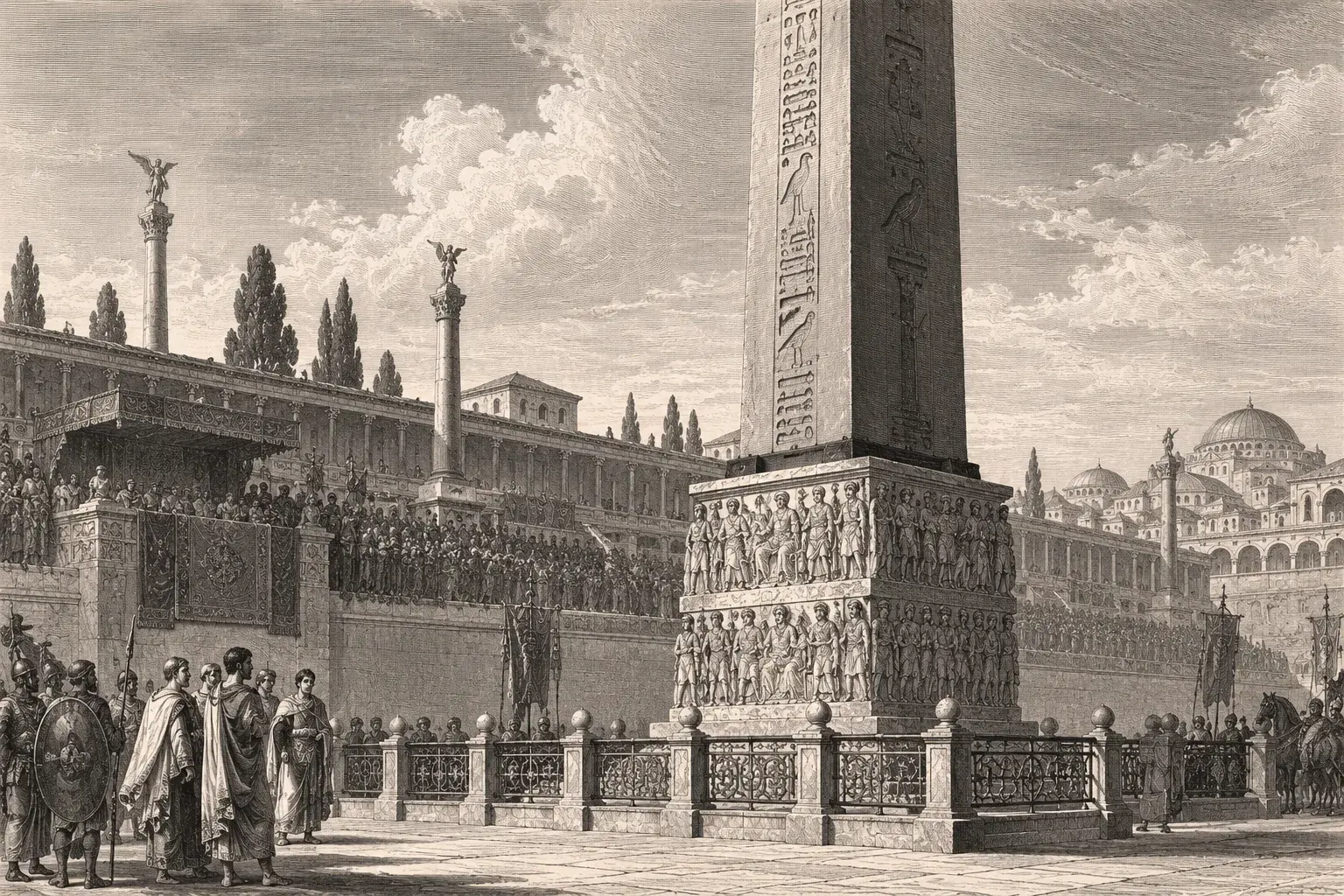
Originally carved for Pharaoh Tuthmosis III at Karnak, the obelisk was re-erected in the Hippodrome of Constantinople in 390 AD, its base carved with scenes of Theodosius and his family.
The Legacy of Theodosius the Great
The subtitle "the Great" was given to him partly to distinguish him from his namesake and successor Theodosius II, and was later confirmed by the church as a reward for his promotion of Nicene Christianity. History has continued to remember Theodosius as a pious emperor. He is still revered as a saint in some Eastern Christian churches.
The evaluation of Theodosius's reign is mixed. He brought stability to a waning frontier, negotiated a successful peace with Persia, and oversaw an artistic and spiritual flowering. On the other hand, his deal with the Goths sowed seeds of future discord, as did his two civil wars, and his sons were ineffective emperors who ruled in troubled circumstances. Theodosius's descendants did manage to hold on to the empire for another six decades, but the division of the empire between east and west would continue until the fall of the western empire in the late 5th century.
In short, Theodosius was not the saintly, pagan-destroying emperor medieval legend would have us believe. He was a far more interesting character: a pragmatic and competent emperor, who navigated a difficult period in Roman history with skill and intelligence.