The Kaaba is the holiest site in Islam. Rising from the middle of the Grand Mosque in Mecca, Saudi Arabia, this simple structure of polished stones and a black cloth with words of God in gold is the focus of the daily lives of nearly 2 billion Muslims.
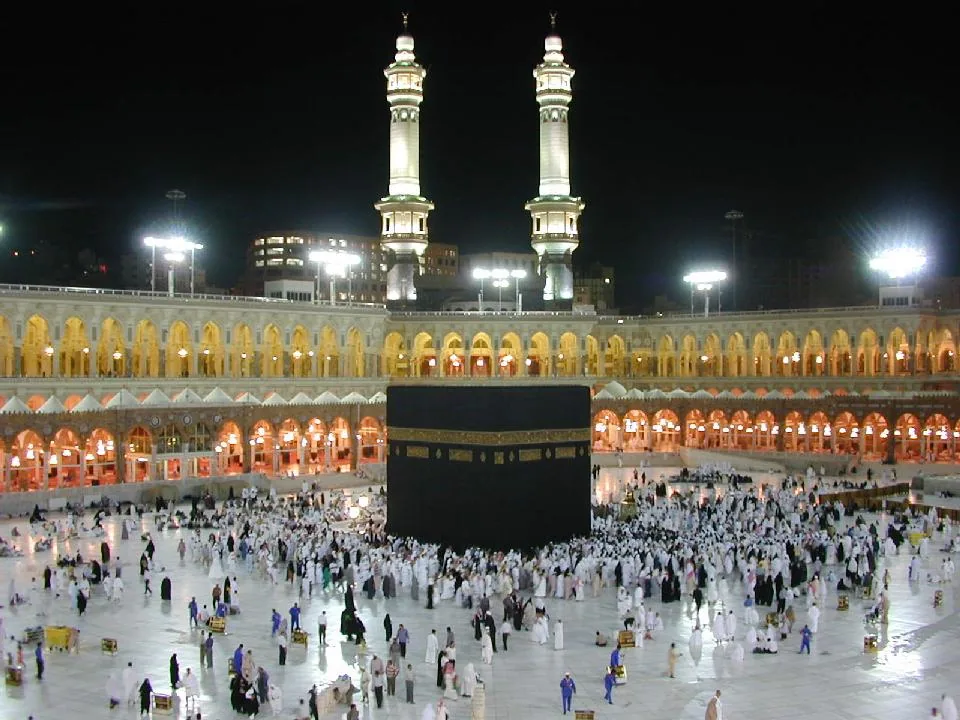
At the heart of the Masjid al-Haram, the Kaaba serves as the single point toward which Muslims around the world orient their daily prayers.
Image Credits: The original uploader was Medineli at English Wikipedia ., via Wikimedia Commons (CC0)
Muslims turn toward the Kaaba when they pray, five times a day, their mosques are aligned with its direction and some hotel rooms even have an arrow on the ceiling pointing the way to Mecca. Every year millions of pilgrims make the journey to Mecca to see the Kaaba, walk around it, offer prayers nearby and, if they can elbow their way through the crowds, to touch the Black Stone embedded in one of its walls.
What Is the Kaaba?
The word "Kaaba" derives from the Arabic root word for cube. The building, though, is not a cube but roughly 13 meters (about 43 feet) in height and has uneven walls of about 11 to 13 meters each.
The Kaaba is made of blocks of granite linked with mortar and a flat roof, one side of which is broken and replaced with a golden rain spout. The spout, called Mizab al-Rahma by Muslims, is believed to carry the blessing of all the rain that falls on the Kaaba during the rare precipitation in Mecca.
The Muslims call the Kaaba Bayt Allah ("the House of God"), but that does not mean that they believe God literally dwells within. Islam teaches that Muslims must not worship the Kaaba but rather see it as a religious focus, a point of unity for the ummah, the community of Islam's faithful.
The Qibla: Why Muslims Face the Holy City
The direction Muslims face when praying to God is known as the qibla, a word that simply means "direction". In mosques, a small niche in the wall, the mihrab, indicates the direction of Mecca.
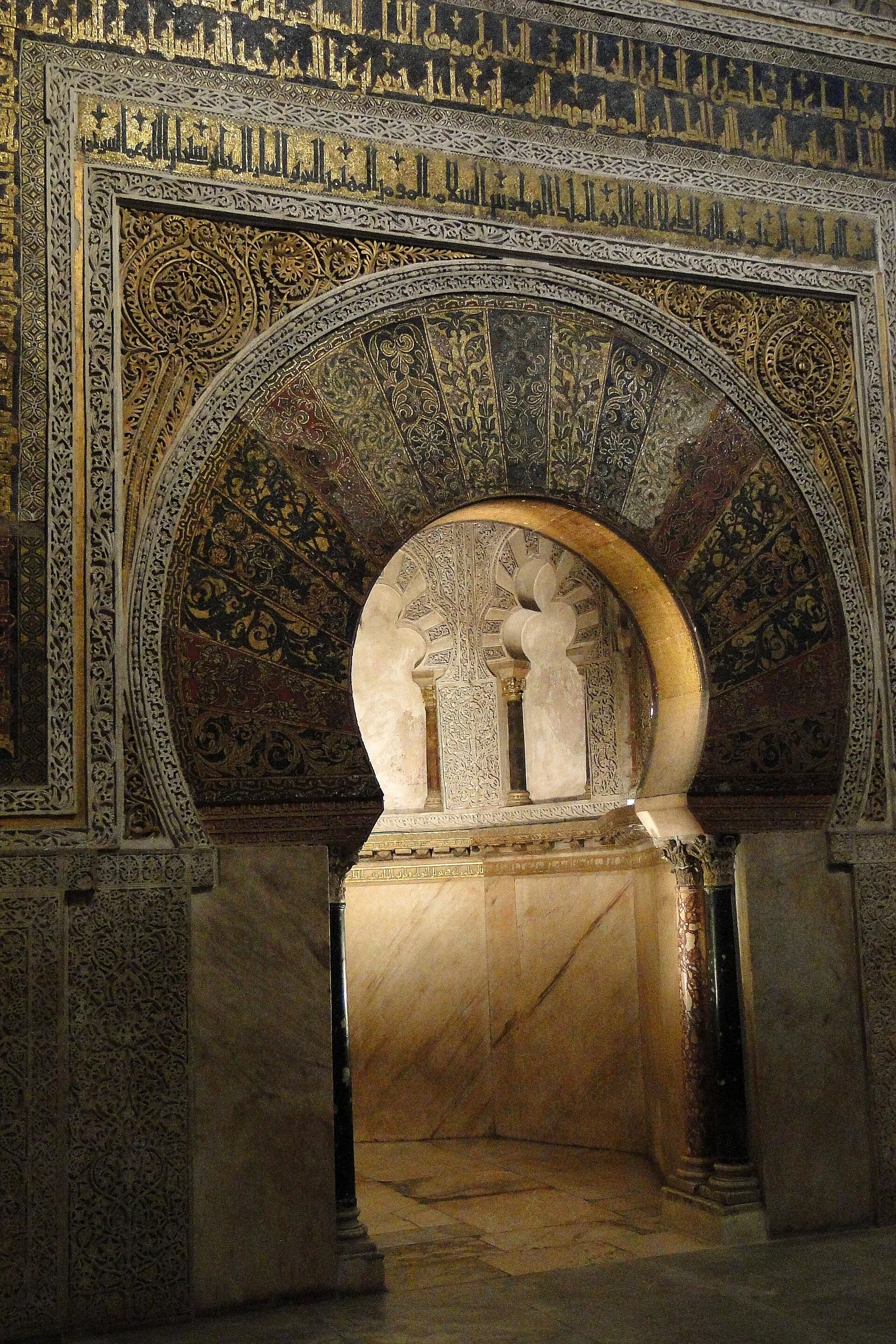
Every mosque's mihrab marks the qibla, turning a building thousands of kilometers away into a shared direction of prayer.
Image Credits: Adam Jones, Ph.D., via Wikimedia Commons (CC BY-SA 3.0)
For centuries, finding the qibla was not easy for Muslims living far from Mecca. As a result, Muslim mathematicians, astronomers and geographers made significant advances in calculating longitude and latitude to determine the direction of Mecca.
The rise of globalization and technology has created new challenges to understanding the qibla. When Malaysian astronaut Sheikh Muszaphar Shukor went to the International Space Station in 2007 during Ramadan, Islamic scholars were asked to determine what he should do for prayers. According to the Malaysian Sun Times, the scholars said an astronaut should try to face the Kaaba if possible and if not, to face the Earth, and if not, to face any direction. But the rules of Islam, scholars noted, say that a Muslim is obliged to make an effort but not to go beyond his means.
The Early Muslims and Jerusalem
The early Muslims did not always face the Kaaba when praying. In fact, for a time during Muhammad's lifetime, both before and shortly after his move to Medina, Muslims faced Jerusalem, just as Jews and Christians did.
Muhammad and his followers in Medina then began to face Mecca. The change happened around 624 A.D., and the Quran, in its second chapter, instructs Muslims to turn their faces toward the Sacred Mosque. Scholars believe that Muhammad may have changed the qibla in an effort to create a distinct Muslim identity. Some historians, such as Fred Donner, have suggested that his early community may have seen itself as partly Jewish and partly Christian.
Donner has also argued that a qibla change may have happened because of tensions between Muhammad's Muslim community and some Jewish tribes in Medina. Other early Muslim writers have likewise suggested that confrontations with Jewish communities may have played a role in the qibla change as well.
What Happens at the Kaaba During Pilgrimage
Every adult Muslim, man or woman, who is physically and financially able is obligated to make the pilgrimage to Mecca at least once in his or her lifetime. The annual hajj takes place during specific days of the year and in 2023, around 1.8 million pilgrims made the journey to Mecca.
Muslims can also make a smaller, optional type of the hajj called umrah at any time of year. Millions of pilgrims make the journey to Mecca for umrah and the hajj.
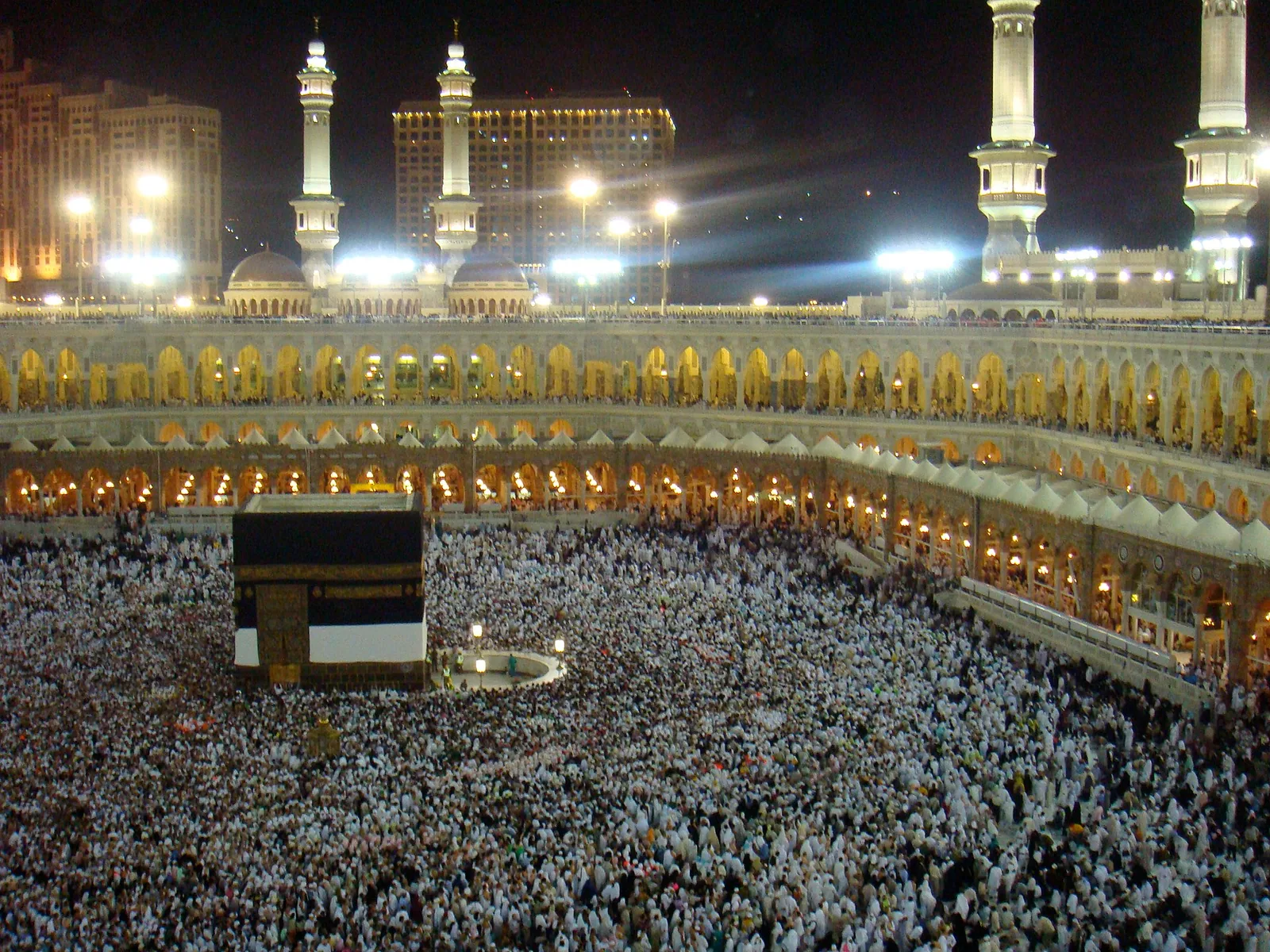
One of the most important rituals during both umrah and hajj is tawaf, the walking counterclockwise around the Kaaba, which can take up to an hour. Muslims perform this ritual when they arrive in Mecca and make it again at various points in the hajj, including once more as a farewell tawaf before leaving Mecca.
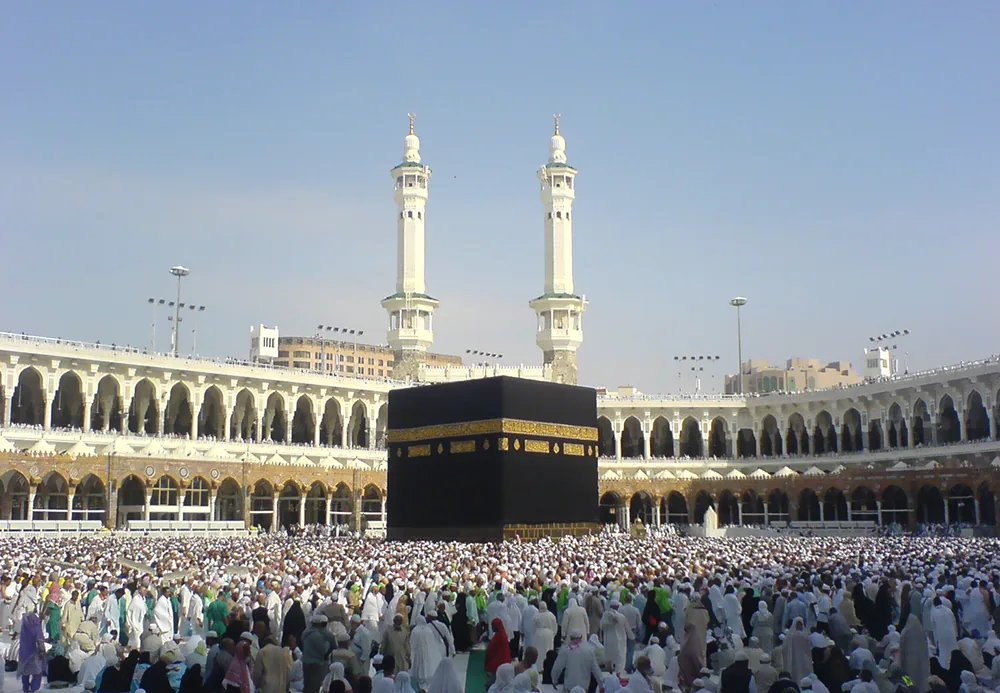
Tawaf consists of seven counterclockwise circuits of the Kaaba and is performed on arrival in Mecca and again before departure.
Image Credits: Muhammad Mahdi Karim, via Wikimedia Commons (CC BY-SA 2.5)
What makes tawaf so important? Many Muslims believe it is a ritual simply because the prophet Muhammad did it and God told him to, but other Muslims believe there is deeper meaning in it. Creation, they say, moves around God, just as the planets do. There are other symbolic acts during the tawaf: Many Muslims believe that the number seven represents completeness and perfection. The Quran mentions seven heavens, and the Kaaba and its tawaf rituals are deeply symbolic.
What Is the Grand Mosque That Surrounds the Kaaba?
The Grand Mosque (Masjid al-Haram) in Mecca surrounds the Kaaba. The area immediately surrounding it, the mataf, is where Muslims perform tawaf.
The mosque has been rebuilt and expanded numerous times, and in recent decades Saudi authorities have embarked on massive building projects so that millions of pilgrims can stand shoulder to shoulder in this area while embracing their faith.
This expansion has also led to controversy. To accommodate the needs of modern society, many older buildings in Mecca have been demolished to make way for new ones, including hotels and the huge Abraj Al-Bait clock tower. Other historians and Muslims, meanwhile, have argued that numerous important Islamic and Ottoman-era buildings have been lost in the process.
What Is the Black Stone of Mecca?
The Black Stone, or al-Hajar al-Aswad, is located in the eastern corner of the Kaaba within a silver frame and is one of the most famous objects of the Islamic world.
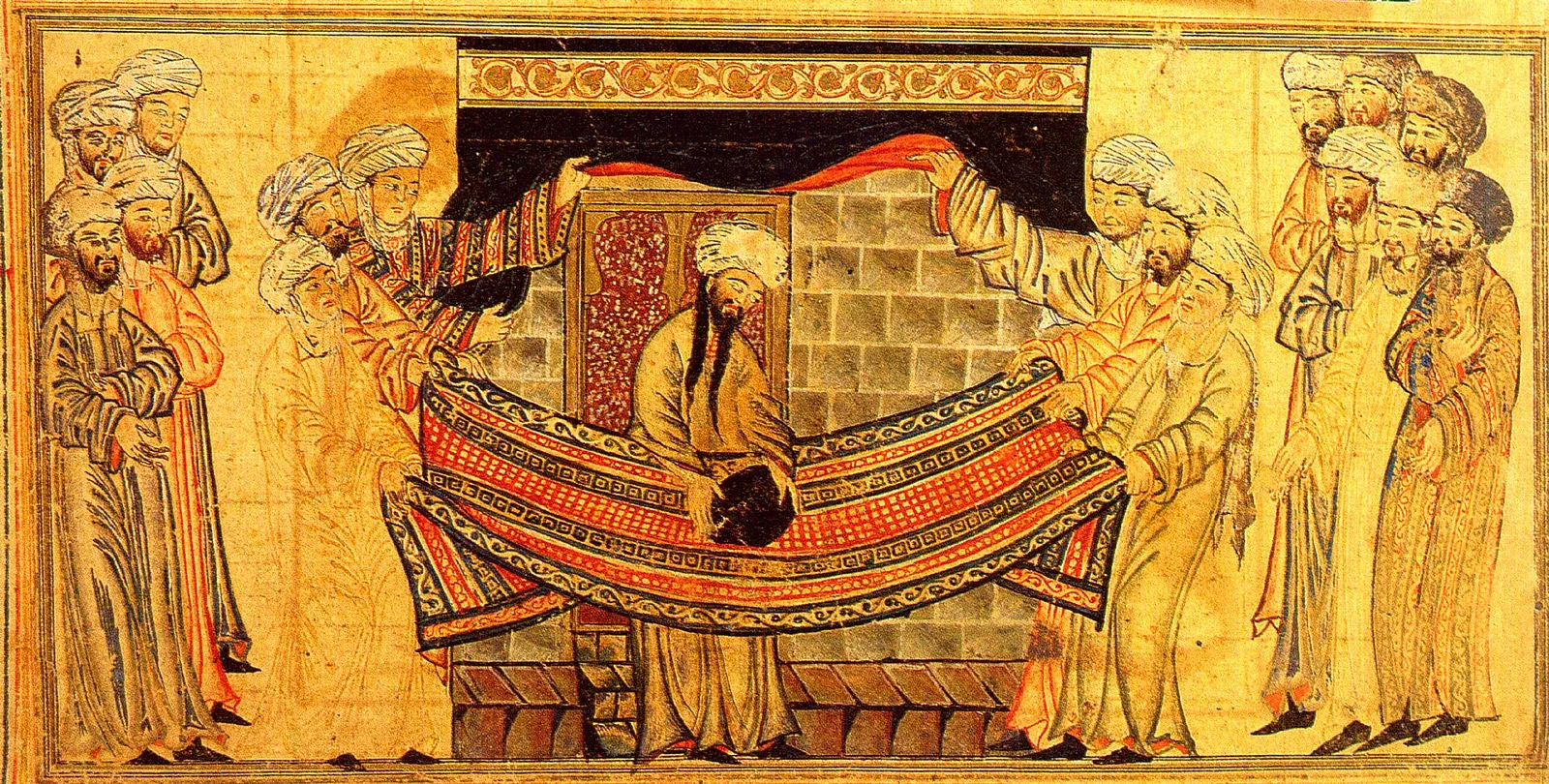
The silver casing holds together the pieces of a stone that has been broken and repaired several times over its long history.
Image Credits: Rashid-al-Din Hamadani, via Wikimedia Commons (Public domain)
According to Islamic traditions, the black stone came from heaven, and some stories attribute its origin to Adam and Eve while others say the angel Gabriel gave the stone to Abraham when he was building the Kaaba. Many Muslims believe the stone was once white.
During the tawaf, Muslims try to get close enough to the black stone to touch it or, like Muhammad is said to have done, to kiss it. Because of the crush of the crowds seeking to do so, many people can only raise a hand in the direction of the stone.
Islamic scholars stress that Muslims do not believe the stone itself is divine or worthy of worship. One of the earliest stories about the black stone involves the second caliph, Umar, who said that he knew that the stone could not hurt or benefit anyone but kissed it because Muhammad kissed it.
The Broken Stone: A History of the Black Stone
The black stone has been broken and rejoined several times in the history of the Muslim world. It was damaged during a siege of Mecca in 683 A.D., when fire broke out on the Kaaba during a civil war between early Muslims.
Even more mysterious was the theft of the black stone in 930 A.D. by the Qarmatians, an extremist sect that stormed Mecca, murdered hundreds of pilgrims and carried off the black stone. Amid the outrage the theft caused among Muslims, the stone was returned to Mecca after more than 20 years in the possession of the Qarmatians, reportedly in exchange for a large ransom. Today, the black stone is broken into several large pieces and is housed in the silver frame in the eastern corner of the Kaaba.
Is the Black Stone a Meteorite?
Because many Muslim traditions claim that the black stone fell from heaven, it is not surprising that many theories abound as to its true origin.
One theory, proposed in numerous television programs, is that the black stone is nothing more than a meteorite, but no scientist has been allowed to examine the stone. The black stone, some researchers believe, could also be a piece of the glassy rock called a tektite, formed by the impact of a meteorite on desert sand, and the Wabar craters in the Empty Quarter of Saudi Arabia have been cited as a possible source, although that impact is now thought to have happened only a few centuries ago.
Others believe the black stone is a common rock such as basalt or agate. Some theories suggest that the stone was struck by radiation from a meteorite. There is no physical basis for this claim, and meteorites are generally not known to give off radiation that humans can sense. But the black stone, as described by many Muslims, has far more religious significance than scientific value.
Other Sacred Sites Around the Kaaba
As Muslims circle the Kaaba during the tawaf, they pass other important holy sites.
Between the Black Stone and the Kaaba's doors is the Multazam, a section of the wall where Muslims press their foreheads, hands and torsos to make personal prayers to God. Just beyond is the Kaaba's door, which sits about two meters from the ground, and a wheel-mounted staircase that is brought in whenever someone needs to enter the building. The current golden doors were installed in 1979.
Nearby is the Station of Abraham, or Maqam Ibrahim, where a glass and metal case covers a rock that is said to bear the footprints of Abraham. According to one tradition, Abraham stood on this rock as he built the upper walls of the Kaaba.
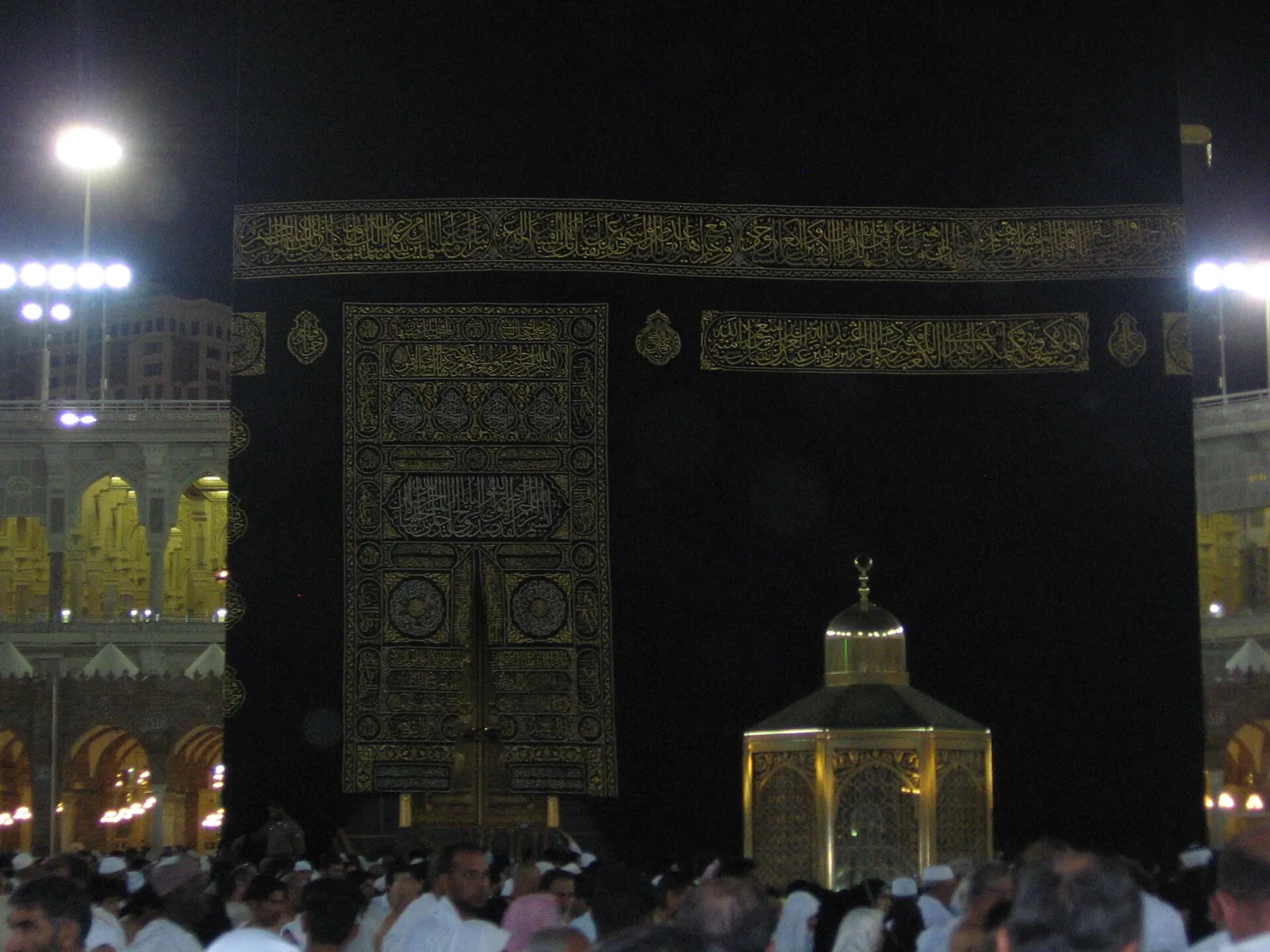
Maqam Ibrahim shelters a stone traditionally said to bear Abraham's footprints from the building of the Kaaba.
Image Credits: Mardetanha, via Wikimedia Commons (CC BY-SA 3.0)
On the northwest side of the Kaaba is a low, rounded, marble wall known as the Hatim or Hijr Ismail, which marks an area considered part of the original Kaaba built by Abraham. When the Quraysh rebuilt the Kaaba before the rise of Islam, they did not have the means to include this area within its walls, so it was left outside and marked by the low wall instead. During the tawaf, Muslims walk around this area as well as the rest of the Kaaba, and many Muslims seek to pray inside this part of the Kaaba. It is the closest most Muslims can get to praying inside the Kaaba.
What Is the Black Covering of the Kaaba?
Most people who have seen photos of the Kaaba know that it is typically covered with a black cloth. This is the kiswa, a silk cloth with Quranic verses in gold and silver thread.
The kiswa's embroidered band of Quranic verses is produced by hand in Mecca and replaced every year.
Image Credits: Al Jazeera English, via Wikimedia Commons (CC BY-SA 2.0)
In the past the kiswa came in a variety of colors, including white, red, green and black. Today the kiswa is created in a factory in Mecca by skilled craftsmen who spend months creating this one-of-a-kind piece of clothing. The kiswa is changed every year, and some of the old cloth is given as a gift to notable visitors or is put on display in museums.
What Is Inside the Kaaba?
Few people get the privilege of seeing what is inside the Kaaba, as pilgrims are not allowed to enter the building. The few people who are permitted to enter the Kaaba are the Saudi authorities, invited guests and those who care for and maintain the Kaaba.
Inside the building, three wooden posts support the ceiling, and large blocks of marble cover the lower walls. Hanging from the upper walls and ceiling is green fabric with Quranic verses. Lamps are strung along the length and width of the ceiling and are accompanied by plaques of stone inscribed with the names of rulers who have renovated and repaired the Kaaba.
Bab al-Tawba, or the "Door of Repentance," is a golden inner door that opens onto a stairway that leads to the roof of the Kaaba. The building is annually washed with water from the Zamzam well and is perfumed with incense.
Scholars have debated whether it is appropriate to perform the daily prayers inside the Kaaba, since a person inside would have his back to part of the building. Different Islamic schools have taken different views on this issue.
The Kaaba: Islam's Sacred Mosque
The Muslims believe that the Kaaba is an ancient artifact with great significance in the history of Islam. Quranic interpreters believe that the Kaaba was built by Adam and that the Black Stone fell from heaven. According to the Quran, Abraham and his son Ishmael laid the Kaaba's foundation and made prayers to God to accept their offering.
According to Islamic tradition, the Kaaba was built by Abraham as a house of worship to God alone, but the people of Arabia in later centuries began to fill the building with idols.
The tradition surrounding the Kaaba also includes the early life of the Prophet Muhammad. Muhammad is said to have been born in approximately 570 A.D. in the Year of the Elephant. According to Islamic traditions, the Christian ruler Abraha and his army of elephants marched on Mecca in an attempt to destroy the Kaaba. One of the Quran's shortest chapters, al-Fil ("The Elephant"), tells the story of God sending flocks of birds to shower the invaders with stones of baked clay.
Many scholars, including Gabriel Said Reynolds, have pointed out that many details of this famous story are the result of later exegetes who wrote commentaries on the Quran. But for Muslims, this story is a statement of the protection of God.
Muhammad and the Conflict Over the Reinstallation of the Black Stone
Around 605 A.D., before he began his preaching, the Kaaba was rebuilt after being damaged and the clans of Mecca argued over who was worthy to return the Black Stone to the eastern corner of the Kaaba.
The Prophet Muhammad was said to have solved this disagreement. According to tradition, he laid the black stone on a cloth, and each sheikh of the Meccan clans took one end and raised it until it reached its place. The clans lifted the stone together, and the Prophet Muhammad set it into its rightful place with his own hands. The Muslims consider this an early sign of the Prophet's leadership and wisdom.
Muhammad and the Idols in the Kaaba
After years of hostilities with the Quraysh, the ruling tribe of Mecca, Muhammad and his followers entered Mecca in 630 A.D. According to Islamic sources, they found hundreds of idols in the Kaaba.
Muhammad ordered the idols to be thrown down and demanded that they devote themselves exclusively to God. One of the most well-known idols was Hubal, the name of which is also associated with an ancient Nabataean inscription found in Hegra in northwestern Arabia. The early historian al-Azraqi also wrote that images of Jesus and Mary were found in the Kaaba, but Muhammad left them untouched.
Many critics of Islam view the early history of the Muhammad and the Kaaba as an example of the appropriation of ancient religious sites by Islam. But for the Muslims, it was an affirmation of the belief that the Kaaba was a house dedicated to God.
What Do Historians Say About the Origins of the Kaaba?
Modern historians investigate the origins of the Kaaba using various methods. Many of these methods are based on a scientific approach that does not rely on faith. As a result, many historians' conclusions differ substantially from those of the Quran or traditional Muslim beliefs, and much about the earliest origins of the Kaaba is unknown.
There is no archaeology that connects Abraham to Mecca, and Mecca does not appear anywhere in the Jewish or Christian scriptures. But many believers accept these traditions on faith rather than on archaeological evidence. Few early written sources describe Mecca, but one early Christian source, the Khuzistan Chronicle, written around 660 A.D., describes a connection between Mecca and Abraham. Many scholars believe that this reference may apply to the Kaaba.
Historians such as Uri Rubin have pointed out that early descriptions of Mecca may describe a building in which the covering cloth over the Kaaba played an especially important role. Linguist Ahmad Al-Jallad, meanwhile, has found ancient Arabic inscriptions that describe small shrines built for sacrifice and rituals that may help explain the development of the Kaaba.
Historians have disputed the significance of Mecca as an early commercial center. Patricia Crone, for example, has argued that Mecca was not a major commercial center, but other historians have pointed out that it may have played a significant role in the local region. What many historians agree on is that the Kaaba was an important shrine to the pre-Islamic Arabs.
Conclusion
The Kaaba is not only a building; it is the point that unites the lives of millions of people. Linking the stories of Adam and Ishmael and the life of Muhammad, the Kaaba is an important element in the Muslim world. Connecting believers of different languages and cultures, it reminds the world that people are united in God's creation.
And by creating a center of faith, the Kaaba has also shown the power of holy places to effect change in the world. Religion is often relegated to an internal quality, but the faith of billions of people has allowed pilgrims to gather in this single place to embrace the Muslim world.
Whether you approach the topic of the Kaaba from a faith-based or a scholarly point of view, these rituals and beliefs demonstrate centuries of devotion. From the simple stone walls of the building to the mysterious black stone in its corner, the Kaaba remains one of the most intriguing places in the world.