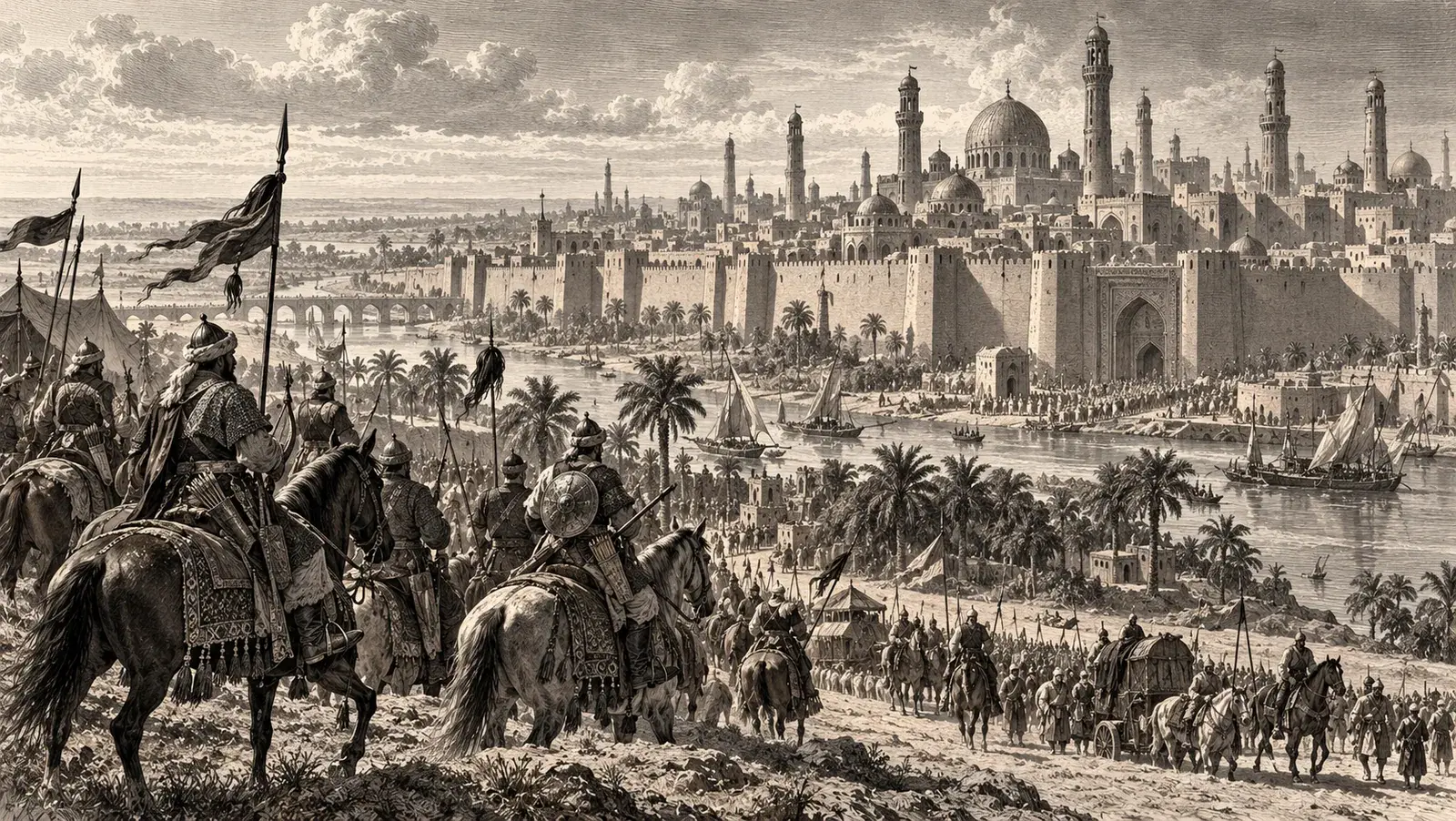
Egyptian was spoken and written on the Nile for the past four thousand years, making it humanity's longest continuously attested language. It is no longer spoken. Egypt is an Arabic-speaking country now, and Coptic - the language that had recently ceased to be spoken in Egypt - only exists as a liturgical script in one church.
This fact is frequently explained by the simple statement that the Arabs conquered Egypt in 642 and the Egyptians became Muslims. This reasoning is almost certainly wrong. Roughly ten percent of Egypt's population is still Christian, and they all speak Arabic, which should not be the case, as Arabic spread much faster than Islam did.
Egyptian as an Afro-Asiatic language
Egyptian belongs to the Afro-Asiatic language family, which also includes Berber, the Semitic languages and the Cushitic languages. The oldest stage of the language, preceding the development of a writing system, is poorly understood; by about 4000 BCE the Neolithic societies inhabiting the Nile valley were probably speaking distinct varieties of Egyptian, already different from the languages of their Afro-Asiatic neighbours.
As in other parts of the Near East and South Asia, the revolution in subsistence patterns associated with the Neolithic transition in Egypt led to the emergence of complex societies with their attendant religious practices and the development of writing systems. The unification of Upper and Lower Egypt and the creation of the First Dynasty in about 3100 BCE coincided with the first appearance of hieroglyphs. Earlier signs have been found, but they differ markedly from the script used later on and appear to have been restricted to ceremonial purposes. This Early Egyptian, or Archaic Egyptian, was not used to record speech, but served a purely religious function.
Hieroglyphs, Hieratic and the Old Kingdom standard
The Old Kingdom (approximately 2686 to 2181 BCE), famous as the Age of the Pyramids, witnessed the consolidation of the script. The deciphering of hieroglyphs revealed a relatively consistent orthography which became more phonetic over time, and changed little for more than two millennia.
A different script, hieratic, emerged alongside hieroglyphs, which was less formal, more cursive and better adapted to the requirements of papyrus. There is no evidence for any significant external contribution to the development of these scripts. The natural barriers to outside interference - the desert to the east and west, the Red Sea to the south and the Mediterranean Sea to the north - were formidable. The language of Egypt was highly stable, and Egypt maintained a high degree of endogeneity throughout this period.
Middle Egyptian and the Classical Standard
This endogeneity continued into the Middle Kingdom (approximately 2055 to 1650 BCE), which is famed as Egypt's golden age of literature and is also the most precisely documented period of ancient Egyptian history. The language contemporary with the Middle Kingdom - Middle Egyptian - provided the classical standard of the language, which was used for all sorts of narrative and religious texts. It appears to have been the most commonly used vernacular at the time, and continued to be referenced in literature long after it had stopped being spoken.
What is notable about this period is that Egyptian appears to be completely isolated from surrounding languages. Egypt maintained extensive commercial and military relationships with Nubia, Canaan and the Levant, regions whose languages belonged to the Afro-Asiatic and Semitic language families. Although Egypt had acquired a military and economic dominance over these regions, neither its grammar nor its vocabulary showed significant change.
The Hyksos, the New Kingdom and Late Egyptian
Egypt's isolation ended during the Second Intermediate Period (approximately 1650 to 1550 BCE), when a Semitic-speaking population known as the Hyksos conquered Lower Egypt. They appear to have been long-settled residents of the Nile Delta, rather than recent arrivists.
The Hyksos introduced Egypt to new military technology and practices, new items of vocabulary and new administrative techniques which they brought with them from Canaan. They were eventually expelled by Theban rulers, and Egypt's New Kingdom (approximately 1550 to 1069 BCE) began, ushering in an age of Egypt's imperial expansion.
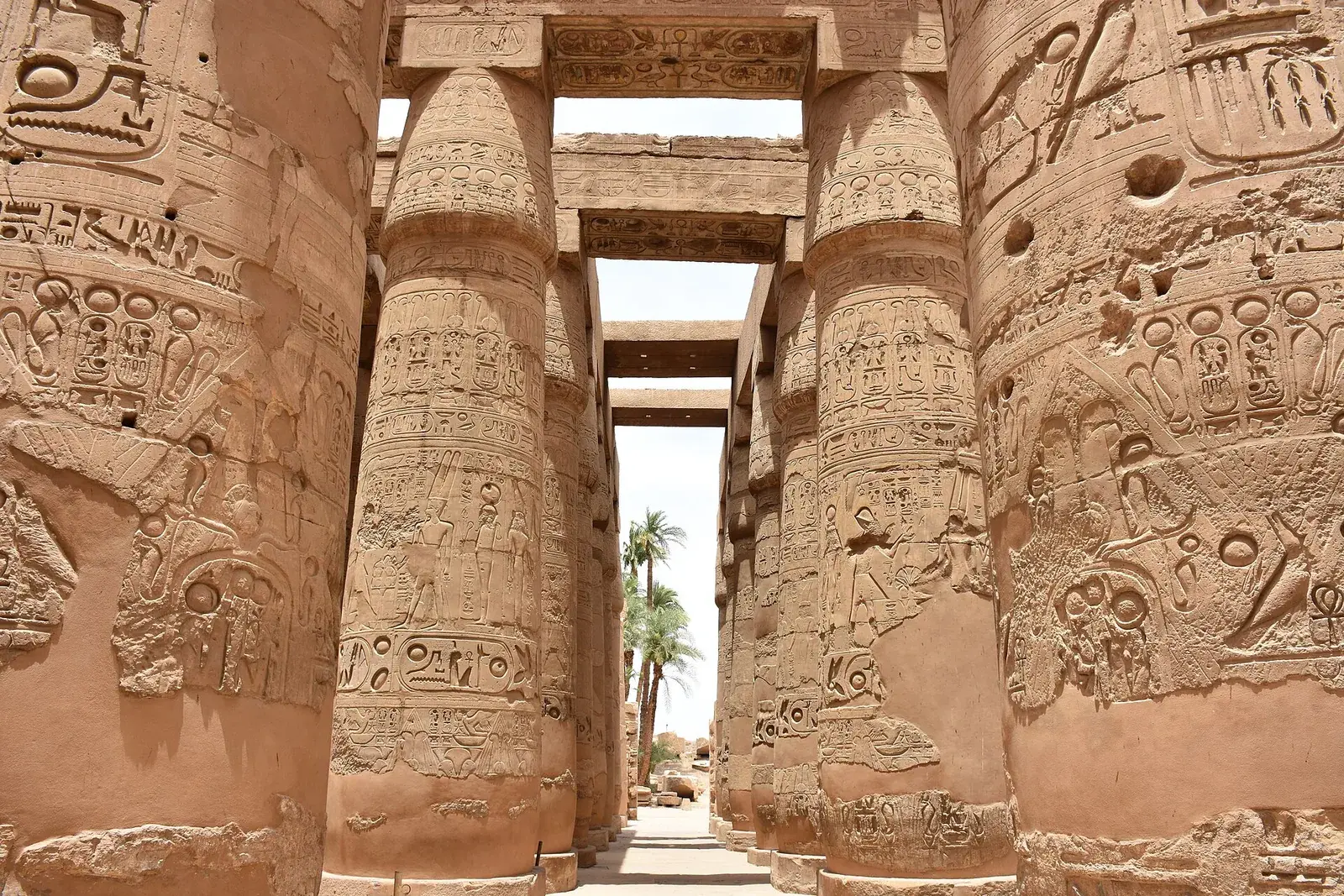
The New Kingdom, ushered in after Theban rulers expelled the Hyksos, was Egypt's age of imperial expansion and monumental temple-building.
Image Credits: MusikAnimal, via Wikimedia Commons (CC BY-SA 4.0)
Egyptian's contact with Semitic and Nubian languages continued through the New Kingdom, and the language of the common people changed significantly through this period, gradually diverging from the conservative written standard. A new dialect, Late Egyptian, emerged during this time, which was still written in hieratic script but contained significant grammatical, phonological, lexical and structural innovations. Unlike Middle Egyptian, the remains of which bear only a vague resemblance to actual speech, the texts of this period represent a language much closer to the spoken one.
Egypt's military expansion came at a considerable cost. The resources needed for war, coupled with internal political instability, placed a great strain on Egypt's economy, and the country became increasingly dependent on outside economic and military support. Egypt was no longer a hegemonic power, and during the Third Intermediate and Late Periods (approximately 1069 to 332 BCE) it was subject to a series of foreign rule, including Libyans, Nubians, Assyrians and Persians.
Persian Rule, Aramaic and the Demotic Script
The Persian conquest was the greatest shock to the stability of the Egyptian language, introducing not only a new set of rulers, but an entirely alien lingua franca. Under Achaemenid rule - first from 525 to 404, then from 343 to 332 BCE - Aramaic was introduced as the administrative language of the empire.
This was the first time Egyptian speakers had been required to use a language other than their own. The administrative system of the Achaemenids was very efficient; it made use of native Egyptian personnel and accommodated local languages, but it was still fundamentally Aramaic in its linguistic and cultural orientation. The transmission of information in administrative contexts became increasingly reliant on an Aramaic lingua franca, which affected Egyptian's phonology, morphology, syntax and orthography.
The local language was undergoing its own transformation at the time, entering the stage known as the Demotic. This name derives from the script used to write it, which began to appear in about 650 BCE and was derived from the northern variety of hieratic. It was simpler and more flexible than hieratic script, and better suited to administrative and commercial purposes. It gradually replaced hieratic in most secular contexts, becoming the dominant written language alongside the hieroglyphs.

Demotic, a simplified cursive script better suited to commerce and administration, gradually took over from hieratic in everyday secular writing.
Image Credits: Wikimedia Commons (CC0)
The conquest by the Achaemenids marks the beginning of a new period in Egyptian history, and the changes it triggered were long lasting. Egyptian ceased to be the exclusive language of administration and began to borrow extensively from Aramaic.
Alexander, the Ptolemies and Greek as a Class Marker
The arrival of Alexander in 332 BCE can be taken as an indication of the generally anti-Persian sentiment in Egypt. Following heavy taxation and the proselytisation of Egyptian religious practices, many Egyptians appear to have welcomed him as a liberator rather than a conqueror.
The existence of Greek influence in Egypt predates both by several centuries. As early as the seventh century BCE Greek merchants had established the city of Naucratis in the Nile Delta with the permission of the Pharaohs, who were themselves coming under increasing pressure from a number of invading powers. Greek mercenaries, advisors and settlers continued to arrive in Egypt during the Persian period, and by the time Alexandria was founded, the groundwork had been laid for a substantial Greek presence in Egypt.

The Rosetta Stone, carved in 196 BCE under Ptolemy V, records the same text in hieroglyphs, Demotic and Greek — a snapshot of Egypt's three-script, two-language world under the Ptolemies.
Image Credits: No machine-readable author provided. Matijap assumed (based on copyright claims)., via Wikimedia Commons (Public domain)
Following Alexander's death in 323 BCE his empire was divided amongst his generals, one of whom - Ptolemy - received Egypt as his share. He declared himself Pharaoh in 305 BCE, beginning the Ptolemaic dynasty, Egypt's last and longest-lasting royal family. Ptolemy was Macedonian, and conscious of the need to balance Greek and Egyptian interests, he adopted Egyptian religious practices while presenting himself as a Pharaoh and maintaining his Greek identity.
Greek became the administrative, military and commercial language of Egypt, and began to impinge significantly on the language of the common people, which was still using the Demotic script. Demotic continued to be used for commercial and legal purposes, as well as for personal letters and other informal documents. The hieroglyphs and hieratic, the other two scripts used to write Egyptian, were relegated to religious uses. Religion became the sole remaining domain of the traditional language.
The extent to which the two cultures were integrated was highly asymmetrical. The Greek elite who dominated Egyptian politics, the economy and the military had little interest in Egyptian culture, and most native Egyptian social classes were largely excluded from political power, economic opportunity and military service. A few Egyptian nobles adopted Greek names and customs, but intermarriage between the two groups was rare; fluency in Greek was an asset for upward mobility, and was largely confined to urban centres. Greek became a class marker rather than a means of communication between native Egyptians and the ruling elite.
Roman Egypt and the Emergence of Coptic
Egypt was a prosperous country under the early Ptolemies, both because of its fertile land and its position on international trade routes, but it gradually declined as a result of internal dynastic conflicts and expensive wars with the Seleucids. The Ptolemies became increasingly reliant on Roman support, and Egypt's independence finally came to an end in 30 BCE when Cleopatra VII's attempts to reassert her authority were defeated by Octavian.
Unlike most other Roman provinces, Egypt was of significant strategic and economic importance to the empire, being not only its breadbasket but also the location of its second largest city, Alexandria. It was thoroughly hellenised, and the Roman language of administration was Greek rather than Latin. By the first century BCE Greek had replaced Demotic in legal, commercial and elite correspondence, and Latin had been introduced in the military sphere, but both remained subordinate to Greek, which had been firmly entrenched in Egyptian institutions for centuries.
Egyptian continued to be the language of the native Egyptian population, especially in rural areas, and was written in the Demotic script. It had ceased to be the language of administration, commerce or military service, and its only remaining function was in religious texts.
Under Greek pressure it began to change significantly and gradually evolved into its final stage, Coptic. The script underwent a particularly radical transformation: as knowledge of how to write the Demotic script faded away, and Egyptians became increasingly reliant on the Greek language for writing purposes, it occurred to them to write Egyptian using the Greek alphabet. It was a familiar script, relatively easy to learn, and - unlike the Demotic or hieratic scripts - had characters representing vowels. A few Demotic signs were adopted to represent sounds not present in Greek, and a new script was born.
It is worth making a brief aside here to discuss the curious etymology of the word 'Coptic'. It was not originally a Christian term; it derives from the Arabic word qubṭ, which in turn comes from the Greek Aigyptios, meaning Egyptian. Some of the earliest examples of the Coptic script are to be found in magical texts, as the correct pronunciation of words was believed to have power; the use of a script which could represent vowels was therefore not without its advantages. Coptic means Egyptian.
Chalcedon, Byzantine Persecution and the Coptic Church
Christianity began to spread in Egypt during the third and fourth centuries, providing a new context for the Coptic language, particularly in Upper Egypt where monasteries flourished.
With the formal division of the Roman Empire in 395, Egypt became part of the eastern, or Byzantine, half, ruled from Constantinople. Greek continued to be the language of administration, and religion became more important in Egyptian cultural life. Bilingual texts in Greek and Coptic became common, and the Church of Egypt emerged as a major landowner and social institution.
The doctrinal dispute which led to the persecution of the Coptic Church began with the Council of Chalcedon in 451, which attempted to unify Christian doctrine throughout the empire. It defined Christ as having two natures - divine and human - which were united in one person. The Coptic Church rejected this definition, insisting that Christ had a single, unified nature.
The Byzantines responded by imposing Greek-speaking bishops on the Egyptian Church, removing native clergy and exiling or imprisoning many Coptic bishops. Coptic churches were confiscated and given to the state-backed Chalcedonian Church. These measures, combined with heavy taxation and general economic decline, led to a certain amount of anti-Byzantine sentiment amongst native Egyptians, a situation which the arrival of Islam and the Arabic language in 642 was to exploit.
What Arabisation Actually Means
Before proceeding, it is worth making a distinction between the terms 'Arabisation' and 'Islamisation', which are often used interchangeably but refer to quite different phenomena. This is not to deny the obvious connection between the two processes, but rather to emphasise the complexity of the linguistic situation following the early Islamic conquests. In Egypt, in particular, the spread of Arabic appears to have outpaced the growth of Islam considerably, as demonstrated by the existence of a large Arabic-speaking Christian population.
In the wider context of the early Islamic world, the pattern which emerges is rather surprising. The linguistic situation of the former Byzantine and Sasanian provinces after their conquest by the Arabs bears a remarkable resemblance to the distribution of languages in Europe today. In Egypt (formerly Byzantine), Arabic replaced Greek and Latin; in Persia (formerly Sasanian) it was replaced by Persian, which had been in decline for some time but still managed to become a major literary language by the tenth century. Greek continued to be used in Egypt and elsewhere despite the loss of the empire, but its influence never extended much beyond the city-states and it disappeared altogether by the eleventh century. Persian persisted and expanded despite the destruction of the Sasanian Empire, reaching outwards to encompass the languages of Central Asia.
Religion played a part in this process, as Greek was the language of the Byzantine Church while Persia was tolerated because the Persians themselves adopted Islam and contributed significantly to Arabic and Islamic scholarship, but it is still worth investigating why the Arabic language was able to make such inroads into cultures which had lasted for thousands of years.
Why Arabic Succeeded Where Greek Failed
The success of Arabic, both in Egypt and beyond, owes much to the cultural context in which it was introduced. Like Aramaic, Greek and Latin before it, it began life as an administrative language, but it had one important advantage over its predecessors: it was adopted by the common people as well as the elite. This is what set it apart from Greek, which remained the language of administration, education and literature. Conversion to Islam often entailed a change of cultural identity as well, and for many non-Arab Muslims, this meant accepting Arabic as their language.
| Greek in Egypt | Arabic in Egypt | |
|---|---|---|
| Adopted by common people? | No — stayed a class marker for the elite | Yes — adopted by rulers and ruled alike |
| Tied to religious conversion? | No | Yes — converting to Islam pushed Arabic adoption |
| Fate of native Egyptian speech | Survived as Demotic for centuries | Coptic gradually died out as everyday speech |
| Political dominance | About 1,000 years (305 BCE–7th c. CE) | Continuous since 642 CE |
It was also the product of a unique cultural and political phenomenon - the medieval Islamic world, which was unprecedented in the scale of its territorial extent and the uniformity of its linguistic and cultural legacy. The creation of a unified political entity stretching from Spain to Central Asia meant that Arabic was the language which linked together all these disparate parts, and it played a significant role in facilitating trade and communication. It was a language of travel and of scholarship, which meant that it spread quickly. As a consequence of these factors, and particularly of the increased rate of conversions, a large percentage of the urban populations of Egypt and Syria became fluent in Arabic, and the language was adopted by Christians and Jews as well, as it was an advantage to be able to communicate in the vernacular of the dominant culture.
Ironically, it was the dissemination of Greek thought which led to its decline. When the Abbasids established Baghdad as the capital of the Islamic world in the eighth century, Greek philosophy, medicine and astronomy were translated into Arabic. However, the language did not remain a conduit for the transmission of knowledge; by the tenth century, original Arabic works had begun to appear in a wide range of disciplines, including science, law, medicine, mathematics and philosophy. Greek knowledge was absorbed and elaborated on in Arabic, and its influence declined even in the areas where it had previously been dominant.
The 705 Decree and Coptic's Unexpected Golden Age
The situation in Egypt following the Arab conquest is somewhat surprising. The Arabs conquered Egypt in 642, but for several decades afterwards, little changed in terms of language. Greek was still the administrative language and Coptic the language of the common people; the new rulers had to decide whether to establish an Arab-Muslim state or merely to replace the Byzantines with another ruling elite. Arabic was declared the official language of the empire in 686 but it was not until 705 that it was formally decreed to replace Greek and Coptic in the administration of Egypt.
It would be expected that Coptic would begin to decline after the Arab conquest, but in fact it experienced a period of flourishing during the first century or so of Arab rule.
The reason for this was that the early Arab Muslim rulers were content to leave the existing ruling class in place and to make limited use of the existing administrative machinery, relying largely on the provincial capital of Fustat. Coptic elites continued to play a significant role in the administration of the country, particularly in the collection and control of taxes, local administration and the bureaucracy. Compared to the harsh policies of the Byzantines, Arab rule was relatively liberal in many ways; the Coptic church was able to recover from the period of persecution, and there was a flourishing of Coptic literature which may well represent the most prolific period in the history of the language.
Al-Mutawakkil, the Fatimids and the Shift to Arabic
The prosperity and stability of the early Arab rulers began to decline in the ninth century. Arabic was now the state language, and its speakers were playing an increasingly prominent role in urban centres. Arabic was also becoming the cultural norm, and the imperial administration was promoting an Arab-Islamic identity which required Arabic to be learnt by non-Arab converts to Islam. Converts were motivated to make the switch by the promise of public office, tax breaks, legal privileges and social acceptance; they were further encouraged by the fact that a large number of Arabic speakers also happened to be wealthy and influential. Bilingual converts gradually adopted Arabic as their dominant language over the course of a generation or two; some claimed to be of Arab descent in an effort to increase their social status, as was common in the Maghreb at the time.
Converts to Arabic who were also Egyptian played an important role in the formation of a new Egyptian identity, constructing a positive view of their Egyptian heritage as part of the wider Arab-Islamic world, and defining their Arabic identity in relation to it. They had historical justification for this position, because Abraham, Joseph and Moses all had connections with Egypt and featured in the Qu'ran, allowing Egyptian Muslims to define their relationship with the wider Islamic world in terms of shared history and heritage. This was also an opportunity for Egyptian Christians, who found themselves viewing their land, rather than their neighbours, as the heartland of the Abrahamic religions.
The social pressure to convert was increased by the measures taken by al-Mutawakkil, the tenth Abbasid Caliph, who imposed restrictions on the public expression of non-Muslim religious beliefs, dress codes and certain professions. These restrictions did not compel anyone to convert, but they did marginalise the Copts, pushing them towards the fringes of society. Islam and Arabic were the only viable options for young Copts seeking a future for themselves, and the Tūlūnids, a semi-autonomous dynasty which governed Egypt from 868 to 905, provided a brief period of respite. They were nominally Abbasid but pursued more pragmatic policies, and are said to have been more sympathetic to non-Muslims. The importance of Arabic continued to grow despite this, however, and it played an increasing role in the economic and administrative life of Egypt. Conversion rates amongst the Christian population continued to rise, partially because of increased rural exodus into urban centres, where Arabic was the dominant language.
The Fatimids, a Shiʿite dynasty which ruled Egypt from 969 to 1171, unwittingly accelerated the process by favouring Christian and Jewish scribes as administrators on the grounds that their loyalty was not compromised by religious convictions. This gave many Copts privileged access to administrative jobs, but only as Arabic speakers.
Severus ibn al-Muqaffaʿ and the Coptic Church in Arabic
Institutional change is reflected in the biographies of individuals. Patriarch Abraham, Pope of the Coptic Church from 975 to 978 and confidant of Caliph al-Muʿizz, moved the patriarchate from Alexandria to Fustat, presumably to be closer to the Fatimid court now that Cairo was the imperial capital. He was followed by his successors, but the trend is instructive.
Severus ibn al-Muqaffaʿ, a tenth-century Coptic bishop, best represents this shift. He complained that many Coptic Christians no longer knew their ancestral language — and wrote his own significant theological and historical works in Arabic, most likely because he was not proficient in Coptic. He had previously worked as a kātib, a secretary, in the Fatimid administration. He was not only fluent and comfortable with Arabic but familiar with its political and ideological underpinnings and was probably not an outlier.
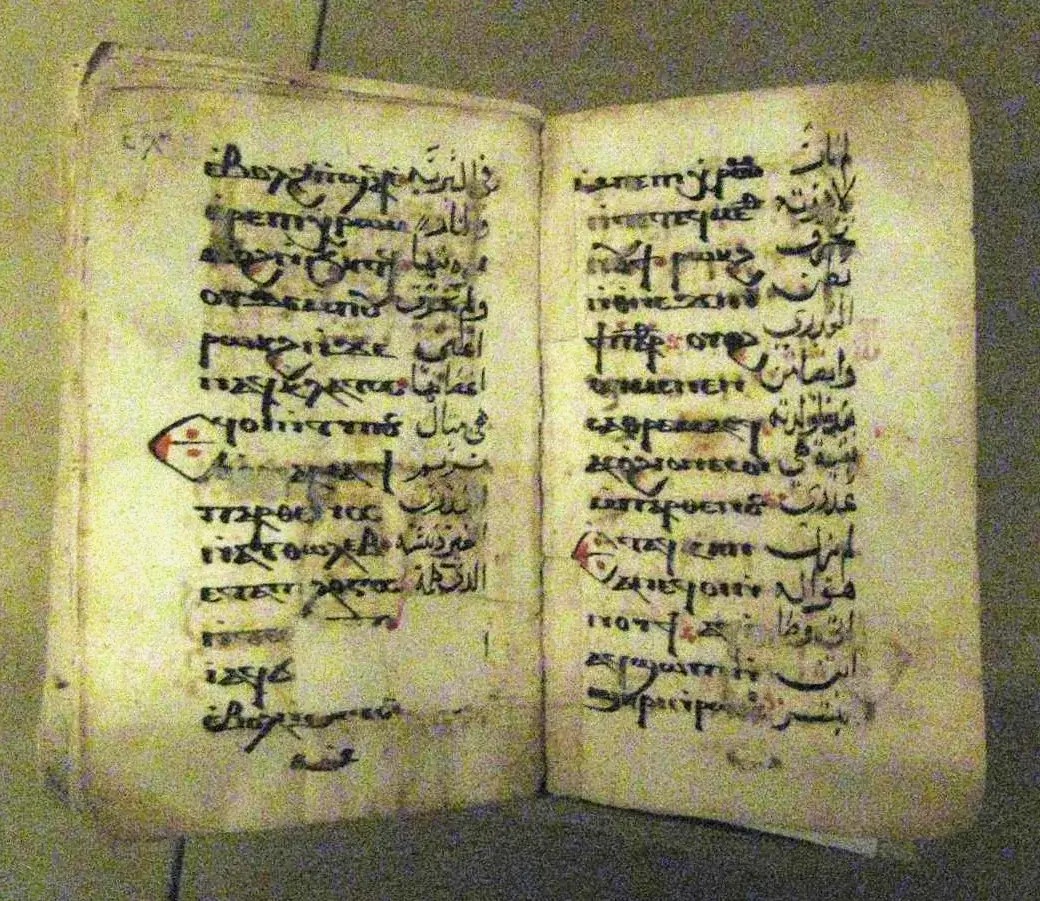
By the tenth century, Coptic bishops like Severus ibn al-Muqaffaʿ were composing major theological works in Arabic, the language many of their own congregants understood better than Coptic.
Image Credits: https://www.flickr.com/people/unforth/, via Wikimedia Commons (Public domain)
The Church did not officially adopt Arabic until the eleventh century, under Cyril II, who also made Cairo its permanent seat. This was as much a socio-political statement as a geographical move, bringing the Coptic centre of power closer to Islamic authorities. Under Cyril and his predecessor Christodoulos, histories of the Church were translated into Arabic while new biographies were being composed in the vernacular.
Two texts represent the unease this caused. Kitāb al-Īḍāḥ, an anonymous theological précis written in Arabic around the eleventh century, was composed to explain Christian doctrine and liturgy to a Coptic Christian community that no longer understood it — and went further to accuse Copts of spiritual befuddlement, asserting that their everyday association with Muslims had rendered them impervious to core Christian principles. If true, Islamic doctrines and linguistic habits had infiltrated Christian consciousness significantly enough to alter its substance.
The Apocalypse of Pseudo-Samuel of Qalamūn, written sometime between the ninth and eleventh centuries and probably by a monk from al-Fayyūm, condemns the urban clergy of Cairo for giving up the Coptic language in pursuit of status and popularity among Muslims and criticises ordinary Christians for adopting Arabic names, dressing in Islamic styles and generally following Muslim customs — a cultural turnaround he interprets as a sign of spiritual decay. It was written in Coptic and only survives in an Arabic version, which is either ironic or tragic. How much of this represents actual conditions rather than doomsaying is impossible to say, but the very existence of the text is evidence of concern: Arabic had become pervasive enough to inspire genuine anxiety.
Where Coptic Survived Longest
Dating the actual adoption of Arabic by Egyptian Christians is more complicated than it appears, especially when differentiating between written and spoken language.
By the end of the tenth century legal documents and an increasing number of ecclesiastical writings were being composed in Arabic, and the urban elite was probably predominantly Arabic-literate. However, official and literary Arabic cannot be taken as representative of the domestic language of the peasantry, who constituted the majority of the population and were generally unlettered.
Even the process by which Arabic displaced Coptic in the minds of Christians is unclear. Whether it was a gradual replacement of the latter in Church-run schools, or if the two languages coexisted for some time, is still a matter of debate in the field.
What is known is that the shift was neither rapid nor universal. While in major cities comprehension of Coptic was evidently waning even in church services, in the south and in monastic communities the vernacular survived for much longer and resistance to Arabic continued through the medieval period, reflected in Christian writings.
As late as the thirteenth century Arabic was not the first language for all Christians. Some legal documents record women who could not understand Arabic, suggesting that the shift may have been felt more keenly by some social classes than others. Arabic contracts frequently included a rider specifying that the terms had been read aloud first in Arabic and then — presumably as an afterthought — in a "foreign language", most likely Coptic. Bilingualism persisted even in official dealings.
Conditions deteriorated later. Under the Ayyubids and especially the Mamluks, zealous Sunni Muslims, Christians were regarded as clearly inferior dhimmis and the protectionist dhimma agreement was enforced more rigidly. Between 1293 and 1354 a wave of anti-Christian campaigns led to the destruction of churches, stricter restrictions on Christians' public behaviour and dress, curtailing further their already limited presence in society. During this period Arabic fluency would have been an advantage, perhaps even a necessity, for survival and advancement.
Coptic did survive as a spoken language in some rural communities, notably al-Fayyūm and Ashmūnayn, until the fifteenth and sixteenth centuries and in some villages well into the nineteenth.
The 705 decree to Arabise the bureaucracy was merely a prelude to a much deeper change, one driven not from above but from below — from people adjusting to a new reality in which their language was no longer useful. By the tenth century Arabic had supplanted Greek and Coptic in state papers. By the eleventh, Coptic legal documents were rare. And by its end, religious texts were being produced in Arabic as well. A language with a four-thousand-year history of written literature lost its country due to decrees and to the choices of several generations of parents who decided what their children needed to learn.