The Indochina Wars are a forty-six year period of wars with almost no interruptions from the Second World War until the ratification of the Paris Peace Agreements in October 1991 by warring parties. The Indochina Wars are largely known to the outside world only in their Vietnam phase, the Vietnam War, and the fact that there was a French war before and a China-Cambodia conflict after is also known.
The reason why it is useful to think of them as three separate conflicts is that the same combatants fought, the same geopolitical issues were raised, and the terms of peace at the end of one conflict set the scene for the next one to start. Indochina is a former French colony that roughly includes Vietnam, Laos, and Cambodia, and today it is a geographic center only.
French Indochina and the Colonization of Vietnam
The French intervention in Vietnam was motivated by strategic and economic interest: Vietnam was a resource-rich land suitable for a colonial outpost facing China. The pretext for the intervention was the persecution of Christians in Vietnam, as decreed by the Vietnamese emperor.
It is not possible to say with a straight face that this was not the reason for the war – Gia Long was indeed rather tolerant of Catholics, and his successors Minh Mang and Thieu Tri were severe orthodox Confucianists who forbade proselytizing in Vietnam and hindered both French and American diplomatic efforts to establish trade there. The French took it as an insult, but they did not exaggerate – Vietnam was a closed country, self-contained, and did not want to interfere with anyone.
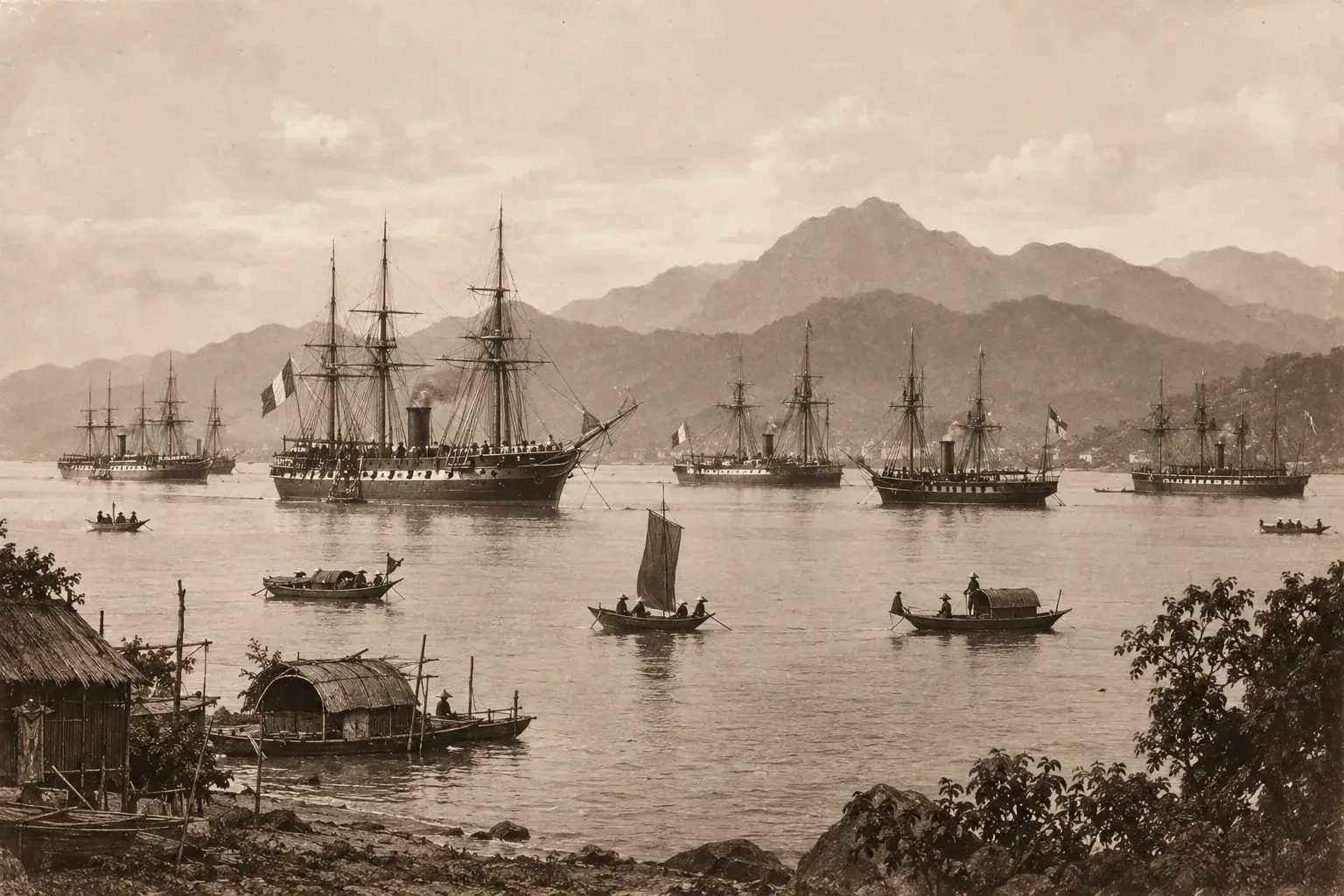
Napoleon III sent a joint French and Spanish naval force to Tourane, present-day Da Nang, in 1858, the opening move in decades of conflict that ended with Vietnam's full absorption into French Indochina.
It could not do that, however, because it did not have industry, while the French did – Napoleon III's forces landed in Da Nang in August 1858, and in 1884, Vietnam was fully occupied by the French and became part of French Indochina.
The independence movement began, but the French did not treat treaties with regard to Vietnam's sovereignty seriously. In 1930, Nguyen Sinh Cung, a Vietnamese independence activist better known as Ho Chi Minh, created the Indochinese Communist Party, which pursued a policy of Marxism-Leninism and aimed to expel the French from Vietnam.
Vietnamese Nationalists and Communists Before 1945
Vietnamese independence movements were not uniform – they consisted of numerous nationalist and communist groups that differed in their views on Vietnam's future. Nationalist movements in Vietnam were of two types – reformists and revolutionaries, and both were generally favorable to the return of Vietnam's sovereignty and opposed to communism. The movements included the Vietnamese Nationalist Party, the Vietnamese Revolutionary League, the Đại Việt Nationalist Party, and mass movements such as Buddhism, Hòa Hảo, Cao Đài, and Catholicism.
Both sides accused each other of factionalism and lack of patriotism – nationalists accused communists of wanting to create their own faction and took a negative attitude towards Ho Chi Minh's actions as an agent of a foreign policy, while communists dismissed nationalism as an incomplete doctrine. Vietnamese nationalists were eager to form a republic and adopt European-style policies. They were generally anti-communist but allowed private ownership of enterprises under the cover of nationalism. Vietnamese communists viewed nationalism as an obstacle to the formation of a truly class-based society. They pursued a policy of revolutionary internationalism and claimed that class struggle was an element necessary for Vietnam's independence. Communists took a more active part in suppressing the nationalist movements, which led to a long and bloody civil war with many purges of "counter-revolutionaries."
Japanese Occupation, the 1945 Famine and the August Revolution
The Vichy French authorities initially allowed the Japanese to occupy Northern Vietnam in 1940, and in 1941, the Japanese gained full control of Indochina with minimal resistance. Thus, there was a puppet government in Indochina with the French as junior partners, who, however, opposed the Japanese and interfered with their attempts to mobilize resources for the war. Ho Chi Minh returned from his exile in China and began his work in Vietnam – he was one of the first to realize that the French would not be able to maintain control of Vietnam in the long run. Both the French and the Japanese promoted Vietnamese nationalism, which gave Ho and his men an excellent opportunity to develop their own nationalist movement.
The Vietnamese were generally disappointed with the French, but the Japanese did not inspire any loyalty either – in the early 1940s, there was a real mass awakening in Vietnam, and right-wing nationalist movements such as the Đại Việt parties began to rise. In March 1945, Japan, having failed in the war, ousted the French and installed a puppet emperor Annam, but the Vietnamese famine of 1944-1945, in which about two million people died, influenced the Vietnamese consciousness.
Thus, when the war ended in Vietnam, the Viet Minh started their August Revolution – Emperor Bảo Đại resigned and handed over power to Ho Chi Minh's provisional government on August 25, and Bảo Đại was in turn appointed Supreme Advisor of Vietnam. Ho Chi Minh declared the independence of Vietnam on September 2, while the Allies had already agreed at Potsdam to divide Vietnam along the 16th parallel – the Chinese were to disarm the Japanese in the north, and the British in the south.
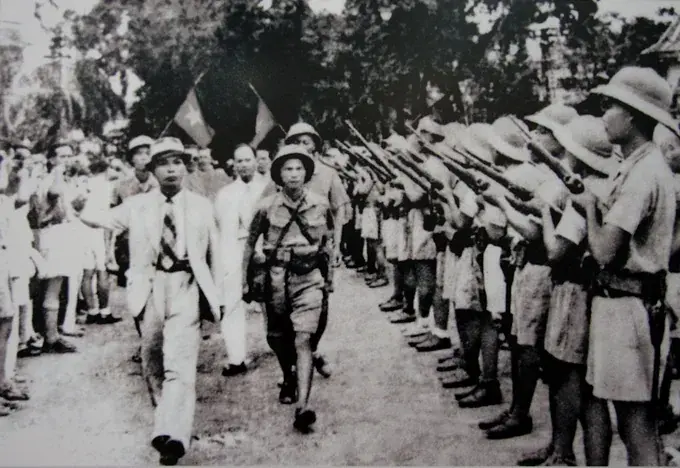
Crowds gathered in Hanoi's Ba Dinh Square as the Viet Minh's August Revolution swept through Vietnam following Japan's surrender, culminating in a declaration of independence on September 2, 1945.
Image Credits: Unknown author Unknown author, via Wikimedia Commons (Public domain)
The First Indochina War and the Fall of Dien Bien Phu
The First Indochina War, also called the Indochina War in France and the French war in Vietnam, began in the south of the country – the War of 1945-1946. British troops had arrived in September 1945 to disarm the Japanese, and on September 23, French colonial troops, rearmed with British assistance, overthrew the Viet Minh administration in Saigon and re-established French authority in the south. The Sino-French agreement and the Hồ-Sainteny Agreement, both concluded in early 1946, allowed the French to bring troops back into the north of Vietnam, where they fought a war with the Viet Minh.
During the period from August 1945 to August 1946, by way of revenge, the Viet Minh suppressed various nationalist movements in Vietnam, including Trotskyists, and worked with the French to liquidate those nationalists who openly proclaimed their opposition to the Viet Minh. Similar resistance movements began in Cambodia and Laos – the Khmer Issarak and the Lao Issara. When the negotiations between France and Ho Chi Minh failed, the First Indochina War began in December 1946 and immediately became involved in international politics. At the UN, in which France held a permanent seat, protests were held about the return of Indochina to French control, while the French joined NATO in 1949. Some of the Vietnamese nationalists who survived the purge adhered to Bảo Đại and openly opposed the Viet Minh, engaging in a war with the French on two fronts. The State of Vietnam was established, which practically did not differ from the Democratic Republic of Vietnam except for the name, but it was directed against the communist regime in North Vietnam and was widely supported by the French.
According to the Truman doctrine, the US provided military and economic aid to all countries that opposed communism, so when the People's Republic of China and the USSR recognized the independence of North Vietnam, the United States recognized the State of Vietnam in February 1950. The US provided aid to the Republic of Vietnam through the French, while the PRC and the USSR provided aid to the Viet Minh. Vietnamese communists consolidated their power in the north, began their land reforms and class struggles in the countryside, established loyalty to the new regime through purges of nationalistic elements, and suppressed the activities of the Nhân Văn–Giai Phẩm intellectual groups. The First Indochina War ended after the battle of Dien Bien Phu – France began to withdraw its forces from North Vietnam after the Geneva Agreements and the country was divided into two parts.
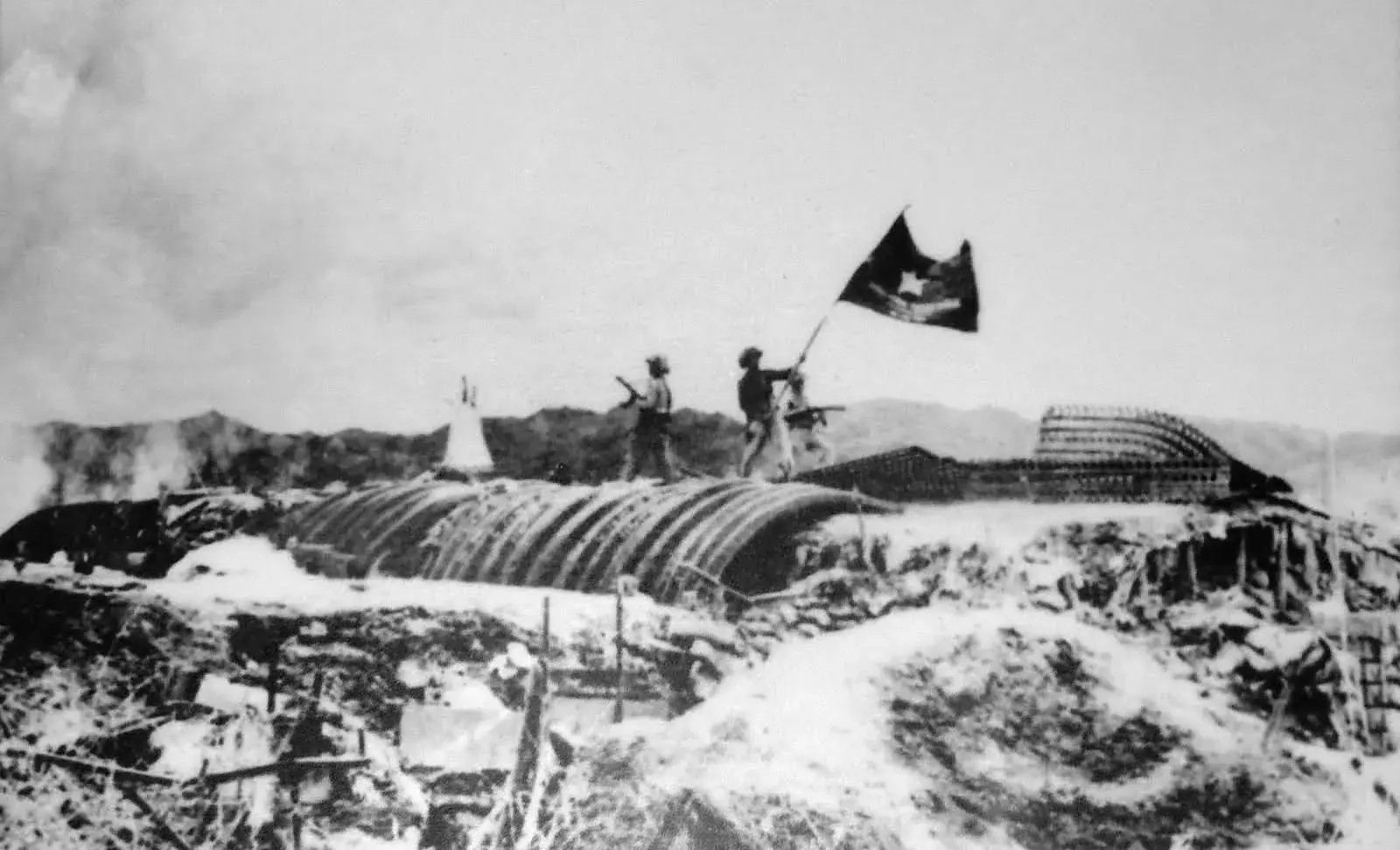
The 1954 siege of Dien Bien Phu, where French forces were surrounded and overwhelmed in a valley ringed by Viet Minh artillery, ended the First Indochina War and led to the division of Vietnam at Geneva.
Image Credits: Vietnam People's Army, via Wikimedia Commons (Public domain)
The Second Indochina War and the Vietnam War
The Second Indochina War is the name for the set of wars in Vietnam, Cambodia, and Laos that broke out in 1955 and ended in 1975. It is also commonly referred to as the Vietnam War, although in North Vietnam it was called the Anti-American War. The Vietnam War was fought between the People's Republic of Vietnam and the Republic of Vietnam, with the Viet Cong insurgency and the People's Army of Vietnam fighting on the side of North Vietnam. The US became directly involved in the war – having supported the French in the First Indochina War, Washington invested significantly in the development of the Republic of Vietnam, while the PRC, the Soviet Union, and the rest of the communist bloc provided military and economic assistance to the Viet Minh. The division of Vietnam along the 16th parallel was therefore hardly a lasting solution.
The ambiguity of the goals of the Vietnam War, as well as the impossibility of measuring success in numerical terms, undermined morale in the US Armed Forces. The Tet Offensive of 1968 ended in a military victory for South Vietnam and America but in a political defeat for the US – the media, led by CBS, reported that Tet was not a victory for the Viet Cong. The military confrontation was directly related to America's domestic policy – the battle of Khe Sanh in 1968, which raged for 77 days, is sometimes referred to as the "turning point of the Vietnam War".
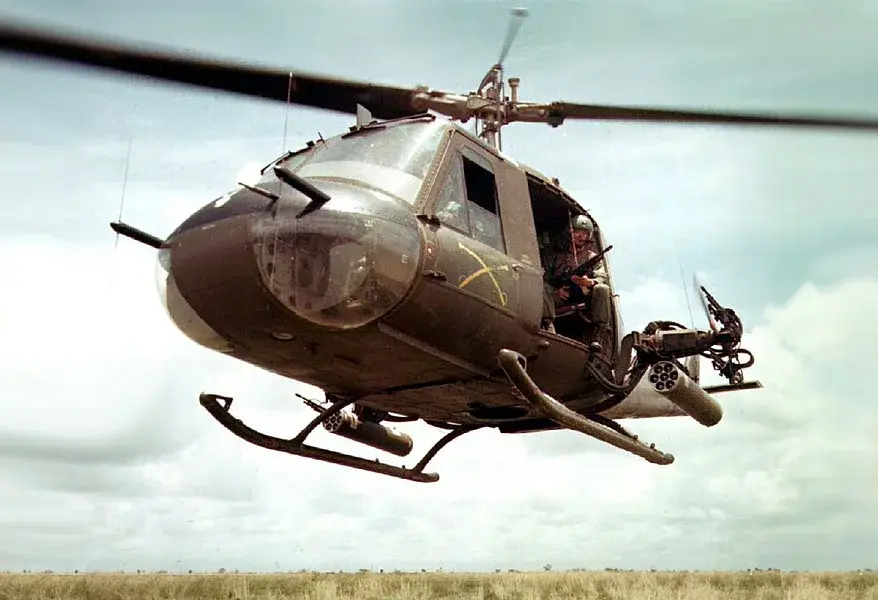
American helicopters became a defining image of the Vietnam War, ferrying troops and supplies across a conflict whose division at the 16th parallel proved to be no lasting solution.
Image Credits: United States Army Heritage and Education Center, via Wikimedia Commons (Public domain)
The Paris Peace Accords of 1973, which stipulated a ceasefire and prevented North Vietnam from sending troops to South Vietnam, were only one step towards ending the war. North Vietnam did not intend to comply with this agreement – in 1973 and 1974, both sides continued to clash while North Vietnam prepared for an all-out invasion of South Vietnam, which was to begin in 1976. The weakening of the Army of the Republic of Vietnam (ARVN) contributed to this, which, weakened by the Easter Offensive of 1972, began to dissolve rapidly after the Paris Accords. The US did not provide the ARVN with the necessary military equipment, while the North Vietnamese forces, having received the help of the PRC and the USSR, were able to quickly regroup and attack South Vietnam. On April 30, 1975, the capital of South Vietnam was occupied by the PAVN.
The Third Indochina War: Cambodia, Vietnam, and China
The Third Indochina War is a complex of military actions that broke out in Cambodia, Vietnam, and Laos at the end of the 1970s and early 1990s. The Third Indochina War is sometimes called the Vietnam War because it overlaps with the latter. The Third Indochina War is a long and complex conflict that is difficult to describe briefly. There are also controversial aspects in the very definition of this term – some researchers refer to the conflict between Vietnam and Cambodia as the Third Indochina War, but this is not an established opinion.
The Third Indochina War can also be called the PRC-Vietnam confrontation, which is related to the struggle between China and Vietnam for hegemony in the region. On May 1, 1975, only a few days after the fall of Saigon, the Cambodian Revolutionary Army began shelling the Vietnamese island of Phu Quoc and soon occupied the island of Koh Wai. Vietnam responded with an attack on Koh Wai and managed to return the occupied territory back at the end of August 1975 on a wave of pacifist declarations on both sides.
However, it was not long before Cambodian forces began attacking Vietnamese villages in Tay Ninh Province along the border – this happened on April 30, 1977. In September 1977, six Cambodian divisions crossed the border and advanced ten kilometers into Tay Ninh Province. Vietnam responded by mobilizing eight divisions and launching a counter-offensive and, after several days of intense fighting, drove the Cambodian troops back – it was then, on December 20, 1977, that Hanoi turned to Beijing.
With a declaration of war, the Vietnamese divisions were sent to attack Cambodia at the beginning of January 1978 and, after several days of battles, they managed to approach within thirty-eight kilometers of Phnom Penh. Despite this, the Cambodian government showed no fear of Vietnam. On March 9, 1978, the PRC declared that "Vietnam is an aggressive expansionist revisionist state," and on March 15, 1978, the Cambodian government asked the PRC for military assistance. On December 25, 1978, Vietnamese forces crossed Cambodia's border and by January 7, 1979, they had captured the capital of Cambodia, Phnom Penh.
The war between Vietnam and Cambodia ended when Vietnam replaced the Khmer Rouge regime with a pro-Vietnamese government – Vietnam withdrew from Cambodia in September 1989. This war officially lasted from December 21, 1978, to October 23, 1991. Vietnam announced a disengagement plan at the end of 1984 and withdrew troops from Cambodia in 1988. The constitutional monarchy of Cambodia was re-established in 1993.
At the same time, China declared a punitive war with Vietnam – the Sino-Vietnamese War of 1979, which is sometimes called the border conflict. This war began in February 1979 and lasted about a month – the war ended when the PRC returned to the border areas after capturing Lang Son, which was about forty kilometers from Hanoi. Border clashes continued until the two countries re-established diplomatic relations on November 5, 1991.
Insurgencies in Laos and Thailand After 1975
The smaller wars of the Indochina region are also significant, but they are often not mentioned in textbooks. However, they provide some insight into the military and especially the political situation in Southeast Asia. Even after the 1975 war, battles were fought in Laos between the Pathet Lao and the Hmong tribes – they continued until the last Hmong soldiers surrendered to the Vietnamese in 2007. In addition, Thailand, which was the biggest supporter of the Lao insurgents and the Third Indochina War, fought a number of wars with both Vietnam and Laos. In particular, Thailand and Vietnam were enemies in 1984, while Thailand and Laos fought a short war in 1987. Finally, in Vietnam itself, the armed rebellion of the FULRO began in 1957 and continued until the early 1990s.
The Communist Party of Thailand participated in the Sino-Vietnamese War – it was opposed to both Vietnam and Cambodia and received weapons and support from Laos and Vietnam from 1975 to 1979. However, then the Communist Party of Thailand turned to the PRC and asked for help – this move led to the suppression of the party by the pro-Soviet Vietnamese and Laotian governments, as well as the cutoff of supplies.