The spread of Islam is frequently confused with the early Muslim conquests, and the two are not the same thing at all. Arab armies took an enormous amount of territory in the century after Muhammad's death in 632. The populations of that territory did not become Muslim for centuries afterward, and in several regions the most important Islamization happened thousands of miles from any battlefield, carried by merchants and Sufi teachers rather than soldiers.
Here's the number that makes the point. At the end of the Umayyad period — roughly 750, more than a hundred years after the conquests — fewer than ten percent of the people living in Iran, Iraq, Syria, Egypt, Tunisia and Spain were Muslim. Only Arabia itself had a higher proportion. The empire was Muslim-ruled; it was not a Muslim society.
Fourteen centuries later there are around 2 billion Muslims, roughly one person in four, making Islam the second-largest religion in the world and currently the fastest-growing major one. The distance between those two facts is the actual story, and it involves caliphates, trade routes, Sufi orders, Mongol khans, Javanese sultans and a great deal of scholarly disagreement about why anybody converted at all.
Islamization, Islamicization and What the Terms Describe
Scholarship on this subject uses several overlapping words. "Islamization," "Islamicization" and "Islamification" — aslamah in Arabic — all describe the process by which a society shifts toward Islam and becomes predominantly Muslim.
That process has usually taken centuries rather than decades, and it happened in distinct waves in different places: the Levant, Iran, North Africa, the Horn of Africa, West Africa, Central Asia, South Asia, Southeast Asia, Southeastern and Eastern Europe, and Southern Europe before the re-Christianizations of Spain, Portugal and Sicily.
Worth flagging is that "Islamization" now carries a second and quite different sense in contemporary usage, where it often implies the perceived imposition of an Islamist political system on a society with a different background. The English synonym "Muslimization," in circulation since before 1940, originally meant much the same as Islamization but has more recently been repurposed to describe the emphatically Muslim practices of new converts reinforcing a freshly acquired identity.
Conversion Under the Umayyads and the Mawali System
The Umayyad period is the one that most sharply contradicts the "spread by the sword" picture, because the Umayyads had strong financial reasons to discourage conversion.
Ira Lapidus distinguishes two very different groups of potential converts in this era: the animists and polytheists of tribal Arabian and Fertile Crescent societies, and the Christians and Jews already present when the Muslims arrived. For the first group, conversion answered a practical need — a larger framework for political and economic integration, a more stable state, a moral vision adequate to a turbulent society. For the second, Islam substituted for a Byzantine or Sasanian political identity and for a Christian, Jewish or Zoroastrian religious one.
But conversion wasn't initially required or even wanted. As Lapidus puts it, the conquerors sought subordination rather than conversion, and were actively hostile to it early on because new Muslims diluted the economic and status advantages Arabs enjoyed. A number of historians read the Umayyad construction of the dhimmah system as designed precisely to extract taxes from non-Muslims and to make conversion unattractive.
Islam in this period was also tangled up with Arab ethnic identity. Converting meant formal association with an Arab tribe and adoption of client status as mawali. Governors filed complaints with the caliph when laws made conversion easier, because easier conversion meant less revenue from the non-Muslim tax.
Richard Bulliet's Conversion Curve and the Abbasid Shift
The Abbasids changed the terms. They replaced the tight-knit Arabian elite's tribal politics with a cosmopolitan culture in which Islamic science, philosophy, theology, law and mysticism spread widely, and the political conception shifted from an Arab empire to a Muslim one. The mawali were effectively enfranchised. Around 930 a law required all imperial bureaucrats to be Muslim.
Richard Bulliet's "conversion curve" quantifies the difference. His model puts conversion of non-Arab subjects at roughly ten percent during the Arab-centric Umayyad period, rising through the more multicultural Abbasid era to around forty percent by the mid-ninth century, with near-total conversion by the end of the eleventh. Bulliet also rejects the stereotype that any of this began as forced conversion.
The curve isn't airtight — it struggles to account for the large Christian minorities that persisted under Abbasid rule. Other estimates push the thresholds later still, suggesting Muslims weren't a majority in Egypt until around the mid-tenth century or in the Fertile Crescent until about 1100, with Syria possibly retaining a Christian majority until the Mongol invasions of the thirteenth century.
Albert Hourani offers a structural explanation for the late-tenth-century acceleration. By then Islam had become more clearly defined and the boundary between Muslim and non-Muslim more sharply drawn, with Muslims living inside an elaborated system of ritual, doctrine and law visibly distinct from anything around it. The status of Christians, Jews and Zoroastrians was correspondingly more precisely defined and in some respects inferior — recognized as People of the Book, generally not forced to convert, but subject to restrictions including a special tax, limits on clothing colors, and a bar on marrying Muslim women.
Why People Converted to Islam: The Scholarly Debate
Lapidus is blunt about how this question has been handled historically. Earlier generations of European scholars believed conversion happened at swordpoint, with conquered peoples offered a choice between Islam and death. That reading has not survived. Forced conversion existed but was rare; conquerors generally preferred domination to conversion, and "most conversions to Islam were voluntary."
His larger point is that worldly and spiritual motives usually blended, and that conversion rarely meant a clean break from an old life. It involved accepting new beliefs and joining a new community, but most converts kept deep attachments to the cultures they came from — which is why Muslim societies today look so different from one another in practice.
Conversion also followed the collapse of existing religious structures. Where churches weakened, where states favored Islam, and where substantial Muslim Turkish populations migrated in — Anatolia and the Balkans being the obvious cases — Islam's social and cultural relevance increased and large numbers converted. It worked far better in Anatolia than in the Balkans, where the vitality of the Christian churches limited how far it went.
Mass conversion did occur occasionally and deliberately. Policies inside Muslim territories usually aimed at individual conversions, which weakened non-Muslim communities gradually; mass conversion was preferred for spreading Islam beyond Muslim lands. The forced mass conversion of the Samaritans stands as an exception, driven during the Abbasid period by economic hardship, social disorder and pressure from Muslim attackers.
Islam in North Africa, the Horn and West Africa
Africa received Islam along three routes: across the Sahara and Sahel through trading towns like Timbuktu, up the Nile valley through Sudan toward Uganda, and across the Red Sea down the East African coast through settlements like Mombasa and Zanzibar.
Egypt converted slowly — more slowly than Mesopotamia or Khurasan, with Muslims probably not a majority until around the fourteenth century. The initial conquest granted religious freedom to Alexandria's Christians, who promptly recalled their exiled monophysite patriarch, leaving the city a religious community under Arab political authority more tolerant than Byzantium had been. Other sources are less rosy about how welcome the conquerors actually were.
Uqba ibn Nafi founded Kairouan in Tunisia in 670 along with its Great Mosque, ancestor of every mosque in the western Islamic world. The conventional view holds that the Umayyad conquest of North Africa effectively ended Catholicism there for centuries, but the picture is more textured: a Christian community is recorded at Qal'a in central Algeria as late as 1114, pilgrimages to Catholic saints' tombs outside Carthage continued after 850, and European calendar reforms reached the indigenous Christians of Tunis, which required ongoing contact with Rome.
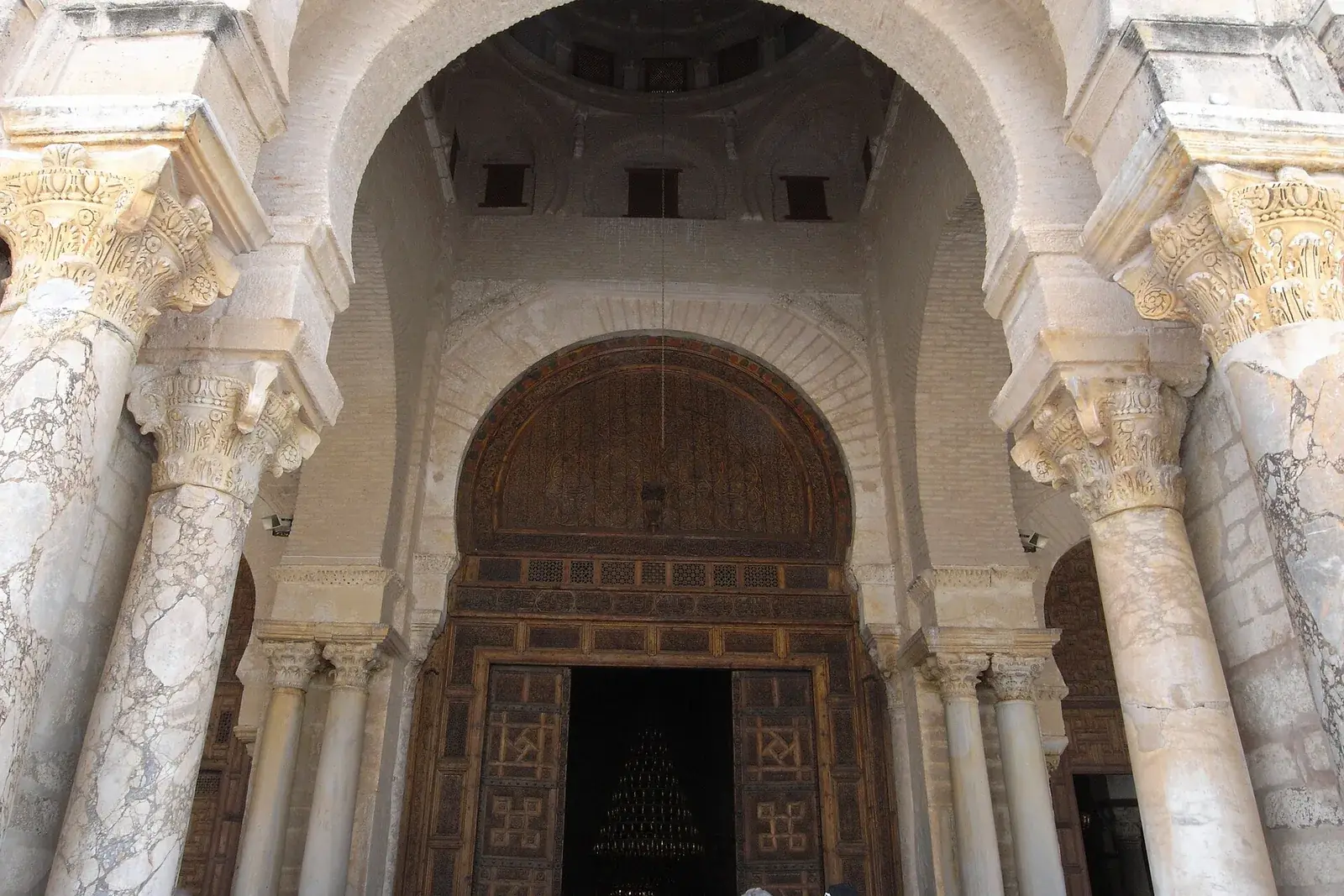
Founded by Uqba ibn Nafi in 670, the Great Mosque of Kairouan in Tunisia became the ancestor of mosque architecture across the western Islamic world.
Image Credits: Yukiko Yamamoto, via Wikimedia Commons (CC BY 2.0)
Berbers were drawn heavily into the armies that invaded Iberia in 711. No previous conqueror had bothered trying to integrate them; the Arabs converted them quickly and recruited them, and Andalusia could not have been taken without their help. By the eleventh century Muslim affiliation had pushed deep into the Sahara and Sahel. Missionary work mattered too — under Umar II the governor Ismail ibn Abdullah reportedly won Berbers over through just administration, and Abdallah ibn Yasin founded a movement that brought thousands more.
West Africa's story is overwhelmingly commercial. Trade networks across North and West Africa created the medium through which Islam spread peacefully, initially among merchants, because shared religion and shared Arabic script made traders more willing to trust and invest in one another. In the nineteenth century the Sokoto Caliphate under Usman dan Fodio put serious institutional effort into propagation.
On the Horn, long commercial contact with Arabia set the stage. Early Muslims fleeing the Quraysh took refuge at Zeila under Aksumite protection, and some settled across the region to promote the faith. When the Muslims prevailed at home, Somali merchants found their Arabian trading partners had all become Muslim and the major Red Sea and Mediterranean routes had passed under caliphal control. Islam followed the trade into the coastal cities, and further migrations from an unstable Arabia added families who acted as catalysts inland.
On the east coast, Arab traders — dealing substantially in slaves — founded permanent colonies on offshore islands, Zanzibar especially, in the ninth and tenth centuries. By the tenth century the Kilwa Sultanate had been founded by Ali ibn al-Hassan Shirazi, driven out of his inheritance by his brothers, and his successors ruled the most powerful of the Swahili coast sultanates from Inhambane to Malindi. Ibn Battuta, visiting in the fourteenth century, remarked on the great mosque at Kilwa Kisiwani built entirely of coral stone.
The twentieth-century numbers are striking in both directions. Africa's Muslim population grew from 34.5 million in 1900 to 315 million in 2000, from roughly twenty to forty percent of the continent. Over the same period Christianity grew from 8.7 million to 346 million — outpacing both Islam's growth rate and the continent's overall population growth.
Islamization of Iran, the Caucasus and Central Asia
The older historiographical model had Zoroastrianism collapsing almost instantly after the conquest of Persia because it was so tightly bound to the Sasanian state — the state falls, the state religion falls with it. That reading has been softened considerably. Trends away from the state religion predated the conquest and troubled Zoroastrian authorities before the Arabs arrived, and later Arab tribal migration during the Abbasid era shaped things further.
Conversion moved fastest in urban centers where Arab forces were garrisoned, which gradually left Zoroastrianism as a rural religion. Mass conversions did happen — the Sasanian army division at Hamra converted before pivotal battles including al-Qadisiyyah — but at the end of the Umayyad period Muslims were still a minority in the region.
Some conversions had very specific occupational logic. Zoroastrians working in industrial and artisan trades accepted Islam readily because Zoroastrian purity law treated occupations that defiled fire as making the worker impure. Missionaries also found the doctrinal distance manageable; Thomas Walker Arnold observed that a Zoroastrian Persian could translate Ahura Mazda and Ahriman into Allah and Iblis without much strain. Muslim leaders courting converts sometimes offered money for attendance at prayer and permitted Quranic recitation in Persian rather than Arabic so it could be understood.
Robert Hoyland stresses how two-directional the exchange was. The relatively small number of Arab conquerors in Persian lands produced heavy interaction and assimilation, with the conquerors' own descendants adopting Persian language, festivals and culture.
Islam reached the North Caucasus, notably Dagestan, during the seventh-century conquest. Large parts of the Caucasus were Islamized over following centuries, though much of the population held to local pagan traditions like the Adyghe Xabze of the Circassians, or to Christianity in Armenia and Georgia. By the sixteenth century, Safavid conversion policy had brought most of what became Iran and Azerbaijan to Shia Islam.
In Afghanistan, Umayyad missionary effort under Hisham ibn Abd al-Malik and Umar ibn Abdul Aziz won a number of converts. From the ninth century the Samanids — whose own roots lay in Zoroastrian theocratic nobility — pushed Sunni Islam and Islamo-Persian culture deep into Central Asia, with significant uptake in places like Taraz in modern Kazakhstan. The first complete Persian translation of the Quran dates to their reign. Historians credit Samanid missionary work with bringing as many as thirty thousand tents of Turkish people to Islam, rising past fifty-five thousand under the Ghaznavids. The Ghaznavids went on to retake Transoxania and invade the Indian subcontinent in the eleventh century, followed by the Ghurids and Timurids, who carried Islamic culture and the Timurid Renaissance as far as Bengal.
Arab Traders, Sufis and the Spread of Islam in India
Islamic influence reached the Indian subcontinent early and commercially. Arab traders were visiting the Malabar coast, which linked them to Southeast Asian ports, before Islam was even established in Arabia. Elliot and Dowson record a ship carrying Muslim travelers on the Indian coast as early as 630. The first Indian mosque is traditionally dated to 629, built at Kodungallur in Kerala by Malik Bin Deenar at the request of an unnamed Chera ruler, within Muhammad's own lifetime. In Malabar, Muslims are called Mappila. In Bengal, Arab merchants helped found the port of Chittagong, and Sufi missionaries settled as early as the eighth century. H. G. Rawlinson dates the first Arab Muslim settlements on the Indian coast to the late seventh century, a position corroborated by J. Sturrock and Haridas Bhattacharya.
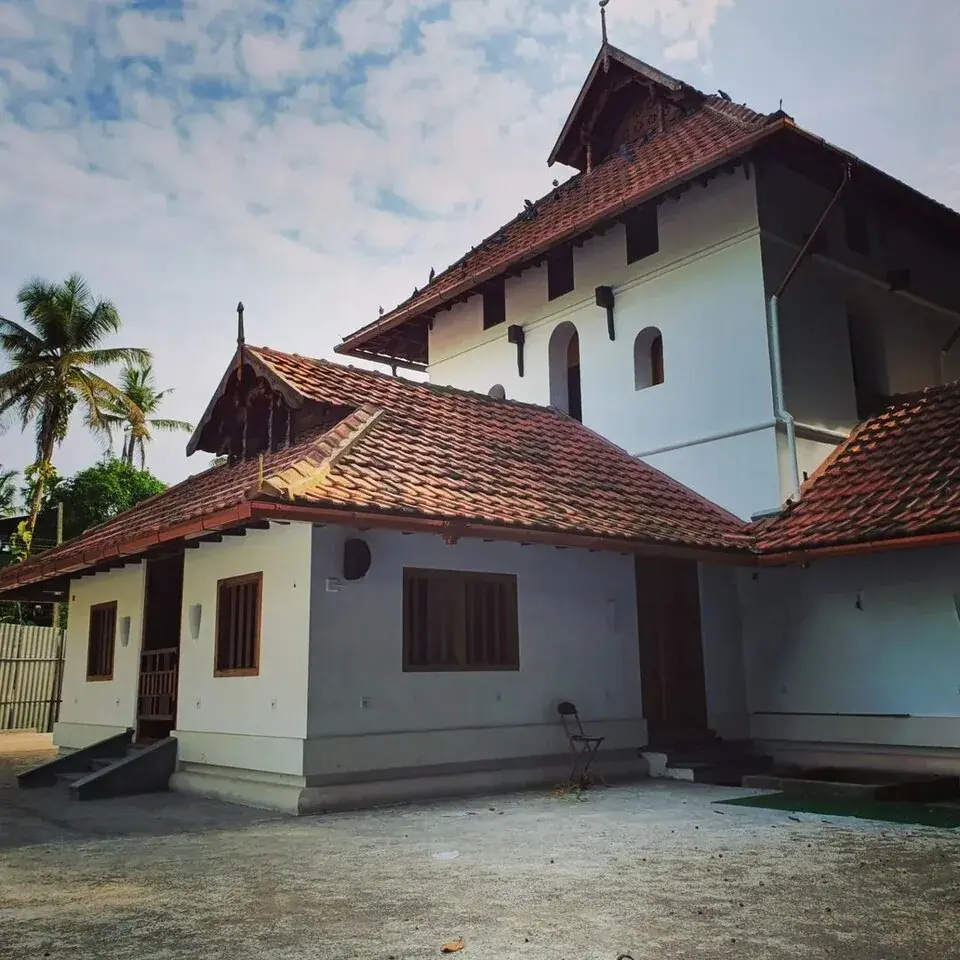
The Cheraman Juma Mosque in Kodungallur, Kerala, is traditionally dated to 629 CE, making it one of the oldest mosques associated with the Indian subcontinent, founded through trade rather than conquest.
Image Credits: By Arjunullas - Own work, CC BY 4.0, https://commons.wikimedia.org/w/index.php?curid=144756899
How conversion actually occurred in the subcontinent is one of the most politically loaded questions in the field, entangled with partition and with communalism in modern India, and typically comes down to a handful of competing schools. One holds that conversion came initially through violence, threat or coercion. Another treats it as a socio-cultural process of diffusion and integration over a long period into a dominant Muslim civilization. A related version emphasizes pragmatism and patronage — social mobility within the Muslim ruling elite, or relief from taxation. A fourth reading combines them, with conversion beginning under duress and followed by genuine belief. And a fifth argues that most Muslims in the region descend from migrants from the Iranian plateau or Arabia.
Missionaries were unquestionably active, often working under commercial cover. In the ninth century the Ismailis dispatched missionaries across Asia disguised variously as traders, Sufis and merchants, with instructions to address potential converts in their own languages. In India they worked hard at cultural translation, presenting Ali as the tenth avatar of Vishnu and composing hymns and a mahdi purana.
Rulers provided the other channel. Ibn Batuta reports that the Khalji dynasty encouraged conversion by making it customary to present converts to the Sultan, who would robe them and award gold bracelets. Muslim missionaries achieved their largest numerical success in India during Ikhtiyar Uddin Muhammad bin Bakhtiyar Khilji's control of Bengal.
The Mughals, founded by Babur, eventually held nearly the whole subcontinent. Akbar's reign is remembered for religious tolerance; Aurangzeb's for the full establishment of sharia and the reintroduction of the jizya through the Fatawa-e-Alamgiri.
Malacca, Java and the Spread of Islam in Southeast Asia
Southeast Asia received Islam almost entirely through commerce, then Sufi orders, then consolidation by converted rulers — with essentially no conquest involved.
Muslim sailors and traders were visiting the Indonesian archipelago long before any Muslim community existed there, many arriving from the Abbasid ports of Basra and Debal, and early Muslim accounts of the region dwell on orangutans, rhinoceroses and the spice commodities that brought them: cloves, nutmeg, galangal, coconut.
Dating the arrival precisely is impossible. The earliest Muslim gravestone markings date to 1082. Marco Polo found the port state of Peureulak Muslim in 1292. Chinese records note a Muslim delegation from the Kingdom of Pasai in 1282, and other accounts place Muslim communities in the Melayu Kingdom around the same time, alongside Muslim Chinese traders from provinces like Fujian.
The first communities formed in northern Sumatra, in Aceh, with Malacca becoming the stronghold from which Islam propagated along regional trade routes. The Sultanate of Malacca emerged after Parameswara Dewa Shah converted and took the name Muhammad Iskandar Shah on marrying a daughter of the ruler of Pasai — which captures the mechanism neatly, since dynastic marriage was a primary vehicle for the change of ruling class across the region.
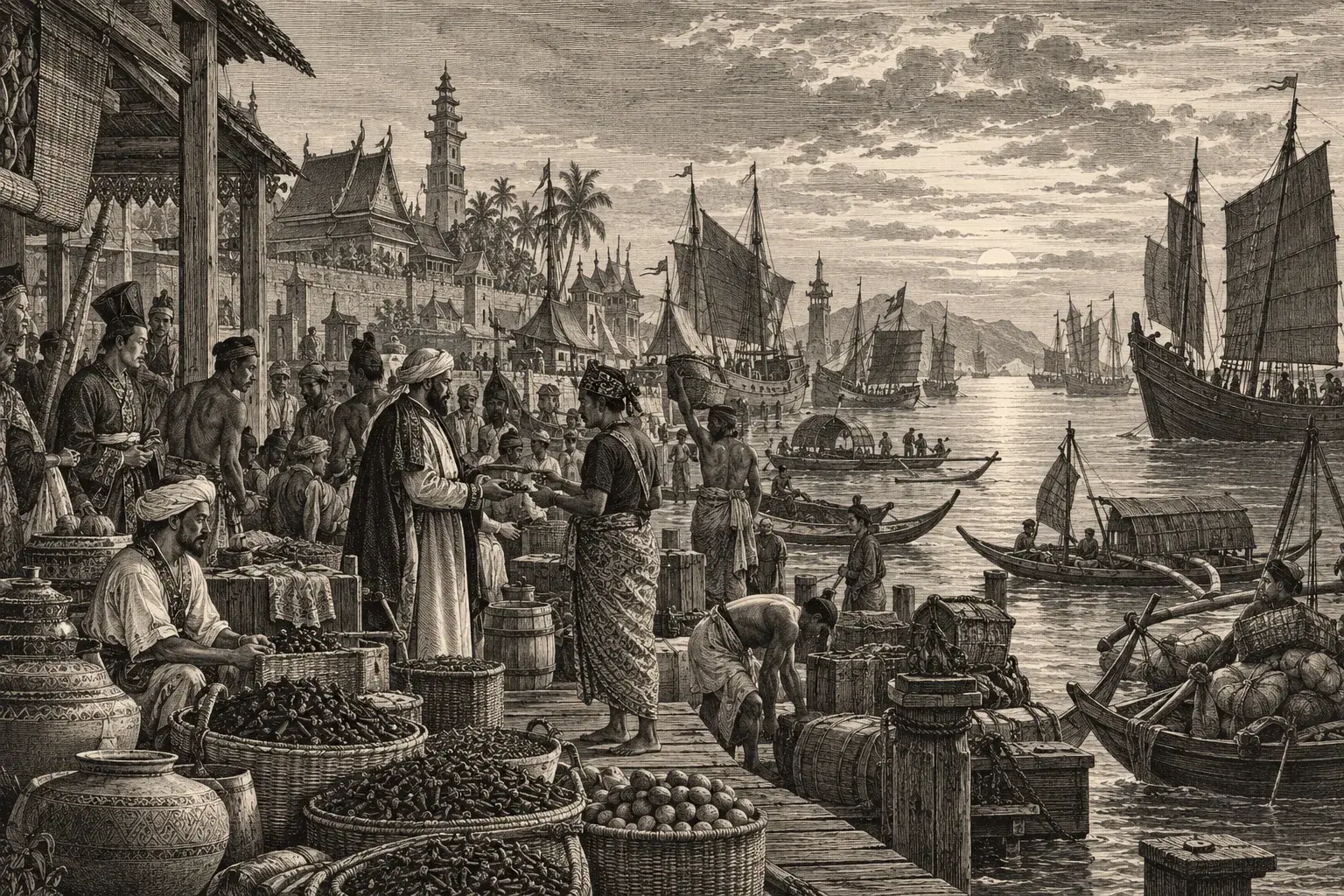
Malacca became the stronghold from which Islam spread along regional trade routes, carried almost entirely by merchants and Sufi orders rather than conquest.
Sufi orders carried Islam to Mindanao by 1380. Java was dominated by the Hindu-ruled Majapahit Empire, but as commerce with the wider Muslim world grew, Islamic influence reached the court even as imperial political power faded, so that by the time Raja Kertawijaya converted in 1475 under the Sufi sheikh Rahmat, the sultanate was already Muslim in character. In Vietnam, the Cham were reached by traders and missionaries from Kelantan. By the time European colonial powers and their missionaries arrived in the seventeenth century, the region as far as New Guinea was overwhelmingly Muslim with animist minorities.
The Golden Horde, Uzbeg Khan and Islam in Inner Asia
The Islamization of Inner Asia and the Turkic peoples beyond the caliphate's borders is poorly documented — histories tend to note that it happened without explaining how.
Some Turkic states, the Khazars and the Turgesh among them, fought the caliphate specifically to stop Arabization and Islamization in Asia during the seventh and eighth centuries. From the ninth century onward Turks began converting individually, ahead of their states. The Volga Bulgars, from whom modern Volga Tatars trace their Islamic roots, adopted Islam by the tenth century under Almış. The Qarakhanid dynasty of the Kara-Khanid Khanate, established by Karluks, converted under Sultan Satuq Bughra Khan around the mid-tenth century.
An eleventh-century Muslim prisoner taken by the Byzantines and brought into Pecheneg territory, where he taught and made converts, counts among the earliest introductions of Islam into Eastern Europe. Ibn Fadlan, traveling to Volga Bulgaria, left detailed reports of the Rus and claimed some had converted.
The decisive phase came with the Mongols, and it went badly at first. After Hulagu Khan's invasion of Central Asia and the sack of Baghdad in 1258, Mongol rule covered nearly all Muslim Asia, the caliphate was destroyed, Islam was persecuted, and Buddhism installed as state religion. Berke Khan became the first Mongol monarch to adopt Islam officially, and after the Mongols under Hulagu's general Kitbuqa were defeated by the Egyptian Mamluks at Ain Jalut in 1260, Berke broke with his cousin Hulagu and went to war with him, in protest at the sack of Baghdad and the killing of fellow Muslims. The real turn came later: Ghazan, khan of the Ilkhanate, converted in 1295, and the Golden Horde followed under Uzbeg Khan, who reportedly converted at the hands of the Sufi saint Baba Tukles. The conquerors had been religiously and culturally absorbed, and the resulting Mongol-Islamic synthesis shaped the further spread of Islam through Central Asia and India.
In the 1330s the Mongol ruler of the Chagatai Khanate converted, prompting the eastern part of his realm, Moghulistan, to rebel. Over the following three centuries the Buddhist, shamanist and Christian Turkic and Mongol nomads of the Kazakh Steppe and Xinjiang converted at the hands of competing Sufi orders working from both sides of the Pamirs, with the Naqshbandis most prominent, particularly in Kashgaria.
Central Asian Muslims also played a major role in the Mongol conquest of China. Sayyid Ajjal Shams al-Din Omar, a court official and general of Turkic origin, became Yuan governor of Yunnan in 1274, and a distinct Muslim community, the Panthays, was established there by the late thirteenth century.
Al-Andalus, the Reconquista and the End of Muslim Spain
Arab expansion reached Ceuta in present-day Morocco just as the three-century-old Visigothic kingdom in Iberia entered a period of political weakness. An Arab-led but largely Berber army invaded in 711 and held the southern and central peninsula by 720, pushing briefly over the mountains into southern France to control Septimania around present-day Narbonne. Charles Martel checked the advance at Poitiers, and Charlemagne established the Spanish March in 801.
The transformative moment came in 750, when an Umayyad prince escaped the massacre of his family in Damascus, fled to Cordoba and founded a new Islamic state there. That produced a distinctly Spanish Muslim society in which large Christian and Jewish populations lived alongside a growing Muslim majority, with many descendants of Visigothic chieftains and Roman counts among the converts. Rulers generally granted Christians and Jews the right to practice their religions, though non-Muslims faced political and taxation disadvantages. Where Muslim rule lasted longest, the result was a largely Arabic-speaking society formed by assimilation of the native population.

Centuries of Muslim rule in Al-Andalus produced a distinctly Spanish Muslim society and left behind architectural landmarks like the palaces of Granada, the last Muslim kingdom to fall in 1492.
Image Credits: Mstyslav Chernov, via Wikimedia Commons (CC BY-SA 3.0)
The Reconquista ran on a parallel track from the Christian victory at Covadonga in 722. Alfonso VI took Toledo in 1085. Las Navas de Tolosa in 1212 recovered the bulk of the peninsula for the Christian kingdoms. James I of Aragon took Valencia in 1238; Ferdinand III took Cordoba in 1236 and Seville in 1248. The Cordoba-centered state had meanwhile splintered into the taifas, and as Muslim Spain fragmented the Christian kingdoms consolidated. Granada, the last Muslim kingdom, fell in 1492. In 1499 the remaining Muslims were ordered to convert or leave, as the Jews had been. Poorer Moriscos who couldn't afford to go converted to Catholicism and practiced Islam in secret, hiding from the Inquisition until the practice was finally stamped out.
Ottoman Rule, the Millet System and Conversion in the Balkans
Balkan conversion is, as the sources acknowledge, a highly charged political subject — bound up with national identity formation and rival territorial claims, and often narrated as the product of a centrally organized Ottoman conversion policy.
The evidence doesn't really support that. Islamization in each Balkan territory unfolded across centuries, and its character and pace were set by local conditions rather than by decisions in Istanbul. Ottoman conquests were military and economic enterprises first. Victory announcements duly celebrated the addition of territory to Muslim domains, but the administration's actual concern was taxation and productivity, and a religious campaign would have cut directly against that.
The millet system allowed autonomous religious communities under their own law and leaders, which is a large part of why vast areas of the Balkans stayed predominantly Christian. The Eastern Orthodox churches occupied a relatively favorable position, largely because the Patriarch lived in Istanbul and functioned as an Ottoman officer. Roman Catholics were tolerated but suspected of loyalty to a foreign power in the Papacy — which is precisely why the Catholic areas of Bosnia, Kosovo and northern Albania saw the heaviest conversion.
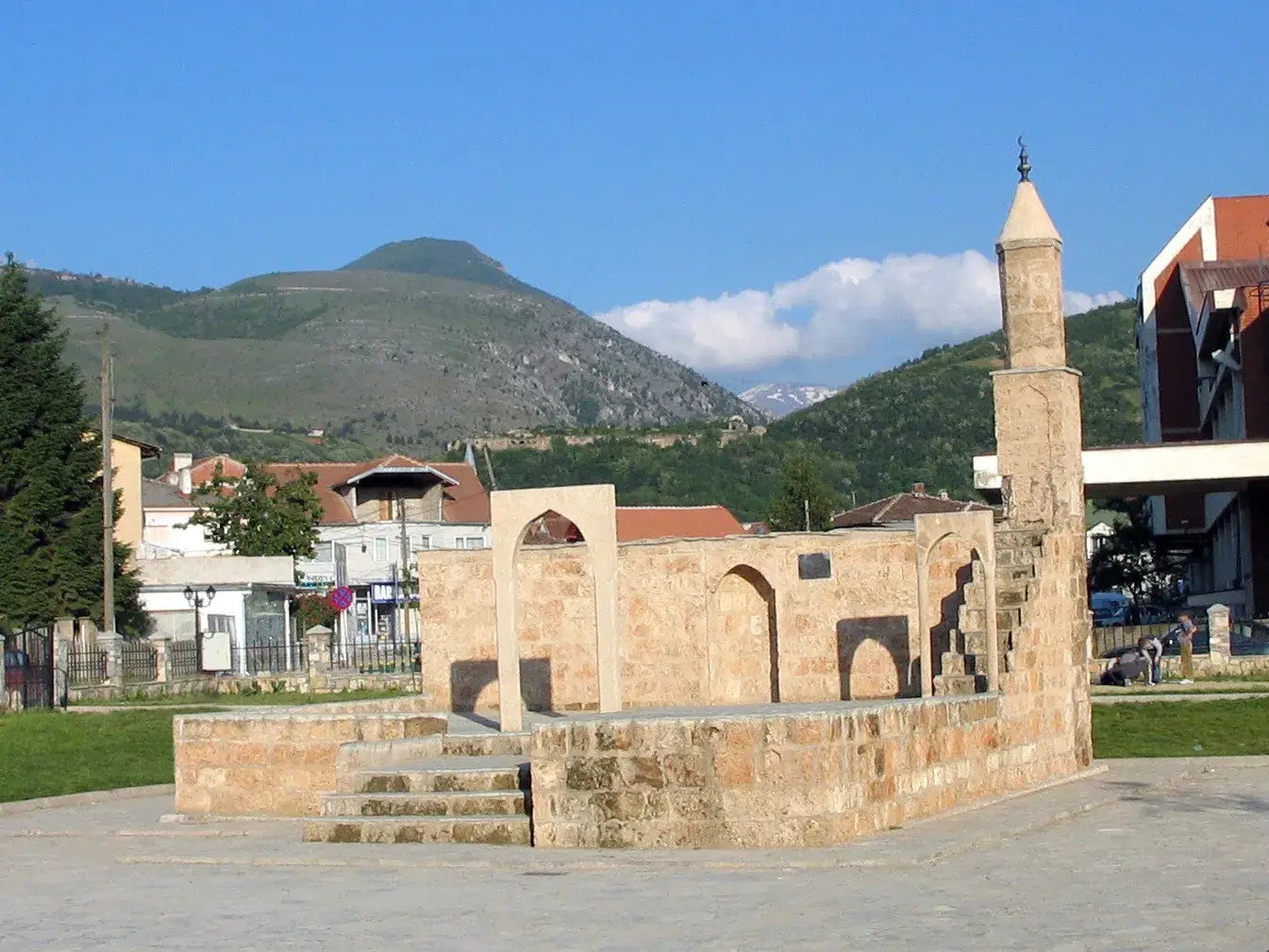
Islamization in the Balkans unfolded unevenly over centuries and was shaped mostly by local conditions, with the heaviest conversion concentrated in the Catholic areas of Bosnia, Kosovo and northern Albania.
Image Credits: Photo Balkan, via Wikimedia Commons (CC BY-SA 3.0)
Greek Orthodox subjects weren't required to convert, though many did to escape the socioeconomic disadvantages of Ottoman rule. The Ottomans did not officially endorse mass conversion, but evidence indicates it happened anyway, often to avoid the jizya. Christian sources record requests for mass conversion that Ottoman authorities actually refused, as in Cyprus, on the grounds that it would damage revenue.
The unwinding was demographic and often violent. After the Austrian defeat of the Ottomans in 1699 cost them Hungary and present-day Croatia, Muslim converts in both largely chose to move to remaining Ottoman territory. European romantic nationalism then seeped into the empire and gave Christian groups an intellectual framework for seeing themselves as subjugated peoples. As Balkan nationalities won independence one by one, co-ethnics who had converted to Islam became a problem for national ideologies that defined the nation as the local dominant Orthodox denomination. Some Muslims left voluntarily; many were expelled. The mosques of Belgrade make the point concisely — over seventy in 1750, three by 1850.
Muslim Migration and Transnational Islam Today
Islam has kept spreading through commerce and migration, particularly into Southeast Asia, the Americas and Europe. Since the 1960s substantial Muslim migration to Western Europe has come through labor recruitment, asylum and family reunification; a Pew Forum study published in January 2011 projected the Muslim share of Europe's population rising from six percent in 2010 to eight percent by 2030.
Contemporary Islamization, in one common reading, describes individuals returning to Muslim values, community and dress rather than states imposing anything. Gilles Kepel and Olivier Roy have written about a parallel development they call transnational Islam — a universalistic Muslim identity common among immigrants and their children in non-Muslim countries, made meaningful by communications, media, travel and migration, and describing an Islam practiced similarly everywhere that transcends national and ethnic custom.
That identity doesn't automatically translate into organized action. Even where Muslims recognize a global affiliation, the substance of religious life stays largely outside politics, in local associations for worship, study, mutual aid, charity and education. A third strand, the growth of transnational militant organizations, emerged from the major Middle Eastern conflicts of the 1980s and 1990s and internationalized what had been local disputes.
Demographically, the trajectory is clear enough: thirty-one percent of children born between 2010 and 2015 were born to Muslim parents. What's less clear, and worth holding onto, is that the story of how Islam reached some 2 billion people looks almost nothing like the caricature. The armies got there first in some places and never got there at all in the largest Muslim country on earth.