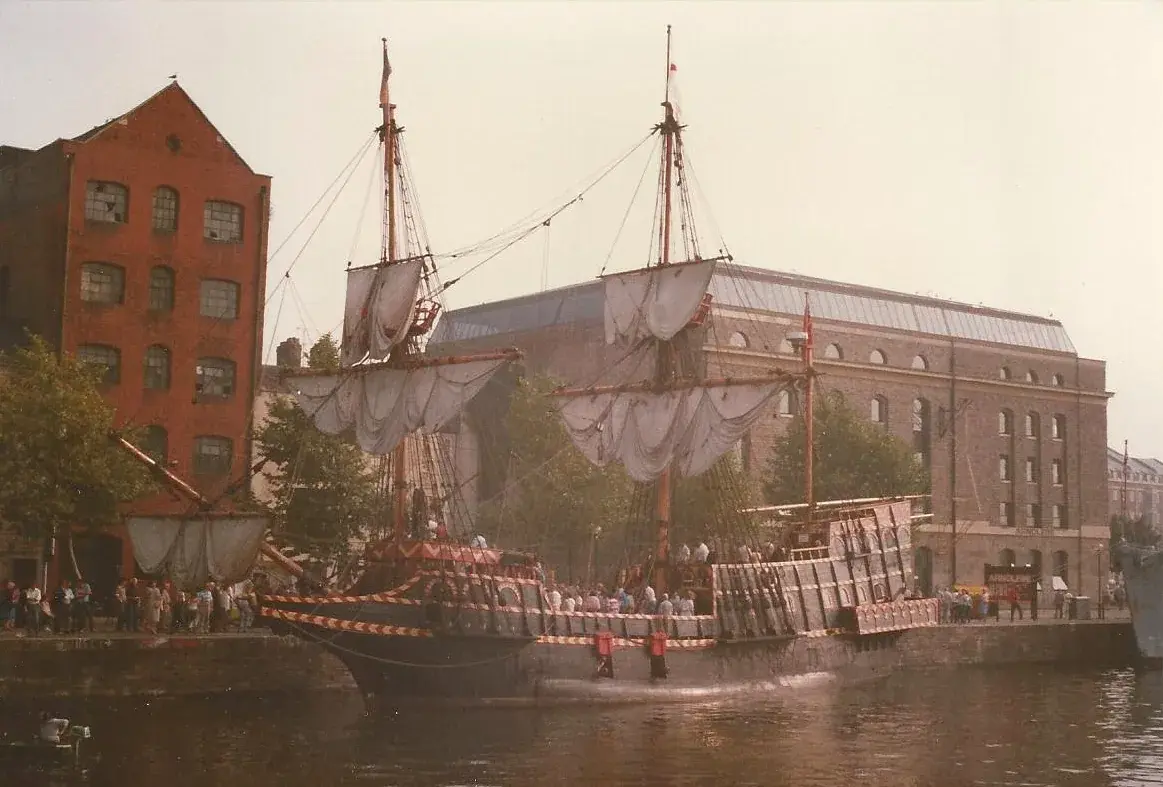
Far from the sea, some elderly man built a ship that stretched fifteen football lengths. It was a long, difficult work, the black pitch filling every tiny crack inside and from the outside, and the wooden walls three floors high. It is easy to imagine the questions that were hurled at the old man day after day, for the reason why he built it would seem madness enough. The sea was coming, yes, and it would drown everything. His name was Noah and the reason that he had built the wooden ship was no madness. The strange thing is, he kept building.
A World Gone Violent
It begins, fittingly enough, with a heartbroken God. After all the years in the Garden, after He'd first spread humans across the Earth, it seems God looked down upon the world and saw something that made His heart grieve, over and over. He saw that every inclination of the human heart was only evil continually, and it broke Him to the point that he decided to kill all who had done this to his creation. What makes the next line so heartbreaking, then, is the contrast when the Bible states that Noah was the only one who had done what was right in the sight of the Lord, and he walked with God, even as Adam had walked with him. In a world overcome with violence, one household would have to be saved from the coming slaughter.
Blueprints from Heaven
And what did God tell them to build? Probably something they'd have to work on for a while, if you believe the numbers. The ark would have to be 300 cubits long, 50 wide, and 30 high. In feet, this would be around 450 feet long, 75 feet wide, and four and a half stories tall, with three levels inside the wooden walls, a ceiling, a door on the side, and a pitch covering inside and out to keep the water away from the wood. Notice that the instructions do not state any sails or any navigation system at all. God told them to build a box good enough to contain everything and then survive the disaster Himself. A boat this big and this elaborate would take years to build and a great deal of money for wood and pitch to cover it, which the Bible ignores when it says simply that Noah did all that the Lord had commanded him. It is the next line that is the real summary of the man, however, for it is stated that he did not find any reason to question the order.
Noah brought his family and pairs of every kind of animal onto the ark.
Two by Two, and Seven by Seven
Everyone knows the story of the two by two, and rightly so, for it is a beautiful account of faith and survival. It is not nearly as known by most, the fact that the animals brought aboard had to include seven of each of the creatures fit for sacrifice, and also that Noah was told to bring in all kinds of food as well. The long line of creatures walked alongside Noah's family, and the whole story would've had no hope of ending well if it weren't for this line saying that God Himself closed the door to the ark, not Noah. Whatever judgment was coming had to be left to the Lord, and not even he had the power to stop the doors from shutting.
The Breaking of the Fountains
The fountains of the deep and the windows of heaven, the Lord God opened both of them, and no one alive at the time would disagree that it was no ordinary rainstorm. The windows of heaven and the fountains of the deep were no doubt metaphors for something far greater, but at the time it seemed like the rains had absolutely drowned the planet, beating against the wooden walls for forty long days and nights. The water simply would not stop pouring down. When it did stop, the Bible does not say, but the next words speak of how the water had risen up until it reached the height of the mountains, killing everything the flood could touch. This was no ordinary deluge, and it claimed almost all lives. Even less ordinary, however, is the way it is said, for while the story has been heavy, it has not been one of outright doom and gloom. The ark had made it through, and the eight souls inside it had seen the last of their world, the ground beneath them swallowed up by the rising waters. But not one of them had been left to die, for God had remembered Noah and the waters had stopped. A wind had blown across the land, and it had taken five long months for the waters to drain away until the ark touched solid ground on the mountains of Ararat.
A Raven, a Dove, and an Olive Leaf
Noah could have seen the tops of the mountains from inside the ark, but seeing is not believing, and so he ordered the first reconnaissance mission the world had ever seen. He sent out a raven, a bird that would have no problem with finding food, and it flew around and around the world, unable to land. He then sent out a dove, which also tried to land but couldn't find any ground. It took another seven days before he sent the dove once more, and this time it had found a leaf from an olive tree to bring back with it. Some say that the sight of fresh leaves and the knowledge of their smell would have done wonders for the morale of anyone who had been on that ark, for it was an announcement that somewhere below the surface of the world, land had returned. It took another seven days before he sent the dove out for the last time, and this time it did not come back at all. It had found its place on the floating landmass and had stayed there, and to this day there is nothing more universally recognized as a peace offering than a dove bearing olive leaves in its wings.
The dove returned with an olive leaf, proof that the world was coming back to life.
The First Rainbow Promise
Now the ground was dry enough for the first time in over a year, and God told Noah to get up off the ark. The first thing that Noah and his family did was to make an offering to the Lord. It is beautiful that the text then speaks of the words the Lord said to Noah, for it is the first covenant He ever made. It is fitting, perhaps, that this was the first sacrifice accepted by God and that it was to become a great promise, the text saying that the Lord made the covenant not only with Noah but with every living creature, bird, and animal. As long as the world continued to turn, seedtime and harvest, cold and heat, summer and winter, day and night, would not cease to exist. A sign was promised to all as well, the Lord saying that He would hang His bow in the clouds, a symbol that would be seen for miles at all times. The rainbow was most likely a promise not to be forgotten, and many have thought about what it really meant; it is the most ancient of symbols, for in those days the bow was a weapon of war, and many have considered the idea that God had hung it up in the sky, pointed it away from the Earth, and put it to rest.
A warrior's bow hung up in the clouds, pointed away from the earth: the sign of the covenant.
One Righteous Family
In a world where no one else was even remotely righteous, one family had done what was right in the sight of the Lord. The text states that Noah had found favor with the Lord and that he was a righteous man, blameless among the people of his time, a man who had walked faithfully with God. In a world of corruption, Noah had been kept pure, and so he and his family had been the first ones to be rescued from the coming destruction. This was, of course, not the only time something like that had ever happened. This was the first covenant in the Bible, and it was also the first example of some righteous people being saved while the rest were destroyed. The pattern would continue throughout the scriptures, and God had been rescuing small groups of people ever since the flood, even as He had promised that it would never happen again. Noah had played his part faithfully in the whole affair as well, for while he had obeyed every word of God, the Scripture only reports that Noah built the boat, with hardly any complaints, even though it must have seemed absurd to build a boat far away from any sea. It is this same part of faith that has made Noah such an important figure to all those who have followed his story.
The Flood Everyone Talks About, Even If They Think It Isn't Real
There is reason to think, for more than a century and a half, that this is not the only flood story to ever have been told, even if Noah's may be the most famous. There is, written on thousands of ancient clay tablets, the Babylonian Epic of Gilgamesh, and within it there is an account of a similar flood, one that saw Utnapishtim instructed by one of the gods to build a great vessel and to bring aboard all the animals he could find. There were birds as well, sent out to find land, and this story was most likely not the first one of its kind, since there existed even older writings, such as Atrahasis. People knew the floods all too well, living as they did along the banks of the great rivers that watered Mesopotamia, for they always seemed to come too soon and too late, drowning crops and villages. What it all meant and whose story it really was depended on whose beliefs one was asking. The believers would claim it as a divine work, one that had been preserved in the minds of men all over the world, while the historians dismissed it as mythology, a part of a literary tradition that had been shared by all the peoples of Mesopotamia, who had since been conquered by the Assyrians and Babylonians. Either way, the comparison only serves to highlight the contrast, for the flood was not really the point of Noah's story. It was the salvation that was so desperately needed, and the way in which God had prepared it, even as it was happening. It is why the story had been passed down, not because anyone wanted to remember the destruction or the loss, but the promise that God had made, one He fulfilled long after the waters had begun to recede.