Every April, Cape Town's Malay community makes a pilgrimage to the tomb of Sheik Joseph — a nobleman from the Celebes who was exiled to South Africa by the Dutch in 1694 because they feared his religious influence across the East Indies. This is his story, the stories the Malay community tells about him, and the legend of Table Mountain's famous cloud — the smoke from a pipe-smoking contest between an old pirate and the Devil himself.
Every April, when the South African autumn sets in, the Malay community of Cape Town packs up tents and provisions and heads out on a pilgrimage. They travel by cart, and by foot, and now by train — the men in red fezzes and long robes, the women in bright silk and satin — to a white tomb on a sandstone hill above the Eerste River, near the sea. The tomb belongs to Sheik Joseph — Sheik Yussuf to the Malay faithful. He has been there since 1699. More than three hundred years of pilgrims have climbed the steps his followers built to reach his resting place, with its bright plush upholstery and copies of the Koran and ostrich eggs hanging from the ceiling. And his story is one of the strangest and most beautiful in the long, strange history of the Cape.
A Nobleman of the East Indies
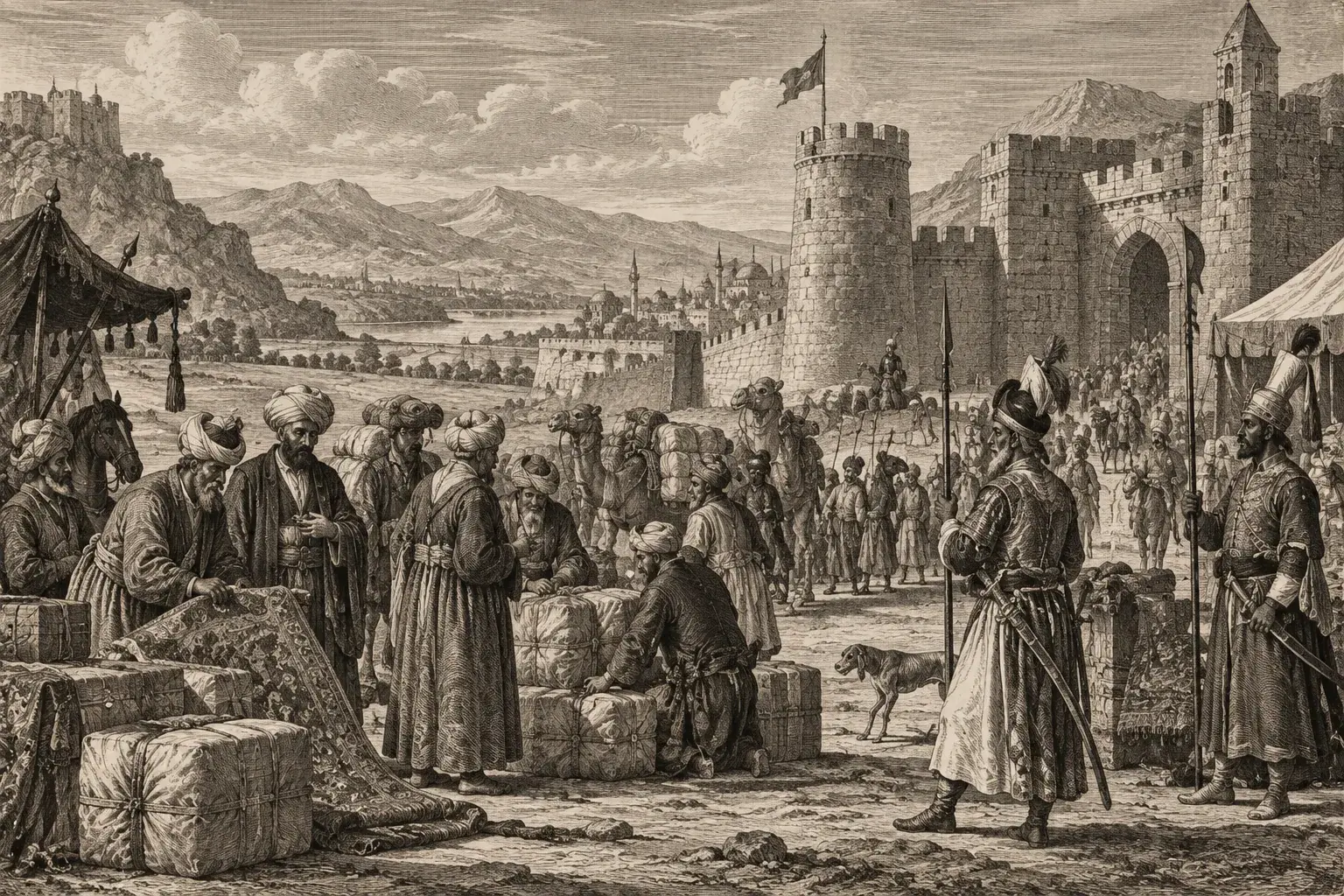
Sheik Joseph was a Macassar or Galeran nobleman of the island of Celebes (modern Sulawesi in Indonesia) — a man of high birth, great piety, and considerable military ability, revered throughout the East Indies as a holy man. When the Dutch East India Company was fighting to establish dominance in the Celebes and across Java in the 1680s, Sheik Joseph took the side of the King of Bantam against the Dutch-backed pretender. He lost. A Dutch officer named Captain Ruis captured him by a clever stratagem — pretending to be a prisoner and a Muslim himself, he won the Sheik's confidence and persuaded him to surrender. The Dutch then sent Sheik Joseph to Ceylon as a prisoner. But he was so revered across the East Indies that his presence there seemed dangerous, so in 1694 they shipped him further still — to South Africa, the remotest corner of their empire, where he could be beyond all hope of escape or rescue. He came in the flute Voetboog with forty-nine followers, wives, and children, and was accommodated on the farm of Zandvliet near the Eerste River, under the supervision of the minister Petrus Calden — the same Calden who had his farm there and was later persecuted in the conspiracy against Willem Adriaan van der Stel. Simon van der Stel himself apparently took great interest in his distinguished prisoner. Before the Sheik died in May 1699, his kinsman the King of Goa petitioned the Company to let him come home. The Company refused even to allow his bones to be moved when he died — they feared the bones would become objects of worship.
The Dutch refused to let Sheik Joseph's followers take his bones home to the East Indies when he died in 1699. Over three hundred years later, the Malay community still comes to pray at his grave every April.
Story Behind the Pilgrimage
There are several stories about how the pilgrimage to Sheik Joseph's tomb began. One version comes from a Malay scholar Abdul Rahim, who heard it from a Moulvi from Batavia. The story goes that a great sultan in the East Indies had raised a boy as his son, not telling the child he was not of royal blood. This boy — who was Sheik Joseph — grew to manhood and fell in love with a beautiful girl in the city. He asked to marry her. The girl's mother, horrified, refused without explanation. He pressed and pressed. Finally, the mother told him the terrible truth: the girl was his own sister, born of the same mother. Sheik Joseph was so struck by grief at this revelation that he could not speak to anyone. He grew weary of the world. He commanded a ship to be prepared and sailed away, not knowing where he was going. The Sheik touched the salt water during the voyage and it became sweet. At long last they came to the Cape, and Sheik Joseph and his followers landed at False Bay where the Eerste River flows to the sea. There he died, and his followers buried him on the hill above the river. His heart, the story says, was taken from his breast and carried back to the city of the sultan, where it was buried. His body remains at the Cape. Another, simpler story — from a grandfather's memory — says that a herd-boy once lost his oxen on the Cape Flats. He searched and couldn't find them and fell asleep in the grass. In his sleep appeared a noble man who said his name was Sheik Joseph and his tomb was on the nearby hill. "Behind the hill," he said, "you will find the oxen." The boy woke. The air was full of fragrant incense. And behind the hill, the oxen were all together. The boy came to Cape Town and told the story. Since then the pilgrimage has been made every year.
Table Mountain Cloud
The Cape Malays — descendants of the slaves and political exiles brought from the Dutch East Indies — have their own legend to explain the famous cloud that sits on top of Table Mountain, rolling down its precipices in great folds of mist whenever the south-easter blows. Long ago, they say, there lived on the slopes of the Devil's Peak an old pirate named van Hunks — a former buccaneer, fat and solitary, who sat all day on his stoep drinking arrack and smoking his great calabash pipe. One day a stranger appeared, limping down the rocks toward him, carrying a large empty pipe. The stranger asked to share van Hunks's tobacco for a smoke. They got to talking, and before long they had made a wager — who could smoke more at a sitting. For days they sat there, puffing at their pipes, the cloud growing larger and larger above them until it covered all of Table Mountain and poured down its sides and swept through the streets of Cape Town below. In the end, van Hunks won. The stranger, overcome and groaning, fell to the ground. Van Hunks knocked off his hat — and revealed a pair of horns. There was a crash of thunder, a blaze of lightning, a dreadful smell of sulphur. When the mist cleared, there was no stranger and no van Hunks. Only an empty keg, two empty pipes, and a spot scorched bare of grass. And that is why the place is called the Devil's Peak, and when the south-easter blows and the cloud comes rolling over Table Mountain, an old Cape Town resident will say that the Devil and van Hunks are at it again.
The tablecloth cloud on Table Mountain has fascinated visitors for centuries. Cape Town's Malay community has the best explanation — and they've been telling it longer than anyone else.