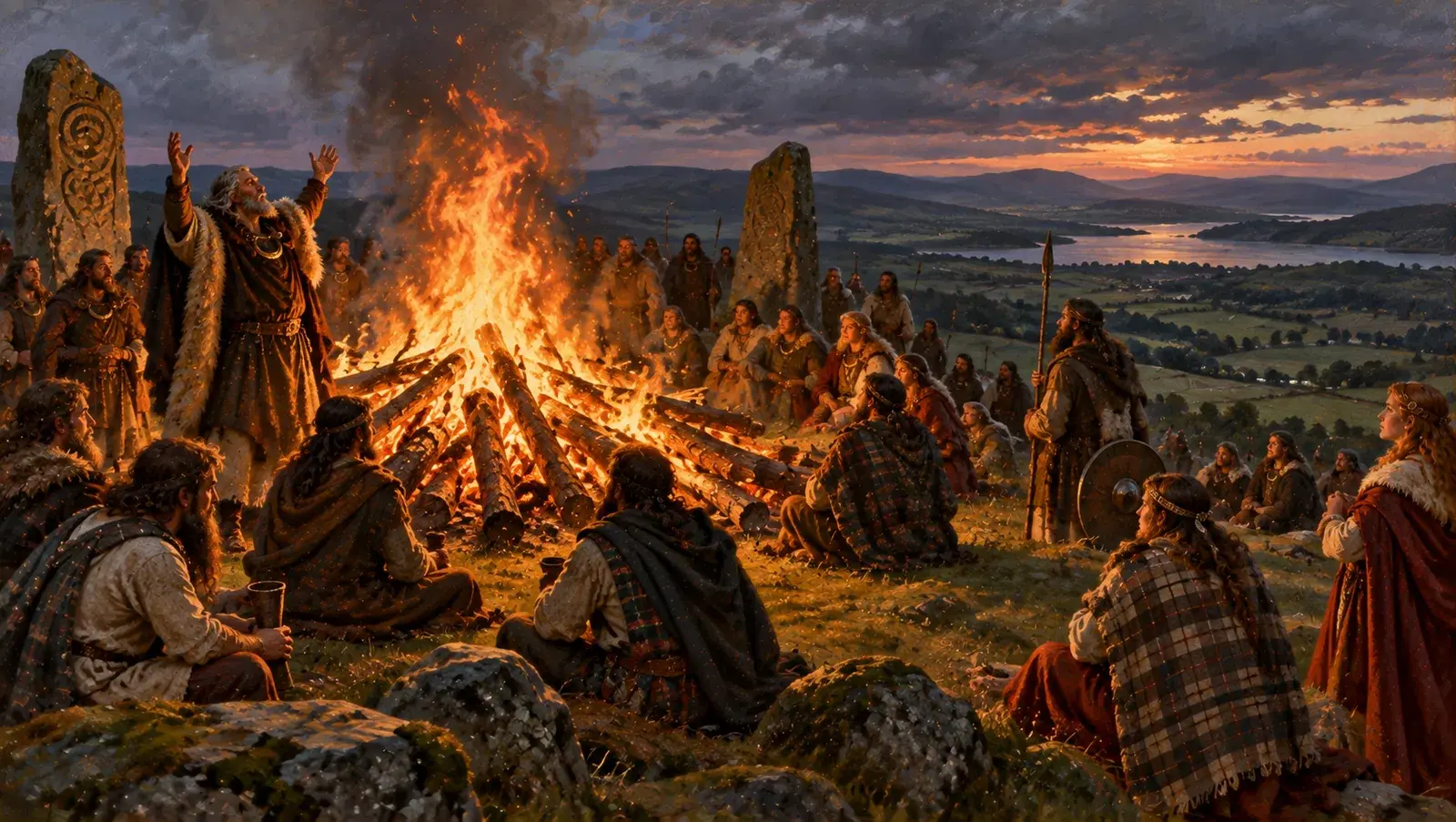
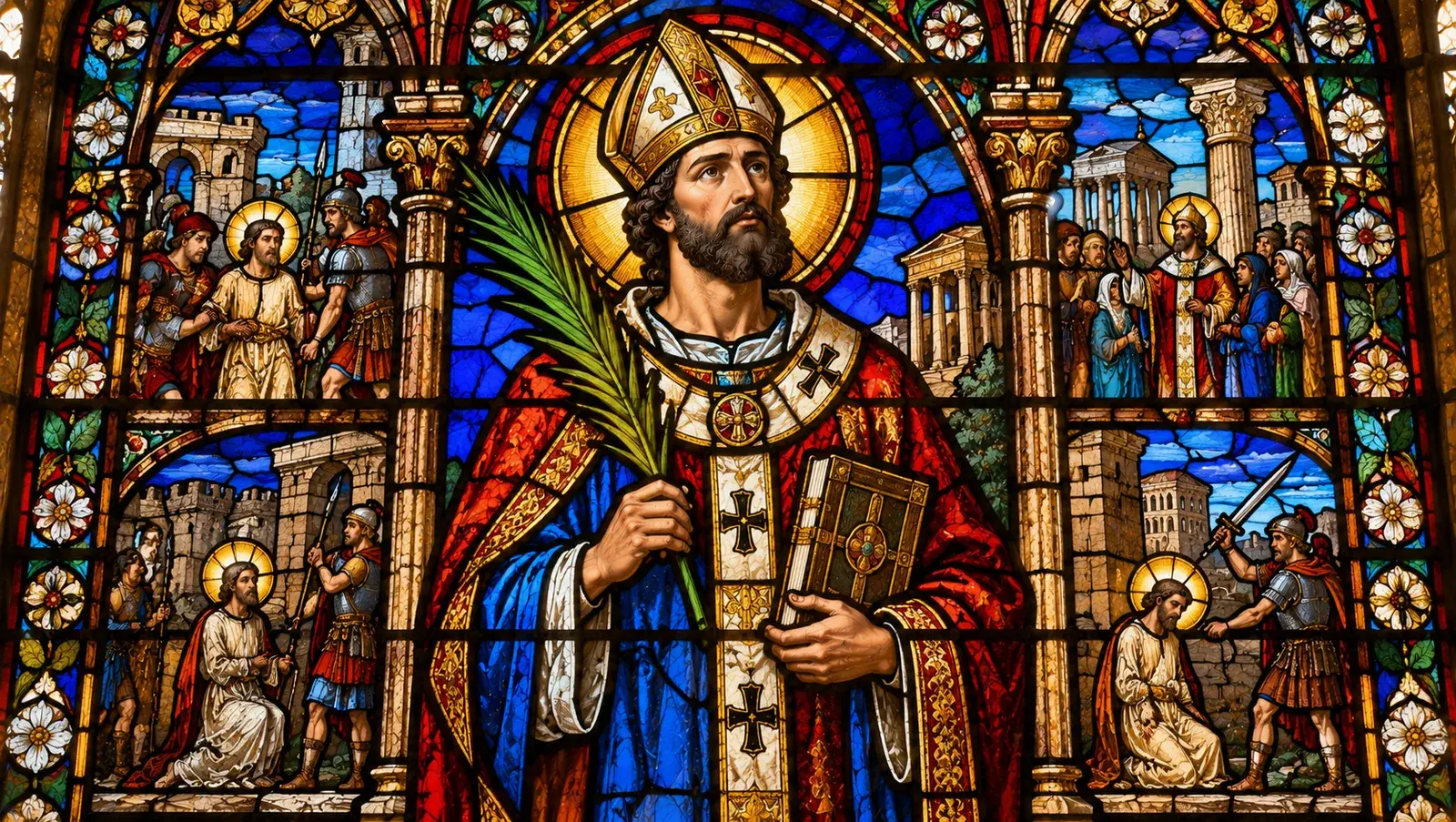
There is something quietly astonishing about a poem that its own author wanted destroyed. Virgil spent the last decade of his life on the Aeneid, an epic about the founding of Rome, the weight of destiny, and the price a man pays when his will is overruled by fate. He died before he could finish it. And by most accounts, he died wanting the whole thing reduced to ash. He had requested it in letters. He had told his closest friends. The Aeneid, as far as Virgil was concerned, was not ready to be read. The Emperor Augustus made sure it was published anyway. That tension — between a poet's private misgivings and an emperor's desire to possess the poem — frames everything worth knowing about the Aeneid. It is a work of immense beauty and structural ambition, one that shaped Latin literature for centuries, formed the backbone of Roman education, and gave Western culture some of its most enduring images and phrases. It is also, on close reading, a deeply unsettled piece of writing — one that raises more questions about empire, violence, and human suffering than it ever comfortably answers.
Virgil and the World He Wrote In
To understand the Aeneid, it helps to understand the man who wrote it and the Rome he was writing in. Publius Vergilius Maro — Virgil, as we know him — was born in 70 BCE in Andes, a village near Mantua in what is now northern Italy. He came of age during one of the most turbulent periods in Roman history, a stretch of decades defined by civil war, political assassination, shifting alliances, and the slow, bloody collapse of the Republic. Julius Caesar rose and fell. Mark Antony and Cleopatra went to war against Octavian and lost. By the time Virgil was in his early forties, the dust had more or less settled, and a new kind of Rome was taking shape — one nominally still a republic but increasingly organized around the singular authority of Augustus, the man who had been Octavian and who now styled himself the first citizen of a new age. Virgil had already produced two celebrated works before he began the Aeneid in earnest — the Eclogues, pastoral poems about shepherds and loss, and the Georgics, a meditation on farming, nature, and the deep roots of the Italian land. Both works engaged, with varying degrees of subtlety, with the political reality Virgil lived in. The Aeneid would do the same, but on a vastly grander scale. He began work on the poem around 29 BCE, and it consumed him for the rest of his life. He died in 19 BCE, leaving it incomplete — there are passages that clearly needed further revision, and the ending, by most scholarly consensus, is abrupt in ways Virgil himself would have smoothed over. He was fifty-one. He had been working on the poem for about ten years. It was still, in his view, not ready.
What the Aeneid Is Actually About
The epic follows Aeneas, son of the goddess Venus and the Trojan nobleman Anchises, from the ruins of Troy to the shores of Italy. When Troy falls to the Greek armies — burned, sacked, its men killed and its women enslaved — Aeneas does not die in the wreckage. He escapes, carrying his elderly father on his back and holding his young son Ascanius by the hand, leading a remnant of survivors away from the smoking city. His wife, Creusa, is lost in the chaos. From that moment, the poem becomes a story about a man who cannot stop moving, driven by a divine mandate he did not choose and cannot refuse. The gods have determined that Aeneas will found a new civilization in Italy, and that his descendants — Romans — will go on to rule the world. The fatum, the fate, has spoken. The only question is what it will cost him to get there. The poem is divided into twelve books. The first six trace Aeneas's wanderings across the Mediterranean before his arrival in Italy, covering storms, sea journeys, a stop in Carthage, a visit to Sicily, and a descent into the Underworld. The final six deal with the wars Aeneas must fight on Italian soil against the Rutulian warrior Turnus and his allies to claim his destined place. The poem ends, with stunning abruptness, at the moment Aeneas kills Turnus in single combat. Virgil wrote in dactylic hexameter — the same meter Homer used for the Iliad and the Odyssey — and the opening line announces the poem's ambitions clearly. Where Homer's Iliad begins with the wrath of Achilles, and the Odyssey with the story of a man ("Tell me, O Muse, of that ingenious hero"), Virgil opens: "I sing of arms and a man." It is a deliberate echo and a declaration of independence simultaneously. Virgil is entering a tradition. He is also, quietly, doing something new.
Driven by fate rather than personal ambition, Aeneas journeys from ruined Troy toward the land where Rome will eventually rise.
Standing in Homer's Shadow — and Stepping Out of It
No serious reading of the Aeneid can ignore its relationship to Homeric epic, and Virgil was clearly aware of that. He drew on a remarkable range of earlier writers — the philosopher-poet Lucretius, the old Roman epic writer Ennius, the Hellenistic poet Apollonius of Rhodes — but Homer towered above all of them in the literary universe Virgil inhabited. The Iliad and the Odyssey were not just great poems; they were cultural scripture, the texts every educated person in the ancient world knew by heart. The structural parallel is not accidental or subtle. The first half of the Aeneid — Books 1 through 6 — follows the shape of the Odyssey so closely that scholars refer to it as the "Virgilian Odyssey." Like Odysseus, Aeneas is a wanderer at sea, battered by divine hostility (Juno plays the role Poseidon plays in Homer), pushed off course by storms, stranded among foreign peoples, tempted to stay, and ultimately compelled to move on. The second half of the poem, Books 7 through 12, shifts into the register of the Iliad — war on land, battlefield aristeia, heroic deaths, and a final duel between champions. But what makes Virgil genuinely interesting rather than merely derivative is what he does with these borrowings. He does not just transplant Homeric situations into a Roman setting. He uses them as moral laboratories. Aeneas is repeatedly placed in circumstances that mirror those of Odysseus or Achilles, and the poem's emotional and ethical weight comes from watching him respond differently — and from asking what those differences reveal. Odysseus is brilliant, adaptable, self-interested. He survives by cunning, by flexibility, by knowing when to dissemble and when to charm. Aeneas is something else entirely. He is slower to speak, heavier in spirit, burdened by obligations that extend beyond himself. When Odysseus leaves Calypso's island, he leaves because he wants to go home. When Aeneas leaves Carthage, he leaves because a god tells him he must — and the poem does not pretend this is an uncomplicated thing. Achilles, meanwhile, is defined by personal glory and overwhelming grief. He is the greatest warrior alive, and he knows it, and much of his tragedy stems from the collision between his heroic self-image and the reality of loss. Aeneas fights, too, and fights devastatingly well, but the poem consistently subordinates his individual glory to a larger, impersonal purpose. He is not fighting to be remembered as the greatest. He is fighting to fulfill a destiny he was assigned before he was born. Quintilian, the great Roman rhetorician, put Virgil nearly on a level with Homer and suggested that Virgil actually faced the harder task. Homer had the advantage of precedent, of novelty, of a tradition that hadn't yet been done. Virgil was writing in Homer's explicit wake, with Homer's poems visible on every page, and he still managed to produce something that the ancient world recognized as genuinely his own. That is no small thing.
Roman Virtue at the Heart of the Epic
If one word could summarize what distinguishes Aeneas from every Homeric hero, it is pietas — a Latin concept that doesn't translate neatly into any modern English equivalent and that Roman readers would have understood with an immediacy modern readers have to work toward. Pietas encompassed obligations to the gods, to one's family, to one's ancestors, and to one's country. It was not mere piety in the religious sense, though it included that. It was the whole structure of duty that bound a person to something larger than themselves. An Achilles could abandon the Greek army out of wounded pride and still be admired. A man of true pietas could not. The obligation was too deep. This is not to say Aeneas is a bloodless figure of civic virtue with no inner life. The poem is too honest and too strange for that. He grieves — for Troy, for his father Anchises, for every person his journey costs. He delays. He falls in love. There are moments when he seems genuinely uncertain whether the divine mission is worth what it demands. He is recognizably human. But the poem's ethical architecture insists on pietas as the value that ultimately shapes his choices, and the original Roman audience would have understood that insistence as something more than just characterization. Virgil was writing at a moment when Augustus was actively attempting to reshape Roman civic and religious culture. One of the defining features of the Augustan program was a return to what the emperor presented as traditional Roman values — including, conspicuously, the religious seriousness and communal obligation that pietas represented. A poem that placed pietas at its moral center was a poem that spoke directly to that cultural moment.
Dido: The Queen Carthage Could Not Keep
No figure in the Aeneid has captured the imagination of readers, artists, and composers across two thousand years quite like Dido, Queen of Carthage. She arrives in Book 1 as a ruler of formidable capability — a woman who has fled a murderous brother, founded a city on foreign soil, and built a functioning civilization essentially from scratch. She is hospitable to the shipwrecked Trojans, resourceful, and possessed of real authority. For a few pages, she feels like the peer of Aeneas himself. Then Venus, Aeneas's divine mother, decides to guarantee her son's safety in Carthage by engineering something more reliable than Dido's goodwill. She causes Dido to fall desperately, wholly in love with Aeneas — not the gentle, mutually chosen love of two people finding each other, but a consuming passion that works like an illness, or a wound. Virgil uses the word vulnus, wound, repeatedly in describing Dido's condition. She cannot eat. She neglects the construction of her city. She wanders the streets at night, looking for Aeneas in the ruins of her own concentration. The affair takes shape. Dido and Aeneas spend the winter in Carthage, and Dido allows herself to believe it could be permanent — that Aeneas is her husband, that Carthage will be his home too, that destiny can be negotiated. Then the god Mercury arrives with a message from Jupiter, and the message is blunt: Aeneas was not sent to Italy to build walls in Carthage. His fate lies elsewhere. Leave. Aeneas tells his men to prepare the ships quietly, hoping to avoid the conversation. Dido finds out anyway. The confrontation between them in Book 4 is one of the most devastating scenes in Latin literature — not because Dido screams and Aeneas flinches, though both those things happen, but because each of them is, on their own terms, entirely right. Dido is right that she was used, right that she was manipulated, right that the gods' game has cost her everything. Aeneas is right that he cannot choose not to go, right that he did not ask for this love and did not manufacture it, right that the gods command and he must follow. Neither of them is lying. Neither of them wins. What Dido does after Aeneas's ships disappear over the horizon is one of the most famous acts in ancient literature. She builds a funeral pyre from his gifts, from his weapons, from the bed they shared. She stabs herself on it, and as she dies, she utters a prophecy: that one day a great warrior will rise from her people to avenge her city on the descendants of Troy. That warrior, the Roman reader would immediately have understood, is Hannibal. The entire history of the Punic Wars — the existential threat that Carthage posed to Rome, the long nightmare of Hannibal's campaign through Italy, the battles of Trasimene and Cannae and the terrible years when Rome nearly ceased to exist — all of it is refracted through the image of a wounded woman's dying curse. Dido is a complicated figure in the way that real people are complicated, and Virgil clearly knows it. She enters the poem wearing traces of Alcinous and Arete, the gracious Phaeacian rulers of the Odyssey who receive Odysseus with royal hospitality and ask for his story. But she darkens as her obsession deepens, acquiring the traits of Medea — the Colchian princess of Greek mythology who helped Jason and was abandoned by him, who turned her grief into terrible acts. The parallel is intentional and uncomfortable, because Medea's response to betrayal involves killing her own children, and Virgil wants his readers to feel that undertow even as they watch Dido choose death instead. For Roman readers, there was another layer of meaning still. A powerful, magnetic foreign queen — ruler of a North African city, entangled with a Roman man of destiny, bringing ruin on herself through a love that swallowed her political judgment — would have echoed, unmistakably, the figure of Cleopatra. The Egyptian queen's relationship with Mark Antony, her role in the final civil war, and her ultimate defeat and death were not distant history when the Aeneid was composed. They were recent events, still raw, still politically charged. Virgil is not crude enough to make the parallel explicit. He doesn't have to.
Abandoned by Aeneas and trapped by a love engineered by the gods, Dido became one of literature's most tragic figures.
Golden Age — for Whom?
The Aeneid was, on its surface, a poem written in support of Augustan Rome. Virgil gives Augustus a prophecy in Book 1 that describes him as the man who will bring another golden age, who will close the gates of war and usher in a period of peace. The shield of Aeneas, forged by the god Vulcan in Book 8, depicts the Battle of Actium — Augustus's defeat of Antony and Cleopatra — as a moment of cosmic triumph, civilization defeating chaos. There is no ambiguity in those passages about who the poem is celebrating. But there are other passages. Passages that do not fit as neatly into the Augustan triumph narrative. The war in Italy that occupies the second half of the poem is bloody in ways that feel deliberate. Turnus, the Rutulian king who opposes Aeneas's settlement in Latium, is not a cartoon villain. He is brave, proud, genuinely beloved by his people, and he fights for what he believes is rightfully his. He is not wrong by his own lights. He is simply on the side that history has already condemned. The battles that surround him are full of young men dying, of mothers losing sons, of a countryside being torn apart. Virgil renders all of it with a grief that refuses to stay in the background. Several scholars have seen in the Italian war a reference to the Battle of Perusia in 41 BCE — an episode in which Octavian's forces brutally besieged and ultimately destroyed a city that had allied with Mark Antony's brother. It was a particularly ugly chapter even by the standards of the civil wars, and it was not something Augustus wished remembered. Whether or not Virgil intended the connection is impossible to prove, but the discomfort the second half of the epic generates is real regardless of its specific target. Then there is the ending. The Aeneid closes not with triumph or reconciliation or the founding of a new city, but with Aeneas killing Turnus in a way that has troubled readers since antiquity. Turnus has been disarmed. He is on his knees. He appeals to Aeneas — man to man, as a warrior who has fought well and is now asking for his life. For a moment, Aeneas pauses. The poem makes clear that he is considering it. And then he sees the belt Turnus took from the body of a young man named Pallas — a young man Aeneas loved — and he kills Turnus in a rage. The last word of the epic is umbras — shadows. Turnus's life fleeing into the darkness below. It is a shocking ending. Epic poetry typically closes on notes of resolution, of order restored, of the world resettled. The Aeneid ends with an act of violence that the poem itself does not endorse or condemn — it just shows it, bluntly, and then goes silent. Aeneas, who has been characterized throughout the poem by his capacity for self-restraint, his pietas, his submission to what is larger than himself, ends it by being consumed by private grief and fury. He is, in that final moment, less like the founder of an empire and more like Achilles standing over Hector.
The epic ends not with celebration but with a controversial act of violence that continues to divide scholars.
Debate That Has Lasted Two Thousand Years
How to interpret all of this is a question classical scholars have been arguing about for roughly as long as the Aeneid has existed, and the debate shows no signs of settling. One school of thought — sometimes called the "optimist" or "Augustan" reading — holds that the Aeneid is fundamentally a poem of imperial confidence. On this view, the violence and suffering of the second half are not criticisms of Roman expansion but honest acknowledgments that history has costs, and that Rome paid them in order to build something lasting and just. The killing of Turnus, in this reading, is not an aberration but an appropriate response to the obligations of Roman virtus — Turnus had killed Pallas, a ward under Aeneas's protection, and the code of the warrior demands an answer. The poem is fully on Augustus's side; it simply refuses to pretend that building an empire is easy or costless. The opposing school — the "pessimist" or "anti-Augustan" readers — argues that Virgil was far too intelligent and far too honest to simply write propaganda. They point to the way the poem consistently humanizes the enemies of Rome, to the way Dido's tragedy is presented with a sympathy that makes Aeneas look almost cold, to the way the ending's darkness is too deliberate to be accidental. On this reading, the Aeneid is a poem haunted by ambivalence — one that presents the Roman destiny as both inevitable and morally troubling, that shows Augustus's peace being built on a foundation of blood and grief. A third position, more nuanced and perhaps more interesting than either of the first two, holds that Virgil may not have been trying to argue for a single interpretation at all. The poem, on this view, is constructed to contain contradictions — to let the reader feel simultaneously the grandeur and the cost of Rome's story, to allow both the Augustan celebration and the elegiac grief to coexist without resolution. Virgil's ambiguity, in other words, might be intentional — a poem open enough that each generation of readers can bring their own sense of what empire means and find it reflected back. This reading would make particular sense given what we know about the conditions of composition. Virgil was not a propagandist. He was a poet who lived through civil wars and tried to make sense of what they meant. The Rome that emerged from those wars was powerful and, under Augustus, genuinely more stable than anything the Republic's last decades had offered. But it was also a Rome shaped by force, by the elimination of rivals, by the subordination of every human will to a larger imperial logic. Virgil knew all of that. The Aeneid knows it too.
Poem's Long Life After Virgil
The reception of the Aeneid in the ancient world was essentially immediate and total. Even before it was published, it was anticipated — there are references to the poem circulating in partial form before Virgil's death, fragments read aloud to Augustus, sections known and discussed while Virgil was still working on them. Once it appeared, in its posthumously published form, it took up a position at the center of Roman literary culture that it never really left. Latin epic poets who came after Virgil were defined, more than anything else, by their relationship to the Aeneid. Statius, who wrote the Thebaid in the first century CE, made his debt explicit in the poem's closing lines — acknowledging that he could not surpass the Virgilian model and urging his own poem to walk a respectful distance behind the Aeneid rather than attempt to compete with it. It is a remarkably candid admission of literary hierarchy. The poem became a standard text in Roman education, read and memorized by schoolchildren across the empire. Its phrases became common cultural currency. Its characters and scenes became reference points for anyone who wanted to invoke Roman mythology, Roman history, or the moral texture of Roman civilization. Virgil himself became something close to a cultural saint — by the medieval period, he had acquired a quasi-magical reputation, and in Dante's Divine Comedy he appears as the guide through Hell and Purgatory, chosen because in the ancient world he had been read as prophetically anticipating the Christian era. None of this changed the fact that Virgil himself never thought the poem was finished. His letters reveal a writer in the grip of perfectionist anxiety — someone who felt that the Aeneid still required years of work, who had left whole passages as structural placeholders rather than completed verse, who needed more time to think through the ethical knot at the poem's center. He asked, in his final days, that the manuscript be destroyed. We can only speculate on what he meant by that request — whether it was a genuine aesthetic judgment, a kind of last-minute despair, or something more philosophically complex about the relationship between a poem and its reader. What we know is that Augustus overruled him. The emperor entrusted the manuscript to two of Virgil's literary friends, Varius and Tucca, with instructions that they could correct but not add to the text — and then ordered it published. The Aeneid was, in a sense, saved by the man whose politics it may or may not have been quietly questioning. The irony is difficult to miss. Why the Aeneid Still Matters Reading the Aeneid today — even in translation, even stripped of the music of Virgil's Latin hexameters — is still a surprisingly immediate experience. The poem has a weight to it that doesn't dissipate with the centuries. That weight comes, I think, from the fact that Virgil was genuinely wrestling with something real: the question of what human beings owe to the future, and what the future has any right to demand from them. Aeneas is asked — compelled, really — to sacrifice his present happiness, his personal attachments, his individual autonomy, and his own moral coherence in service of a civilization that will not exist until after he is dead. He will never live in Rome. He will never see the great city whose founding myth his story becomes. He gets to die having fought for it and built the preconditions for it, and that is supposed to be enough. The gods say it is enough. Virgil seems uncertain. That uncertainty is what makes the poem feel honest rather than ceremonial. It does not pretend that empire is simply glorious, or that history moves toward its destinations without leaving casualties in its wake. It shows the wreckage — Dido on her pyre, Pallas carried home on a bier of oak, Turnus sinking into shadow — and it asks the reader to hold both the achievement and the cost in mind at the same time. For a poem written in the service of a political moment that ended nearly two thousand years ago, that is a remarkable kind of staying power. The Aeneid outlasted Augustus, outlasted Rome, outlasted the Latin-speaking world that first gave it life. Virgil wanted it burned. Rome — in the form of one emperor's decision — refused. In the end, the poem survived not because authority commanded it but because it turned out to be true about something that didn't stop being true. About what it costs to be loyal to things larger than yourself. About who gets remembered and who gets mourned. About the strange, unchosen weight of destiny — and what a person looks like when they carry it all the way to the end.